







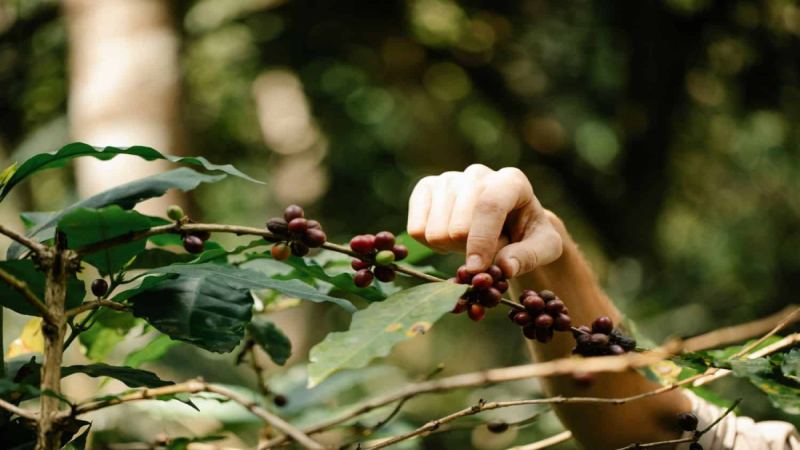
How does coffee cultivation shape Mandheling flavor?
Indonesian Mandheling coffee is known for low acidity, high body and an herbal spice aroma. Sumatra's wet-hulling process and complex geography produce that deep, earthy profile. Common Mandheling comes from the Lintong mountains at 900 to 1,200 meters near Lake Toba, while Golden Mandheling goes through four rounds of hand sorting for a higher grade.
Indonesia's coffee cultivation centers on islands crossed by the equator, including Java, Sumatra, Kalimantan and Sulawesi, and the same arabica variety tastes different from island to island. Lake Tawar coffee grows at 800 to 1,600 meters in the Mount Gayo area of Aceh, using washed, semi-washed and some natural processing. A standard pour-over recipe lets the low-acid, full-bodied character come through.
Mandheling is one of Indonesia's most representative specialty coffees, known for its low acidity, high body, and unique herbal spice aroma. Sumatra's complex geographical conditions and rare wet-hulling process together shape its rich and deep flavor. This article will provide a comprehensive introduction to the grade characteristics and taste profile of Indonesian Mandheling coffee beans, from producing regions and grading systems to processing methods and brewing parameters, and share the pour-over recipe recommended by Front Street Coffee, helping coffee lovers better understand this bean's complete journey from green bean to cup.
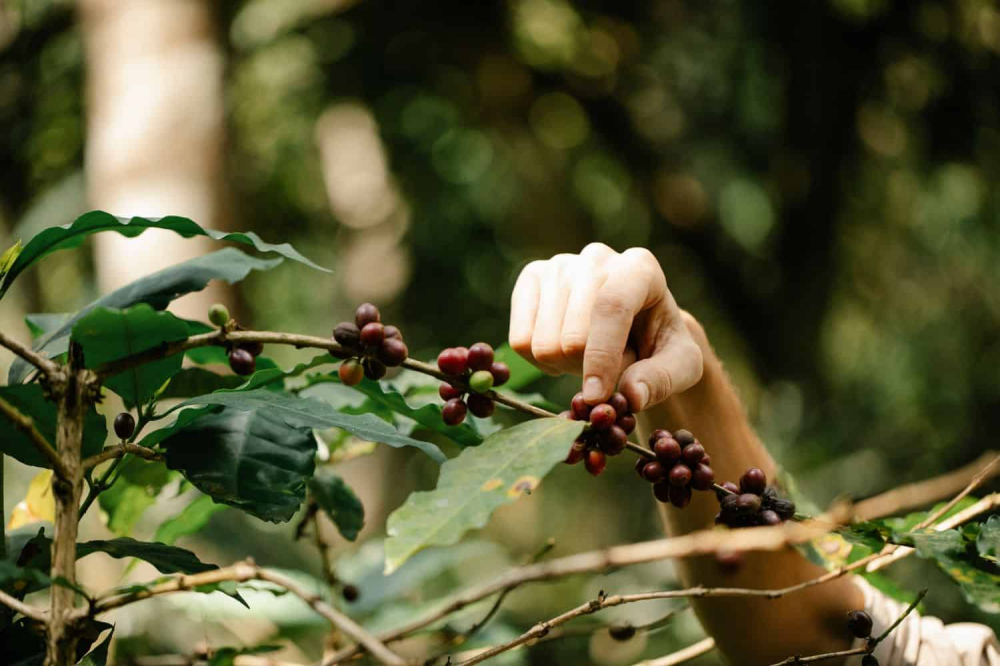
Indonesia is an important coffee-producing country globally, with coffee cultivation mainly concentrated on islands crossed by the equator, including Java, Sumatra, Kalimantan, and Sulawesi. Interestingly, even with the same variety, coffee from different islands presents distinctly different aromas and flavors. Front Street Coffee points out that Indonesian coffee as a whole is known for its deep aroma, lower acidity, and excellent body, and among them, the most famous is Mandheling.
In Indonesia's specialty coffee landscape, the delicate-flavored Arabica is mostly grown in the high-altitude areas of northern Sumatra, Sulawesi, and Java. Although Arabica accounts for a small proportion of Indonesia's total production, names like Mandheling, Golden Mandheling, Lake Tawar, Mount Gayo, Aceh, Sulawesi, Aged Mandheling, and Java have long made Indonesian coffee renowned in specialty circles, and it has not lost its luster due to the negative impression of Robusta.
Sumatra is the core producing region of Indonesian specialty coffee, and its coffee system is quite complex, roughly categorized into the following four types:
(1) What is commonly called Mandheling refers to semi-washed or sun-dried beans produced in the Lintong mountainous area at altitudes of 900 to 1,200 meters along the southwestern shore around Lake Toba in north-central Sumatra, with the Lintong region being the most famous.
(2) Golden Mandheling requires four rounds of hand sorting, with a quality grade higher than ordinary Mandheling.
(3) Lake Tawar coffee is located near Lake Tawar in Aceh Province at the northernmost tip of Sumatra, in the Mount Gayo area at altitudes of 800 to 1,600 meters. Processing methods include washed, semi-washed, and a small amount of sun-dried. Competition in this region is fierce; Costa Rica's famous La Minita estate once traveled here to teach semi-washed techniques, and Dutch coffee groups also promoted Mount Gayo washed beans here.
(4) Aged Mandheling and Java coffee.
Mandheling coffee beans are produced on the island of Sumatra, Indonesia, and are therefore also called "Sumatra coffee." They are mostly grown in highland mountains at altitudes of 750 to 1,500 meters and belong to the rare Arabica variety in Indonesia, with the first-grade Mandheling produced in Takengon and Sidikalang being the finest. Due to limited production, Mandheling is regarded by coffee lovers as a "famous specialty," especially under dark roasting, where the bitterness is prominent and the beans are darker in color; that rich, sweet aftertaste deeply fascinates many coffee addicts.
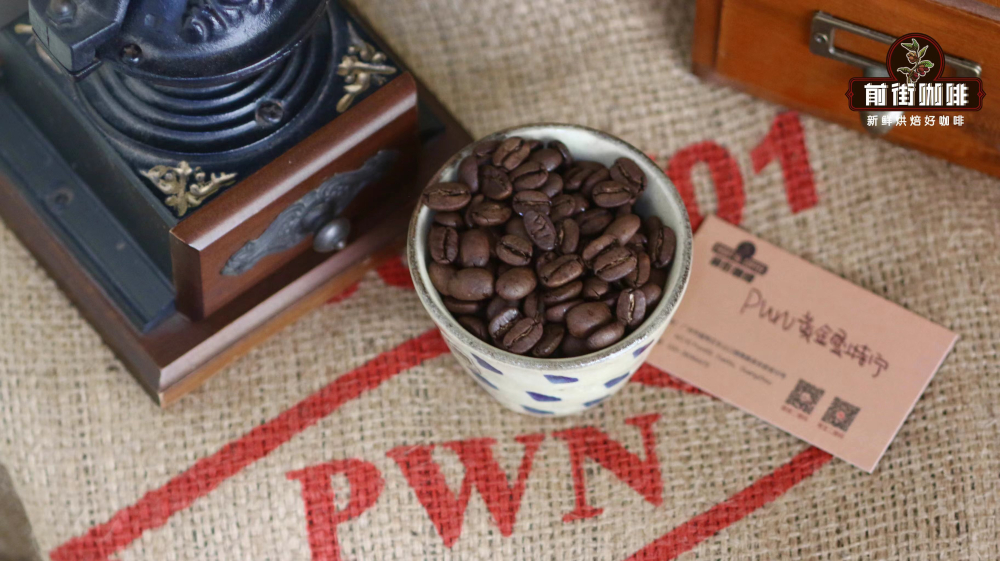
Lintong Mandheling
When it comes to Mandheling coffee, Front Street Coffee has a daily-drinker bean — Lintong Mandheling, which has won the favor of coffee fans with its rich aroma, full body, and intense flavor, and that unique herbal spice aroma is also a signature characteristic of Mandheling. In addition to Indonesia's terroir conditions, the wet-hulling process is also an important reason why Mandheling develops such a strong flavor.
The Lintong mountainous area southwest of Lake Toba is a relatively new producing region. In the 1990s, Lintong Mandheling quickly rose to fame, and afterward Typica production increased year by year, with most beans processed by sun-drying.
The unique wet-hulling process
Mandheling coffee is mostly processed using Sumatra's unique wet-hulling method. Because local water resources are precious in Lintong, Mandheling was initially mainly sun-dried, but quality was unstable, so it was later changed to a method similar to Brazil's semi-dry process. However, Indonesia's humid climate makes it impossible to dry the sticky parchment beans outdoors for two to three days as in Brazil, otherwise they easily become moldy. Therefore, they are dried for at most a few hours to one day, and when the moisture content drops to 20% to 35% and the mucilage layer has not yet solidified, they are purchased by middlemen and sent to rudimentary processing plants where machines remove the mucilage layer to avoid excessive fermentation of the mucilage producing sour, foul odors. In other words, Lintong Mandheling removes the mucilage layer before the parchment beans are dry, which is precisely the key to its lower acidity and high body. After that, it is dried a little more, and the coffee beans inside the parchment have a moisture content of about 18%. Finally, exporters in Medan purchase these unfinished parchment beans and dry them on large drying yards or with machines until the moisture content drops to 12%, at which point they can be stored.
It can be seen that the drying process of Lintong Mandheling, due to farmers' lack of equipment, has formed a three-stage division of labor among farmers, middlemen, and exporters. Mandheling's distinctive herbal aroma (similar to grass jelly) and aged-wood notes are precisely the result of drying the mucilage layer in three stages under high-humidity conditions. This processing method is extremely rare in the world, yet by accident it has created Mandheling's special flavor profile of low acidity, thick body, and deep, muted aroma.
Grading method
Indonesian coffee beans use a grading method based on the proportion of defective beans, mainly divided into 6 grades, namely G1 to G6. Ethiopia also uses a similar system, where the highest grades for washed beans are G1 and G2, and the highest grades for sun-dried beans are G1 and G3.
Washed: Grade-1; Grade-2
Sun-dried: Grade-1 and Grade-3~Grade-5
There are a few points to note:
Whether washed or sun-dried, there is Gr-1, with the condition of "zero" defects and a Premium Cup. Regardless of the processing method, Gr-1 represents the cream of the crop, or a rating for Cup of Excellence-level coffee. Beans of the same grade, such as Lim Gr-2, also vary in quality depending on the exporter's sorting standards and level of effort. According to the existing "zero" defect requirement, Gr-1 beans (whether washed or sun-dried) are extremely rare, because processing costs are very high and very few suppliers are willing to do it.
How should Mandheling coffee be brewed?
Front Street's approach to brewing Mandheling coffee is: to present a rich yet clean texture, highlight caramel, chocolate, and the signature herbal aroma, while avoiding unpleasant bitterness. In fact, every bag of Front Street Coffee specialty coffee beans has detailed information and recommended brewing parameters on its packaging, as follows:
Brewing parameters: Use a Kono dripper
Water temperature: 88°C
Dose: 15 grams
Coffee-to-water ratio: 1:15
Grind size: medium-fine grind (70-75% passing through a Chinese standard No. 20 sieve)
Front Street Coffee uses staged extraction, also known as three-stage brewing: pouring water in three stages better showcases Mandheling coffee's rich body and caramel sweetness. The specific water distribution is as follows — the first stage is the bloom, pouring 30 ml, which fully wets the coffee grounds and allows them to degas, preparing for the subsequent extraction of flavor compounds; the second stage pours 100 ml; the final stage pours 95 ml to enhance the coffee's sweetness, resulting in an overall thick, rich body along with caramel sweetness and chocolate, nutty flavors.
Professional coffee knowledge exchange. For more coffee bean information, please follow Coffee Workshop (WeChat public account: cafe_style).
For more specialty coffee beans, please add the private WeChat of Front Street Coffee: qjcoffeex.
The above content is compiled by CoffeeHunters, a coffee news website.


