







What does raw coffee bean meaning tell us in Guji?
In Ethiopia's Guji region, raw coffee bean meaning comes down to how green beans are handled before roasting. At Hambela, the Buku processing plant uses rigorous sun-drying to shape the strawberry-and-cream aroma of Huakui coffee. The Dega variety and distinctive green bean appearance also set these lots apart from washed Yirgacheffe, which leans toward citrus and lemon notes.
Ethiopia is the birthplace of coffee and the world's sixth-largest producer. In 2017 it grew about 470,000 tons of green coffee, exporting roughly 160,000 tons, so more than half stayed home. Coffee work engages a large share of the population. The article also details Front Street Huakui 4.0 brewing parameters and a three-stage pouring method to bring out that fruit-forward profile.
Ethiopia is not only the birthplace of coffee, but also a country that has woven coffee into its daily life and cultural bloodstream. Among its many producing regions, Sidamo, Guji, and Hambela nurture flavors that captivate coffee lovers worldwide through their unique terroir and meticulous processing methods. From the perspective of Front Street Coffee, this article systematically sorts out the independent journey of the Guji region, the altitude advantages of the Hambela micro-region, and how the Buku processing plant shapes the signature strawberry-and-cream aroma of Huakui coffee through rigorous sun-drying techniques. At the same time, the article also provides an in-depth analysis of the characteristics of the Dega variety, the differences in green bean appearance, and includes the complete brewing parameters and three-stage pouring method for Front Street Huakui 4.0, helping readers fully understand the flavor logic of this coffee from origin to cup.
For more specialty coffee knowledge, please follow our WeChat official account: FrontStreet Coffee
Among the factors influencing coffee flavor, Front Street has always believed that in addition to variety, origin, and cultivation methods, there is another link that cannot be ignored—green bean processing methods. Different processing methods can not only give coffee different tonalities, but also fully release its essence. Take the well-known Ethiopian coffee as an example: washed processing amplifies the citrus and lemon aromas of Yirgacheffe itself, creating the highly recognizable "Yirga flavor"; while sun-dried processing allows the strawberry-and-cream tonality of Front Street Huakui coffee to be fully displayed and stand out in competitions.
Coffee is at the core of Ethiopian culture
In Ethiopia, coffee production is both a means of labor for a large number of people and an important pillar of national income. This crop has long been deeply embedded in the local cultural and economic fabric. Ethiopia is the world's sixth-largest coffee producer. According to some data, in 2018 about 100 million people worldwide were directly or indirectly engaged in the coffee industry, and coffee workers in Ethiopia accounted for 20% of them. In 2017, the country's green coffee production was about 470,000 tons, of which about 160,000 tons were exported, meaning that Ethiopia's exported coffee was less than half of its total production, with the rest consumed domestically.
Coffee has been integrated into Ethiopia's social structure for hundreds of years. It is reported that the local social term "buna tetu" is often used, meaning "drink coffee"; and one of Ethiopia's most famous proverbs, "buna dabo naw," means "coffee is our bread."
Ethiopian coffee mainly has eight major producing regions: Lekempti, Limu, Illubabor, Djimmah, Harar, Teppi/Bebeka, Sidamo, and Yirgacheffe.
Sidamo
The coffee flavor of Front Street Sidamo is extremely diverse, thanks to varied soil types, microclimates, and countless native coffee varieties. The producing region features towering mountains, with highlands, plateaus, valleys, and plains interwoven in rich terrain. The geology there consists of fertile, well-drained volcanic soil, with a soil layer nearly two meters deep and topsoil in dark brown or brown.
Sidamo is located at the southernmost end of the Ethiopian Highlands, at an altitude between 4,600 and 7,200 feet (Sidamo Province). It is a famous specialty coffee region in southern Ethiopia, bordering Kenya, located southeast of Jimma and directly south of the capital. Coffee from this region usually has obvious sweetness, which is why it is loved by many, with an annual output of about 225,000 bags (60 kg per bag). Its greatest advantage lies in maintaining soil fertility through organic matter cycling, relying on fallen leaves from surrounding trees or residual plant roots as fertilizer, which also creates obvious differences and characteristics in coffee flavors between towns.
According to Ethiopia's administrative divisions, it can be divided into four levels: Region, Zone, Woreda, and Kebele, equivalent to China's province, city, district, and street. Front Street Huakui coffee beans come from Guji City in Sidamo Province, and further down can be divided to Shakisso Woreda's Hambella Kebele. Usually when Hambela is mentioned, most people think of Front Street Huakui coffee beans, because the popularity of Front Street Hambela Huakui coffee beans is simply too high.
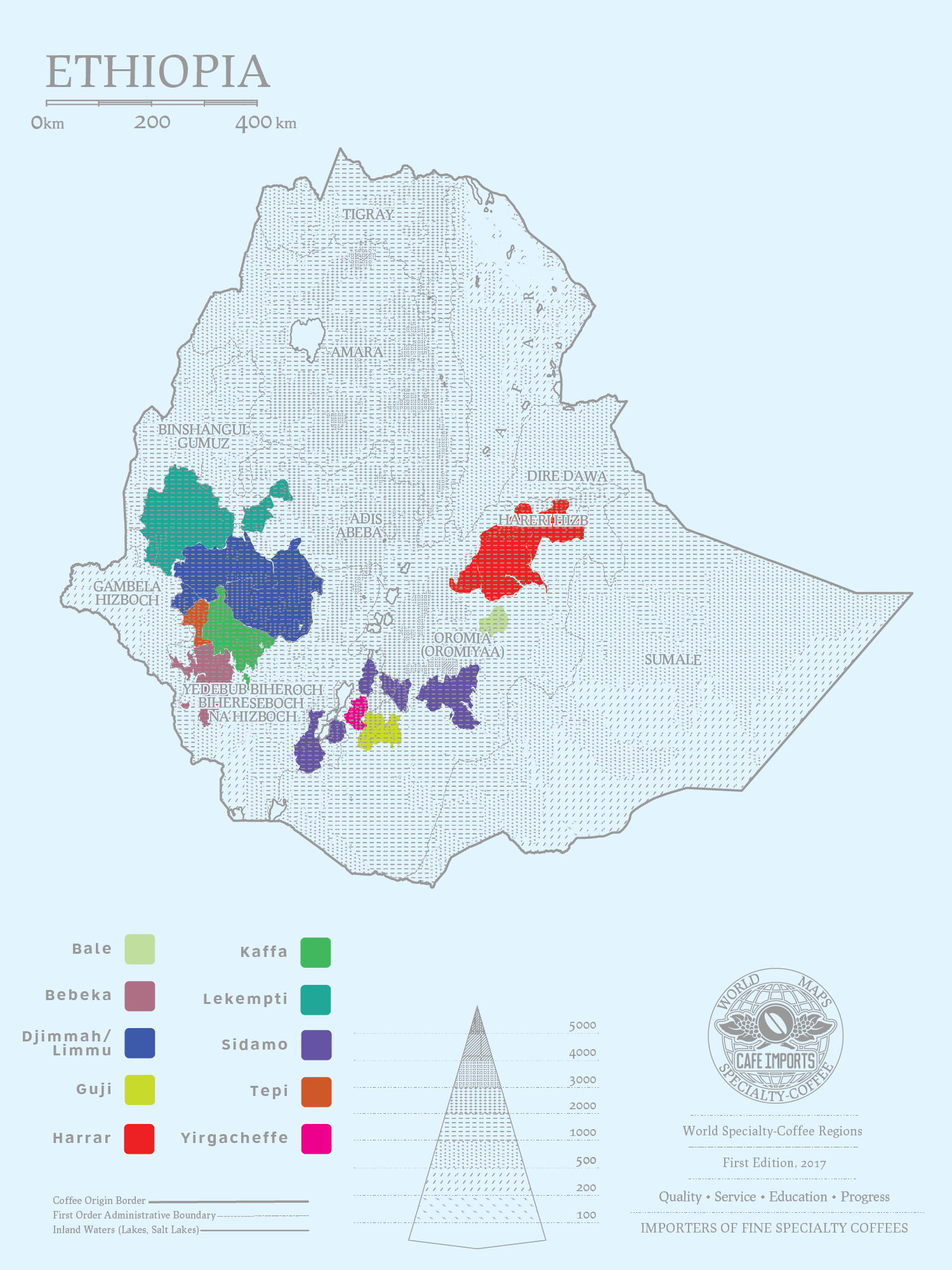
From the map of Ethiopian coffee producing regions, it can be seen that Guji and Sidamo are separate. Because Guji's geographical location is superior enough and the coffee it produces has a unique flavor, it was separated from the Sidamo producing region by the ECX (Ethiopia Commodity Exchange) in 2010. Shakisso is the most notable micro-region in the Guji producing area, with an average altitude above 1,800 meters.
Introduction to the Guji Producing Region
The Guji producing region is located southeast of the well-known Yirgacheffe producing region.
In terms of administrative divisions, Guji belongs to Oromia Region Guji Zone and is a regional green coffee bean. Just as Yirgacheffe became widely known after gaining fame, Guji later became a sub-region independent from the broad Sidamo area. This batch comes from smallholder coffee farmers of the Shilcho Coop near Dara Woreda town in Sidama Province. The cooperative was established in 1976 and is currently a member of the Sidama Coffee Farmer Cooperative Union (SCFCU). SCFCU is a large Ethiopian coffee cooperative union with about 46 member cooperatives at present and is Ethiopia's second-largest coffee production team.
Front Street Ethiopia Huakui 4.0 Coffee Beans
Country: Ethiopia
Region: Sidamo Guji Hambela producing area
Processing plant: BUKU
Altitude: 2350m
Variety: Dega
Processing method: Sun-dried
Introduction to the Hambela Producing Region
Hambella (generally translated as "Hanbeila") is located in Guji, Ethiopia's largest coffee producing region, and administratively belongs to Oromia State. To the west, Hambela faces Yirgacheffe's Kochore across the mountains, with the two producing regions separated by a highland about 30 kilometers wide at an altitude of 3,200 meters; to the southeast and north, it borders Guji's Shakiso, Uraga, and Kercha sub-regions respectively. It is the highest-altitude coffee sub-region in Ethiopia (Harrar is Ethiopia's highest-altitude main producing region).
At present, the Hambela producing region has nearly 20 processing plants of various scales. In 2017, a sun-dried bean from Buku Abel processing plant under DW Company won the championship in the Ethiopia National Taste of Harvest Competition. Chinese green bean importers named this bean Huakui, and at that time it displayed rich strawberry and cream aromas. Since then, DW Company has expanded from one estate processing plant to four in Dimtu, the core producing area of Hambela, namely Buku abel, Buku saysay, Haro soresa, and Tirtiro Goye, with an annual coffee output of about 1,100 tons. The Front Street Huakui that FrontStreet Coffee obtains each year comes precisely from the familiar Buku abel processing plant, and this year's freshly processed Front Street Huakui 8.0 is no exception.
Buku abel Processing Plant
Buku abel processing plant is located in Buku abel village at an altitude of 2,200 meters. From the very beginning of cultivation, the coffee enjoys a noble "family environment"—red-brown soil rich in humus, shaded and protected by "Enset" trees, allowing the fruit to receive ample sunlight and develop rich flavors while not consuming too many nutrients, thereby retaining more essential substances inside the coffee fruit.
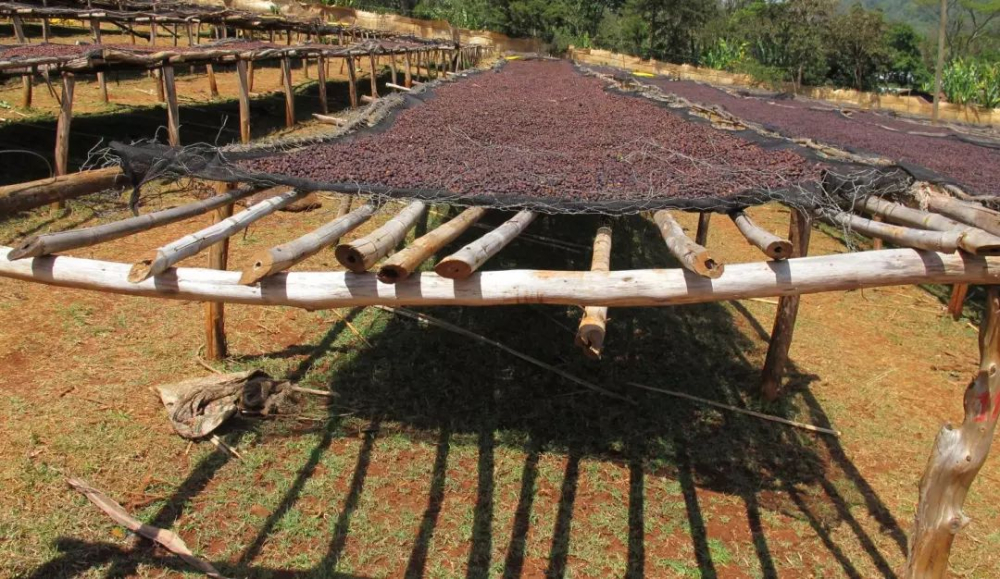
During the harvest and processing season (December to January), the unique growing environment and natural climate together create the distinctive flavor of Huakui. First, the red cherries picked by coffee farmers must reach a sugar content above 30 before sun-drying begins. In the first two days of drying, workers must ensure the humidity of the red cherries so that their fructose fully initiates the fermentation reaction. At the same time, the high-altitude location allows the processing plant's nighttime temperature to drop to around 12 degrees Celsius, while not producing overly fermented odors due to excessively high temperatures. When the midday temperature is higher, coffee farmers need to shade them promptly to prevent the coffee cherries from sunburn. In addition, farmers also control the thickness of the fruit layer and turn it regularly 24 hours a day to ensure even sun exposure and ventilation, and to grasp the degree of fermentation more accurately.
Buku Abel means "NEW" in the local Ethiopian language, that is, a new place. Front Street found through maps that Buku Abel is located in southeastern Ethiopia, in an extremely high-altitude indigenous tribe in the Hambela area of the Guji producing region, with a population of about 30,000. Like most Ethiopian coffee gardens, this small village grows coffee in wild virgin forests. Coffee farmers have passed it down for generations here and plant native bananas, interplanting local native coffee varieties among the banana groves.
Strictly speaking, only sun-dried coffee produced by the "Buku Abel" processing plant is called "Huakui coffee beans." This is also the reason why the sun-dried beans from this processing plant were named Huakui 2.0, Huakui 3.0, and Huakui 3.1 in 2018 and 2019 respectively.
The Huakui produced in the new 2020 season was named Huakui 4.0 to distinguish it from previous Huakui. 2020 was the fourth year of this Huakui coffee bean. Its producing area had expanded to several times the original size, and with more scientific cultivation management, the flavor of Front Street Huakui 4.0 became even better and received praise from many coffee enthusiasts. Therefore, FrontStreet Coffee also purchased this batch of new-season Front Street Huakui 4.0 for roasting and cupping.
Dega Coffee Bean Variety
This year Ethiopia held the Cup of Excellence (CoE) for the first time, and the classification of coffee varieties among the top 28 finalists was finer than expected. For Dega, ranked 21st, there are two very different versions of the origin of its name. One version believes that Dega's name comes from a type of firewood, and Dega's aroma during roasting is very similar to the aroma of this firewood burning. Another version explains that "dega" is the root word in Ethiopian language for "highland and shady place," and Dega often grows in high-altitude areas. Unfortunately, because Dega did not enter the top 14 in this COE competition, no related flavor description was collected. The Front Street Huakui 4.0 that FrontStreet Coffee obtained this time is precisely coffee beans of the Dega variety.
Green Bean Analysis
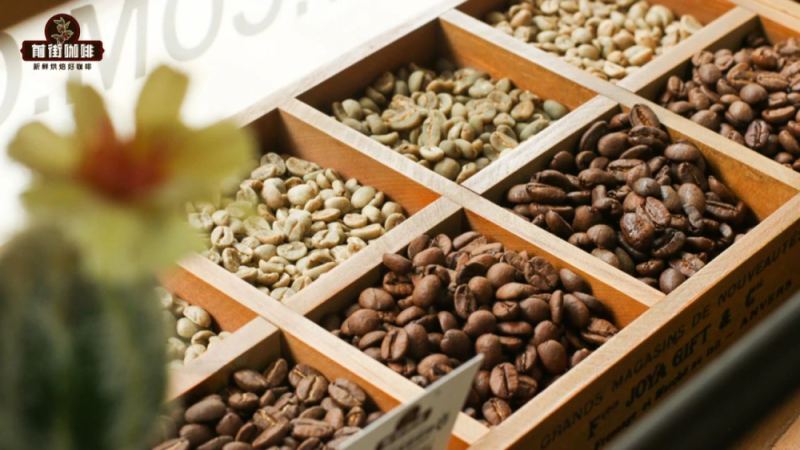
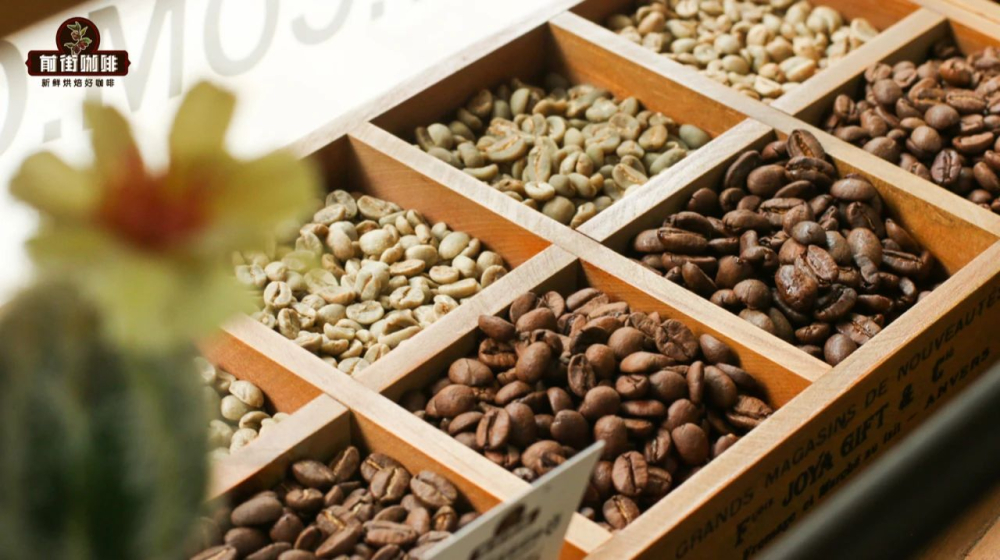
In this batch of Front Street Huakui 4.0 purchased by FrontStreet Coffee, it can be seen that Front Street Huakui 4.0 has smaller beans than the other two Front Street Huakui 3.0 coffees, because the varieties are different. Front Street Huakui 3.0 is Ethiopian native variety coffee beans, while Front Street Huakui 4.0 is the Dega variety. In addition, it can also be seen that the two Huakui 3.0 coffees have relatively uniform bean sizes because the coffee beans were screened after picking; while Front Street Huakui 4.0 was not screened, so the beans appear uneven in size.
Coffee Processing Methods
The sun-dried processing method is the most traditional processing method. After harvest, the fruit is naturally dried in the sun. The steps are as follows:
1. After harvesting, coffee farmers place the cherries directly on the drying yard and dry them in the sun;
2. During the drying process, they need to turn and stir them at appropriate times to avoid uneven drying or fermentation;
3. After several days, dry them until dry;
4. Use a hulling machine to remove the pulp and parchment from the dried green beans and take out the green beans.
Advantages: Coffee fruit processed by the sun-dried method retains pectin during processing, and pectin itself has a sweet taste. During the sun-drying process, sugars are transferred into the coffee beans, so the processed coffee has relatively strong sweetness, a rich mouthfeel, and stronger layers.
Disadvantages: There will be more defective beans, the appearance of the beans is not uniform, and they easily absorb odors from the ground and earthy flavors.
Roasting Suggestions
Cupping Report
Brewing Parameters
Brewing equipment: HARIO V60
Coffee powder: 15g powder
Powder-to-water ratio: 1:15
Water temperature: 90℃
Grind size: medium-coarse grind (80% passing rate on China standard No. 20 sieve)
The ribs of the V60 dripper are distributed in a curved shape from top to bottom, with varying lengths. During brewing, air release is relatively smooth and the flow rate is also relatively fast. Because of this, a staged extraction method is usually used with this dripper: first, it can slow down the water flow speed; second, it can increase the extraction yield and to a certain extent reduce under-extraction caused by the fast flow rate.
Brewing Technique
FrontStreet Coffee uses staged extraction, that is, three-stage pouring.
First pour: Blooming (to help release gas)
During the roasting process in which coffee beans change from green beans to roasted beans, a series of chemical reactions and physical changes occur. After reaching a certain degree of roasting, a large amount of gas (mostly carbon dioxide) accumulates inside the coffee beans.
Generally speaking, the fresher the coffee beans and the closer they are to the roasting date, the more bubbles appear during blooming. Dark-roasted beans also release more gas during blooming than light-roasted beans. FrontStreet Coffee's coffee beans are all freshly roasted, so customers are generally advised to rest the beans for three days first, allowing the coffee beans to release carbon dioxide first, which can avoid problems of instability and under-extraction during brewing.
After the gas is discharged during blooming, the coffee particles can absorb water evenly, which helps with even extraction later. A good bloom can allow the coffee grounds to release gas quickly, fully, and evenly, and at the same time allow the coffee grounds to fully and quickly contact water, helping the coffee grounds to be extracted evenly.
During blooming, pay attention to the following four points:
1. Before pouring water for blooming, first level the coffee grounds.
2. Pour water gently during blooming.
3. During blooming, the extracted liquid flowing down should be as little as possible; when too much extracted liquid appears in the server, reduce the amount of water poured, or pay attention to the grind size. (If there is too much blooming water and a large amount of coffee liquid drips down, the falling water does not stay but directly carries out substances from the outside of the coffee grounds. Then the off-flavors and astringency in the outer layer of the coffee grounds also begin to dissolve out, making the brewed coffee both weak and full of over-extracted off-flavors. If the blooming water is insufficient and no water drops fall at all, it means the coffee grounds have not absorbed enough water, and some coffee has not released enough gas, causing under-extraction.) Based on this situation, FrontStreet Coffee, after many blooming experiments, found that pouring water at twice the amount of coffee grounds during blooming is more appropriate.
4. The blooming time is about 30 seconds. When the surface expansion of the coffee grounds ends, you will see the coffee surface shrink, which means blooming is complete and you can begin pouring. (If the blooming time is too long, the coffee is prone to bitterness and astringency; if the time is too short, soaking is insufficient, and the coffee may be under-extracted or the flavor may not be fully displayed.) Generally speaking, the end time of blooming varies by bean, but FrontStreet Coffee found that this is not conducive to operation for beginners, since beginners emphasize standardization and ease of handling. Therefore, while ensuring the coffee beans are freshly roasted, FrontStreet Coffee recommends a blooming time of 30 seconds, and experienced people can adjust it themselves.
Second pour
The second pour starts from the center, with a small stream of water injected into the bottom of the coffee bed. In order to concentrate the penetration of the water stream, the circular movement range should be small, about the size of a one-yuan coin, and then spiral outward. From the start of the second pour, pay attention to the water amount and try not to exceed the height of the coffee bed; that is, when the water stream circles close to the filter paper, you can stop pouring.
Third pour
As the originally thicker coffee bed near the edge of the filter paper becomes heavier after absorbing water, it slides down and becomes thinner as the water level drops. When the water level drops by half, you can proceed with the third pour.
From the start of the third pour, observe the extent of the water level drop. Likewise, start pouring from the center in circles, and do not let the water amount exceed the height of the coffee bed. At this time, you will also observe that the proportion of foam has already covered the surface. The third pour should increase the tumbling of coffee particles, allowing all settled particles to tumble and thereby dissolve soluble substances.
The rolling particles will begin to stop because you stop adding water. At this point, the flow rate caused by the dropping water level is needed to create friction among the coffee particles. Therefore, once water addition stops, the coffee particles will sink downward and cause clogging, so pay special attention to the rhythm of water addition. If there are too many interruptions in pouring, it is equivalent to letting the coffee particles sit in water all the time, which will cause astringency and off-flavors in the final stage of coffee extraction.
Summary:
When FrontStreet Coffee brews this Front Street Huakui 4.0 coffee bean, the overall process is: use a blooming water amount of twice the coffee grounds, that is, 30g of water for blooming, with a blooming time of 30 seconds. Pour in a small stream in circles until 125g for the stage break. When the water level is about to expose the coffee bed, continue pouring until 225g and stop pouring. When the water level is about to expose the coffee bed, remove the dripper. (Start timing from the beginning of blooming.) The extraction time is 2 minutes.
[Front Street Ethiopia Huakui 4.0] Flavor description: Citrus acidity, full berry juice mouthfeel, lemon black tea tea-like quality, lasting sweetness.
The above content is compiled by CoffeeHunters, a coffee news website.


