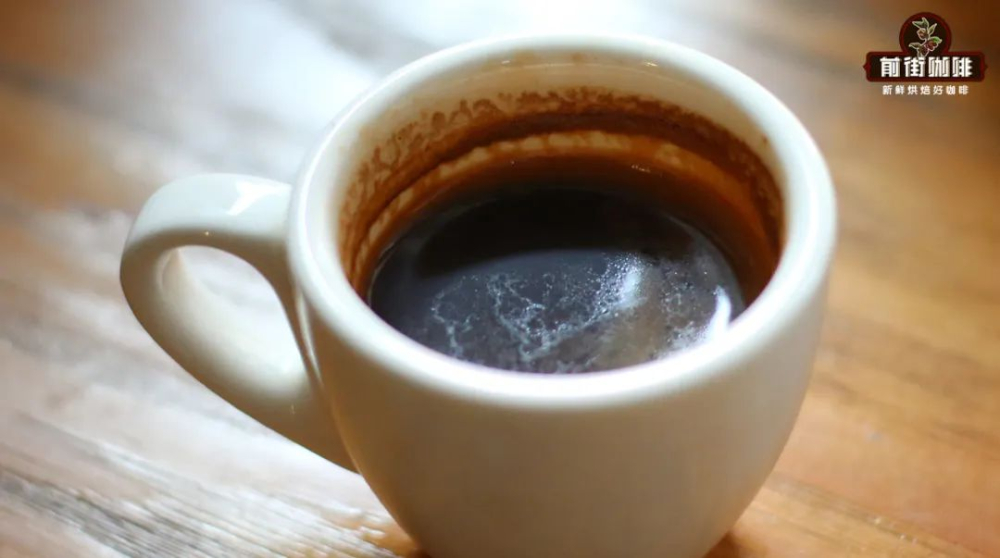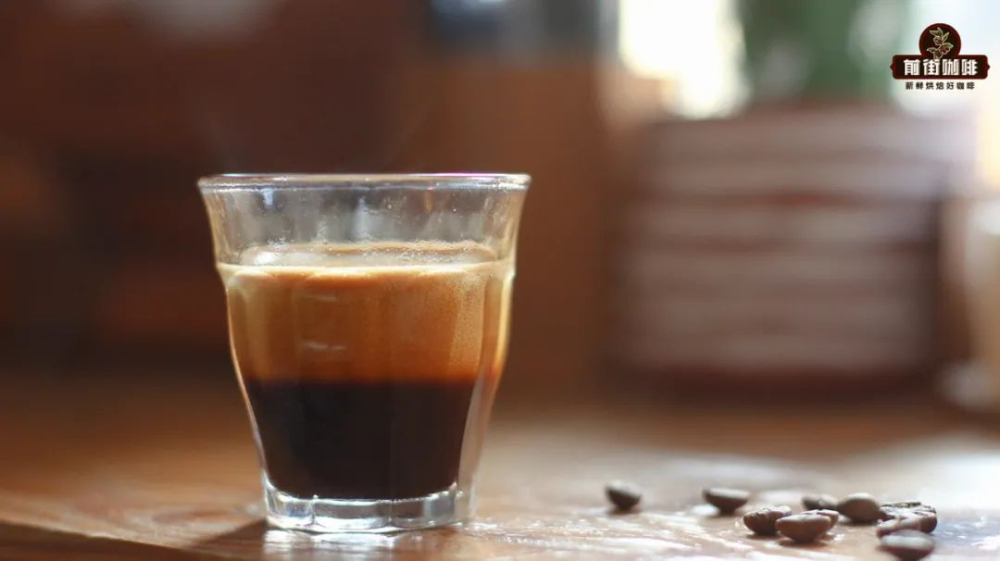
Just a few days ago, a customer came to the Front Street Coffee store in Dongshankou, Guangzhou, to drink espresso. Before leaving, they said, "I really love your espresso; the crema is the richest I've ever seen!" Coincidentally, a friend also asked Front Street how to make the crema of espresso even richer. Today, Front Street will share its insights here.
Espresso, as the name suggests, comes from Italy in Europe. The development of espresso was aimed at speeding up coffee making. Originally, espresso referred to a method of making coffee, with "espres" meaning "fast," indicating that a cup of black coffee can be made in a very short time.

The golden layer of crema on espresso is called crema, but calling it oil isn't entirely accurate, because this golden crema is composed of coffee oils and carbon dioxide. Once this crema breaks down and the carbon dioxide dissipates, the thin reflective layer that remains is the actual coffee oil.
However, due to some habitual expressions, this golden crema can also be referred to as espresso crema. Since we know the composition of crema, to extract a rich crema, we need to choose beans with rich oils and sufficient carbon dioxide.
1884In the year, an ItalianAngelo Moriondodesigned the first espresso machine, featuring two independent brewing boilers,1.5barpressure and steam, the extracted coffee liquid is relatively viscous, with a richer taste than drip coffee. As coffee machines were continuously improved, factors like water temperature and pressure were better controlled,1948In the year, a café owner in MilanAchille Gaggiainvented the lever-driven coffee machine, which could generate what we now call crema through high pressure (crema). Since then,cremahas been considered one of the indicators of espresso quality,spressobecame specifically referring to making a highly concentrated coffee with rich crema through pressurized methods.
The richness of coffee bean oils is mainly determined by the bean variety and roast level. Generally, Robusta has richer oils than Arabica, but its flavor is not as good as Arabica, so Robusta is often blended with Arabica to achieve a balanced state. For example, Front Street's Front Street Commercial Blend contains 10% Robusta to enhance the coffee's oils while balancing the flavor; American Arabica performs better in oils than African, such as the Sunflower Warm Sun Blend used in Front Street stores, which contains 70% Honduras Sherry coffee beans, providing rich oils.
The roast level also affects the richness of the extracted oils; typically, the darker the roast, the better the coffee oils perform. So to exhibit good oils, espresso beans are usually medium-dark roasted. Some friends who want to pursue the acidity of espresso use medium-light roasted coffee beans to extract espresso, and naturally, the crema performance is not as good.
 Next is the carbon dioxide content, which basically means freshness. Carbon dioxide is produced during roasting and slowly escapes from the beans over time. Generally, espresso beans completely release it in about 45-60 days. Once the carbon dioxide is fully released, the coffee beans' flavor is almost entirely gone (i.e., not fresh), and the extracted coffee has thin oils and only the inherent bitterness of coffee. Some friends ask Front Street why their extracted espresso has no oils, and upon asking about the roast date, it was roasted half a year ago... left too long, the coffee made doesn't even have aroma, let alone oils. This is also why Front Street has always emphasized the importance of fresh roasting over the years.
Some friends rebut that they bought coffee beans roasted abroad and still had oils after more than half a year. First, imported coffee beans use technologies like nitrogen flushing for preservation, but after you open the package, those preservation techniques no longer work, and after 2 months, there's still no flavor.
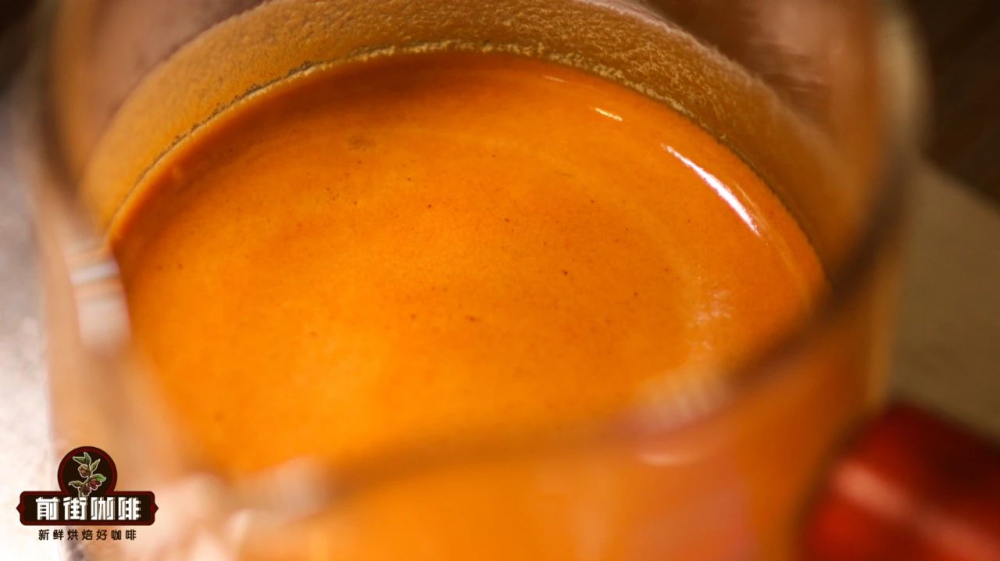
Second, it's not that the fresher the espresso beans, the better. If they don't go through a 7-12 day resting period, the abundant carbon dioxide inside the beans gets trapped in the oils, forming a very rich crema, but this crema is very rough and unstable, breaking down quickly, and the coffee flavor is relatively weak. Some friends who just bought espresso beans ask Front Street why the coffee flavor is different from before; Front Street tells them to rest the beans for 5 days and try again, and after 5 days, they say it's the original taste.
After choosing the right coffee beans, the remaining issue is extraction. To extract rich golden oils, the extraction pressure should be maintained at 9Bar. Some small home machines using vibration pumps struggle to stabilize pressure throughout the extraction, which is also a reason for less rich oils.
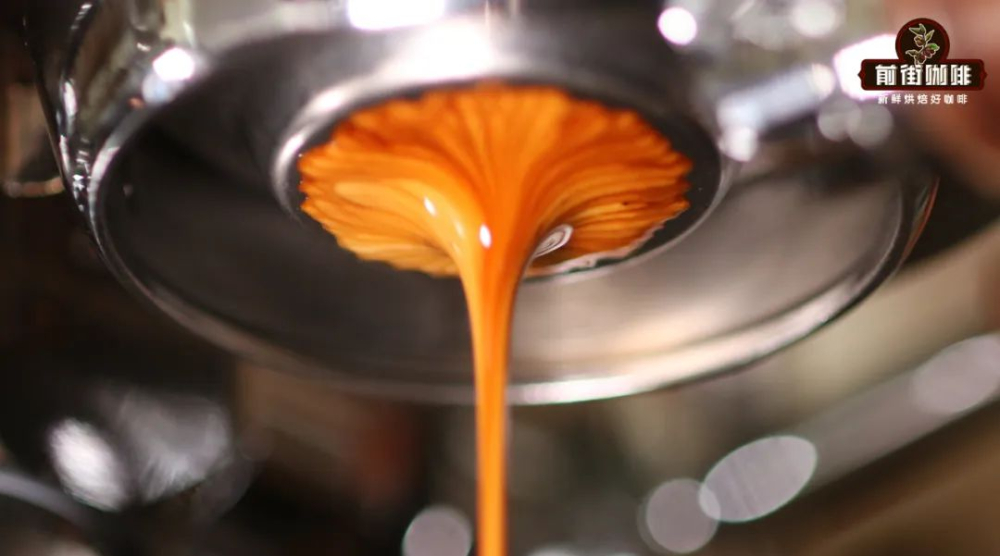
With sufficient hardware support, it's about the extraction method, such as the coffee-to-water ratio. Some friends think that to get richer oils, they should extract more coffee liquid, so the oils will increase accordingly. But if you observe the coffee extraction process, you should notice that it starts brown-black, then brown-yellow, then golden-yellow, and finally yellow-white.
This is the process of coffee crema changing from dark to light. The further into the extraction, the thinner the oils and the lighter the color, which actually affects the overall espresso quality. Front Street's espresso typically uses a coffee-to-liquid ratio between 1:1.8-2, rarely exceeding 1:2. For example, today's parameters are 20 grams of coffee powder extracting 40 grams of coffee liquid in 30 seconds.
The above content is compiled by CoffeeHunters, a coffee news website.