







Mandheling is a name coffee lovers can't avoid, but do you know the flavor differences between the Lake Toba and Lake Tawar growing regions? What do the G1 to G6 grade classifications actually mean? Starting from the terroir of the origins, this article breaks down layer by layer the real differences between ordinary Mandheling, G1, PWN Golden Mandheling, and Gold Top Mandheling, while also bringing you flavor descriptions and brewing suggestions for Front Street Tiger Mandheling and Aged Mandheling. Whether you're a beginner just starting out or a connoisseur chasing the ultimate taste, you'll find clear guidance on selecting and tasting, and avoid the common trap of Robusta masquerading as Mandheling on the market.
The coffee cherries for Front Street Mandheling come from the highlands around Lake Toba, a typical high-mountain freshwater lake located north of Medan, the capital of North Sumatra Province, with a surface elevation of about 900 meters. What we usually call Mandheling refers to the Typica and its derivative varieties grown in the mountains surrounding Lake Toba.
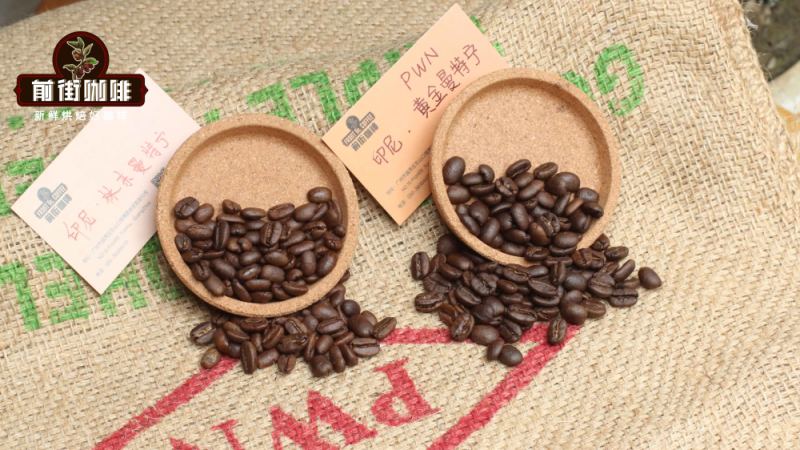
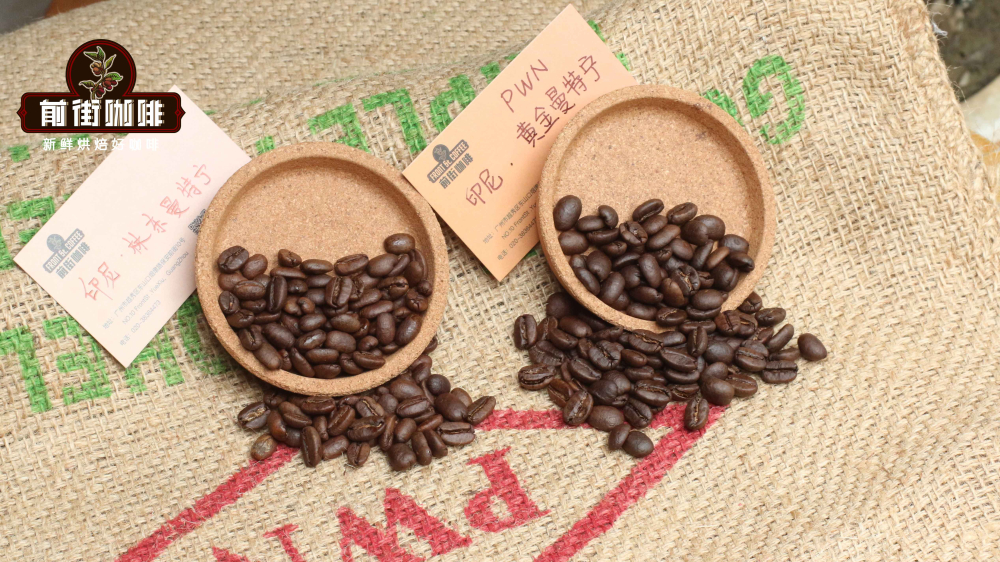
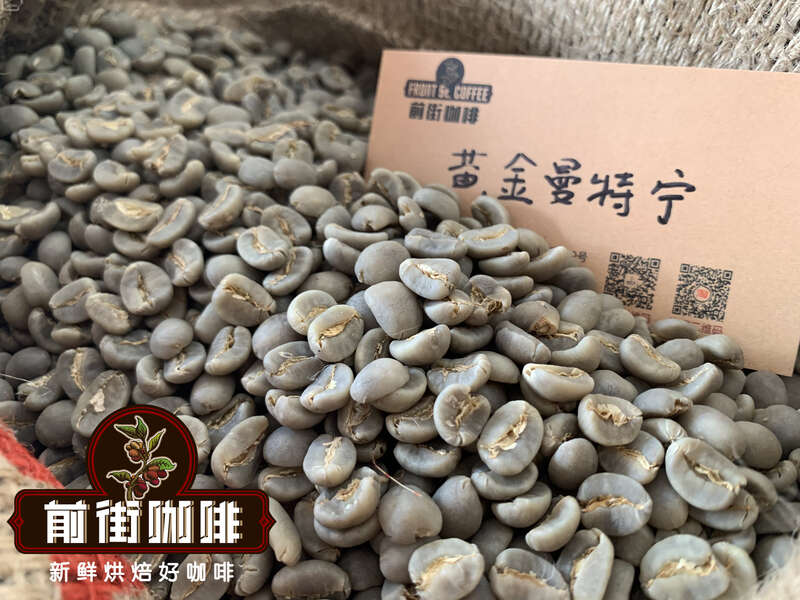
On the market, Front Street PWN Golden Mandheling coffee beans and Gold Top Mandheling are of higher quality than ordinary Mandheling. The difference between the two is significant: the green beans of Golden Mandheling must undergo three to four rounds of manual sorting, the beans are larger, dark green in color, and regular flat beans in shape. In terms of flavor, Golden Mandheling displays a rich, solid mouthfeel accompanied by the sweet aroma of honey and cream, making it truly unique and irreplaceable in the coffee market.
[The difference between Front Street Mandheling G1 and Front Street PWN Golden Mandheling]
Coffee beginners often ask: what exactly is the difference between Front Street PWN Golden Mandheling and Front Street Mandheling G1? I really can't tell them apart. For professional-level coffee tasters or enthusiasts with keen palates, if you taste these two beans side by side, the difference will emerge quite clearly. Front Street PWN Golden Mandheling surpasses Front Street Mandheling G1 in sweetness, cleanliness, body, and wild spice-family flavors.
In terms of mouthfeel: Front Street PWN Golden Mandheling is cleaner than Front Street Indonesian Lintong Mandheling. The herbal, earthy, and woody notes commonly found in ordinary Mandheling almost disappear, replaced by a stronger caramel sweetness, and the fruit acidity appears bright and elegant.
What is the G1, G2, G3, G4 grading method?
Indonesian coffee beans use a defect-bean ratio grading method, mainly divided into six grades, namely G1 to G6.
Indonesia is the world's largest archipelagic country, and as early as the 18th century during the Dutch colonial period, Arabica tree species were introduced for cultivation. The main producing areas are distributed across Sumatra, Java, and Sulawesi. The locally produced Mandheling is known for its deep, low-acidity, rich and full-bodied mouthfeel, and is hailed as "the most important coffee in the world." Among these, Sumatra has the largest output, and the northern province of Aceh is Sumatra's largest producing area.
The island of Sumatra faces Java across the Sunda Strait to the southeast, gazes across the Malacca Strait toward the Malay Peninsula to the north, borders Borneo across the Karimata Strait to the east, and faces the Indian Ocean to the west.
[About Lake Toba]
The hometown of premium Mandheling—the Lake Toba region—is located at the northern tip of Sumatra, Indonesia.
The Barisan Mountains are a continuation of the Cenozoic mountain range of the Qinghai-Tibet Plateau, running through the entire island of Sumatra. This region is rich in coal and gold deposits, and the minerals brought by volcanic eruptions make the soil exceptionally fertile. The mountain scenery is magnificent and captivating, with the area around Lake Toba being a typical example.
Lake Toba (Indonesian: Danau Toba, English: Lake Toba), located in northern Sumatra, Indonesia, is a volcanic lake. The lake is diamond-shaped, 100 kilometers long and 30 kilometers wide, with an area of 1,130 square kilometers and an average elevation of about 900 meters. It is also the largest volcanic lake in the world.
Lake Toba
Mountainous areas are naturally foggy, and combined with the abundant moisture of Lake Toba, the nearby mountains are shrouded in mist and clouds year-round. It is precisely this special environment that allows areas at not particularly high elevations to produce high-quality Mandheling, rivaling other renowned coffee-growing regions around the world.
[About "Lake Tawar"]
Lake Tawar is located in the Gayo highlands of northern Aceh Province, Sumatra.
The hot and humid tropical rainforest climate brings abundant rainfall, and combined with fertile volcanic soil, the area already possessed natural advantages for growing coffee. However, due to its remote location and inconvenient transportation, coffee cultivation did not begin until 1924. There are clear differences between the coffee beans of the two major lake regions, Lake Toba and Lake Tawar.
Aceh, located at the northernmost tip of Sumatra, is a fascinating yet complex place. Due to long-term political instability, it is not an area ordinary people would easily visit. The Gayo mountain region is located in Aceh Province in northern Sumatra, where coffee is grown on the hillsides around the town of Takegon and Lake Tawar, at average elevations between 1,110 and 1,300 meters.
[Front Street Tiger Mandheling] is grown in Indonesia, with main producing areas distributed across the three islands of Sumatra, Java, and Sulawesi. The northern part of Sumatra has higher elevation terrain, and Aceh Province, where Lake Tawar is located, and North Sumatra, where Lake Toba is located, are the main Arabica coffee-producing regions. Lake Tawar is located in the Gayo highlands north of Aceh Province, Sumatra.
Front Street Tiger Mandheling is slightly different from other Mandheling, with the main varieties being Caturra, Typica, and Sidikalang. Caturra has a citrus and lemon acidity in its mouthfeel; to maintain its sweetness, regular and measured fertilization is needed to sustain stable productivity. Typica has a long-lasting sweet finish but is relatively susceptible to leaf rust. These varieties also give Tiger Mandheling a more uniform mouthfeel and high cleanliness, with notes of nuts, cream, and dark chocolate. Everyday Brewing | Extracting Tiger Mandheling with 5 Different Brewers
[The difference between Gold Top Mandheling and Front Street PWN Golden Mandheling coffee beans]
Both Gold Top Mandheling and Golden Mandheling are produced in the Lintong area of northern Sumatra, Indonesia. Harvesting is limited to fully manual hand-picking of individual ripe cherries to ensure initial bean selection quality. The coffee cherries are processed using the SEMI-WASHED method, dried by natural sun exposure, and after hulling, undergo one more drying and refining step, as well as two green bean cleanings and four rounds of Hand-Pick manual selection. Therefore, both can be said to be strictly selected top-grade Mandheling coffee.
Golden Mandheling was named "Golden Mandheling" by the Indonesian Pawani coffee company and is the company's exclusive product. To taste the most authentic premium Mandheling, Front Street PWN Golden Mandheling is the top choice.
Gold Top Mandheling's predecessor was Golden Mandheling. Golden Mandheling was originally a Japanese product, and when it was introduced to Taiwan about ten years ago, the name was Golden Mandheling. Because the Indonesian Pawani company registered Golden Mandheling as its trademark, all Japanese companies that introduced this product had to remove the name Golden Mandheling. Japanese importers then changed it to Gold Top Mandheling, and the Chinese translation was accordingly changed to "鼎上黄金曼特宁" (Gold Top Golden Mandheling).
The Golden Mandheling marked "PWN" is the abbreviation of the Indonesian Pawani company, and the Golden Mandheling coffee it produces has been registered in Indonesia. Therefore, coffee beans produced by Japanese companies in the same region can only be sold as "Gold Top Mandheling," with "BIWA" marked on the packaging.
Mandheling from the Lintong region has also begun to be further subdivided. In recent years, some Mandheling named after regions has appeared on the market (for example, Sidikalang, abbreviated as SDK Mandheling). The significance of the Lintong region has also gradually shrunk, becoming a producing area near Lintongnihuta.
Mandheling green beans
Mandheling coffee beans are relatively large, with hard bean texture, prone to defects during cultivation, and usually require strict manual selection after harvesting. If quality control is not strict enough, quality can easily vary widely, and different roasting levels will also directly affect the mouthfeel, making it a single-origin coffee with considerable controversy.
Above: Golden Mandheling semi-washed green beans
Above: Horse-face Mandheling full sun-dried green beans, a hybrid variety of Arabica and Robusta called Timor, known in Indonesia as the timtim variety.
Tim Tim—Horse-face Mandheling longberry
Tim Tim is a bean from Indonesia. Because of its slender shape, many people call it horse-face bean, and some also call it long-strip Mandheling. In fact, tim tim is not a purebred bean, but a variety naturally hybridized from Arabica coffee trees and Robusta coffee trees. This variety was discovered on the island of Timor in the 1940s and was cultivated for its natural disease resistance. In the Americas, this variety is called Hybrido de Timor, abbreviated as Tim Tim, and in Indonesia it is also called Bor Bor.
Above: Lintong Mandheling G1. Although the grade is Grade-1, it still cannot change the high defect rate characteristic of Indonesian beans, with defective beans at about 8%
Above: Emerald Mandheling (Aceh, Sumatra), 19 mesh+, green beans plump and translucent, like emeralds.
So what kind of bean is Aged Golden Mandheling?
Aged coffee actually has a long history in Indonesia. In the early days when shipping was underdeveloped, transporting coffee from Indonesia to other countries took a considerable amount of time. As time passed, the fresh coffee beans originally rich in moisture slowly dried, and combined with the blowing of sea breeze, an even more special flavor was added. Because modern shipping advances have greatly shortened transportation time, this specially flavored coffee has become a specially processed type of coffee bean. Processing Methods | The Difference Between Aged Coffee Beans and Monsoon Coffee Beans
[Front Street Aged Mandheling] After the passage of time, it has lost some of Mandheling's wildness, and the mouthfeel has gained more richness and finesse. After aging, the coffee beans' acidity weakens, but the body increases, the texture thickens, and there is a sense of mature steadiness, completely different from the lively brightness of new beans. Roasted aged coffee beans require a longer development time to reveal their richness.
Are you really drinking Mandheling? Avoid the following traps:
1. The largest category of coffee cultivation in Indonesia is still inferior Robusta (mainly used for instant coffee, with poorer flavor, and therefore not within the scope of specialty coffee discussion), while Arabica coffee beans account for only 10% of annual production. Poor or unprofessional coffee businesses will use Indonesian Robusta to pass off as Mandheling.
Ateng—a hybrid variety between Arabica and Robusta, with several subtypes, widely planted in Sumatra and other small Indonesian islands. Simply put, it is a branch of Catimor; Ateng is the local name.
2. Product names containing the word "flavor": for example, Mandheling "flavor," Mamba (Mandheling & Brazil) "flavor," etc.; in fact, there is not a single Mandheling bean in the ingredients.
[Front Street V60 Pour-Over Mandheling]
Dripper: Hario V60
Water temperature: 88 degrees
Grind size: Fuji Royal grinder setting 4
Brewing method: water-to-coffee ratio 1:15, 15g coffee, first pour 25g of water, bloom for 25s, second pour to 120g and stop, wait for the water level in the coffee bed to drop halfway before pouring again, pour slowly until reaching 225g, extraction time about 2:00
Analysis: A three-stage brewing method is used to clearly define the front, middle, and back-end flavors of the coffee. Because the V60 has many ribs, the drainage speed is relatively fast; stopping the pour can extend the extraction time and better extract the nutty and chocolate notes of the finish.
Flavor: Layered and changeable, overall clean, relatively thin mouthfeel, with a long-lasting caramel sweetness in the finish and a hint of bitterness.
The above content is compiled by CoffeeHunters, a coffee news website.


