








What makes moka pot coffee stronger and more aromatic?
Stronger, more aromatic coffee in a moka pot comes down to four things: understanding how the brewer works, choosing beans with the flavor you want, matching grind size to the basket, and watching safety details. The moka pot heats water in the lower chamber until steam forces it up through the coffee grounds and into the upper chamber, so grind and heat control the extraction directly.
The moka pot dates to the 1930s, when Alfonso Bialetti designed it after watching his wife's washing machine force liquid upward through a tube. Its sections are the upper chamber, filter basket, lower chamber, and a metal tube between them. Beans with cocoa notes, such as classic blends and Brazilian or Mandheling options, suit this full-bodied brewing style and help produce a rich cup with crema.
The moka pot, with its convenient operation and rich taste, has become the top choice at home for many coffee lovers. However, consistently brewing a delicious cup of moka pot coffee is not just as simple as "add water, add grounds, then heat." From understanding how the moka pot works, to choosing suitable coffee beans, to mastering grind size and safety details, every step affects the final flavor. This article will guide you through a comprehensive overview of moka pot usage, its pros and cons, and recommendations for coffee beans with cocoa notes, including Front Street Classic Blend, Commercial Blend, Brazil Queen's Estate, and PWN Golden Mandheling, helping you avoid common pitfalls and easily make a cup of rich, smooth moka pot coffee with abundant crema.
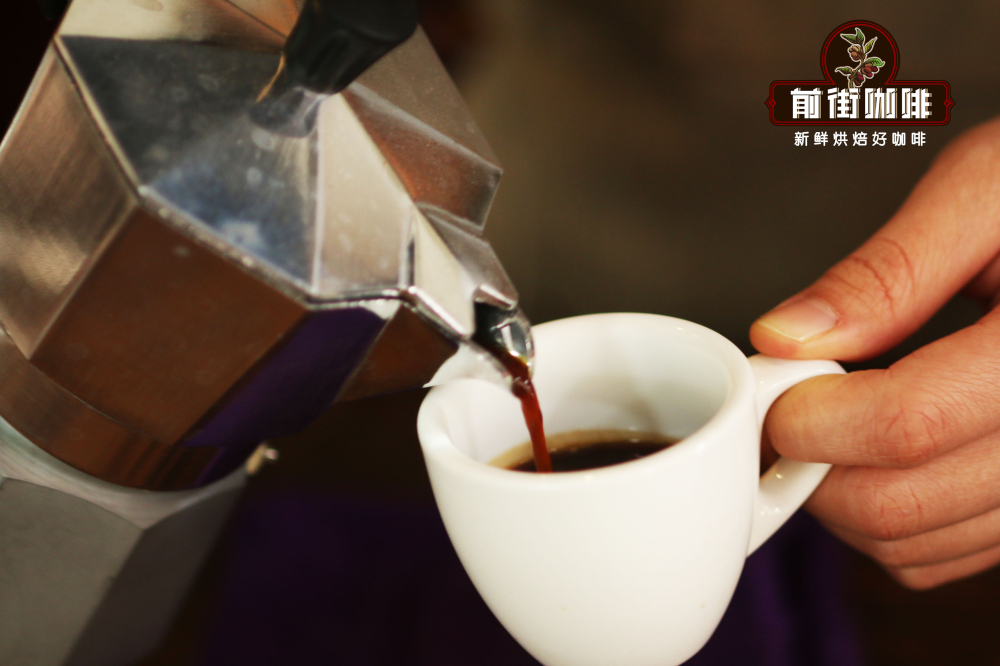
More and more people are pursuing coffee with a rich taste, and the moka pot perfectly satisfies this readily available, full-bodied need, gradually entering the public eye. Many bloggers online show off the thick crema brewed with a moka pot, which is truly tempting, but once you try it yourself, problems often arise—either no crema at all, or a burnt, bitter, sharp taste. What exactly is the problem? Could it be that the moka pot usage method is incorrect?
To brew a delicious cup of moka pot coffee, the first step is to understand how it works. The moka pot was born in the 1930s, and its inventor, Alfonso Bialetti, was inspired by watching his wife use a washing machine. At the time, the washing machine had two chambers, upper and lower, connected by a tube: the upper part held clothes to be washed, and the lower part contained washing liquid. After heating, the liquid in the lower part surged up through the tube and sprinkled onto the clothes.
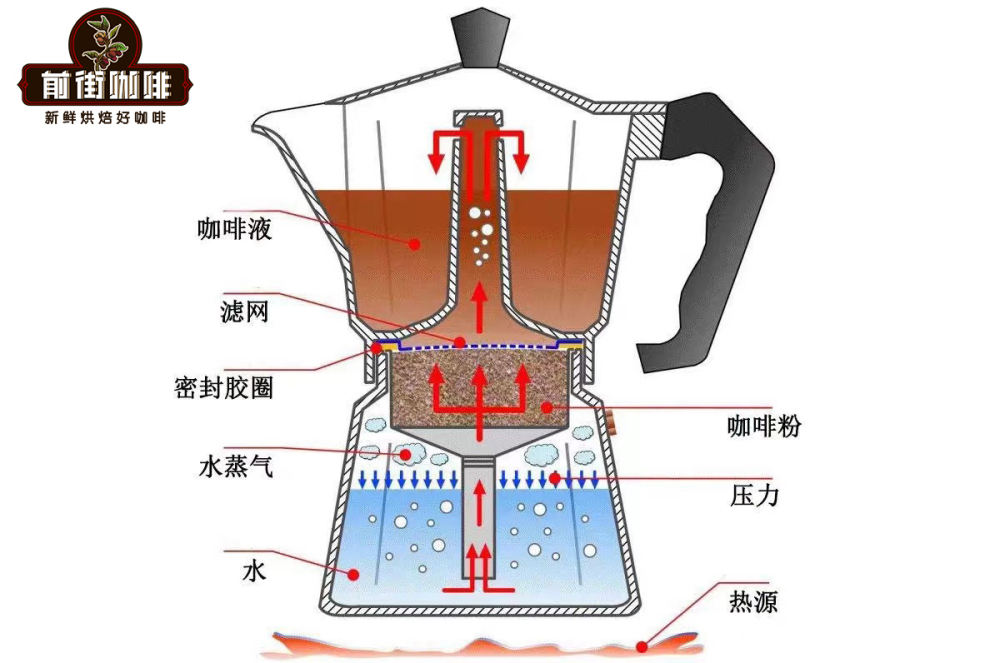
Inspired by this, Bialetti, with years of experience in aluminum processing, designed the moka pot. Its structure mainly consists of an upper chamber, a filter basket, a lower chamber, and a metal tube running from the lower chamber to the upper chamber.
The working principle of the moka pot is: heat the water in the lower chamber; when the water boils, it produces a large amount of steam. In the sealed small space, the hot water is forced into the metal tube connecting the upper and lower chambers, passes through the layer of coffee grounds in the middle, and finally spurts into the upper chamber.
Since the moka pot is so simple to operate—pour in hot water, add coffee grounds, heat, and coffee comes out—what exactly are its pros and cons?
If you often go to cafes, you'll notice that moka pots are rarely seen in commercial settings. The reason is that commercial espresso machines extract at a pressure of at least 9 bar or more, while a moka pot simply cannot generate such high pressure. So, is what a moka pot brews espresso? It is indeed very rich, but it is not the same thing as espresso extracted by an espresso machine.
Given that, what coffee beans are suitable for a moka pot?
Since the goal is the rich, full-bodied feel that a moka pot brings, compared to light to medium roast beans, medium-dark or dark roasts better meet this need. In addition, pressure extraction more easily produces crema, so it is recommended to prioritize fresh medium-dark roasted coffee beans. Here are several popular coffee bean recommendations for moka pots:
① Front Street Classic Blend Coffee: Dark roast, maximally highlighting the rich aroma of coffee, and easily extracting abundant, dense crema. It can be diluted with water to make an Americano, or made into a latte, with a cocoa milk flavor, and can also be used for specialty coffee. It is a highly cost-effective bean, available for purchase at the Front Street Taobao store or Front Street Tmall flagship store.
② Front Street Commercial Blend Coffee: Dark roast, maximally reproducing the taste of coffee shop offerings. Because of its rich crema, it is very suitable for moka pot extraction; whether made into an Americano or a latte, it has a rich, aromatic character.
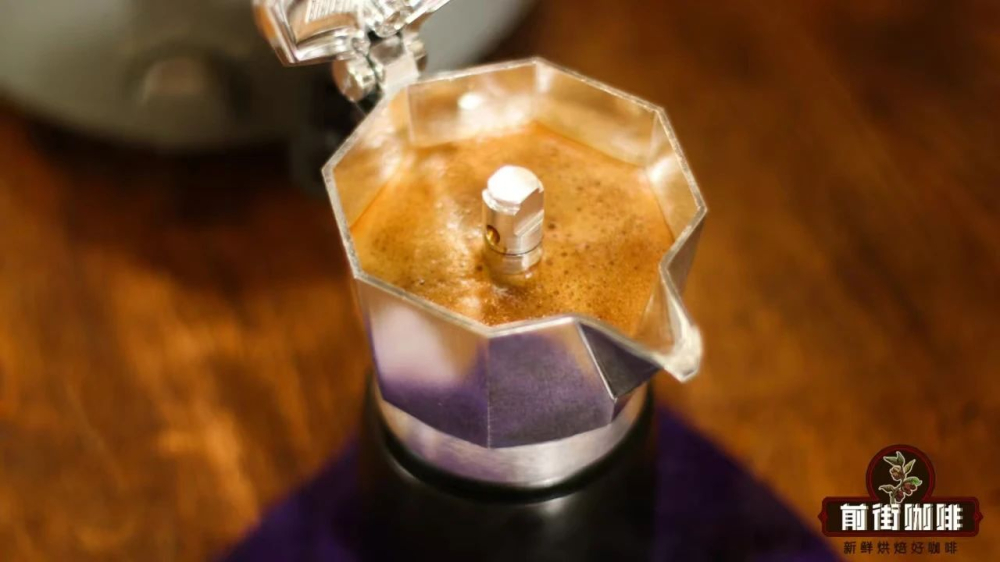
③ Front Street Brazil Queen's Estate Coffee: Medium-dark roast, with flavors of roasted peanuts, cocoa, chocolate, and cream. The crema extracted by the moka pot has a distinct nutty aroma, a balanced mouthfeel, and a soft fruit acidity.
④ Front Street PWN Golden Mandheling Coffee: Dark roast, presenting the sweet aroma of pine, dark cocoa, nuts, herbs, and caramel. When extracted with a moka pot, the crema is fine and smooth; the Americano is full-bodied with low acidity.
If using a moka pot to brew coffee, the grind size should be close to flour-like, with particle size between 0.3 mm and 0.55 mm, which is slightly coarser than espresso machine grounds. Since particle size is difficult to distinguish with the naked eye, you can confirm the grind size through the following two methods:
First, purchase a particle size ruler or moka-specific pre-ground coffee for reference and comparison; second, determine the grind size through continuous adjustment.
When the coffee liquid gushes out like a fountain, it indicates the coffee grounds are too coarse and the water encounters too little resistance; when you hear a low humming sound but the coffee liquid does not come up for a long time, immediately pick up the moka pot and move it away from the heat source, and take safety precautions.

Because during moka pot extraction, the relatively sealed and limited space of the lower chamber generates a large amount of steam, causing high pressure in the lower chamber, the entire operation process requires attention to safety. Anyone who has carefully observed a moka pot should notice that the lower chamber has a protruding hole—that is the moka pot's pressure relief valve. The function of the pressure relief valve is to prevent certain factors (such as too fine a grind) from causing excessive pressure inside the lower chamber, which could lead to an explosion.
Therefore, when preparing equipment and materials, Front Street recommends never letting the water in the lower chamber exceed the valve. Once water exceeds the valve, the pressure relief valve will lose its pressure-relief effect, creating a huge safety hazard.
The above content is compiled by CoffeeHunters, a coffee news website.


