







How Do Blended Coffee Beans Compare With Drip Bag Coffee?
Drip bag coffee is judged mainly by its roast date and the completeness of its label. Look for a recent roasting date, since flavor fades noticeably after about two months, and check that the packaging lists variety, grind size, origin and roaster. Drip bags also carry no flavorings or creamers, unlike many instant coffees.
Brewing follows a simple process: control the coffee-to-water ratio, watch water temperature, bloom the grounds first, then pour in stages. Early drip bag lines often used commercial blended coffee beans, while current specialty versions come from single estates across Ethiopia, Brazil and Indonesia, giving drinkers a range of regional flavors to compare.
Drip bag coffee, with its combination of convenience and flavor, has become a daily choice for many coffee lovers. But faced with a dazzling array of products, how do you pick fresh, high-quality drip bags? How do you brew them to fully release the aroma? This article starts with the key points of selection, explains the importance of the production date and completeness of information, compares the advantages of drip bags over instant coffee, and shares Front Street Coffee's flavor recommendations from multiple origins. It then breaks down the brewing steps in detail, including the coffee-to-water ratio, water temperature control, blooming, and pouring technique, to help you easily make a delicious cup of drip-bag pour-over.
For more specialty coffee information, welcome to follow: Front Street Coffee (Frontsteet Coffee)
How to Choose Drip Bag Coffee?
1. Check the production date: The freshness of freshly ground coffee powder is the most critical. Drip bag coffee is sealed immediately after roasting and grinding, so when purchasing, you should prioritize products with a more recent roasting date. If it has been more than two months, the flavor will decline noticeably.
2. Confirm the completeness of information: The relevant information about the coffee beans should cover the variety, grind size, origin, and roaster, etc.
Advantages of Drip Bag Coffee:
Compared with instant coffee, drip bag coffee has a fuller and richer flavor and offers diverse choices, allowing you to experience coffees from different origins, different processing methods, and different roast levels, and also to taste many specialty coffees with unique flavors.
1. Drip bag coffee does not contain additives such as flavorings or creamers, making it relatively healthier.
2. It is affordable, quick and convenient to brew, easy to carry, and requires no additional brewing equipment.
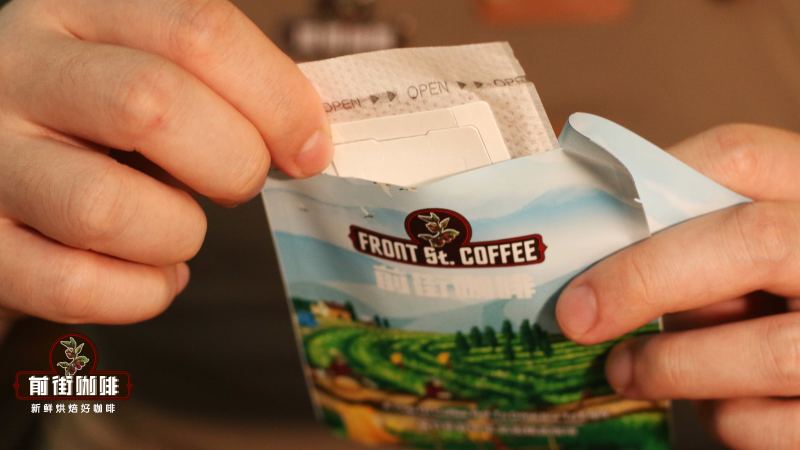
When most products on the market were still using commercial blended coffee beans, Front Street had already launched "filter-type drip bag coffee packs made with specialty estate coffee beans," with dozens of varieties. The Front Street drip bag coffee series covers flavors from multiple origins, such as the Front Street Huakui drip bag with Ethiopian floral and fruity notes, the Front Street Cerrado drip bag with Brazilian nutty flavors, the Front Street Mandheling drip bag with a rich Indonesian style, and the Front Street Diamond Mountain with a balanced Panamanian taste... Since the aroma of coffee beans dissipates faster after being ground into powder, all drip bags shipped by Front Street strictly ensure freshness, with the goal of allowing consumers to taste the rich aroma of coffee.
Brewing Method Sharing
1. The net content of coffee powder in drip bag coffee usually has a fixed label (generally 10 grams), which saves the trouble of a grinder and an electronic scale.
2. Next, solve the issues of water amount and water temperature. Consistent with pour-over coffee, use a coffee-to-water ratio of 1:15 to 1:16, so the brewed coffee liquid should reach 140 milliliters to 150 milliliters. The recommended water temperature is around 90°C. If you have a thermometer or a temperature-controlled kettle, use it first; if not, you can make a rough judgment—after the kettle boils, turn off the heat source and open the lid, let it sit for 2 to 3 minutes, and the water temperature will drop to about 90°C (at a room temperature of 28°C).
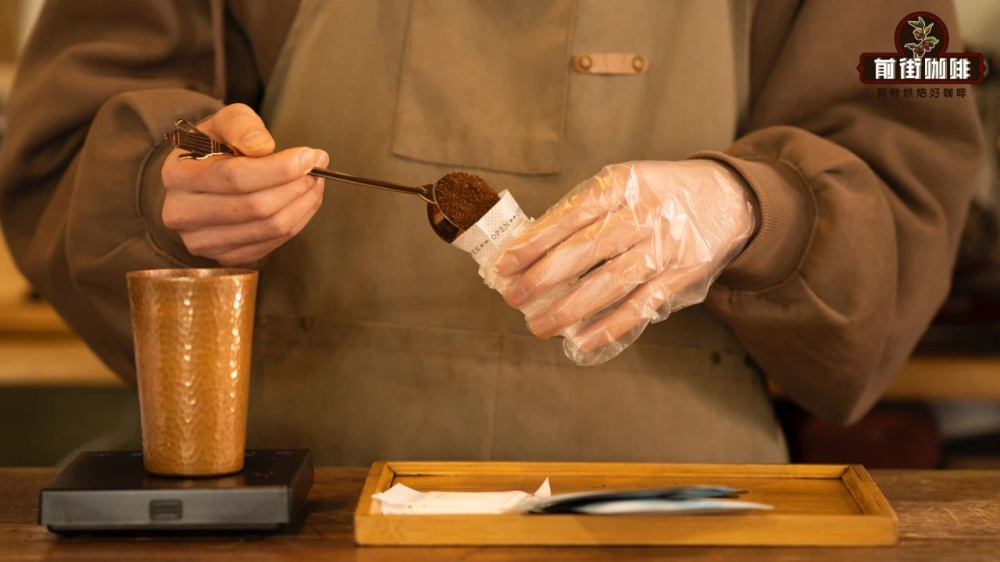
3. Once ready, first preheat the mug (or cup), take out the drip bag and tear open the sealed opening, unfold the "ears" on both ends of the filter bag, hang it on the rim of the cup, and gently shake it flat.
4. For the first pour, simply wet the coffee powder layer completely, then let it bloom for 30 seconds.
5. After the blooming ends, make the second pour. Use a small stream of water in a circular motion to fill it directly, and after the powder layer drops slightly, continue pouring to full. Repeat this until the coffee liquid in the cup reaches about 140 to 150 milliliters, then remove the drip bag and start enjoying it.
6. If you want to control the water amount more precisely, you can also pour 150 to 160 milliliters of water into the pouring kettle, pour all the water in the kettle during brewing, and remove the drip bag after the coffee liquid has completely flowed into the cup. The entire brewing process can be completed in about 1 minute.
Because drip bag coffee uses pre-ground coffee powder, its flavor dissipates faster than whole coffee beans. Therefore, if you want to fully enjoy the coffee's flavor, it is best to drink it as soon as possible.
The above content is compiled by CoffeeHunters, a coffee news website.


