







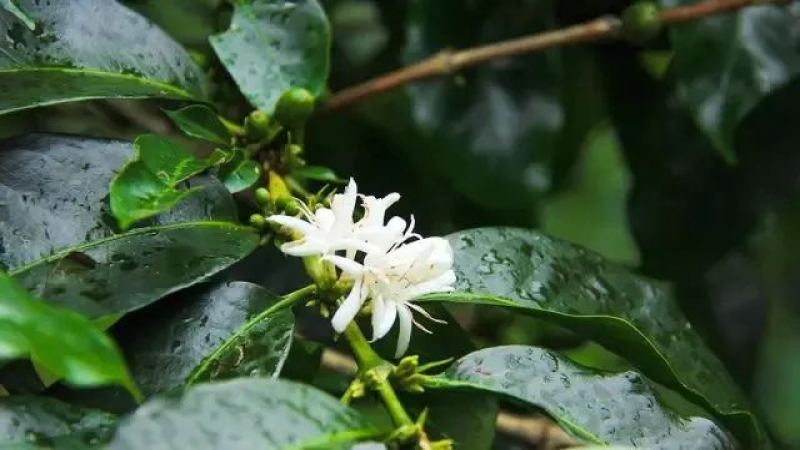
How Does Geisha Coffee From Panama Differ From Ethiopian?
Geisha is a coffee variety first found in 1931 in Ethiopia's Geisha forest, later sent to Kenya and introduced to Uganda, Tanzania, Costa Rica, and finally Panama in the 1970s. Panama Geisha became famous after Hacienda La Esmeralda separated it and won the 2004 BOP competition. Ethiopian Geisha tends to show floral and tea-like notes, while Panama Geisha is known for jasmine, citrus, and stone fruit.
The variety is one of the most expensive coffee lots sold, largely because yields are low and the tall trees are hard to harvest. Ethiopia's Geisha is often grown in forest or garden settings, giving a softer, more varied cup, while Panama's volcanic plots and precise processing push clarity and intensity. Origin, altitude, and processing explain most of the price gap.
Geisha is regarded as the crown jewel of specialty coffee and one of the most expensive coffee varieties in the world. Many people's first association with Geisha is the Panama Hacienda La Esmeralda, but the variety actually originated deep in the forests of Ethiopia. From its discovery in 1931, through its journey to Kenya, Uganda, and Costa Rica, and then to its stunning breakthrough in Panama, Geisha has traveled a long and winding road. This article will systematically trace the history of Geisha, compare the flavor differences between the two major producing regions of Panama and Ethiopia, introduce the grading system of Hacienda La Esmeralda, and present Front Street Coffee's diverse lineup of Geisha selections, giving you a comprehensive understanding of this legendary bean.
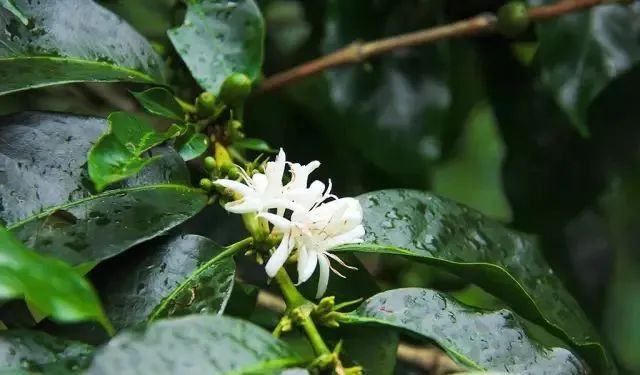
Geisha is one of the most expensive varieties in today's specialty coffee scene, and its quality is often ranked among the very best. When it comes to Geisha, Front Street believes most people's first association is Panama Geisha. There is also a shepherd's legend circulating among enthusiasts, which adds a touch of mystery to the bean, but that is ultimately just a story, not the true origin of Geisha. So where did Geisha actually come from? Today, Front Street will walk you through it carefully.
The History of Geisha Coffee
The pronunciation of Geisha is similar to the Japanese word for "geisha," which is why it also acquired the nickname "geisha coffee." This variety first grew in Ethiopia, but it was not appreciated in its place of origin because the tree is taller than ordinary coffee trees, so estates casually planted it in some small area as a windbreak. So how did Geisha become famous in Panama?
Due to low yield, tall plants, and difficult harvesting, Geisha was far less favored than Caturra and Catuaí, and in Panama it mostly served as a windbreak tree for other varieties. The turning point came in 2003, when Panama Geisha Hacienda La Esmeralda separated it from other varieties, and then in 2004 it won the BOP competition championship, which is when Geisha truly came into the public eye.
The Geisha variety was discovered in 1931 in the Geisha forest of Ethiopia, and was subsequently sent to the coffee research institute in Kenya; in 1936 it was introduced to Uganda and Tanzania, in 1953 Costa Rica introduced it, and Panama began cultivating it in the 1970s after Mr. Francisco Serracín of Don Pachi Estate obtained seeds from CATIE in Costa Rica. After that, it swept through the coffee world like a hurricane. This coffee revolution came with such force that even Jamaica Blue Mountain and Hawaii Kona, which had long occupied the throne of the coffee kingdom, had to yield somewhat. This wild variety native to Ethiopia, after countless battles, is now planted across major coffee-producing regions, and its most outstanding ambassador is none other than Panama's Hacienda La Esmeralda.
Since Hacienda La Esmeralda's Geisha became famous, estates growing Geisha have sprung up like a tide. Hacienda La Esmeralda's Geisha holds a revered position and broad recognition in the coffee world, but FrontStreet Coffee not only offers Hacienda La Esmeralda Geisha, but also purchases Geisha from other estates in Panama and even from other countries.
FrontStreet Coffee believes this is progress. Hacienda La Esmeralda is not the only one in the world studying Geisha; other estates are also expanding this field, and to FrontStreet Coffee, this is healthy market development. Therefore FrontStreet Coffee also continues to purchase Geisha coffee beans from other producing regions, such as Ethiopia Gesha Village Red Label, Colombia Blueberry Geisha, Costa Rica Mirazu Geisha, and Blue Mountain Geisha. Of course, there are also more than fifty single-origin beans from other regions, among which there are more than a dozen single-origin beans of Ethiopian local heirloom varieties. So when you come to Front Street, we believe you can taste coffees from around the world and experience the flavors of different producing regions.
First, let's look at Hacienda La Esmeralda's Geisha coffee
Hacienda La Esmeralda Estate
In 1964, American banker Rudolph Peterson retired and moved to Panama, buying Hacienda La Esmeralda in Boquete, initially focusing on dairy. Later, his son Price resigned from his job as a doctor to help his father run the farm, and in 1987 introduced Caturra and Catuaí coffee varieties, and in 1994 established a washing station, from then on having its own coffee processing plant. In 1996, they also bought the nearby Jaramillo Estate, which had a superior geographical environment and excellent flavors from its existing coffee varieties, and merged it into Hacienda La Esmeralda.
Jaramillo was favored by the Petersons precisely because the coffee beans originally planted there had pleasant orange and floral-fruity aromas, different from the usual taste of Panamanian coffee. After cupping coffee beans from different areas of the estate, it was found that the aroma came from an unknown coffee tree growing at the highest point of the estate. Because of its low yield, the previous owner had used it only as a windbreak tree, but it was discovered by the Petersons, who decided to plant and cultivate the coffee trees in that area separately. After winning the 2004 Panama Best of Panama (BOP) green bean competition, it went on to amaze, and later expert identification revealed that this coffee bean was in fact the Ethiopian Geisha variety. After that, the Peterson family devoted most of their energy to infrastructure development to support excellent lot separation and meticulous processing.
Hacienda La Esmeralda Geisha Grades
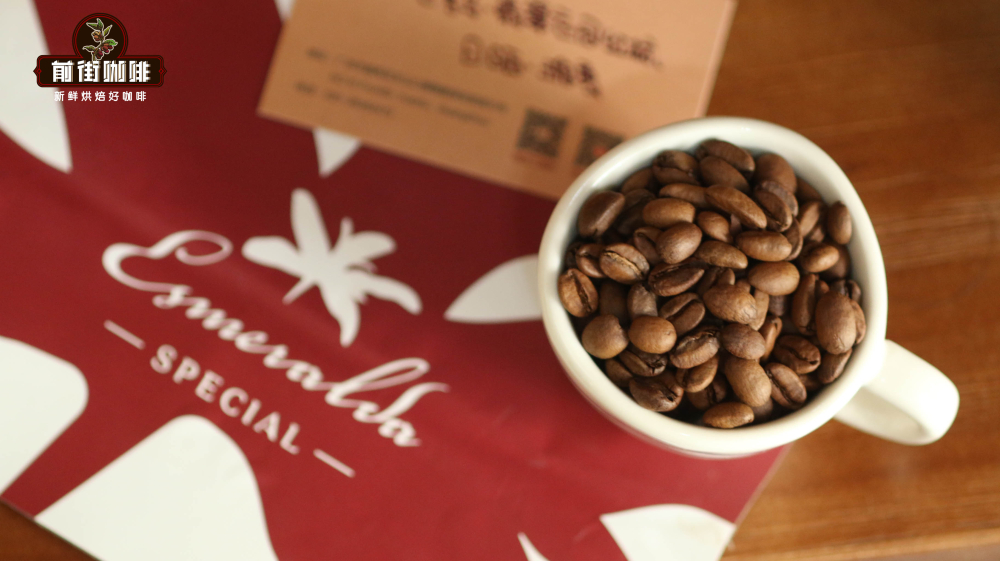
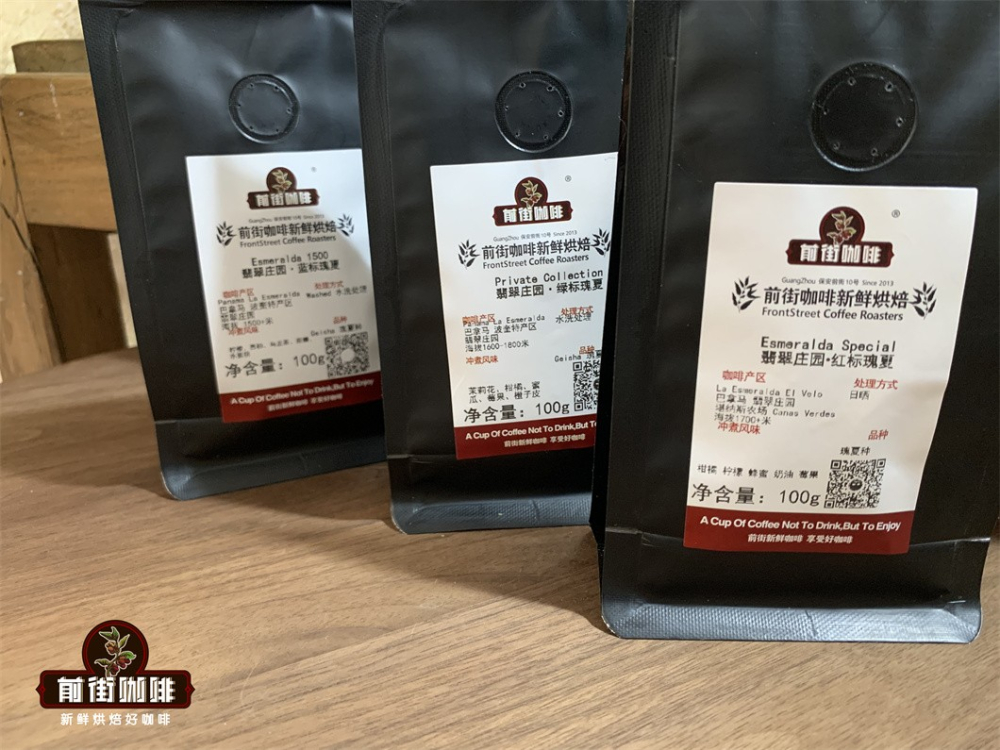
After years of experimentation, Hacienda La Esmeralda found that only Geisha grown above 1,400 meters can display its proper refined flavor. Therefore, the estate divides its Geisha coffee into three grades based mainly on growing altitude and secondarily on actual cupping results. Esmeralda Special is what we commonly call "Red Label." Red Label Geisha lots are grown at 1,600-1,800 meters, score above 90 points in cupping, and mainly come from the Jaramillo and Canas Verdes regions. Red Label lots may be washed or natural processed.
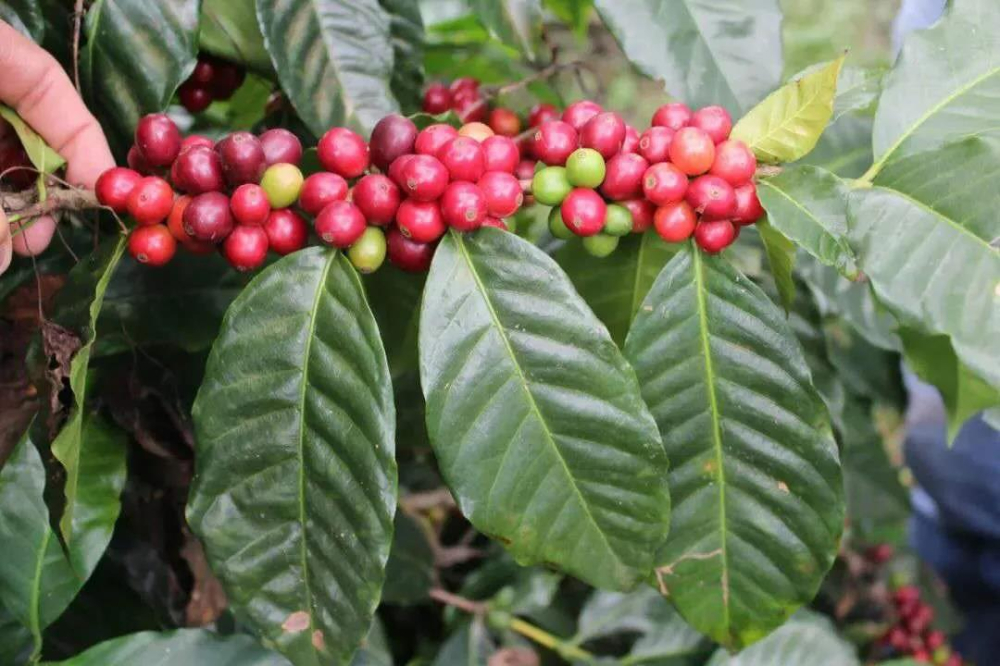
In the independent auction held each year by Hacienda La Esmeralda itself, only the Geisha lots from the divided plots that are put up for bidding are auction-level Red Label, so there are non-auction-level Red Labels sold on the market every year. Currently, FrontStreet Coffee sells Hacienda La Esmeralda non-auction-level natural Red Label Geisha coffee beans.
Private Collection, commonly known as Green Label, consists of Green Label Geisha lots that do not participate in auctions but are still of excellent quality. Green Label Geisha lots are grown at 1,600-1,800 meters and are mainly blends of lots from different plots such as Jaramillo and Canas Verdes.
Before 2021, Hacienda La Esmeralda's Geisha coffee was divided into three brands: Red Label, Green Label, and Blue Label, but in the first half of that year Hacienda La Esmeralda announced the cancellation of the Blue Label brand. In the second half of the year, Front Street discovered a Geisha coffee on the market called Las Rocas, and after rigorous investigation and cupping found that Las Rocas indeed came from Hacienda La Esmeralda, with a flavor highly similar to the former Blue Label.
Panama Hacienda La Esmeralda Geisha Flavor Description
[Red Label] Bright rose and citrus aromas, brown rice, berries, apricot, composite fruits, honey, thick juicy body, rich flavor layers, and pronounced sweetness.
[Green Label] On the palate, intense jasmine floral aroma and high sweetness, citrus, berries, juicy body, cream, green tea, orange peel, cantaloupe, with rich overall flavor layers and a lingering finish of floral and citrus notes.
[Blue Label] On the palate, soft acidity of lemon and grapefruit; after the temperature drops slightly, oolong tea, honey, and sugarcane sweetness return, with a clean, bright mouthfeel.
Colombia Geisha Coffee
The Herrera family of Colombia's "Finca La Esperanza" introduced Geisha coffee from Panama's Hacienda La Esmeralda in 2007. Although they initially encountered failure, after years of trial cultivation they won first place in April 2011 at the Specialty Coffee Association of America's Coffees of the Year (COTY) competition in Houston, USA.
Front Street Colombia Hanami flavor notes: red pepper, chamomile, mandarin, honey, almond
Costa Rica Geisha
In addition to Panama and Ethiopia, Costa Rica is also a relatively famous Geisha-producing region. Geisha was introduced to Costa Rica in 1953, even earlier than Panama. Panama began cultivating it in the 1970s after Mr. Francisco Serracín of Don Pachi Estate received seeds from CATIE in Costa Rica, and because the yield is extremely low and it must participate in auctions, this bean can truly be said to be hard-won.
Costa Rica's coffee-growing areas are mostly volcanic terrain, with fertile volcanic ash, mild and suitable temperatures, and stable and abundant rainfall, all of which are important factors in Costa Rica's production of excellent coffee. Costa Rica has been growing coffee for nearly two hundred years. As an important economic crop for the country, the coffee industry is very mature, and today there are also many newly established estates, many of which have the resources and willingness to grow the Geisha variety.
Floral aromas, tropical fruits, and intense sweetness—these are what Geisha has always brought us. Proper roasting allows it to deliver the fragrance of sipping a bouquet of fresh flowers. Perhaps you still do not know the story of Geisha. It was originally an ancient heirloom variety from Ethiopia, brought into Costa Rica's coffee experimental garden as a coffee sample and distributed to several small farms for small-scale trial planting.
Costa Rica Mirazu coffee flavor notes: jasmine aroma, on the palate raisin sweetness, strawberry gummy sweetness, and a nutty creamy mouthfeel.
Ethiopia Geisha Coffee
Ethiopia is the birthplace of coffee, and the Geisha variety is no exception. As mentioned earlier, the Geisha variety was discovered in 1931 and then gradually spread to the Americas and elsewhere, so Ethiopia is one of the most noteworthy Geisha-producing countries besides Panama. But unlike Panama and other American countries, Ethiopia has many varieties and is dominated by smallholder farming, making it almost impossible to distinguish whether something is the Geisha variety, and most are exported under the name "heirloom." Starting in 2008, Gesha Village owners Adam and Rachel spent three years searching and finally found an environmental system suitable for coffee growing at 1,900-2,100 meters altitude, with tropical rainforest, suitable climate, fertile forest soil, and a long-standing forest. Under the guidance and help of Mr. Willem Boot, the "godfather of Geisha," Gesha Village's coffee has repeatedly achieved excellent results in world competitions.
Gesha Village is completely different from the vast majority of Ethiopian farms. It is not a small farm but a large farm of more than 400 hectares, with its own washing station and laboratory, located in the southwest near the Sudanese border. Gesha Village divides the farm into 8 blocks and 3 main Geisha varieties. The Geisha selections came from the native coffee forest 20 kilometers from the estate, which is also the source region of the Panama Geisha variety.
In addition to the two Geisha varieties Gesha 1931 and Gori Gesha, Gesha Village also has a heirloom variety called Illubabor. Even the top estates produce coffees with quality differences. In order not to disappoint Gesha Village's "reputation for flavor," Gesha Village implements a strict internal grading system, dividing coffees into five grades based on factors such as cupping score and yield: Auction, Gold Label, Red Label, Green Label, and Chaka lot Geisha. Front Street's Gesha Village Red Label is a fully traceable lot with typical Gesha Village flavor; its flavor intensity and complexity are slightly weaker than the Gold Label lot, making it a single-origin lot with very high value for money.
The flavor expression of Gesha Village's Geisha coffee differs from that of Panama Hacienda La Esmeralda. Panama Hacienda La Esmeralda's washed Geisha mostly features refined floral aromas, tea-like notes, and almond-nutty tones, while its natural Geisha mostly features rich fruit tones and slight floral notes, and when cooled reminds one of ginger flower and citrus. Gesha Village's coffee is mostly based on yellow stone fruit flavors, reminding one of yellow peach and so on, with medium-high sweetness, and the better-performing lots even have toffee flavors.
To highlight the characteristics and aroma of Geisha coffee beans, Front Street recommends light roasting, which better brings out the bean's own characteristics; too dark a roast will diminish the floral aroma and fruit acidity. Of course, this should also be adjusted according to the characteristics of the coffee beans and the roaster's understanding of the beans themselves.
FrontStreet Coffee Brewing Suggestions
For coffee brewing, Front Street recommends using freshly roasted coffee beans, as this allows you to experience the coffee's rich flavors to the greatest extent. The coffee beans shipped by FrontStreet Coffee are all within 5 days of roasting, because Front Street deeply understands that bean freshness greatly affects flavor. Front Street's roasting philosophy is "freshly roasted good coffee," so that every customer who places an order receives the freshest coffee when it arrives. The resting period for coffee is about 4-7 days, so when the customer receives it, it is at its best flavor. Of course, some customers need Front Street to help grind the beans, and that is fine too, but Front Street reminds you that once coffee beans are ground in advance, they need to be brewed promptly, because ground coffee oxidizes quickly after contact with air and the coffee's flavor will dissipate faster, making the flavor less good. Therefore Front Street recommends grinding fresh and brewing fresh, so you can better taste the coffee's flavor.
Geisha Coffee Bean Brewing:
Dripper: Hario V60 Water temperature: 90°C Dose: 15 g Coffee-to-water ratio: 1:15 Grind size: medium-fine (BG#6S) (80% passing through a Chinese standard No. 20 sieve)
FrontStreet Coffee brewing method: three-stage extraction method
Use 30 grams of water for a 30-second bloom, then pour in a slow circular stream until 125 grams and pause for a stage; when the water level drops and the coffee bed is about to be exposed, continue pouring until 225 grams and stop pouring. After the coffee finishes extracting, remove the dripper. Start timing from the beginning of pouring; the total extraction time is 2'00".
Next, pick up the entire cup of coffee and swirl it to mix evenly, then pour it into a cup for tasting.
For professional coffee knowledge exchange and more coffee bean information, please follow FrontStreet Coffee.
The above content is compiled by CoffeeHunters, a coffee news website.


