







Yunnan coffee has attracted much attention in recent years, evolving through multiple stages from the original Typica and Bourbon to the now-dominant Catimor. This article reviews the planting history and variety evolution of Yunnan coffee, explains the meaning of the "small bean" concept, and focuses on the coffee beans selected and cultivated by Front Street Coffee in Baoshan and Lincang. Through cupping, Front Street Coffee found that Yunnan small beans present a balanced profile interweaving nutty, herbal, brown sugar, and plum-like acidity. The article also includes the V60 three-pour brewing parameters used at Front Street Coffee's stores, helping coffee enthusiasts recreate the flavor of a cup of Yunnan everyday beans at home.
At the Front Street Coffee Dongshankou store, whenever guests bring up Yunnan coffee beans, the conversation always extends to Yunnan coffee's past, present, and future. Over the past two years, "the rise of Yunnan coffee" has become a hot topic in the industry, and Front Street Coffee often engages in discussions with customers about it.
Yunnan Coffee Development History Overview
From a chronological perspective, the evolution of Yunnan coffee can be roughly divided into three milestones: the 1960s, the 1980s, and the period after 2000.
The earliest written record of coffee cultivation in Yunnan dates back to 1904. French missionary Tian Deneng introduced the first batch of Typica coffee trees in Zhugula Village, Binchuan County, which is regarded as the starting point of coffee cultivation in Yunnan.
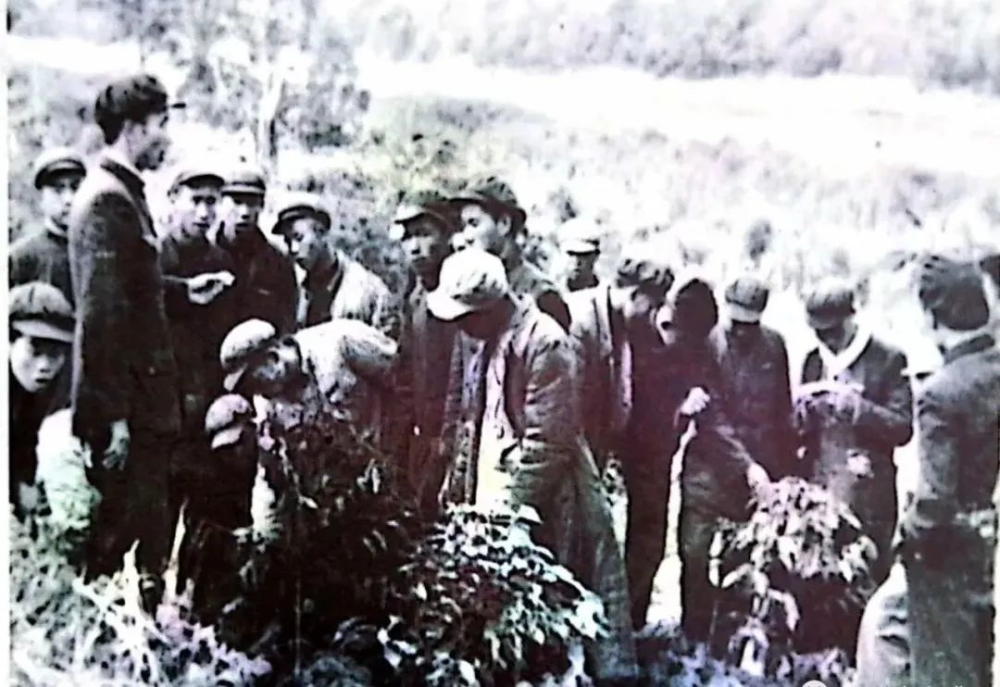
Entering the 1960s, the scale of coffee cultivation in Yunnan expanded further. In 1952, in the early days of New China, agricultural academy expert Ma Guojin led a team to formally promote large-scale coffee planting, with products mainly supplied to the Soviet Union. As early as 1937, patriotic overseas Chinese Liang Jinshan brought back a batch of seeds from Myanmar to Baoshan, opening up the coffee-growing area of Lujiangba. At that time, the varieties planted in Yunnan were all Typica and its variant Bourbon, and the planting area once expanded to 50,000 mu.
Afterward, global leaf rust disease struck Yunnan's coffee-growing regions, causing massive coffee tree deaths and a sharp shrinkage of the planting area. It was not until the 1980s, after the reform and opening-up, that Yunnan coffee gradually stepped onto the international stage. In 1988, Nestlé and other foreign enterprises established branches in China and supported Yunnan's coffee industry on multiple levels. They not only introduced disease-resistant, high-yield varieties such as Catimor, but also promised to purchase Yunnan coffee beans as raw materials at U.S. futures prices. These actions significantly expanded the planting scale and mobilized the enthusiasm of coffee farmers, while also establishing Catimor's position as the main variety replacing traditional Typica.
After 2000, as various domestic industries developed rapidly and the concept of specialty coffee continued to spread, Yunnan coffee also became increasingly scientific in seed selection, cultivation, harvesting, and processing. Today, through various sources of information, one can see that Yunnan coffee is steadily advancing toward specialization.
What Variety Does Yunnan Small Bean Belong To
"Small bean" refers to the smaller-beaned category within the Arabica species, used to distinguish it from the medium-beaned Robusta grown in Hainan. Front Street Coffee has also previously mentioned that the earliest coffee trees introduced to Yunnan all belonged to the two pure Arabica varieties, Typica and Bourbon. Arabica grown at high altitudes has layered, rich sweet-and-sour aromas and is widely recognized as a high-quality variety. However, its disease resistance is extremely weak and its yield per plant is also low, so most local farmers switched to growing the higher-yielding Catimor.
Although Catimor is classified as Arabica, genetically speaking it carries about 25% Robusta lineage. Thanks to this, Catimor has strong disease resistance and considerable yield, and the roasted coffee beans are rich in oils, but they also carry the "devil's flavor" unique to Robusta. In cupping performance, it often falls short of pure Arabica varieties grown at the same altitude, such as Caturra and Bourbon. To improve the overall quality of Yunnan coffee, variety renewal is imperative. In recent years, new varieties such as Geisha have also begun trial planting in Yunnan. But Front Street Coffee needs to remind readers that changing varieties is not achieved overnight: a new variety needs 3 to 4 years to flower and bear fruit, 4 to 5 years to reach mass production, and 2 to 3 generations to adapt to a new environment, with the entire process taking about 15 to 20 years.
Front Street Coffee believes that understanding Yunnan coffee should begin with the flavor characteristics of its producing regions. Therefore, the Yunnan coffee everyday beans launched by Front Street Coffee come from the Catimor variety in Baoshan, using the washed process. Washing can more clearly present the flavor direction of the coffee beans themselves, and most of Front Street Coffee's everyday bean series use the washed method.
So, besides Catimor, are other varieties now grown in Yunnan? The answer is yes. The coffee trees selected and cultivated by Front Street Coffee in Lincang, Yunnan, in 2013 are precisely the ancient variety Typica. After 5 to 6 years of cultivation, in 2020 Front Street Coffee finally harvested the first batch of fruit, used the natural process, and named it "Front Street 2013."
Yunnan Small Bean Coffee Flavor Description
Yunnan coffee is not like African beans with bright floral and fruity acidity, nor does it have the rich chocolate notes of American beans, and it is even less like the spice aroma of Indonesian beans. Front Street Coffee believes that the flavor of Yunnan small beans follows a balanced, middle-of-the-road path, possessing acidity, sweetness, and bitterness alike. Therefore, Front Street Coffee chooses a medium roast to highlight the chocolate aroma while retaining some acidity. According to Front Street Coffee's cupping, the Yunnan small bean everyday beans show the sweet aromas of nuts, herbs, and brown sugar, along with melon-like sweetness and plum-like acidity, with an overall balanced mouthfeel.
Below, Front Street Coffee brews a cup of its own roasted Yunnan small bean everyday beans in the style of its store service. Considering that Yunnan small beans lean toward a balanced taste, meaning they should not have overly high acidity or heavy bitterness, Front Street Coffee uses a V60 dripper with a medium-fine grind size and medium water temperature for extraction.
Dripper: V60
Water temperature: 90°C
Grind size: 80% passing rate on a No. 20 standard sieve
Coffee-to-water ratio: 1:15
Coffee dose: 15 grams
With three-pour extraction: pour the ground coffee into the filter paper, start from the center and pour 30 grams of water to bloom for 30 seconds, maintaining a small steady stream in circular motions from inside to outside throughout; pour 95 grams of water in the second pour, and after the coffee liquid has basically drained, begin the third pour of 100 grams until all has filtered through, then remove the dripper. The total duration is about 2 minutes, with a margin of about 10 seconds.
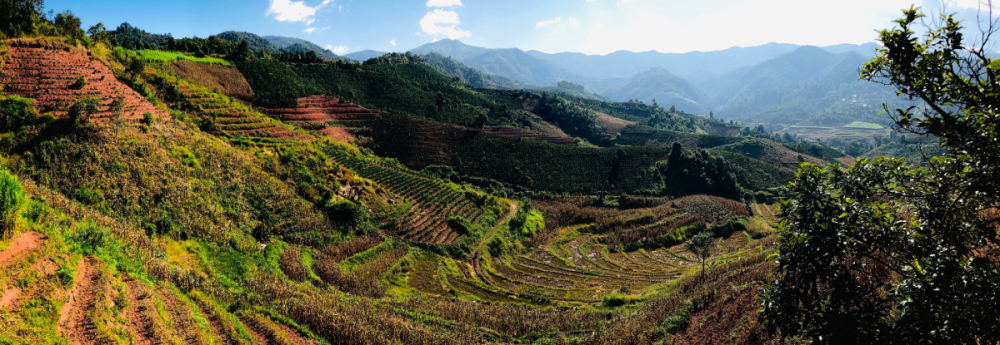
The small bean Catimor coffee has a dry aroma of nuts and berries. On the palate, one can feel the sweet aromas of nuts, herbs, chocolate, and brown sugar, accompanied by a balanced plum-like acidity, with a faint fruity acidity lingering in the aftertaste.
For professional coffee knowledge exchange and more coffee bean information, please follow Coffee Workshop (WeChat public account: cafe_style)
For more specialty coffee beans, please add the private WeChat of Front Street Coffee (FrontStreet Coffee), WeChat ID: qjcoffeex
The above content is compiled by CoffeeHunters, a coffee news website.


