







How Did Kona Coffee Become Hawaii's Signature Crop
Kona coffee grows on the west coast of Hawaii's Big Island, the only U.S. state with commercial coffee farming, and the islands together produce more than 8 million pounds a year. Volcanic rock soil and a family-farm model yield a smooth cup with nutty sweetness and balanced acidity, which is why it is often compared with Jamaican Blue Mountain.
Typica arrived from Guatemala in the 19th century, roughly twenty years after U.S. independence, when the mainland had no climate for coffee and Hawaii filled the gap. A five-tier coffee grading system and hand-picking tradition followed. Front Street's brewing tests cover five devices, including V60, siphon, AeroPress, French press, and KONO, along with roasting curves.
Kona coffee comes from the Big Island of Hawaii, the only U.S. state where coffee is commercially grown, with annual production exceeding 8 million pounds. Volcanic soil, island climate, and the family-farm model together shape its signature flavor—smooth and aromatic, with nutty sweetness and balanced acidity. This article traces Kona coffee's development from the introduction of Typica in the 19th century to Queen Farm's award-winning status, analyzes its five-tier grading system and hand-picking tradition, and provides a complete record of Front Street Coffee's brewing experiments using five devices—V60, siphon, AeroPress, French press, and KONO—along with roasting curves and flavor descriptions, offering coffee enthusiasts a systematic guide to Kona coffee.
The volcanic rock soil of Hawaii's west coast is rich in minerals, delivering abundant nutrients to the coffee trees and forging the deep, sweet foundation of local coffee. The entire Hawaiian archipelago produces over 8 million pounds of coffee each year, and among all fifty U.S. states, only here possesses the conditions for coffee cultivation. Front Street Hawaiian coffee is smooth on the palate with a full aroma, its nutty notes particularly appealing, and its acidity kept in a balanced, moderate range. When it comes to interpreting coffee flavors, Front Street Coffee (FrontStreet Coffee) has always believed that every drinker has their own answer, and what Front Street Coffee (FrontStreet Coffee) wants to do is help friends just stepping into the world of specialty coffee build a bridge between the taste in the cup and their own palate.
Hawaiian Coffee
Twenty years after the United States declared independence, the coffee trade was still dominated by commercial beans, with Europe profiting handsomely, and America naturally wanted a share of the coffee map. Yet the mainland lacked the natural conditions to grow coffee, and Hawaii's annexation neatly filled that gap. Typica was subsequently introduced from Guatemala and planted across the islands. At that time, Jamaican Blue Mountain coffee had already undergone sixty years of development with a highly mature system, and Hawaii, being an island too, naturally looked to it as a reference. For this reason, Blue Mountain coffee and Kona coffee are often tasted and compared side by side.
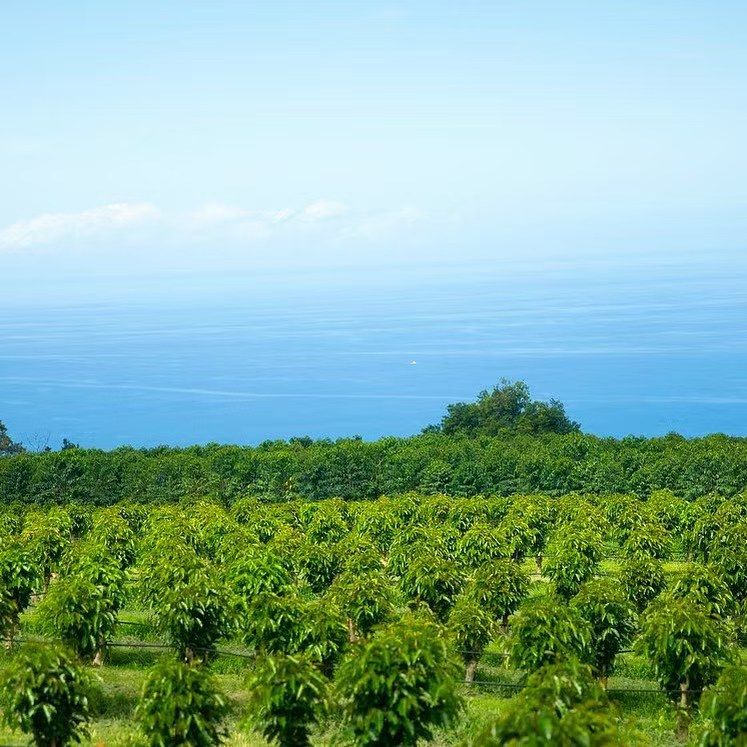
As an overseas archipelago of the United States, Hawaii sits in the middle of the Pacific Ocean. Among the many islands, only the Big Island has the conditions for coffee cultivation—not only because the Big Island has the highest elevation in the archipelago, but also because its climate is most suited to coffee growing, and the island has few hybrid varieties to interfere, keeping the growing environment remarkably pure.
Although the Big Island has the highest elevation in the archipelago, the coffee-growing belt actually spans only 300 to 1,100 meters. Measured against the elevation threshold often cited for specialty coffee, Kona does not qualify. Yet almost no one would exclude Kona from specialty coffee, which sounds somewhat contradictory. Front Street Coffee (FrontStreet Coffee), when chatting with peers in the industry, often remarks that although the concept of specialty coffee has a seemingly clear set of standards, there are always some special beans that can break through the framework—and that is precisely what Front Street Coffee (FrontStreet Coffee) finds most fascinating about coffee.
Although Kona coffee from the Big Island is the most famous, coffee is now grown on every major island across more than 950 farms, with a harvested area exceeding 7,900 acres. Hawaii is warm year-round with ample sunshine, fertile volcanic soil, rolling hillsides, gentle and calm trade winds, and abundant rainfall—these conditions combined elevate Hawaiian coffee to the ranks of the world's finest.
In 1813, the first coffee plants were brought to Oahu, though at the time sugar crops held far greater status among farmers than coffee. By the late 1820s, the Bourbon variety was introduced to the Big Island, and over the following decade, the first coffee-focused estates were established one after another.
However, the early path of Hawaii's coffee industry was far from smooth. In 1858, blight brought coffee production on Kauai to a complete halt. Then came competitive pressure from the sugar industry, as landowners switched from coffee to sugarcane for higher returns. These factors led to large numbers of plantations being abandoned and subsequently cut into small farms. In 1898, the United States began administering the islands and removed the protective tariff on coffee, further shrinking the market. The result was more farmers switching to sugarcane. It was not until sugar prices fell in the 1980s that the coffee industry saw a turnaround.
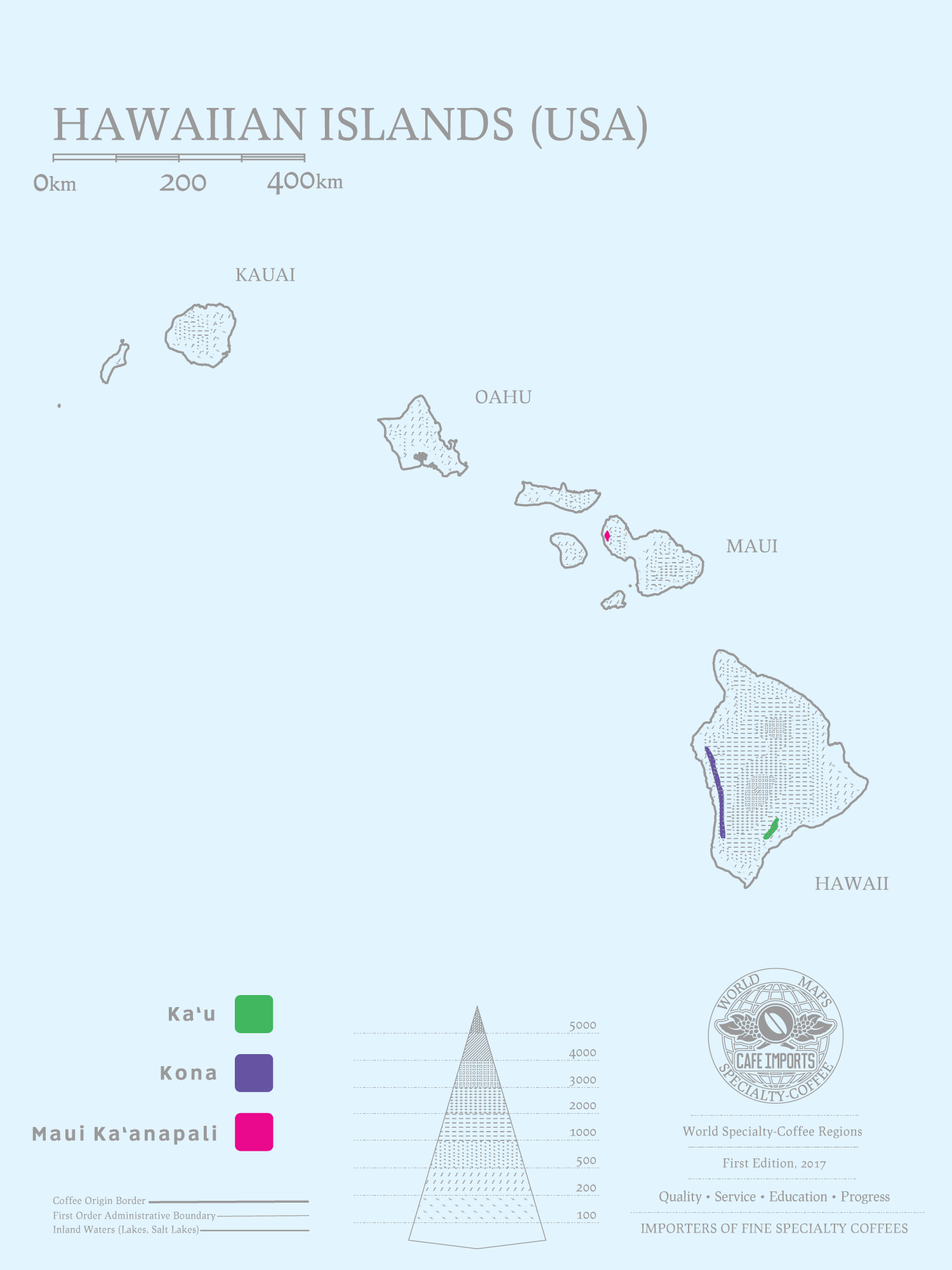
Currently, the islands are divided into 12 coffee-growing regions, with Kona being the most well-known. Due to limited production and high production costs, against the backdrop of rising demand for specialty coffee year by year, market Kona prices are approaching those of Jamaican Blue Mountain, and top-quality Kona beans are increasingly difficult to purchase. Although Hawaiian coffee is priced steeply, its traceability is quite outstanding.
Kona Coffee Grading System
Kona coffee beans are actually subdivided into five grades. The top three are the most common, in order: Extra Fancy, Fancy, No.1, Primary, and Peaberry (round beans, colloquially known as male beans—because some coffee enthusiasts prefer them, they are specially sorted out and can fetch a higher price; about 5% of Kona coffee beans are of the Peaberry type). Apart from Peaberry being specially sorted, the other four grades are classified by bean size, weight, and defect ratio.
The superior Front Street Hawaiian Kona has moderate acidity with a hint of wine-like fragrance, a very rich mouthfeel, and an irresistible aroma.
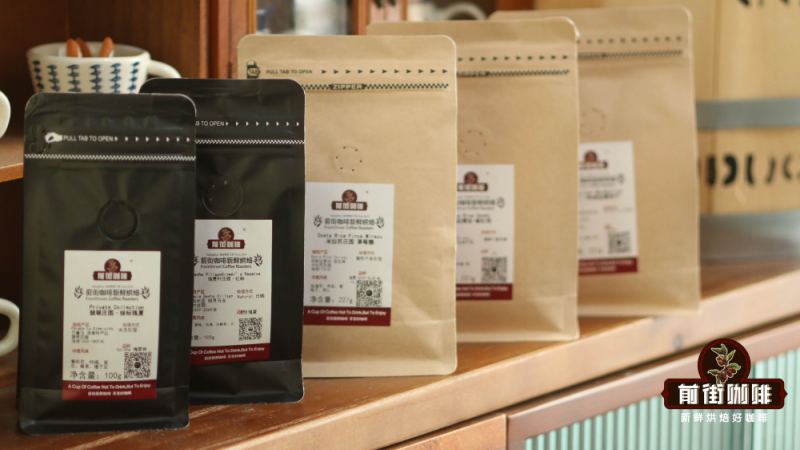
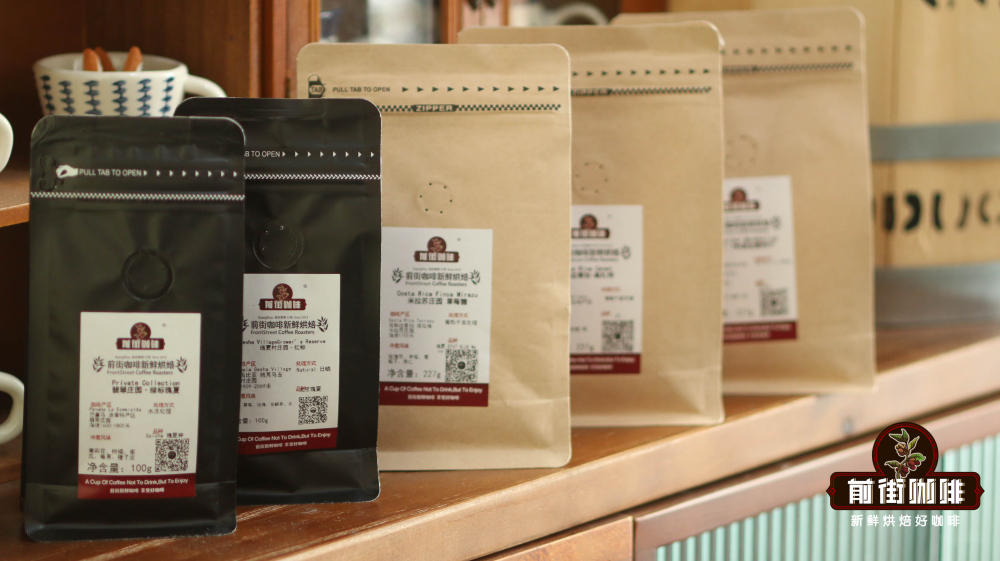
Front Street Hawaiian Kona Coffee
Before Kona green beans are exported, numbered tags are sewn onto the burlap sacks to indicate they have passed certification by the Hawaii Department of Agriculture, accompanied by an official identification seal—one of the reasons for its higher price. Kona coffee's market price is second only to Blue Mountain globally. Moreover, from sowing and harvesting to washed processing, sun-drying, and hulling/polishing, nearly every step of Kona coffee relies on manual labor, which limits annual production. Today, Hawaii 100% Kona coffee and Blue Mountain coffee are jointly regarded as synonymous with premium coffee.
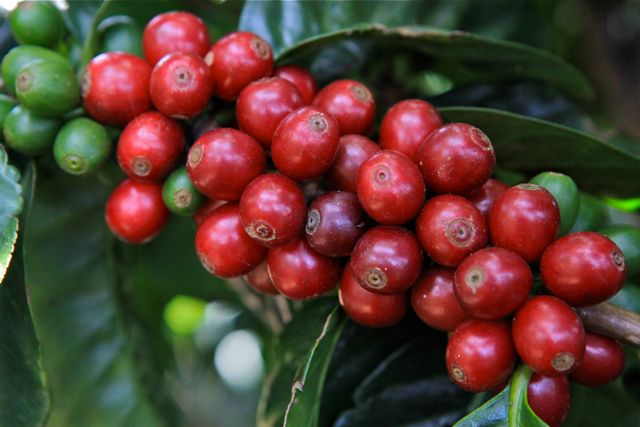
The exceptional natural conditions of the Kona region nurture Arabica coffee, making it one of the highest-yielding coffee plantations in the world. Beyond stable quality, nourished by its unique terroir and climate, the coffee's flavor is exceptionally rich. Coffee beans from the Kona region are outstanding in appearance—plump, lustrous, and smooth—earning the reputation of "the most beautiful coffee beans in the world."
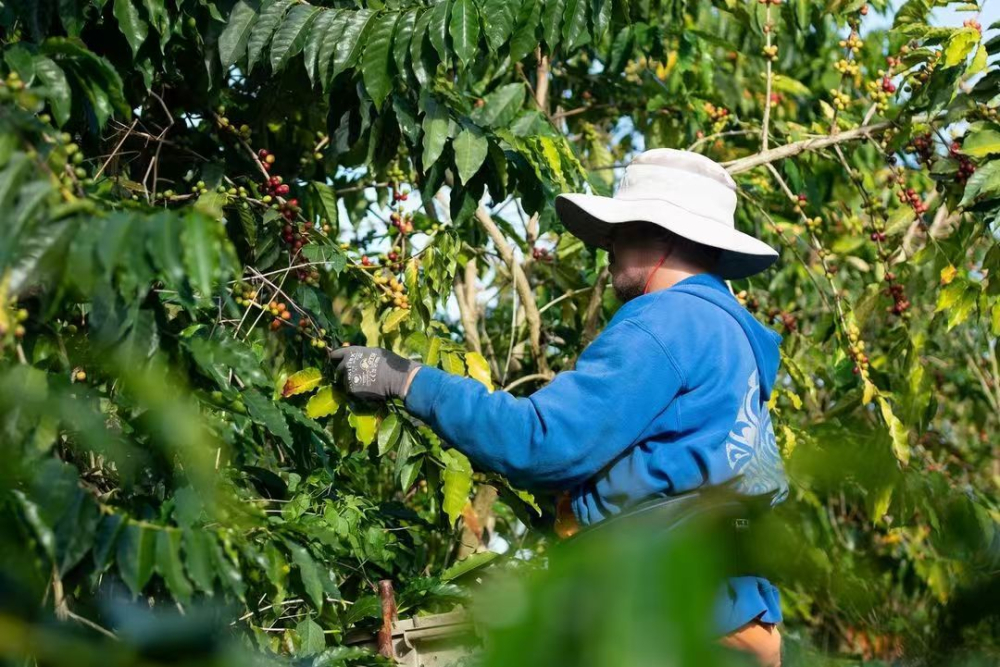
Most coffee trees in the Kona region grow on volcanic slopes, able to draw abundant nutrients from the soil, and combined with manual cultivation techniques, each bean presents a unique appearance. Kona coffee ground and brewed from such beans is silky-smooth on the palate, richly aromatic with alluring nutty notes and moderate acidity—as captivating as the colorful scenery of the Hawaiian islands, with an equally lingering finish.
Kona coffee cultivation has long been carried out on a family basis. The harvest season runs from late August each year to January of the following year, with farmers picking ripe cherries in batches and then processing them into coffee beans. Initially only men were allowed to work in the coffee fields, but later women also participated. Hawaiians tended to rely on family members rather than hired labor to complete production, so it was not uncommon for a household to raise eight or nine children at the time. Subsequently, new immigrants from the Philippines, the U.S. mainland, and Europe arrived in Hawaii to take up coffee farming. Over time, Hawaii developed a social atmosphere centered on family culture while also being adept at absorbing outside influences—which has become a distinctive local characteristic.
Queen Farm
This Front Street Hawaiian Kona coffee that Front Street sourced comes from Queen Farm. In the 2009 and 2011 Gevalia (Hawaii KONA cupping competition) Cup competitions, the estate won runner-up honors. Seventy percent of its harvest reaches the top Extra Fancy specialty bean level, making it a farm renowned for high quality. Even its slightly lower-grade specialty beans possess an aroma not inferior to Extra Fancy beans, which roasting industry professionals marvel at and praise endlessly.
Currently, the Hawaiian coffees commonly found on the market, besides the Kona region of the Big Island, also include coffee estates emerging on Maui, Kauai, and Molokai. Common Hawaiian coffee varieties include Typica, Mocca, and Catuai, among others.
Front Street Hawaiian Kona Coffee Beans
Region: Kona growing region
Estate: Queen Farm
Elevation: 1100m
Variety: Typica
Processing method: Washed
Roasting Suggestions
Front Street Hawaiian Kona, similar to Front Street Jamaican Blue Mountain coffee, is a lower-density bean, so the drop temperature should not be too high. When sweetness begins to release, the bean color turns pale yellow; because of its higher moisture content, sufficient steaming time is needed. The coffee beans are clean and refreshing with a solid, substantial feel. Kona is not suited to dark roasting; Front Street Coffee (FrontStreet Coffee) recommends a medium-light roast.
Machine: Yangjia 800N, 550g green beans charged
Charge temperature: 200℃
Yellowing point: 5'35'', 150.1℃
First crack: 9'30'', 187℃
1'50'' development after first crack, dropped at 193.4℃
When the drum temperature rises to 200°C, charge the beans, open the damper to 3, and after one minute adjust the heat to 150°C, keeping the damper unchanged. Roast until 5'35'', at 150°C, when the bean surface turns yellow, the grassy smell completely dissipates, and the dehydration phase ends; adjust heat to 140°C, damper to 4;
At 9'30'', the bean surface shows ugly wrinkles and dark streaks, and the toasty bread aroma clearly turns to coffee fragrance—this can be defined as the prelude to first crack. At this point, listen carefully for the sound of first crack. At 9'30'', first crack begins; reduce heat to 70°C, open the damper fully (adjusting heat requires great care—not so low that there is no cracking sound), turn off the heat at 182°C, and drop at 193.4°C.
【Front Street Hawaiian Kona Coffee】Brewing Methods
Front Street Coffee (FrontStreet Coffee) experimented with five different brewing tools—V60 dripper, siphon, AeroPress, French press, and KONO—to compare the flavor differences among them.
1. Hario V60
Water temperature: 90℃
Dose: 15g
Coffee-to-water ratio: 1:15
Grind size: fine sugar (80% passing through China standard No. 20 sieve)
Brewing method
Bloom with 30g water for 30 seconds, then pour in a slow circular stream until 125g for a split, and when the water level drops and is about to expose the coffee bed, continue pouring until 225g and stop. When the water level drops and is about to expose the coffee bed, remove the dripper. (Timing starts from the beginning of the bloom.) Total extraction time: 2'00''.
Flavor description
Balanced and warm osmanthus honey sweetness with an elegant, full yet not heavy mouthfeel. The brewed coffee gives off mulberry aromas that bring a sweet happiness, with a smooth malt note in the finish; when cooled, it's like a cup of mulberry tea.
2. Siphon
Dose: 20g
Coffee-to-water ratio: 1:10
Grind size: BG-6M
Brewing method
Add 210g water to the lower chamber; when the lower chamber water reaches 90℃, insert the upper chamber tightly. When the upper chamber water reaches 90℃, add the coffee grounds and stir to allow full contact between grounds and water. After 30 seconds, stir again to break the crust. At one minute, remove the heat source and wipe the lower chamber with a dry cloth to accelerate the return of the coffee liquid.
Flavor description
Chestnut, caramel, almond, hazelnut, plum, toffee; the overall mouthfeel is relatively round with a pronounced aroma.
3. AeroPress
Water temperature: 88℃
Dose: 10g
Coffee-to-water ratio: 1:15
Grind size: BG-5R
Brewing method
Pour directly to 147g, then press the grounds with a cross pattern 3 times. At 50 seconds, stir 3 circles. At 1 minute 30 seconds, press out. Total extraction time: 1 minute 41 seconds.
Flavor description
Sandalwood, herbal, chocolate, plum, peach, nut, cream; round mouthfeel, rich layers, soft fruit acidity.
4. French Press
Water temperature: 88℃
Dose: 17g
Coffee-to-water ratio: 1:13
Grind size: BG-5R
Brewing method
Pour directly to 223g, stir 5 circles, then at 50 seconds stir 4 more circles. At 1 minute, insert the plunger and press down the grounds. Total time to fully pour out the coffee liquid: 1'31''.
Flavor description
Brown sugar, nut, cream, herbal, dark chocolate; slightly oily mouthfeel that is very smooth with high sweetness.
5. KONO Dripper
Water temperature: 88℃
Dose: 15g
Coffee-to-water ratio: 1:15
Grind size: BG-6M
Brewing method
Bloom with 30g water for 30 seconds, then pour in a slow circular stream until 125g for a split, and when the water level drops and is about to expose the coffee bed, continue pouring until 225g and stop. When the water level drops and is about to expose the coffee bed, remove the dripper. (Timing starts from the beginning of the bloom.) Total extraction time: 2'00''.
Flavor description
Berry, chocolate, cream, spice, fermented notes, hazelnut; smooth mouthfeel with lively fruit acidity.
Summary
In the process of extracting Front Street Hawaiian Kona coffee in different ways, Front Street Coffee (FrontStreet Coffee) found that the V60 and KONO drippers produced more layered flavors with softer fruit acidity. The AeroPress, siphon, and French press all retain some oils, resulting in a fuller mouthfeel with flavors leaning toward nutty and creamy notes. Front Street Coffee (FrontStreet Coffee) suggests that if you prefer a richly layered expression, try the V60 or KONO; if you seek a fuller mouthfeel, choose the AeroPress, siphon, or French press.
The above content is compiled by CoffeeHunters, a coffee news website.


