







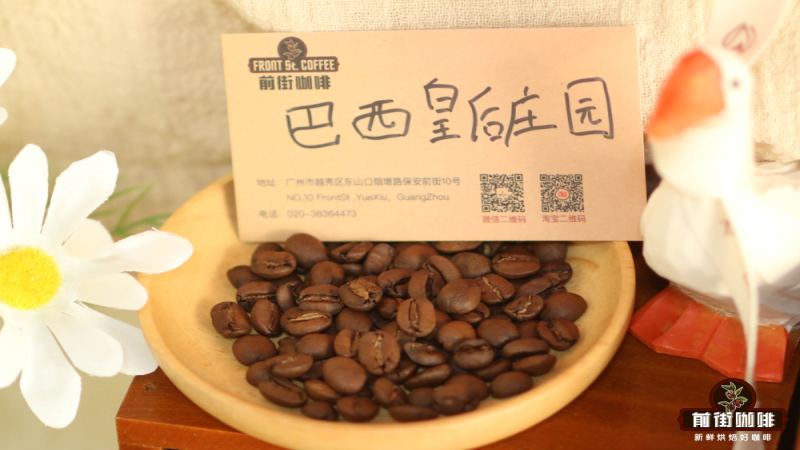
What Makes Yellow Bourbon Coffee Taste So Sweet
Brazil's Fazenda Rainha grows Yellow Bourbon at 1,400 to 1,950 meters in the Mogiana region of São Paulo state, hand-picking every cherry and processing it with the pulped natural method. That combination produces a cup that is sweet and clean, with mild brightness and tropical fruit aromas. The estate has collected awards since Brazil's first Cup of Excellence competition in 1999.
The Carvalho Dias family owns Fazenda Rainha inside the volcanic valley of Vale da Grama, where 280 mu of land sit on mineral-rich soil. The pulped natural process leaves some mucilage on the bean during drying, which holds acidity in balance with sweetness and adds a nutty aroma. Roasted beans work in a moka pot, Americano, siphon, or drip bag.
Brazil's Fazenda Rainha is a legendary coffee estate under the Carvalho Dias family, and it has won numerous awards since the first Brazil COE competition in 1999, even taking the championship in 2011. The estate is located in a volcanic valley in the Mogiana region of São Paulo state, at an altitude of 1,400 to 1,950 meters, where Yellow Bourbon is entirely hand-picked and processed using the pulped natural method, creating a unique flavor profile that is sweet, clean, bright in acidity, and accented with tropical fruit aromas. Front Street Coffee's Brazil Fazenda Rainha coffee beans have a rich nutty aroma and a balanced mouthfeel, and are suitable for various extraction methods such as moka pot, Americano, siphon, and drip bags, and can be purchased at the Front Street Tmall flagship store. This article will comprehensively analyze the estate background, processing techniques, award records, roasting analysis, and pour-over parameters, taking you deeper into this exemplary Brazilian specialty coffee.
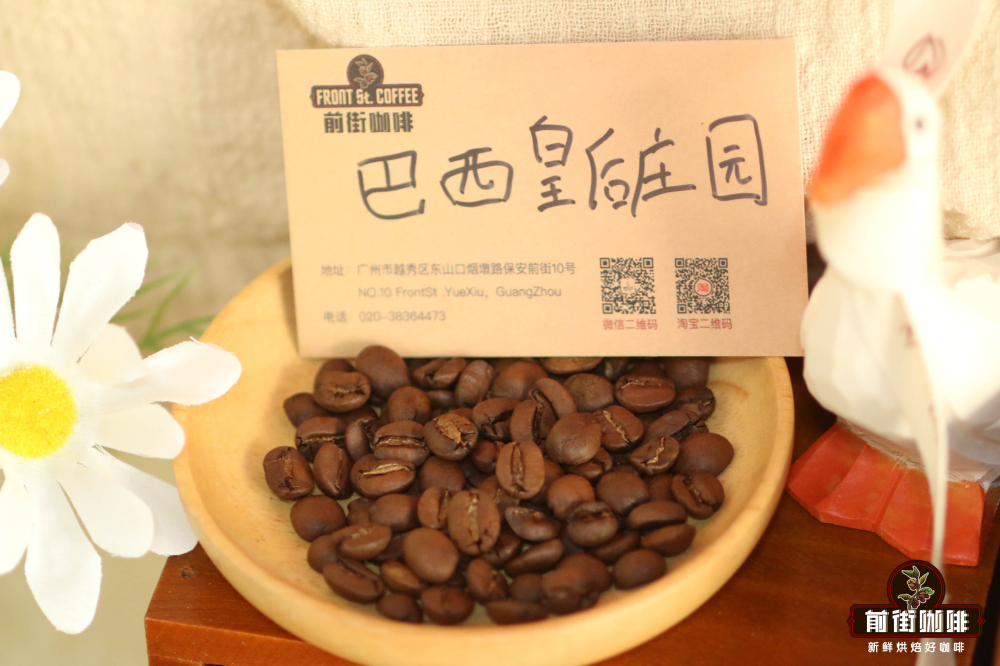
Brazil Fazenda Rainha
【Country】Brazil; Region: St Paulo, São Paulo state, near St Sebastieo da Grama
【Estate Name】Fazenda Rainha
【Owner】Regina Helena Mello de Carvalho Dias, belonging to the Carvalho Dias family
【Variety】Yellow Bourbon
【Processing Method】Hand-picked, then pulped natural process
【Origin】Fazenda Rainha, Brazil (Mogiana) region.
【Variety】Yellow Bourbon
【Altitude】1,400–1,950 m
【Processing Method】Natural
【Flavor】The bean is sweet and clean; using the pulped natural method gives its acidity a slight brightness while still combining excellently with sweetness, and some even carry tropical fruit aromas . Our Front Street Brazil Fazenda Rainha has a rich nutty aroma along with a balanced mouthfeel, suitable for a variety of extraction methods, and can be made into moka pot coffee, Americano, siphon coffee, drip bag coffee, and more. You can purchase it at the Front Street Tmall flagship store.
【Estate Introduction】:
This coffee comes from Fazenda Rainha, which covers 280 mu and is located in an ancient Brazilian volcanic valley, Vale da Grama.
In 2011, the estate won the championship in Brazil's COE competition. Fazenda Rainha is owned by the renowned and highly respected Carvalho Dias family. The four major estates under Carvalho Dias have won awards every year since the first Brazil COE competition in 1999, with more than 12 awards over 7 years. In 2004, they even swept the championship, 9th place, 11th place, and so on. Many estates in Brazil, large and small.
For many years, they have hoped to place and win but found it difficult, yet this family's estates have taken away multiple awards year after year. Even the Fazenda Rainha purchased by Oshe this time, also enjoys a brilliant record: runner-up in 2000, third place in 2001, 29th place in 2005; to date, Fazenda Rainha has won awards 3 times.
The Carvalho Dias family is also a founding member of the Brazil Specialty Coffee Association. Their commitment to coffee quality and environmental conservation is evident to all. On the family farms, natural waterfalls are used to develop pollution-free hydroelectric power, meeting electricity needs self-sufficiently (another consistently award-winning estate in the family is named Cachoeira after this waterfall). They have built churches, classrooms, nurseries, and medical stations, insist on maintaining native flora and fauna in original forests, and continue reforestation... In the case of Fazenda Rainha, environmental protection is quite thorough. Because of its higher elevation and non-flat terrain, machine harvesting cannot be used, so the fruit is entirely hand-picked. They also cultivate low-yield, high-quality Bourbon, making it a representative estate of Brazil's finest coffee!
Fazenda Rainha's coffee processing system:
Ripe cherries are hand-picked into cloth bags to avoid contact with the ground. The coffee fruit harvested that day is always sent the same day to the estate's processing facility for pulped natural processing. Hand-picking and using cloth bags to collect the harvested coffee fruit is intended to avoid earthy flavors and any improper fermentation notes. When these harvested coffee fruits arrive at the processing facility, they are immediately washed: the coffee fruit is washed clean, and according to bean size, substandard or dried fruit is screened out. The qualified beans that pass screening then proceed to pulping (using a pulper).
The estate has 200 mu planted with Yellow Bourbon coffee trees. The rolling mountainous terrain makes large-scale mechanical harvesting impossible, so all coffee here must be hand-picked.
Estate The estate uses natural/pulped natural processing methods, semi-washed method Drying on raised beds and mechanical drying, after mechanical sorting it is also supplemented by manual sorting. A great deal of work requires farm employees to live on the farm year-round. All employees and their families can enjoy housing, healthcare, and education benefits here.
The estate is a member of a medium-scale farm organization in the local Grama Valley, mainly exporting specialty coffee of the Bourbon variety. The organization's office is located nearby in Pocos de Caldas, and they also have a national-level cupping laboratory equipped with a large warehouse. The organization also collaborates with local universities and other institutions on research, including Lavras University—the famous Dr. Flavio Borem comes from that university's agricultural research center.
Fazenda Rainha Award Record:
2014 COE Cup of Excellence 13th place
2013 COE Cup of Excellence 2nd place
2012 COE Cup of Excellence 8th place
2011 COE Cup of Excellence Champion
2010 COE Cup of Excellence 20th place
2009 COE Cup of Excellence 6th place
2008 COE Cup of Excellence 14th place
【Related Trivia】:
The Cup of Excellence (COE) program and trademark are currently owned and managed by the Alliance for Coffee Excellence (ACE), a nonprofit organization. Every year, ACE works with the host countries of the Cup of Excellence program (cupping competition) to complete the cupping selection and online auction of specialty coffee. At the same time, it advises and promotes anything related to improving coffee quality, with the aim of selecting exemplary specialty coffees in the host countries and exchanging experience for the industry to learn from.
This bean is 100% Yellow Bourbon, and its provenance can be traced back to the birthplace of Bourbon, Reunion Island in Madagascar. In the 18th century, French explorers first brought coffee here, so this variety also has another name: French Missionary. In the 20th century, it was brought to the African continent and then introduced to Brazil, and its derived varieties are now found throughout Africa and the Americas. Bourbon grown in Brazil has yellow fruit due to the influence of a recessive gene.
This bean is processed using the Cerezadescascado method (pulped method) invented in Brazil. This natural processing method, similar to honey processing, makes the coffee flavor rounder, with an effect between washed processing and full natural processing. During processing, a small amount of water is first used to remove the pulp and skin, and then the coffee is placed directly on raised drying beds to dry, being turned continuously during this time to ensure all the coffee is exposed to sunlight. After several days of drying, mechanical drying is then carried out to reach the appropriate moisture content.
The processed coffee beans are relatively stable in nature and can be stored for a long time. They have low moisture content, and the beans are also relatively large; 98% of the beans can reach 16 screen or above, and half can reach 18 screen.
The Brazilian grading system scores based on defect ratio, size, flavor, and mouthfeel. It is an independent grading system of its own and is more complex than those of other countries. For example, "Brasil Santos NY 2 SC17/18 SS FC” NY2 is the defect ratio grade: the larger the number, the more defects. In order: 2, 2/3, 3, 3/4……, NY indicates that the New York grading standard is used as the basis.
The raw beans have a very rich fermented berry aroma when smelled
【Roasting Analysis】
The raw beans have a solid texture and good flavor expression, with a slight orange peel and spice note
Raw bean moisture content 9.9%
This bean's moisture content is also relatively low, which gives the bean a very strong heat absorption capacity, so the roasting plan is to charge the beans at 200°C, then use high heat and a small airflow to speed up dehydration. After the dehydration stage ends, open to medium airflow and medium heat for the Maillard reaction. Do not make the time too rushed; discharge near the end of first crack.
I test-roasted 4 times in total, and finally chose the interval of 1 minute 45 seconds to 2 minutes after the end of first crack as best. The flavor has obvious sweetness, but it is not a boring kind of sweetness. In the background there is a faint lemon aroma, and this aroma is more prominent in the wet aroma stage. The later stage shows an obvious dark chocolate flavor. The overall impression is relatively round, and while expressing Brazil's overall characteristics, it does not lose liveliness.
Bean charge amount 550g
【Cupping】
Dry aroma: roasted hazelnut, cinnamon notes
Wet aroma: Slight tropical fruit aroma, butter, sucrose
On the palate there is a delicate nutty flavor, fruity flavor, creamy peanut
【Pour-over Record】:
【Reference】
Brazil Fazenda Rainha. 15g coffee powder, medium grind (70–75% passing a No. 20 sieve)
V60 dripper, 88–89°C water temperature, first pour 30g water, bloom for 27 seconds,
Pour to 105g water and stop, wait until the water level in the coffee bed drops halfway before pouring again, pour slowly until 225g water, discard the final part, water-to-coffee ratio 1:15, extraction time 2:00
【Flavor】 The bean is sweet and clean; using the pulped natural method gives its acidity a slight brightness while still combining excellently with sweetness, and some even have tropical fruit aromas, especially the aroma spreading all around during brewing, which makes it even more appealing. The fresh sweetness of sugarcane juice, black tea, a soft and smooth fruit sweetness, obvious nutty flavor, balanced and smooth acidity, weak and clean bitterness, containing rich chocolate aroma and nutty flavor, with a bright and refreshing mouthfeel, a silky and delicate mouthfeel.
The above content is compiled by CoffeeHunters, a coffee news website.


