







How Do Brazilian Coffee Varieties and Grades Work?
Brazil supplies about one-third of the world's coffee, and its quality tiers go well beyond commercial beans. Most plantations sit on flat land, and estates developed improved Arabica varieties that grow in full sun without high altitude or shade. Ripening speeds up at low elevation, so bean density and flavor development are lower than in high-altitude regions, though mechanized harvesting cuts labor costs sharply.
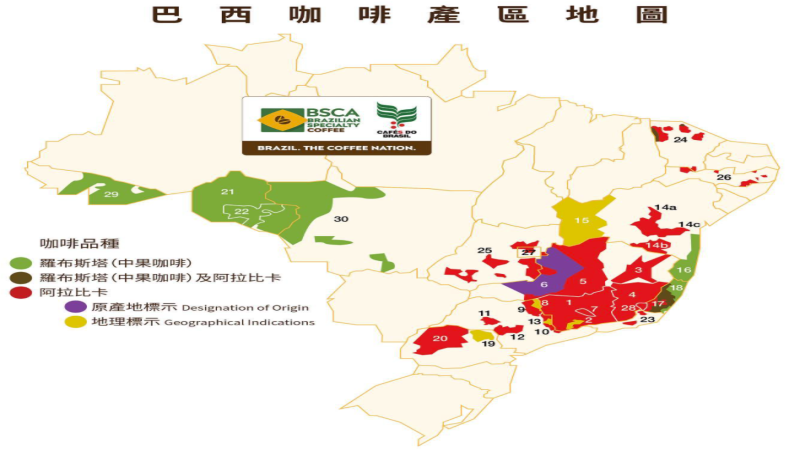
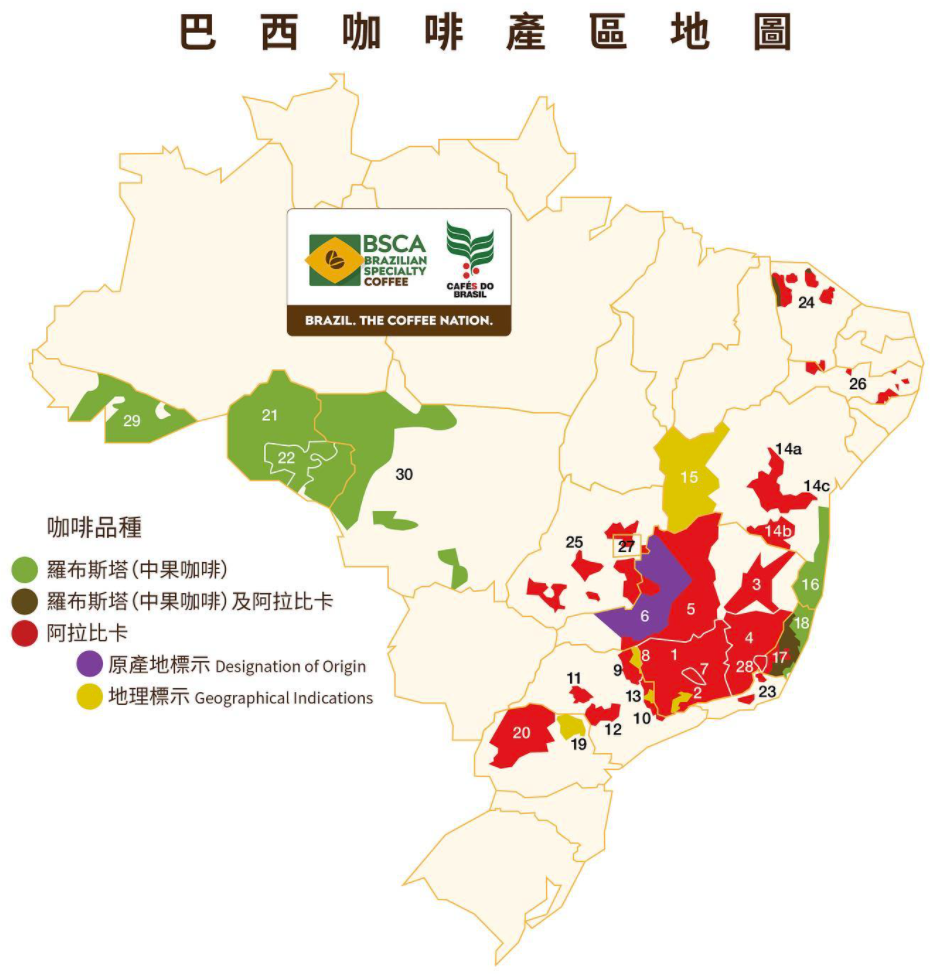
Coffee is grown in 14 states, with the top seven accounting for roughly 90% of national output. The west favors Robusta, while better Arabica comes from the southeast: Minas Gerais, the leading state, and São Paulo, the first to cultivate coffee. Minas Gerais includes Cerrado, Sul de Minas, Chapada de Minas, and Matas de Minas. Varieties such as Yellow Bourbon respond well to tuned pour-over parameters.
As the world's leading producer, accounting for over one-third of global coffee output, Brazil's coffee landscape goes far beyond commercial beans. From mechanized cultivation on flat terrain to the two representative regions of Minas Gerais and São Paulo, and classic varieties like Red Bourbon and Yellow Bourbon, Brazilian coffee has its own unique flavor and grading logic. This article will guide you through the varietal characteristics, origin distribution, and quality evaluation system of Brazilian coffee, and include Front Street's recommended pour-over parameters for Brazilian coffee, so you can easily brew a rich and balanced Brazilian flavor at home.
Located in the tropics, Brazil's main cash crops include coffee, sugarcane, and citrus, with production of these crops ranking first globally. As the world's largest coffee producer, Brazil contributes about one-third of the global coffee total. For example, in 2020, Brazil still held the top position in the coffee industry with 37.4% of global production.
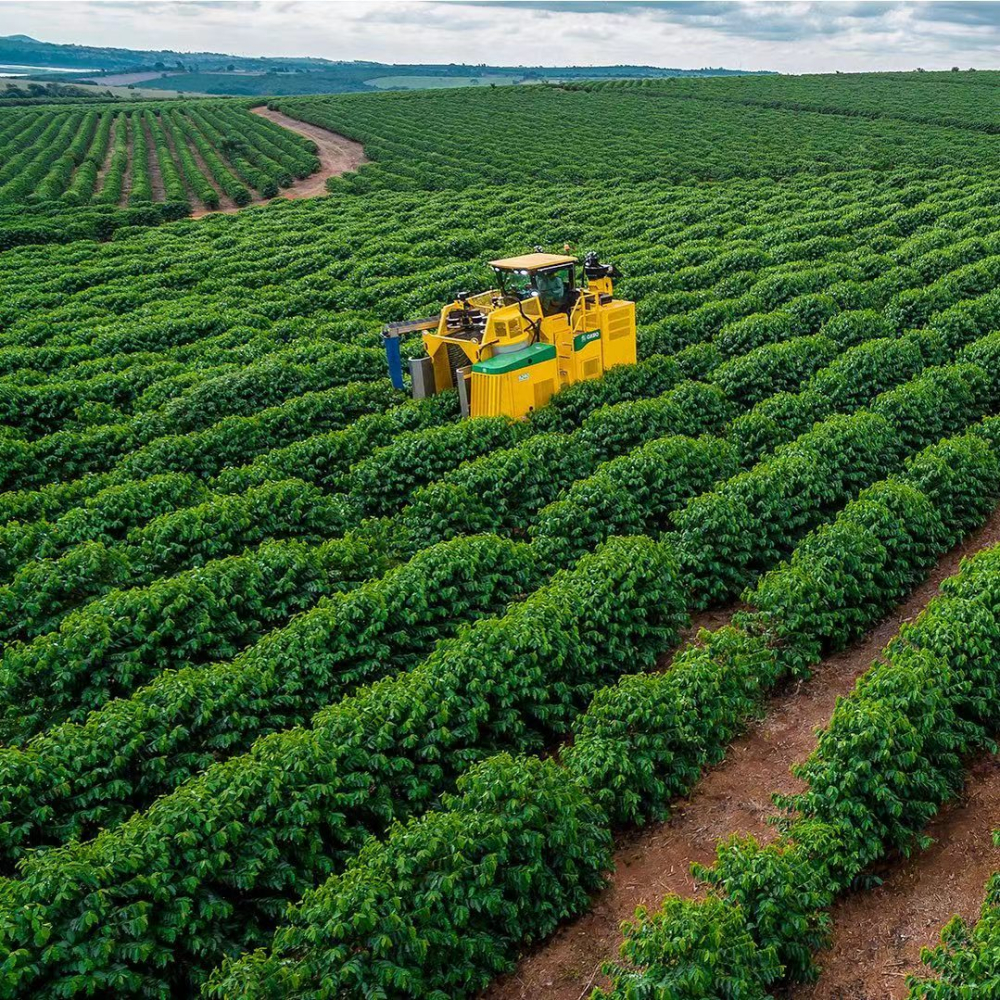
Most of Brazil's coffee plantations are distributed in relatively flat areas. To adapt to this terrain, local estate owners developed improved Arabica varieties decades ago that do not require high altitude and shade environments, and can be planted directly on plains or grasslands, fully exposed to sunlight, which is completely different from traditional high-altitude shade cultivation. Low-altitude conditions accelerate the ripening process of coffee cherries, leading to insufficient flavor development and lower bean density than high-altitude regions. However, the flat terrain also brings a benefit: large coffee estates can implement mechanized harvesting, greatly saving labor.
Coffee cultivation in Brazil covers 14 states nationwide, with the top 7 producing states accounting for about 90% of the national total. The west primarily grows Robusta varieties, while the higher-quality Arabica is concentrated in the southeast. Here, Front Street highlights two representative regions: Minas Gerais (MINAS GERAIS), Brazil's top-producing state, and São Paulo (SÃO PAULO), the first state in Brazil to cultivate coffee.
Minas Gerais state's average annual coffee production is nearly half of the national total, and it encompasses four large regions: Cerrado, Sul de Minas, Chapada de Minas, and Matas de Minas. The Cerrado region, sharing its name with the Cerrado savanna, in coffee terms specifically refers to the Cerrado area in western Minas Gerais. The terrain there is flat, the harvest period is concentrated, and it is very suitable for large-scale management and harvesting; many exporters have built farms there, generally over 10 hectares. The other three regions, due to their more undulating terrain and steep hills, are mainly dominated by smallholder manual production.
São Paulo state includes Brazil's well-known Mogiana region. The name comes from the Mogiana Railroad Company, the company that built the "coffee railway" in 1883; the railway improved transportation and also promoted further expansion of coffee production in the region. The Mogiana region has an altitude of 900 to 1100 meters and an average annual temperature of about 20°C. The hilly terrain gives the coffee good sweetness and balance, and due to terrain constraints, estates mostly rely on manual harvesting. The Queen's Estate coffee on Front Street's bean list comes from Mogiana, with a sweet and clean taste, excellent balance, and tropical fruit aroma.
Brazil has a rich variety of coffee, currently dominated by Red Bourbon, Yellow Bourbon, New World, and Catuai, with Bourbon being the oldest local variety. Bourbon cherries are short and round, and the beans have high density; Bourbon grown at high altitudes has high sweetness and bright acidity. Like Typica, it is an ancient and excellent variety; Bourbon has stronger resistance to leaf rust than Typica, and its flavor is no less impressive. The biggest commonality between Bourbon and Typica is that they must have shade trees to block sunlight for good growth and flavor development, so they have certain requirements for the growing environment.
Common Bourbon varieties change color from green to slightly yellow, then red, and finally to fully ripe dark red from flowering to fruit maturity, hence the name Red Bourbon. There are also Bourbon varieties that do not turn red when ripe but instead become a rare yellow or pink, namely Yellow Bourbon and Pink Bourbon. Yellow Bourbon produced at high altitudes has a delicate flavor and has repeatedly won excellent rankings in Brazil's Cup of Excellence (CoE) competition. The Queen's Estate coffee from Front Street uses Yellow Bourbon coffee.
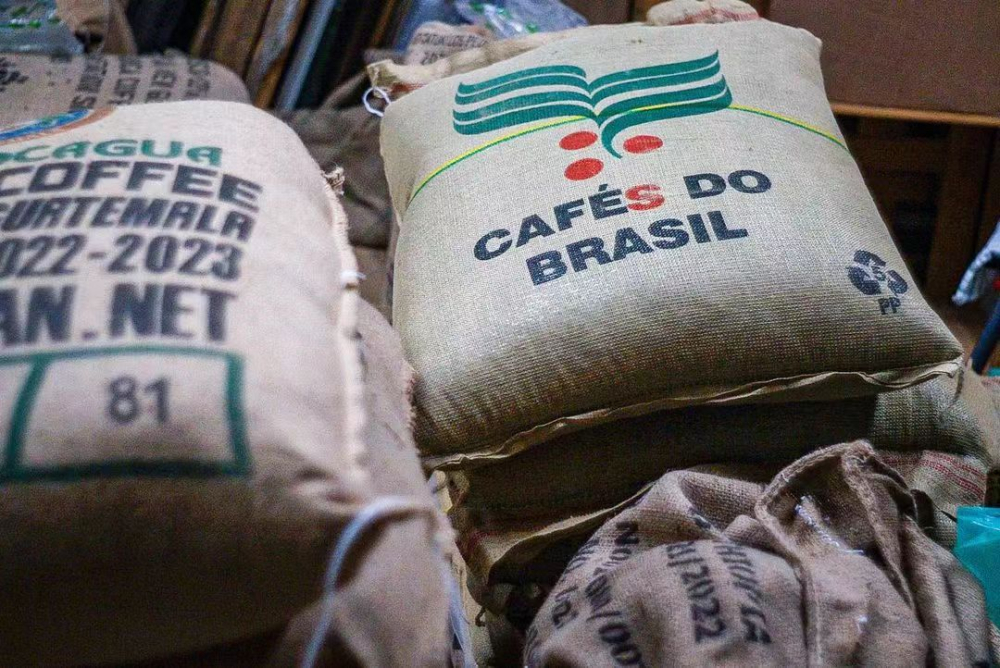
Due to the massive coffee production and uneven bean quality, local inspection agencies take 300-gram samples and grade them according to different standards such as green bean defects, size, and cup testing, which is also Brazil's unique grading system distinct from other coffee-producing countries. Brazilian green coffee jute bags usually indicate relevant grade information: country + defect grade + cup profile + size + flavor + region. For example, Brazil NY.2 SC – 17/18 FC Cerrado means it originates from the Cerrado region of Brazil, size is 17 to 18 screen, SC stands for Strictly Soft, meaning very smooth mouthfeel, FC stands for Fine Cup, meaning high-quality cup flavor, and the defect rate grade is NY.2.
Regarding the defect grading method: NY.2 refers to the New York grading standard, which can be divided into NY2, NY2/3, NY3, NY3/4, etc., based on the proportion of defects. The smaller the number, the lower the defect rate and the higher the grade, with lots scoring below 4 points classified as NY2, the highest grade. Since NY.1 requires zero defective beans, such select lots cannot be supplied consistently, so Brazil designates NY.2 as the highest grade.
Regarding size specifications: 17/18 means the green bean size is between 17 and 18 screen (1 screen equals 1/24 inch).
Flavor and mouthfeel also have corresponding standard distinctions, with various descriptions based on the coffee's mouthfeel during cupping: Strictly Soft, Soft, Softish, Hard, Rioy. SC, or Strictly Soft, has the best mouthfeel. Cup flavors are divided into Fine Cup, Good cup, Fair cup, Poor cup, Bad cup, with Fine Cup having the best flavor and highest quality, followed by Good cup.
Specialty-grade Brazilian coffee beans have the characteristics of low acidity and high body, presenting flavors of nuts, cocoa, chocolate, and toast after roasting, with a smooth, balanced, and clean mouthfeel. Therefore, they are often used in espresso blend formulas to provide support and neutralization. Front Street's bean list has 4 espresso coffee beans, three of which are based on Brazilian coffee in their blend ratios, giving the extracted espresso a rich golden crema and intense aroma of roasted hazelnuts. Made into Americano, it is rich and full-bodied; blended with milk into a latte, it is creamy and smooth.
Front Street's most produced offering is still in the form of single-origin pour-over coffee, allowing everyone to taste the flavor characteristics of Brazilian coffee. If you want to enjoy rich Brazilian coffee at home, you can follow Front Street's brewing parameters below for pour-over.
Dripper: KONO dripper
Water temperature: 87–88°C
Dose: 15 grams
Coffee-to-water ratio: 1:15
Grind size: medium grind (70% passing through China standard No. 20 sieve)
First, wet the coffee bed with twice the amount of water as the coffee grounds, forming a dome and letting it bloom for 30 seconds. Then, pour in a thin stream in a circular motion from the inside out. At 125 grams, pause in stages. When the coffee bed drops to half the dripper's height, continue pouring the third stage with the same thin stream until 225 grams, and wait until all the coffee liquid has filtered through, then remove the dripper. Total time is about 2 minutes.
The above content is compiled by CoffeeHunters, a coffee news website.


