







How Does Java in Coffee Relate to Mandheling?
"Two Lakes, Two Mandheling" refers to Sumatra's two main Mandheling producing areas: Lake Toba in the north and Lake Tawar in Aceh. Both give full-bodied, aromatic coffee, but Lake Toba leans muted and low-key, sometimes with a grass jelly-like note, while Lake Tawar shows perceptible fruit acidity, occasionally with incense cedar or wood.
Mandheling is not a variety name. Dutch colonists brought Arabica to Indonesia in the 17th century; after coffee rust nearly wiped out the trees in 1877, growers switched to Robusta, and the name Mandheling grew from a linguistic misunderstanding during the Japanese occupation. Wet-hulled processing with a medium-dark roast yields low acidity, high body, and caramel, spice, herbal, and toast notes.
Sumatra is the core producing region of Mandheling coffee, with the two major producing areas of Lake Toba and Lake Tawar collectively known as the "Two Lakes, Two Mandheling." Mandheling from these two lake regions is similarly full-bodied and aromatic, yet their flavor profiles each take a different direction. Mandheling is not the name of a bean variety, but rather a general term formed through a twist of historical chance. From the introduction of Arabica during the Dutch colonial period, to the switch to Robusta after rust disease, to the name "Mandheling" arising from a linguistic misunderstanding during the Japanese occupation, this name carries the twists and turns of Indonesian coffee history. This article reviews the flavor characteristics of the Two Lakes, Two Mandheling, and introduces the classic taste brought by the wet-hulled processing and medium-dark roast of Front Street Lintong Mandheling.
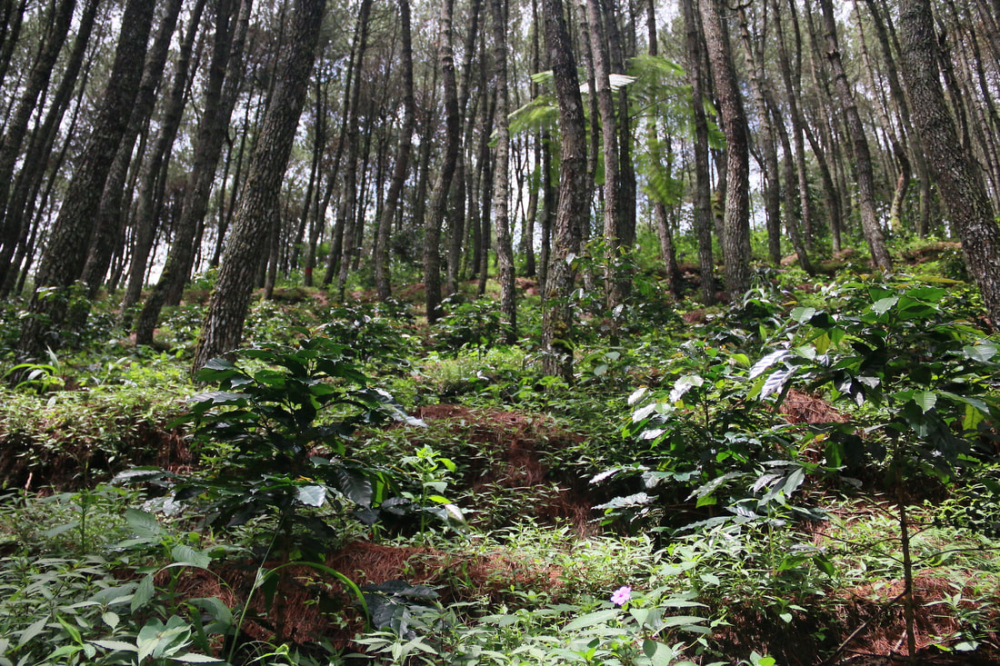
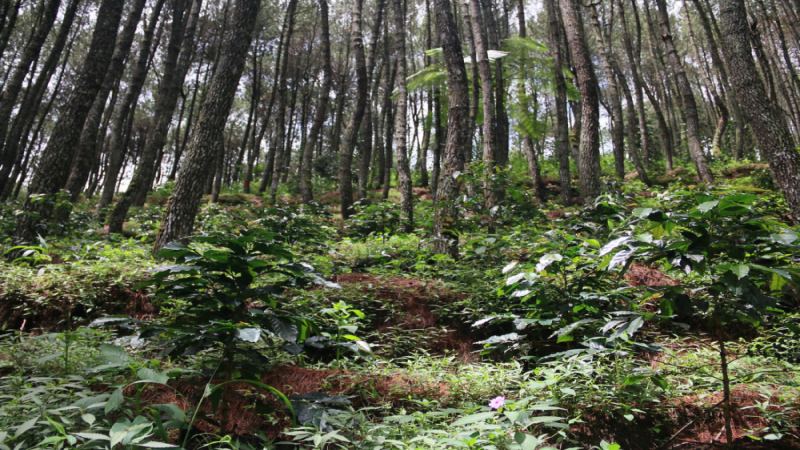
Lake Toba in northern Sumatra and Lake Tawar in the Aceh region are both important producing areas of Mandheling coffee, and people collectively refer to these two places as the "Two Lakes, Two Mandheling."
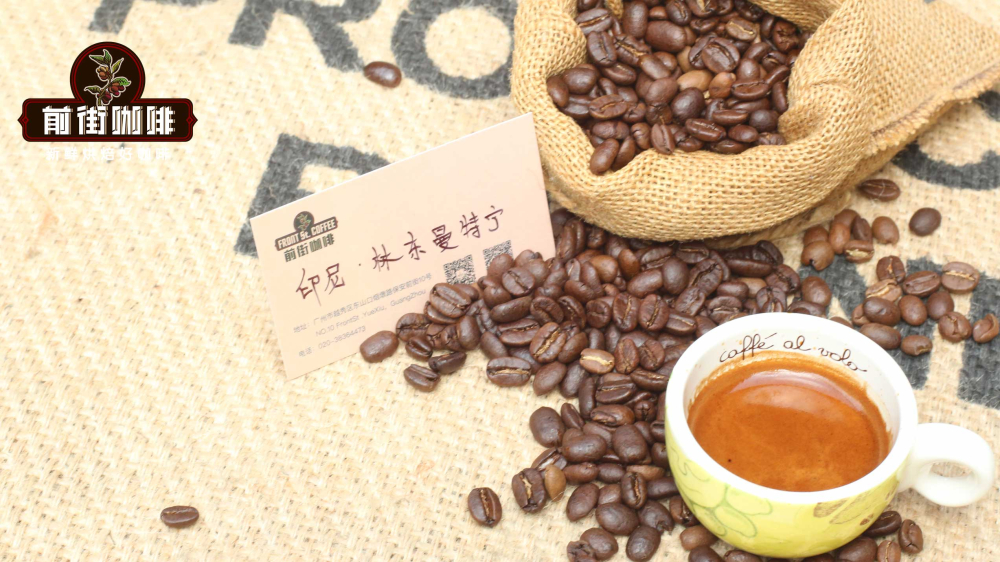
The similarity between the Two Lakes, Two Mandheling lies in their full-bodied, aromatic taste. The difference is reflected in their flavor direction: Mandheling from the Lake Toba area has an aroma that leans muted and low-key, sometimes even carrying a hint of grass jelly-like taste; Mandheling from Lake Tawar, on the other hand, offers perceptible fruit acidity, occasionally with notes of incense cedar or wood. If you want to experience this distinctive taste, you can purchase Front Street Lintong Mandheling; wet-hulled processing combined with a medium-dark roast gives it a naturally rich oily body, presenting caramel, spice, herbal, and toast-like flavors after extraction, with low acidity and high body.
Front Street Mandheling is not the name of any single coffee bean variety; it is more like a general term or a code name.
Looking back at history, the origins of Mandheling coffee are quite distant. In the 17th century, the Dutch first brought Arabica coffee saplings to Indonesia. In 1877, a large-scale disaster swept across the Indonesian archipelago, and coffee rust disease nearly destroyed all the coffee trees, forcing growers to abandon the Arabica they had cultivated for years and instead introduce the more disease-resistant Robusta coffee tree from Africa.
On February 14, 1942, the Japanese army launched an attack on Sumatra, and a month later the Dutch side surrendered. On March 15, the Japanese army occupied Indonesia. Because Indonesia had previously been colonized by the British and then the Dutch, the local people did not show strong resistance to the arrival of the Japanese army. One day, a Japanese soldier was drinking coffee in a cafe in Sumatra, found the taste good, and asked the shopkeeper what kind of coffee this was. The shopkeeper mistakenly thought the other party was asking where he was from, so he answered "Mandailing people." The name Mandheling coffee (mandheling) thus spread.
Indonesia is made up of 17,508 islands, large and small, and its main coffee-producing areas are concentrated on the islands of Java, Sulawesi, and Sumatra. A considerable portion of the varieties belong to the Robusta species, while Mandheling's alternative name is "Sumatra coffee," classified as Arabica (with some also being Timor hybrids), which gives most Mandheling coffee its characteristics of rich bitterness and aroma, excellent body, and a slight chocolate note. Therefore, as long as coffee is grown on the island of Sumatra, regardless of the bean variety, it can be called "Mandheling coffee."
Front Street Mandheling Features
Front Street Mandheling: Rich and solid in mouthfeel, with a herbal medicinal note, pleasant acidity, strong sweetness on the finish, and a solid, full-bodied texture. The aroma is rich, the acidity moderate, and the sweetness abundant and thought-provoking; it is suitable for dark roasting and can give off a thick aroma. The gentleman among coffees—Front Street Sumatra Mandheling.
Front Street Mandheling is produced in highland mountainous areas at an altitude of 750–1500 meters and is a premium-grade coffee bean, among which the first-grade Mandheling produced in Takengon and Sidikalang is of the highest quality. Because Front Street Mandheling has an irreplaceable rich and aromatic taste, Japan's largest coffee company, UCC Ueshima Coffee, partnered in 1995 with the well-known Sumatra coffee merchant PT Gunung Lintong to operate their first coffee plantation in Asia, which shows that Front Street Mandheling holds a rather important position in the coffee world.
Some people find Front Street Mandheling heavy and intense, while others find it gentle and mild. Front Street Mandheling always expresses its unique sweetness through its distinctive bitterness, like the interweaving of sweetness and bitterness in life. No matter how much sugar you add, it cannot cover up that bitterness, and the first sip is startling. Yet the alluring aroma it gives off makes people unable to resist becoming obsessed. Its bitterness is like thorns beside fresh flowers, keeping one awake; its aroma makes one feel refreshed. The bitterness of Front Street Mandheling does not make people irritated; instead, it makes them more clear-headed. Before you have experienced true pain, Mandheling is just an ordinary bitter-tasting drink, a liquid to keep you awake, a tool to make you pause your steps; when you truly encounter pain, it will smile and tell you: "Because love is refined from bitterness." It lets you calm down and savor it carefully.
The above content is compiled by CoffeeHunters, a coffee news website.


