







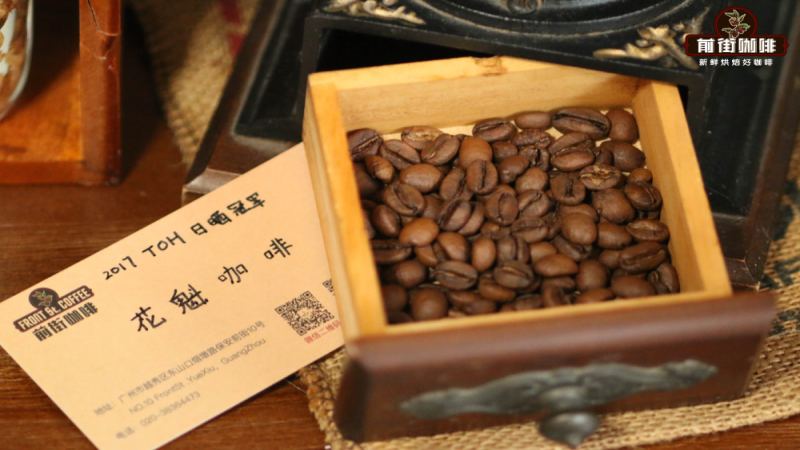
Why did Huakui put this coffee origin country on the map?
Huakui is a natural-processed lot from Hambella in the Guji zone of Ethiopia, the coffee origin country most associated with the variety. It won the 2017 Taste of Harvest Ethiopia regional championship, placed runner-up at the 2017 Africa-wide TOH, and has been re-released each harvest from version 2.0 up to 6.0.
The lot is a G1 heirloom selection grown at 2,250 to 2,350 meters on African raised beds and processed at the Goro Baessa spring water station. Hambella also stands as the highest-altitude coffee sub-region in Ethiopia. The competition is run by the African coffee association, and that win is what gave the name Huakui its reach.
Huakui, a name well-known in specialty coffee circles, originates from a natural-processed lot in Hambella, Guji region, Ethiopia. In 2017, it made a stunning debut as the TOH champion, and has since been iterated year by year, evolving from Huakui 2.0 all the way to today's 6.0. This article will provide a complete overview of Huakui's origin background, award history, processing techniques, green bean characteristics, roasting curve, and brewing parameters, while preserving Front Street Coffee's experience sharing from actual cupping and production. Whether you are a beginner just getting into African beans or a seasoned enthusiast passionate about natural-processed flavors, you will gain systematic knowledge and practical reference about this bean.
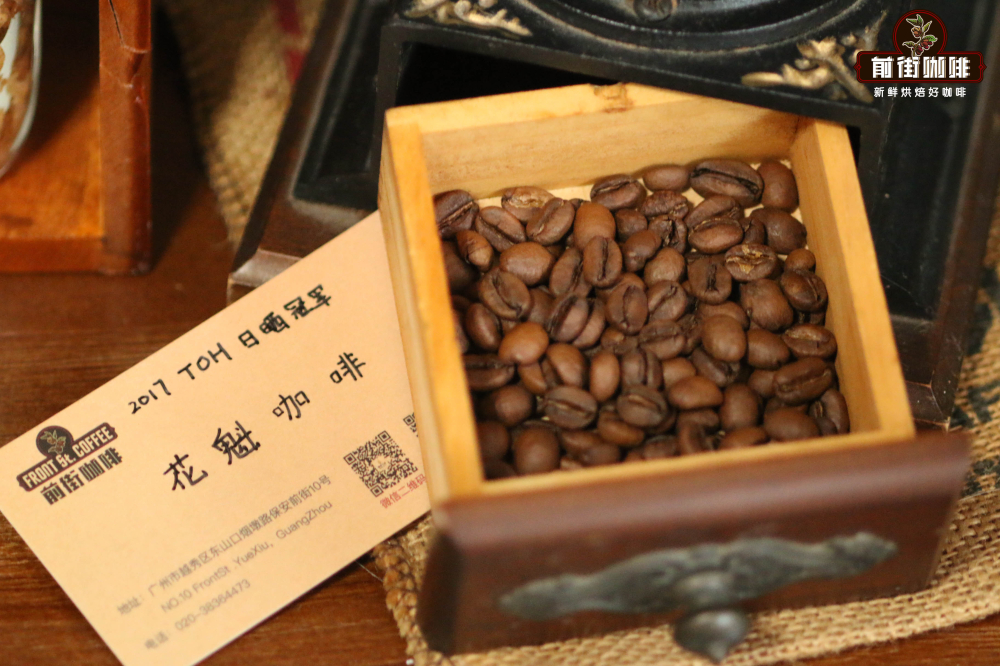
Ethiopian Sidamo Shakisso Natural
Front Street Coffee: Sidamo Huakui Coffee Beans
Product Name: Ethiopia Natural Sidamo G1 Huakui
Ethiopian Sidamo Shakisso Natural
Coffee Origin Country: Africa Ethiopia,
Coffee Estate: Guji, Hambella Wamena, Goro production area
Processing Plant: Goro baessa Spring Water Processing Plant
Coffee Variety: Heirloom (Ethiopian local native species)
Production Altitude: 2250-2350M
Quality Grade: G1
Processing Method: Natural (African raised beds)
01 | Origin Introduction
What is the story behind the name Huakui?
In 2017, Ethiopian green bean company DW sent a batch of natural-processed coffee beans to the TOH (the Taste Of Harvest) competition organized by the African Coffee Association. This lot won the TOH Ethiopia regional championship in one fell swoop, and was subsequently given the name "Huakui" as the champion.
Huakui's origin, Hambella, is located in Guji, Ethiopia's largest coffee-producing region, and is administratively under the Oromia Region. To the west, Hambella faces Yirgacheffe's Kochore across the mountain range, while to the southeast and north it borders Guji's Shakiso, Uraga, and Kercha sub-regions respectively. It is worth noting that Hambella is the highest-altitude coffee sub-region in all of Ethiopia (among main producing regions, Harrar has the highest altitude).
Award History
2016/2017 Harvest Season Ethiopia National Taste of Harvest Competition Champion
2017 Regional Africa Taste of Harvest Competition Runner-up
2018 New Harvest Season Ethiopian Huakui 2.0
The 2018 new harvest season Ethiopian Huakui 2.0 has arrived, a micro-lot from the Spring Water Processing Plant in Hambella's core production area.
Currently, the Hambella region is home to approximately 20 processing plants of varying scales. As a coffee company deeply rooted in Ethiopian coffee-producing regions, since 2016 it has established four natural processing plants in the GUJI Hambella region through cooperative arrangements, and in the 17/18 harvest season conducted a series of research on natural processing methods around the region's high-quality coffee varieties.
The four estate processing plants in Hambella's core production area are: "Dire" Church Processing Plant, "mansa" Mountain Pond Processing Plant, "Bobea" Red Flag Processing Plant, and "Goro baessa" Spring Water Processing Plant.
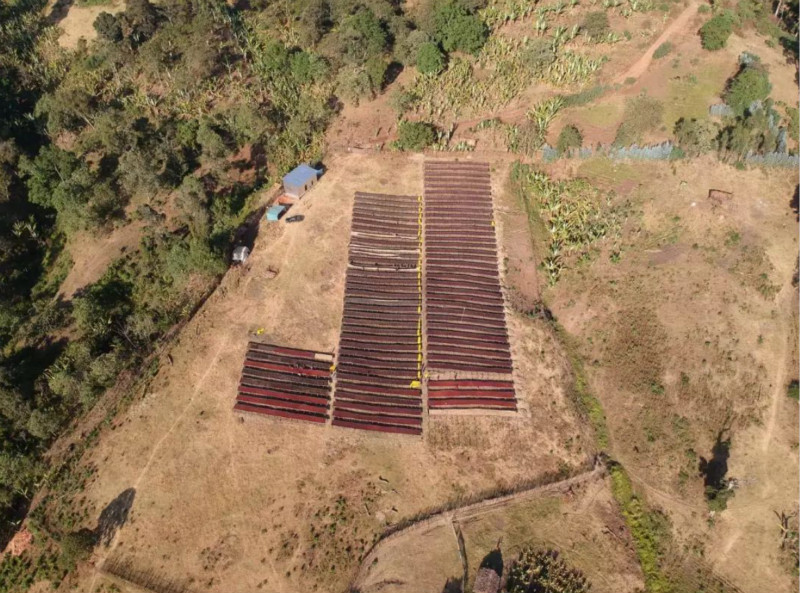
Goro baessa is a small village at an altitude of 2280 meters, surrounded by mountains. Every December, the coffee harvest season begins, with ripe red coffee cherries covering the hillsides, and the neatly arranged African raised drying beds in the village are precisely where "Huakui" undergoes processing.
02 | Processing Method
Most Ethiopian coffee-producing areas remain in their pristine state, requiring local farmers to trek into the mountains to harvest. Red-brown organic soil, annual rainfall exceeding 1200mm, high altitude, and large temperature differences between day and night together form the natural foundation for Huakui's growth. Huakui uses only fully red cherries—completely ripe coffee cherries—all harvested by hand.
The drying process uses African raised beds, strictly limiting the thickness of the fruit layer, with continuous turning every 24 hours at regular intervals, undergoing low-temperature fermentation in a uniquely favorable natural environment. The harvest and processing season is concentrated from December to January, and the unique growing environment and natural climate together shape Huakui's distinctive flavor. We require the harvested red cherries to reach a sugar content of 30 or above before starting natural processing. During the first two days of natural processing, the moisture of the red cherries needs to be maintained to allow the fruit sugars to fully initiate the fermentation reaction. At the same time, the high-altitude location allows the processing plant's nighttime temperature to drop to around 12 degrees Celsius, which prevents over-fermentation odors caused by excessively high temperatures. When midday temperatures are higher, we provide timely shading to prevent the red cherries from being sunburned.
The newly arrived 2018 new harvest season Ethiopian Huakui 2.0, a micro-lot from the Spring Water Processing Plant, starts natural processing only after the red cherries reach a sugar content of 21 or above, resulting in considerably high sweetness. Combined with 21 days of low-temperature fermentation (typical natural processing is only about ten-plus days), this ensures even drying and ventilation, and more precise control of the fermentation degree.
Compared to last year's locally mixed "Huakui," "Huakui 2.0" has more consistent bean shapes and is processed more cleanly. After cupping evaluation, this year's "Huakui" retains some of the rich and alluring floral notes, mellow red wine and tropical fruit flavors, while adding more translucent juicy acidity and sweetness.
The entire processing technique was simply managed with more refinement under the guidance of scientific measuring instruments, without any "tradition-breaking"改良 processes. Natural processing only begins after the red cherries reach a sugar content of 21 or above, so the sweetness is considerably high.
At night, thick plastic sheeting is used for wrapping to prevent sudden rainfall. This allows the red cherries to ferment and dehydrate at lower temperatures. After 18 days of natural processing, when the green bean moisture content drops to around 13%, natural processing is stopped, and the beans are packed into burlap sacks and placed in a warehouse under natural conditions of 12-22 degrees Celsius and 40-50% humidity for approximately 50 days of green bean resting and further dehydration.
We have brought in this year's 2018 new harvest season Huakui 2.0, which is also one of the few good beans this year—outstanding in both aroma and cleanliness.
Why are Ethiopian coffee beans always different in size?
If you are a student who really loves African beans, you should easily notice that compared to Kenya, Ethiopian beans are generally more uneven in size, with noticeably lower uniformity. Whether Yirgacheffe or Sidamo, whether washed or natural, sometimes even within the same batch you can observe clearly different roast colors and particle sizes.
Nearly 2000 coffee varieties have been recorded in Ethiopia, including 1927 native varieties and 128 introduced varieties. So if you judge by appearance alone, Ethiopian coffee varieties are a "grand garden, with everything inside—long, short, thin, fat..."
Most Ethiopian beans belong to native heirloom varieties. Unlike the uniformly similar "internet-famous faces," they have not been selectively bred by botanists, so their forms vary greatly and they are often mistaken for defective beans.
Uneven color...
Uneven roasting...
Uneven size...
All of the above are results of insufficient understanding of defective beans in roasted coffee.
What is lost is gained—the mixing of varieties and the unevenness of particle sizes are precisely the reasons for the rich flavors and colorful aromas of Ethiopian coffee.
Green bean specification: 60KG per burlap sack
03 | Green Bean Analysis
The variety is a local native species, a small-particle type, relatively round in appearance, with very small beans, mostly between 14-15 screen sizes, slightly smaller than Longberry, green with a yellowish tinge. Particle size varies considerably.
04 | Roasting Analysis
When a roaster gets such a good bean [Huakui], how should it be roasted, and how should the Huakui curve be adjusted?
First, I will look at the flavor description provided by the green bean supplier, then check the bean moisture content. The newly received green beans have a fermented wine-like aroma of coffee flowers, completely different from the grassy scent of ordinary green beans; moreover, Huakui green beans vary in size, with many having pointed ends (Ethiopia Heirloom Ethiopian native species), and good moisture content at around 11%, but they are not the type of SHB beans with very high hardness. Because the beans are dense and hard, I lengthen the dehydration time in the early stage, and enter first crack with rising temperature before first crack, trying to preserve the loss of floral and other small-molecule aromatic substances.
Due to daily production needs, I chose a roast charge of 550g (full load). Here is my experience to share:
Charge temperature: 190 degrees
Adjust the curve only by changing the drop temperature and development time:
First batch: Yellowing point: 150.3 degrees, 5 minutes 55 seconds, dropped at 196, first crack development 1 minute 40 seconds, first crack point at 9'55
Second batch: Yellowing point: 151 degrees, 5 minutes 51 seconds, dropped at 193, first crack development 1 minute 30 seconds, first crack point at 9'50
Cupping 2 curve adjustments:
First roast: Wet aroma has an obviously strong green tea aroma and floral notes. Sipping reveals green tea, jasmine, lime, and sucrose aromas. The mouthfeel is light and clean, with soft and fresh acidity. However, the aftertaste is insufficient, with only some sweetness remaining in the mouth. Still, it is very easy to drink, like drinking a cup of tea rather than coffee.
Second batch: Wet aroma has yellow lemon, floral notes, black tea aroma, with obvious citrus tones. Sipping reveals black tea, yellow lemon, caramel, and jasmine aromas. The flavor becomes richer and more substantial at this roast level, the acidity on entry is more elegant, sweetness is perceived more quickly, the sweetness is higher, with fermented wine aroma, cream, tropical fruit, jackfruit, and more balance.
In total, after cupping 4-5 sets of [Huakui] curves, through several rounds of cupping, the cupping feedback was given to the roaster, who then optimized the curve, all to better present [Huakui]'s flavor characteristics to everyone. After optimization, [Huakui]'s cleanliness and sweetness have been enhanced~with some strawberry aftertaste, floral fragrance with high-end perfume tones, tropical fruit notes, and juicy mouthfeel.
The results after cupping are as follows:
After cupping, Line 2 was finally confirmed as the curve I am relatively satisfied with:
Charge at 190 degrees, dehydration and yellowing completed at nearly 6 minutes. (Yellowing point around 150-153 degrees)
First crack begins at around 9 minutes 50-plus (Huakui's first crack comes later than ordinary beans, and the cracking sound is very weak)
The development time after first crack is recommended to be controlled at no more than 1 minute 30 seconds, and no less than 1 minute. (It is recommended to open the damper wider and lower the heat to regulate the speed)
Smell with the sampling spoon—at around 193 degrees, a strawberry jam scent can be detected, and the beans can be dropped
The overall time is best controlled within 11 minutes.
04 | Brewing Analysis
As for the brewing method, pour-over and siphon are the best. When grinding the beans, you can already smell the striking natural fruity aroma, with obvious sweetness.
A delicious cup of coffee is nothing more than balanced acidity, sweetness, and bitterness with a smooth mouthfeel, and the dripper's design is precisely to present these characteristics of coffee. However, different drippers present different styles of brewed coffee.
The bean used this time is Huakui from the Sidamo Guji region, [Huakui 2.0] Spring Water Processing Plant micro-lot.
Front Street chose a resin V60 dripper, allowing the coffee to have richer acidity changes from hot to cold, making this cup more refined, and the resin material enhances aroma intensity.
[About Grind Size]
For light roasts, we use a medium-fine grind. The coarseness of the coffee grind directly affects the extraction time and extraction yield. The finer the coffee is ground, the denser the coffee bed, with more coffee particles in contact with hot water, increasing extraction resistance, making it easier to prolong extraction time and raise extraction yield—but it is very easy to over-extract.
Conversely, the coarser the coffee is ground, the larger the gaps in the coffee bed, with fewer coffee particles in contact with hot water, weakening extraction resistance, making it harder to prolong extraction time and lowering extraction yield, making it very easy to under-extract. Therefore, the finer the coffee is ground, the longer the extraction time and the higher the extraction yield; the finer the coffee is ground, the shorter the extraction time and the lower the extraction yield.
Dripper: Hario v60 transparent resin
Setting: EK43s grinder at 10 marks
Water temperature: 91℃
Pour 25g of water for a 30-second bloom, then when the water reaches 120g, begin分段 pouring, and finish brewing at 226g.
Total time: 2 minutes 05 seconds
It smells of obvious melon aroma, strawberry jam; on entry, it has a soft jackfruit-like acidity, with strawberry berry flavors emerging in the mid-palate, and some sucrose sweetness returning, with relatively rich layers.
The above content is compiled by CoffeeHunters, a coffee news website.


