







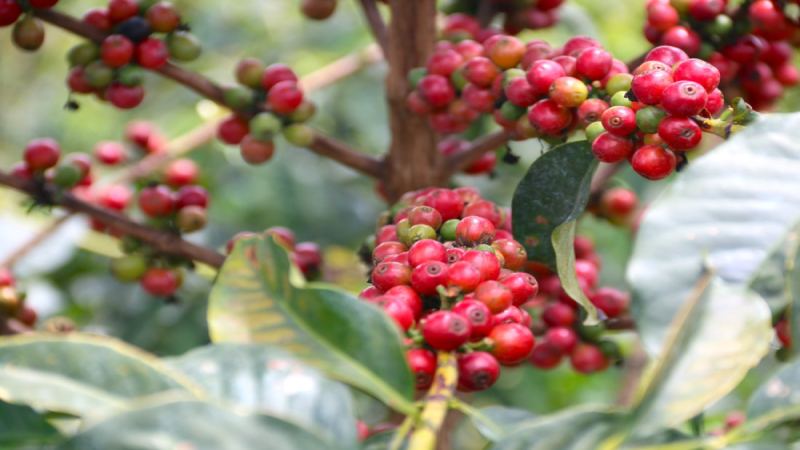
Why does yellow bourbon coffee ripen to a different color?
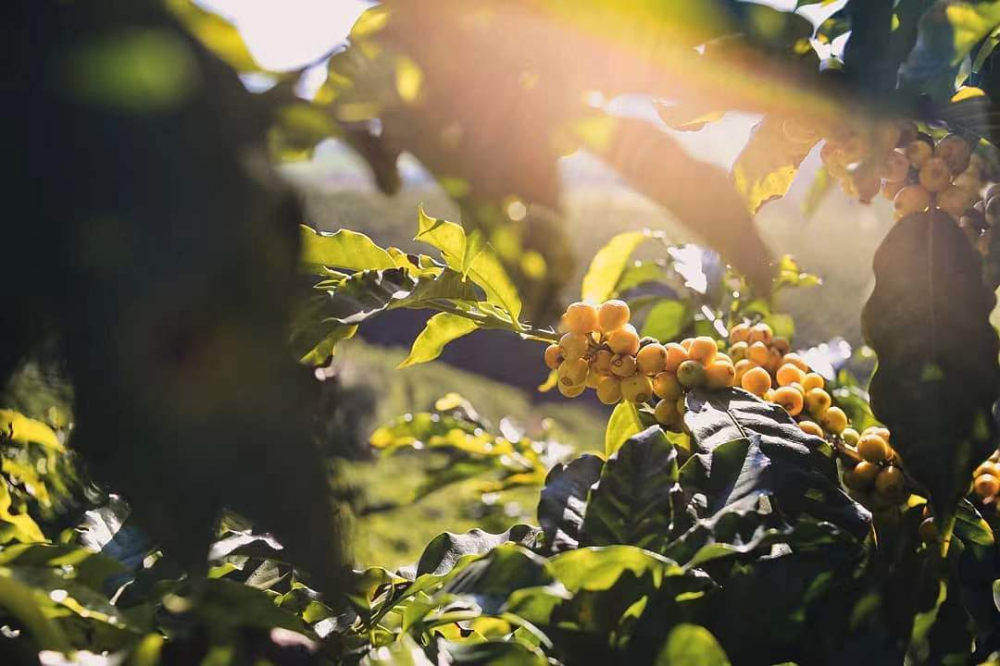
Yellow Bourbon ripens to a bright yellow fruit instead of the usual red, which is how the variety got its name and its visibility on the Brazilian coffee map. The mutation was first recorded in 1871 in Botucatu, and the variety has a cultivation history of nearly ninety years, though it only gained real market traction in recent decades.
It descends from Red Bourbon, which reached Brazil in the 1870s after a grower traveled to Reunion Island in the Indian Ocean to obtain seeds because Typica yields were limiting export volume. Front Street selects its Queen Farm lots from this variety, and the coffee beans grown there cup round and sweet. For pour-over, use a medium grind, water near 90 degrees, and a slow, steady pour.
Yellow Bourbon is a distinctive variety on Brazil's coffee map, with ripe fruit showing a bright yellow color that contrasts sharply with the common red-fruited coffee. It has both a long cultivation history and a resurgence in the specialty coffee wave. This article will comprehensively interpret Brazilian Yellow Bourbon from the perspectives of variety origin, genetic characteristics, and flavor performance, while also sharing Front Street Coffee's roasting approach and pour-over plan for the Queen Farm Yellow Bourbon bean, including specific parameters such as water temperature, grind size, coffee-to-water ratio, and pouring technique, to help coffee lovers brew a cup of round, sweet Brazilian Yellow Bourbon at home.
For more specialty coffee knowledge, please follow: Front Street Coffee ( Frontsteet Coffee )
Yellow Bourbon is something of an outlier among coffee varieties. The vast majority of coffee varieties turn red when the fruit ripens, but Yellow Bourbon presents a bright yellow color at maturity, and it is precisely this characteristic that has made it widely known. In Brazil, Yellow Bourbon is regarded as a valuable variety, and the coffee beans from Front Street's Queen Farm are selected from this very variety.
In recent years, this variety has received widespread praise from coffee buyers and roasters, one reason being its distinctive flavor expression and outstanding quality, while also standing out visually from other varieties. In fact, Yellow Bourbon has a fairly long cultivation history; it was simply truly promoted on the Brazilian market.
As a coffee variety, Yellow Bourbon has a cultivation history of nearly ninety years. To understand its origins and development, one needs to start with its parent varieties.
In the 1850s, Brazil was already the world's largest coffee-producing country, relying mainly on the Typica variety at the time, and Typica's cultivation in Brazil can be traced back to the 1720s. Because Typica's yields were limited, Brazil's export volume was affected accordingly. Against this backdrop, a Brazilian traveled far to Réunion Island in the Indian Ocean, east of Madagascar, with the aim of obtaining Red Bourbon seeds. By the 1870s, Red Bourbon had become the most common variety in coffee houses throughout Brazil.
In 1871, something puzzling happened. A mutated variety appeared in the city of Botucatu, bearing yellow fruit, which was unprecedented in Brazil and documented nowhere in the literature. At the time, this yellow Typica variant was called Yello Botucatu, and its drawback was low yield. But many farmers still began planting it out of curiosity about the fruit's color. It is worth noting that some researchers believe Yellow Bourbon originated from a natural mutation of Red Bourbon.
The Yellow Bourbon as we know it today is generally believed to have first appeared in 1930, at a farm growing Red Bourbon near Pederneiras (SP). Many believe it is the product of a natural cross between Red Bourbon and Yellow Botucatu. Apart from the yellow fruit color, this variety is extremely similar to Red Bourbon in all other characteristics, and it has higher yields.
The appearance of Yellow Bourbon caught the attention of researchers at the Campinas Agronomic Institute (IAC), including Carlos Arnaldo Krug, who conducted the first systematic study of Yellow Bourbon in 1942. Over the following three years, a total of 30 varieties were planted and in-depth observations were made of this variety. The research site was located in IAC's experimental area in Jaú (SP).
By the 1950s, the Yellow Bourbon varieties with the greatest breeding potential were assigned the designation "IAC J," and the research results were made public to farmers. In 1951, Professor Mendes at the same institute conducted a comparative study of the yields of the varieties then being grown, involving Typica, Yellow Botucatu, Sumatra, Red Bourbon, Yellow Bourbon, and Maragogipe, and the results showed that Yellow Bourbon was the highest-yielding among them.
Although the research results were encouraging, Yellow Bourbon never managed to become Brazil's main variety over the following decades. Although it was still commercially grown, adoption rates among farmers were not high. Because the ripe fruit presents a unique yellow color, it was more often regarded as a novelty variety.
In the past, during the period when professors such as Krug and Mendes carried out their research, the quality of coffee flavor was not the core focus of botanical research. The research emphasis was usually placed on yield, plant health, and resistance to pests and diseases. And during the same period when Yellow Bourbon appeared in Brazil, later widely popular varieties such as Caturra (1937), Mundo Novo (1943), and Catuaí (1949) also emerged one after another.
However, driven by specialty coffee and the third wave coffee movement, Yellow Bourbon remains a variety that can bring people a completely new experience.
In 1942, Professor Krug had already revealed the genetic source of this color. It is controlled by a pair of genes called "Xanthocarpa," a term derived from the Greek combination of xanthus (yellow) and carpus (fruit).
Its genetic mechanism is as follows: plants carrying a pair of dominant XcXc genes bear red fruit; plants carrying a pair of recessive xcxc genes bear yellow fruit; in rare cases, an Xcxc plant with one dominant gene paired with one recessive gene bears orange fruit. In the case of yellow fruit, the substance expressed by these genes is luteolin, a flavonoid that is also found in plants such as Brazilian parsley and broccoli.
Yellow Bourbon trees can grow to a height of 2.8 meters and also ripen relatively quickly. Of the 30 Yellow Bourbon varieties studied in 1945, only seven are still used in commercial cultivation in Brazil today.
Because Yellow Bourbon has low yields and weak resistance to leaf rust, growing it may require more effort than other varieties. Yellow Bourbon is usually planted in areas above 1,000 meters in altitude, and its harvesting and processing stages require careful attention to fully realize this variety's potential.
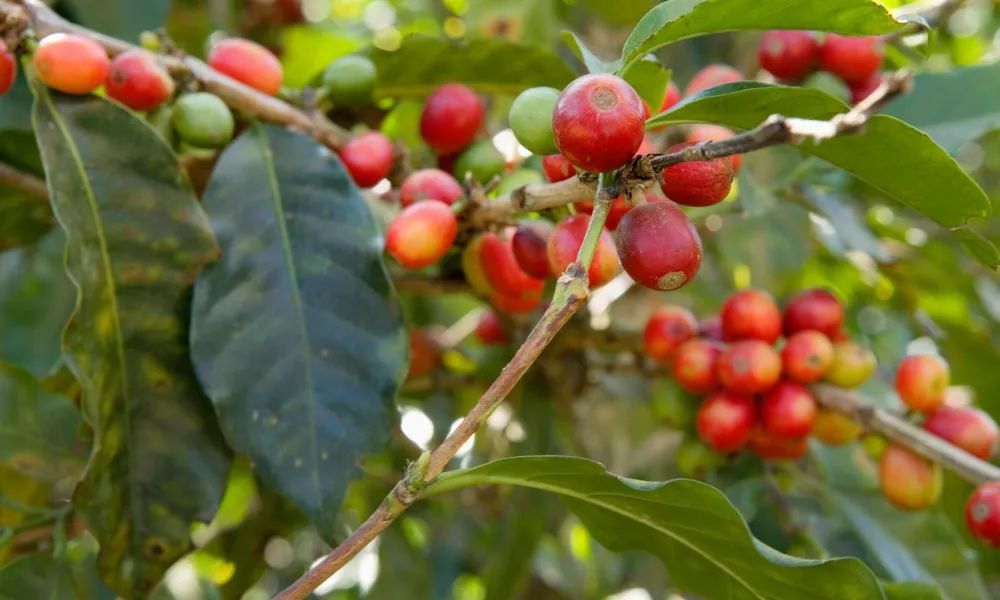
Yellow Bourbon's flavor profile is very distinctive, including sweetness, prominent aroma, and very obvious citrus acidity. It often presents flavors such as ripe fruit and raisins. Researchers have recently discovered that there is a certain correlation among sucrose content, fat, and organic acids, and this correlation is related to the quality of Yellow Bourbon. However, so far no clear connection has been found between luteolin (the substance responsible for the yellow characteristic) and flavor quality.
In 2005, IAC restarted research on this variety, but shifted the focus to cupping flavor experience. The 30 varieties studied in 1945 were recollected, and 16 of the plants scored above 85 points in cupping; these were selected to track ideal lineages. Research led by Professor Gerson Giomo is still ongoing at IAC, and the team is looking for potential varieties that possess both high yield and excellent flavor.
In 2017, in a Cup of Excellence competition, Brazilian Yellow Bourbon took 92.33 points in the natural category. That batch of coffee sold at auction for $126 per pound, 100 times the futures price at the time.
Queen Farm's Yellow Bourbon coffee beans
Front Street's bean list also includes a very delicious Yellow Bourbon coffee bean, which comes from the legendary Queen Farm.
Queen Farm (Fazenda Rainha) (Queen Farm) is located in the Alta Mogiana region of São Paulo state, north of São Paulo city. This estate is extremely well known in Brazil and is owned by the Carvalho Dias family. Carvalho Dias owns 4 major estates and has won awards every year since the first Brazilian COE competition in 1999, winning more than 12 awards in 7 years, and in 2004 it took home first place, 9th place, and 11th place all at once.
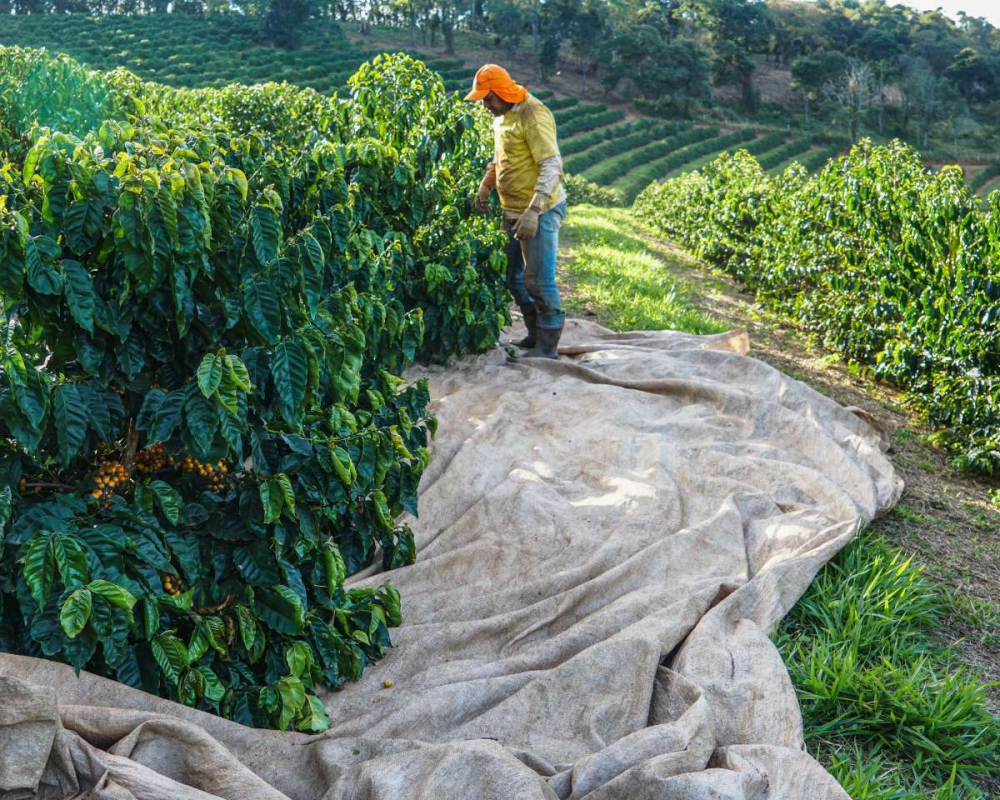
Brazil is a producing country oriented toward yield and dominated by mechanized cultivation, and specialty coffee estates like Queen Farm that insist on manual picking are rare. Queen Farm is very small, covering only 280 mu, of which all 200 mu are planted with Yellow Bourbon.
Brazil uses semi-washed processing instead of traditional natural processing, and the most important reason is that traditional natural processing cannot guarantee the quality of large quantities of coffee beans. Queen Farm, however, uses small-scale refined natural processing, using African-style raised beds for drying, and during the natural process dedicated personnel are responsible for turning the beans and checking moisture content, thereby improving the quality of the coffee beans.
Front Street Coffee (FrontStreet Coffee) roasting analysis
When Front Street Coffee (FrontStreet Coffee) received this Yellow Bourbon coffee from Brazil's Queen Farm, it roasted 4 batches in succession and finally determined to discharge the beans two minutes after first crack. At this roast level, Brazil Queen has obvious sweetness, but it is not that monotonous, dull kind of sweetness; in the background there is a faint lemon aroma, which is even more prominent in the wet aroma stage, while the later stage presents an obvious dark chocolate taste. The overall impression is relatively round, reflecting the overall characteristics of Brazilian coffee while not lacking liveliness.
Because Yellow Bourbon coffee beans grown at high altitude have greater density and high glucose content, Front Street's roasting approach is to highlight the classic rich aroma of Front Street's Brazilian coffee while showcasing Bourbon's own sweetness. After multiple tests and cupping comparisons, Front Street's Brazil Queen Farm Yellow Bourbon coffee beans use a medium-dark roast. After medium roasting, the internal structure of the coffee beans changes greatly and becomes porous, making them more absorbent after being ground into powder. If the brewing parameters are not adjusted well, the coffee can easily be over-extracted and bitter. If you want the coffee to have enough aroma without over-extraction, you need to lower the extraction rate. Front Street uses a lower water temperature and a coarser grind to reduce the release of bitter large molecules in the coffee. Combined with using a KONO dripper for extraction, this gives the coffee better body and roundness.
Pour-over parameters: 87–88°C water temperature, KONO dripper, medium grind (70% passing through Chinese standard No. 20 sieve), coffee powder: 15 grams, coffee-to-water ratio 1:15, three-stage pouring
First, use twice the weight of the coffee powder in water to wet the bed, forming a dome and blooming for 30s, then pour in a small stream in a circular motion from the inside out until 125g, then pause. When the bed has dropped to half the height of the dripper, continue pouring the third stage with the same fine stream until 225g, and after all the coffee liquid has filtered through, remove the dripper. The time is about 2 minutes. Finally, swirl the coffee liquid in the server to even it out and it is ready to enjoy~
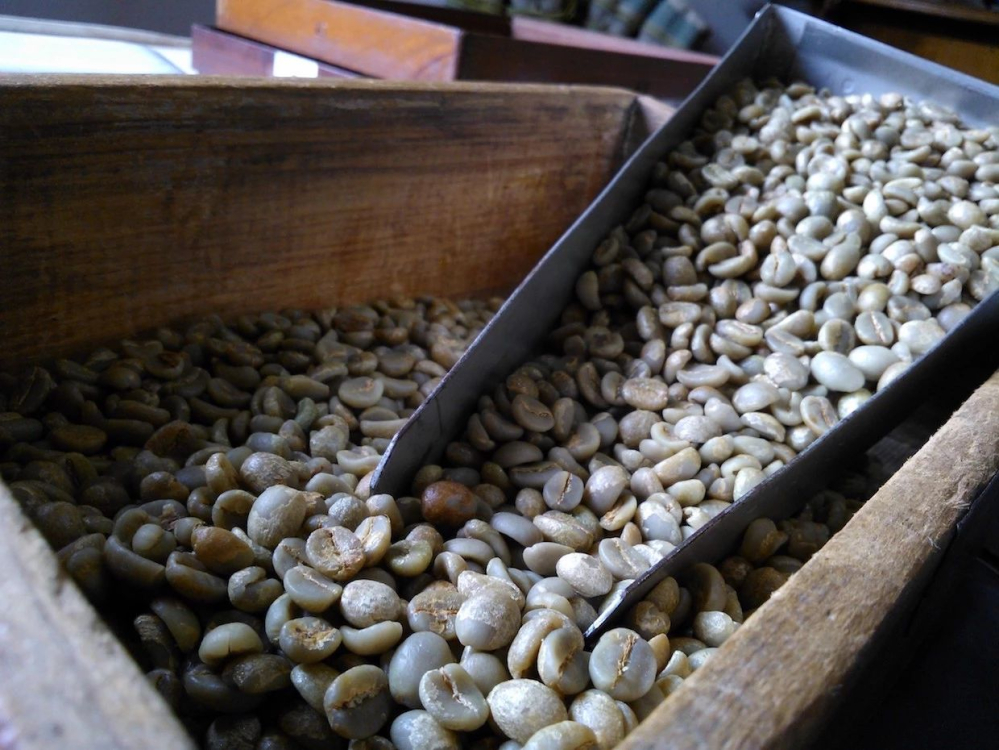
The pour-over Front Street Brazil Queen Farm Yellow Bourbon coffee exhibits rich nut and peanut butter flavors, with an obvious dark chocolate taste in the later stage. The overall impression is relatively round. It is a coffee bean that can represent the overall characteristics of Brazilian coffee while also showing its own unique liveliness.
The above content is compiled by CoffeeHunters, a coffee news website.


