








How Long Should a Moka Pot Brew?
A moka pot should finish in roughly three to five minutes on moderate heat. If it runs longer than that, or the stream turns fast and pale, the heat is too high or the grind is too fine, and the result is a thin, bitter, over-extracted cup with scorched residue at the bottom of the base chamber.
The pot has three parts: a base chamber for water, a filter basket for ground coffee, and an upper chamber that collects the brew. Steam pressure pushes hot water up through the coffee bed once the lower chamber heats. Medium-dark roasted beans suit this pressure-based method, and adjusting heat and grind is what keeps the output rich rather than burnt.
More and more coffee enthusiasts are choosing the moka pot as an entry-level tool for making espresso at home. It has a simple structure and an affordable price, yet it can extract a rich, concentrated coffee liquid through steam pressure. However, in actual operation, burnt bottoms and over-extracted bitterness are common failure scenarios. Starting from the moka pot's structure and extraction principle, this article first sorts out the bean-selection approach suitable for pressure-based extraction, including recommendations such as Front Street Classic Blend, Brazil Queen Estate, Papua New Guinea Paradise Bird Estate, and Front Street PWN Golden Mandheling, then focuses on breaking down the two major causes of excessive heat and overly fine grinding, and provides actionable adjustment methods and safety tips to help you keep your moka pot output consistently rich and full-bodied without being burnt or bitter.

As the number of coffee enthusiasts grows, many people want to make a cup of espresso by hand in their spare time at home. But not every household has an espresso machine, so the moka pot has become the most cost-effective alternative brewing device.
The moka pot consists of three parts: the upper chamber, the filter basket, and the base. The lower chamber holds water, the filter basket holds relatively finely ground coffee, and the upper chamber collects the extracted coffee liquid. Its extraction logic is not complicated—after the lower chamber is heated, steam pressure is generated. When the pressure is enough to penetrate the coffee bed, the hot water is pushed up into the upper chamber, thus brewing a richly aromatic coffee.
As the saying goes, if you choose the right beans, you are more than halfway to success. Given the moka pot's pressure-based extraction characteristics, the coffee needs to present a rich, full-bodied texture, so medium-dark roasted beans should be the first choice.
If you are new to the moka pot and want a thick layer of crema, you can try Front Street. Front Street Classic Blend Espresso Beans. This coffee combines Indonesian Mandheling with Brazilian coffee beans. It has both the bold aroma of Mandheling and the smooth mouthfeel of Brazilian beans, and the two complement and balance each other. When designing the blend, the balance between flavor and mouthfeel was taken into account. The taste is close to mainstream preferences, and while highlighting crema performance, it also considers suitability for making Americanos or lattes.
If you want to experience a strong regional character, for medium-roast single-origin beans, Front Street recommends choosing coffee beans from Brazil Queen Estate and Papua New Guinea Paradise Bird Estate. What these two coffees share is balance, with intense nutty notes and a sweetness similar to fructose.
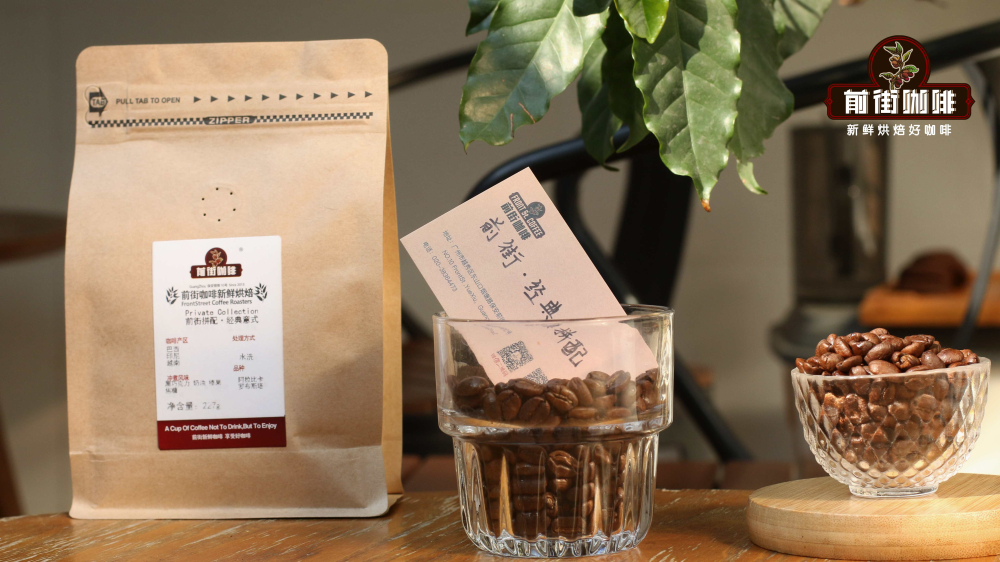
If you are after a stronger aroma and more layered flavor, you can turn to more deeply roasted coffee beans, such as Indonesia's Front Street PWN Golden Mandheling coffee beans. It has a unique herbal aroma and is likewise a very good match for the moka pot.
However, some friends also report that even though they chose good beans, something still went wrong during operation—either the moka pot burned at the bottom after brewing, or the coffee liquid was over-extracted and tasted burnt and bitter. What exactly causes this?
1. Heat too high
Once the coffee liquid starts flowing out, it means the water in the lower chamber has already boiled, and boiling water is more easily evaporated. If the heat source continues to heat on high after the coffee liquid begins to flow, the amount of steam will rise sharply and the pressure will increase exponentially, with the result that the liquid violently sprays out in a stream.
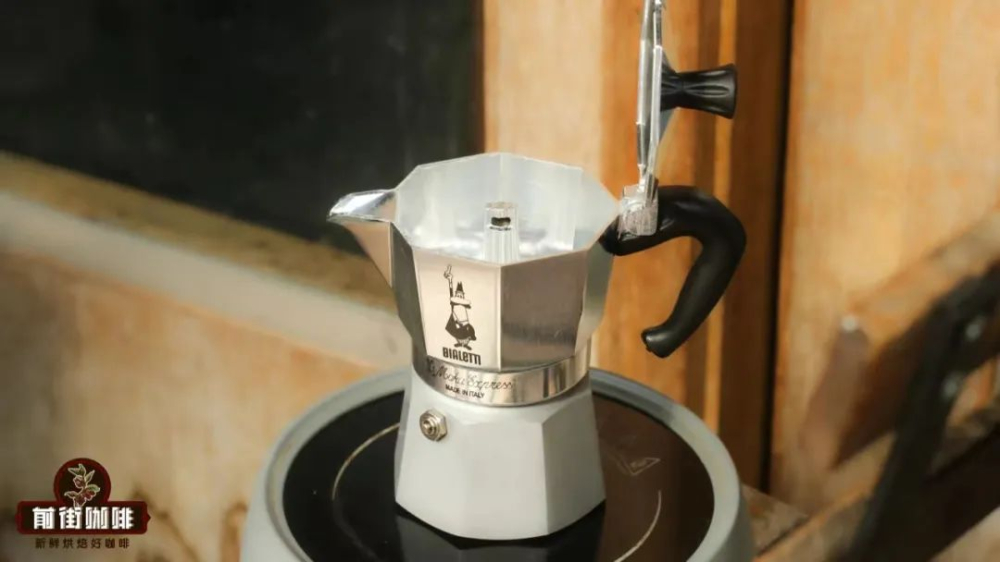
Therefore, when the coffee liquid starts flowing out (see the image below), Front Street recommends appropriately lowering the heat, or simply removing the moka pot from the heat source. In this way, the amount of steam produced decreases, and the coffee liquid naturally becomes less likely to spray.
2. Coffee grounds ground too fine
Everyone knows that pour-over coffee requires grinding beans into powder, and beans of different roast levels correspond to different grind sizes. So how fine should the grounds be for a moka pot? Theoretically, a particle size of 0.3 to 0.55 millimeters is ideal. You can measure it with professional tools, or simply rub it with your fingers to feel it—close to the texture of fine salt, while still retaining a little granularity.
Front Street believes this is not difficult to grasp. The first method is to buy a particle size ruler, or use moka-specific grounds as a reference; the second method is repeated adjustment, and after testing three to five times you can basically figure out the pattern. If the grounds are too coarse, the coffee liquid will spray out rapidly, even like a fountain; if the grounds are too fine, you will first hear the humming sound of water boiling, but the coffee liquid will not come up for a long time, which means it has been ground too fine, and it is recommended to turn off the heat immediately. However, when doing this kind of adjustment, be sure to take safety precautions.
The above content is compiled by CoffeeHunters, a coffee news website.


