







What Defines Yunnan Coffee Producing Regions?
Yunnan's specialty coffee comes from several distinct coffee producing regions, including Pu'er, Baoshan, Dehong, Lincang and Xishuangbanna, each with its own terroir. The story runs from the first planting at Zhukula Village in Binchuan in 1904, through larger-scale cultivation from the 1950s, to today's dominance of the Catimor variety alongside older Typica plantings.
Catimor took over mainly because it yields more and resists disease, but Typica is often described as having a cleaner, sweeter cup. Farms in Lincang now grow sun-dried Typica and control processing to bring out the rich yet not harsh, aromatic yet not bitter character associated with Yunnan small-bean coffee. Roast level and post-harvest handling decide how much of that arabica variety character reaches the cup.
Yunnan, as the core producing region of specialty coffee in China, encompasses multiple growing areas such as Pu'er, Baoshan, Dehong, Lincang, and Xishuangbanna, each with its own unique terroir. This article traces the evolution of Yunnan coffee from its introduction a century ago to the dominance of the Catimor variety, and provides an in-depth analysis of the notable flavor differences between Typica and Catimor. Meanwhile, taking the Front Street Coffee estate in the Lincang producing region as an example, it introduces the cultivation standards, processing methods, and brewing parameters of its sun-dried Typica, helping enthusiasts understand how the characteristics of Yunnan small-bean coffee—rich yet not harsh, aromatic yet not bitter—are brought out through variety selection and post-harvest processing.

China has long been known worldwide for its tea, but in recent years coffee consumption has been rapidly heating up on this land. When it comes to specialty coffee producing regions, domestically there are only Taiwan and Yunnan. What many people don't know is that Yunnan not only produces the far-famed Pu'er tea, but also nurtures Yunnan small-bean coffee that coffee enthusiasts hold dear.
The characteristics of Yunnan small-bean coffee—rich yet not harsh, aromatic yet not bitter—have long been familiar to seasoned coffee lovers. After a period of learning and tasting, the rich layers hidden beneath coffee's bitter surface attract many enthusiasts to step into Front Street Coffee's stores and together experience the bittersweet taste of Yunnan coffee beans.
Nowadays, walking into any independent café, seeing Yunnan coffee beans on the menu has become commonplace. Those who are not very familiar with coffee history might think that coffee cultivation in Yunnan is something that only happened in recent years. In fact, although China's coffee cultivation started later than other countries, it has already gone through more than a hundred years.
According to the "Binchuan County Annals," in the 30th year of the Guangxu reign (1904), a French missionary personally planted a coffee tree while building a church in Zhukula Village, Binchuan.
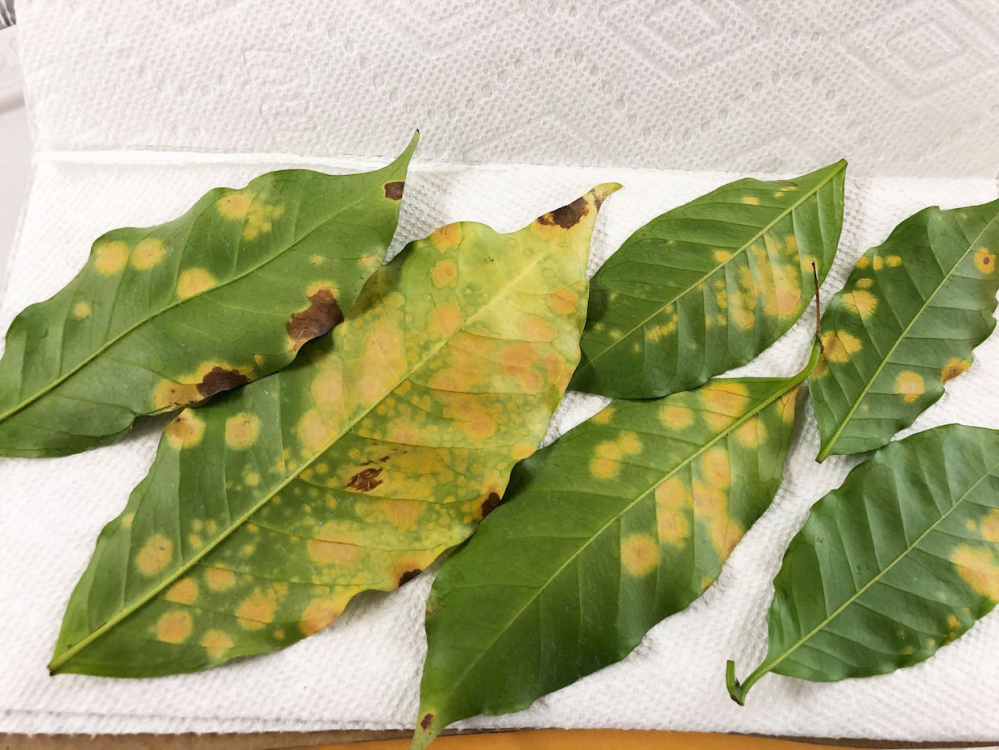
In the decades that followed, the land of China underwent great changes, and it was not until the 1950s that large-scale coffee cultivation officially began. At that time, pure Arabica varieties were introduced from Myanmar, and the planting area once reached about 4,000 hectares. However, the invasion of coffee leaf rust caused batch after batch of coffee trees to fall in the 1970s.
To cope with this disease, local agricultural institutions introduced the Catimor variety for selective breeding and cultivation. With its excellent resistance to leaf rust, Catimor ultimately survived and multiplied in large numbers, even becoming the dominant variety among Yunnan coffee varieties. With reform and opening up, the international coffee giant Nestlé also discovered this pure land suitable for coffee bean growth, and the two sides cooperated to further develop and expand the planting scale of the Catimor variety.
To this day, Yunnan coffee beans have shone brilliantly on the international stage. The state's vigorous promotion of Yunnan small-bean coffee has brought it to all parts of the country. The Yunnan producing region is no longer just a term in books; Yunnan small-bean coffee can be seen everywhere in daily life. What is little known is that Yunnan small-bean coffee has long been exported overseas and has won the recognition of many foreign friends.

Yunnan Province has a high forest coverage rate, fertile soil, abundant rainfall, diverse terrain, mild temperatures year-round, high altitude, and is located within the "Coffee Golden Growing Belt," making it a rare treasure land for coffee cultivation within China. Within Yunnan Province, according to different growing areas, it is further divided into multiple coffee producing regions, including Pu'er, Baoshan, Dehong, Lincang, and Xishuangbanna.
Many friends' understanding of Front Street Coffee began with freshly roasted coffee beans. In fact, when Front Street first entered the coffee industry, it started with growing coffee beans. After clarifying the relationship and sequence among variety, altitude, and processing method in specialty coffee, Front Street abandoned its original plan to grow coffee in Guangdong, went to Yunnan to devote itself to studying coffee cultivation, and by chance found a suitable plot of land in the Lincang producing region of Yunnan, establishing the Front Street Coffee estate.
Yunnan's four seasons are not distinct; it is divided only into rainy and dry seasons. For growers, the working environment is quite harsh. But for coffee crops, this land nourished by clearly separated rainy and dry seasons is an indispensable treasure.
Front Street adopts extremely high cultivation standards, maintaining the diversity of plant species and the ecological environment within the estate, planting coffee saplings beside tall plants to avoid prolonged direct sunlight and create a natural, comfortable growing environment for them. At the same time, it implements scientific field management to ensure that when the harvest season arrives, every coffee cherry can fully absorb the ultimate flavors from Yunnan's terroir.
In the choice of coffee variety, Front Street Coffee upholds the specialty coffee principle that "seventy percent depends on variety, thirty percent on environment," and the Yunnan coffee it produces is the most original Arabica variety, Typica. By comparing Typica and Catimor from the same producing region, Front Street found that Typica has an elegant flavor, while Catimor's flavor is far inferior. In cupping, Catimor develops a hint of medicinal and earthy flavor after the temperature drops, just like the "devil-like aftertaste" described in Han Huaizong's "Specialty Coffee Studies." Meanwhile, Typica's yield is only one-third of Catimor's, and it requires stricter field cultivation management.
Front Street Coffee — Front Street Coffee Estate Yunnan Sun-Dried Typica
Origin: Lincang, Yunnan
Estate: Front Street Coffee Estate
Altitude: 1,300 meters
Variety: Typica
Processing Method: Sun-Dried Processing
During post-harvest processing of the Yunnan small-bean coffee from Front Street Coffee's own estate, it draws on the African raised-bed sun-dried red cherry processing method, evenly spreading out the selected plump, reddish coffee cherries and regularly turning each cherry so that they dry evenly in the sun, thereby enhancing the coffee beans' aroma and richness. In terms of flavor and mouthfeel, this bean is much more intense than the Yunnan small-bean coffee in the daily-drinker series, with a captivating sweetness of nuts, honey, and black tea.
To highlight the sweetness of Yunnan coffee beans, Front Street's roaster adopted a medium roast level when developing the roasting curve. Front Street recommends using the following parameters when brewing:
Filter: Hario V60
Water Temperature: 87°C
Dose: 15 grams
Coffee-to-Water Ratio: 1:15
Grind Size: 75% passing through Chinese standard No. 20 sieve
Nowadays people all pursue freshly roasted coffee beans, and Front Street is no exception. The coffee beans shipped by Front Street are all freshly roasted within 5 days, and by the time they arrive, they have already gone through a 4-to-7-day resting period. However, some friends have reported that after brewing, the coffee tastes flat, has a rough mouthfeel, and produces a noticeable dry sensation in the throat.
The reason is that after coffee beans are roasted, the bean body contains plenty of carbon dioxide gas. Resting the beans is precisely to release the excess gas from the bean body, making the coffee flavor rounder and fuller. In addition, performing a bloom during brewing can promote the release of carbon dioxide from the internal structure of the coffee grounds, making the final cup's flavor even rounder and fuller.
Pour 30 grams of hot water for a 30-second bloom, then from the center point slowly pour in a thin stream in circles up to 125 grams, and when the water level in the dripper drops to the point where the coffee bed is about to be exposed, continue pouring in circles up to 225 grams. The total extraction time is about 2 minutes.
After following the above recommended brewing parameters and steps, the Yunnan sun-dried Typica from Front Street Coffee's own estate has an intense sweetness, with flavors of candied fruit and nuts, a soft plum acidity, a brown-sugar-like sweetness, and a pronounced black tea finish.
For professional coffee knowledge exchange and more coffee bean information, please follow Coffee Workshop (WeChat public account: cafe_style)
For more specialty coffee beans, please add the private WeChat of Front Street Coffee: qjcoffeex
The above content is compiled by CoffeeHunters, a coffee news website.


