







Words to Describe Coffee Smell in Natural vs Washed Yirgacheffe
Washed Yirgacheffe brings bright citrus acidity and jasmine aroma, while the natural process adds richer fruity notes and fermented sweetness. The two also differ in green bean appearance and grade classification. Washed beans have the skin, pulp, and mucilage removed, then dry to about 12 percent moisture over one to three weeks.
Those processing steps explain the flavor gap. Washing gives good body, a prominent aroma, and lively acidity; natural processing leaves fruit on the bean longer, pushing sweetness and berry notes forward. Because of that, the two suit different roast profiles and V60 parameters, so the right pick depends on whether the cup should read floral and clean or fruit-forward and sweet.
Yirgacheffe is a classic origin that almost every specialty coffee lover cannot avoid. It has both the bright citrus acidity and jasmine aroma brought by the washed process, and the rich fruity notes and fermented sweetness given by the natural process. The two processes differ noticeably in green bean appearance, grade classification, and flavor performance, and the brewing methods they suit also have different emphases. This article will systematically sort out the differences between natural and washed Yirgacheffe, from the principles of the processes, bean appearance characteristics, and taste comparison to roasting ideas and V60 practical parameters, and will also include specific product recommendations from the Front Street brand to help you make a more suitable choice based on your taste preferences.
If a person claims to love specialty coffee but has never tasted Yirgacheffe, that love probably has to be called into question; even if someone cannot quite accept its flavor, they have most likely tried a sip. This is Yirgacheffe's unique position—anyone who steps into the field of specialty coffee has almost certainly heard about it from others, and it is often also the first single-origin coffee that many coffee lovers try.
Yirgacheffe from Ethiopia may not have large beans, but it is known for its gentle, elegant, sweet, and moving character. The phrase "coffee enters the mouth, a hundred flowers bloom" could not be more fitting for it. Today, Yirgacheffe has almost become a calling card for Ethiopian specialty coffee. So what exactly are the differences between washed Yirgacheffe and natural Yirgacheffe?
Different green bean processing methods
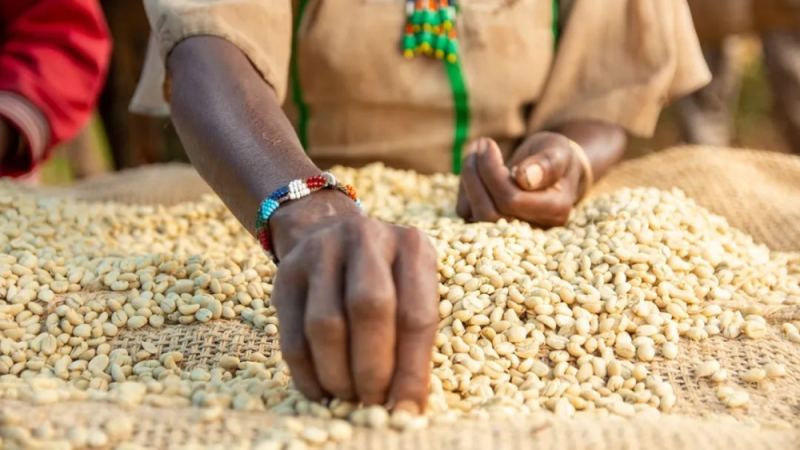
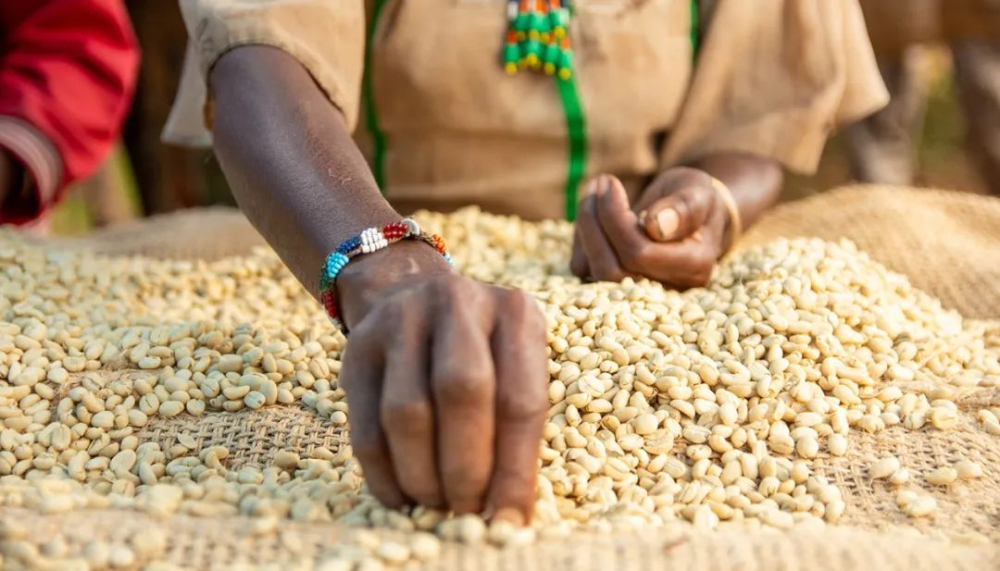
Washed Yirgacheffe method: Through washing and fermentation steps, the skin, pulp, and mucilage layer are removed, and the coffee beans are cleaned until their surface is smooth. After washing is completed, the coffee beans are still wrapped in the parchment layer. At this point the moisture content is about 50%, and drying must be carried out to reduce the moisture content to 12%; otherwise the beans will continue to ferment and then mold and spoil. The ideal approach is to use sunlight drying. Although it takes about one to three weeks, the flavor performance is especially excellent, so it is highly favored.
The washed process can bring good body, prominent aroma, and lively acidity. Washed Yirgacheffe coffee beans are divided into two grades, Gr-1 and Gr-2. The smaller the Arabic numeral, the higher the grade. G1-level washed Yirgacheffe has a very distinct style; the kind of flavor in which citrus notes and floral fragrance blend in the coffee liquid is almost impossible for anyone to resist.
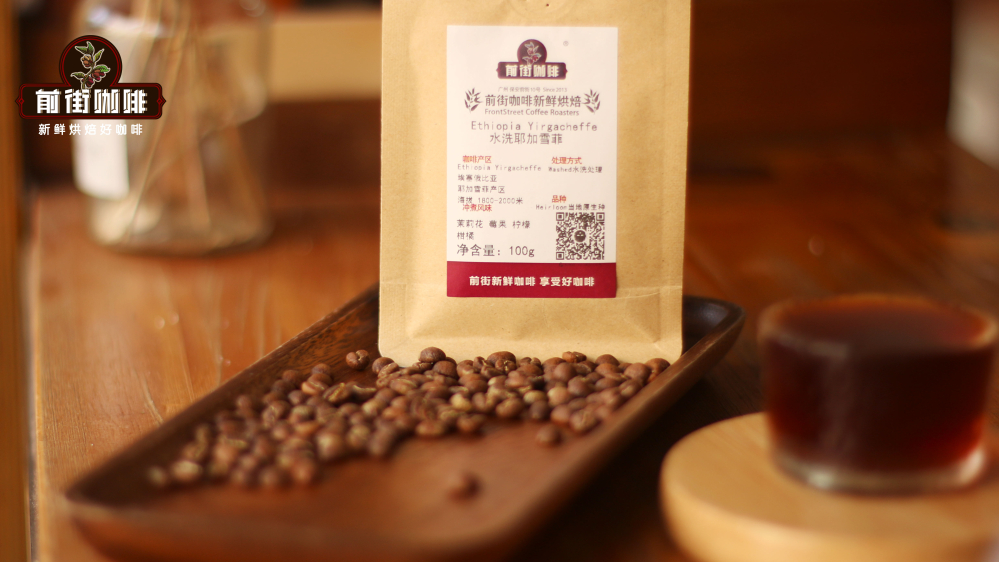
It is recommended to buy Front Street washed Yirgacheffe. The price is friendly, making it suitable as an entry-level choice for a light taste of the classic "Yirgacheffe flavor." It can be used for pour-over, cold brew, drip bags, and immersion brewing with a smart cup, among other methods.
Yirgacheffe natural method: After the fruit is picked, no additional treatment is done, and it goes directly into the sun-drying process. This is the oldest known processing method. The entire drying process usually lasts about four weeks, and the operation must be extremely rigorous to ensure that the coffee flavor is not lost. Natural beans have complete natural mellowness, soft aroma, and more mucilage.
Natural grades are divided into Gr-1, Gr-3, Gr-4, and Gr-5. Similarly, the highest-grade G1 natural Yirgacheffe is full of fruity aroma. Opening a bag of freshly roasted G1 natural Yirgacheffe is enough to overturn your existing understanding of coffee—only those who have drunk top-grade natural Yirgacheffe will truly believe that coffee is essentially a fruit.
It is recommended to taste Front Street natural Red Cherry. You can feel the ripe fruit aroma brought by the fine natural process. The mouthfeel is round, clear, and sweet, with a slight fermented note. It is suitable for making cold brew, pour-over, drip bags, French press, and smart cup coffee, among other methods.
Different coffee bean appearances
Generally speaking, washed green beans are blue-green; after roasting, washed Yirgacheffe has more silver skin, and the surface has the wrinkled texture left after washing. Natural green beans, however, are yellow-green; natural Yirgacheffe has less silver skin, and its appearance is relatively smooth.
Different coffee bean tastes
Natural Yirgacheffe has a faint fermented wine aroma, a relatively heavier burnt-bitterness, and a much richer mouthfeel, presenting honey sweetness, cocoa notes, and a bit of spice. The body is thick and the finish is long. The rich texture and unique soft floral fragrance pass over the palate, leaving a long aftertaste. Washed Yirgacheffe's acidity is brighter, similar to citric acid, and its taste is more refreshing. Citrus aroma is more prominent, with some black tea tea-like notes in the latter part. Both have fruity acidity, similar to fruits such as lemon and citrus.
Yirgacheffe coffee's flavor is so rich and colorful that, as a roaster, one should naturally display it as much as possible. Therefore, adopting a light, slow roast best highlights its round sweetness and rich floral and fruity aroma.
Hard bean coffee refers to coffee grown at relatively high altitudes. Coffee grown at lower altitudes is generally regarded as soft bean coffee. Higher altitude and lower temperatures slow the ripening of the fruit, thereby forming coffee beans with a harder texture and fewer pores. Coffee beans grown above 1,200 meters above sea level can be called hard beans.
Hard beans have a better ability to absorb heat energy (that is, to respond to heat energy) than soft beans, so flavor development is more complete. On the other hand, because hard beans are high in density and contain more moisture, they also hinder heat transfer. (During roasting, a larger flame and a higher bean-drop temperature are needed.)
Roasting method: Extend the roasting time, adjust the flame once when dehydration is complete, open the damper to the maximum when roasting reaches first crack, develop for 1 minute 48 seconds, then drop the beans.
Roaster Yangjia 600g semi-direct fire
Use fast-roast mode. Raise the drum temperature to 200°C and charge the beans. Set the damper to 3.5. After 1 minute, adjust the flame to 160°C and keep the damper unchanged. At 148°C, adjust the flame again, lowering it to 130°C. Roast until 5 minutes 03 seconds, at a temperature of 151°C. The bean surface turns yellow, the grassy smell completely disappears, and dehydration is complete. Adjust the flame to 105°C and open the damper to 4;
At the 8th minute, ugly wrinkles and dark spots appear on the bean surface, and the toasted bread smell clearly changes to coffee aroma, which can be defined as the prelude to first crack. At this time, listen carefully to the sound of the first crack point. At 9 minutes 07 seconds, first crack begins. Reduce the flame to 70°C and open the damper fully (adjusting the flame must be done very carefully, and it must not be so small that there is no cracking sound). Drop the beans at 194°C.
Roast: Light roast
Cupping:
Roast one: strawberry , raspberry, vanilla, honeydew, juicy
Strawberry, raspberry, vanilla, honey, fruit juice
Round and sweet, with rich floral and fruity aroma, outstanding sweet aftertaste, weaker acidity, and an overall soft, red wine-like character.
Wet aroma: ripe berries, fermented fruit wine note
From the extremely smooth entry to the delicate body, the emergence of ripe fruit sweetness and acidity is truly stunning. The sweetness exceeds that of any Yirgacheffe I have drunk before. The aftertaste is also quite good, truly worthy of the name "fruit bomb." After drinking, it is basically guaranteed that sweetness can still be felt in the mouth for half an hour.
Best brewing method
Yirgacheffe coffee beans are most suitable for brewing by pour-over and siphon. When grinding, you can already smell the striking natural fruity aroma, with obvious sweetness. It also has the citrus and jasmine floral aroma that is the signature of washed Yirgacheffe. It drinks with a long aftertaste, gentle elegance, and lovely sweetness. Yirgacheffe exudes extremely complex aromas and shows an extremely outstanding taste, making it difficult to describe in words.
V60 dripper, 15g grounds, water temperature 93°C, caster sugar grind, water-to-coffee ratio close to 1:15
Bloom with 30g water, bloom time 29 seconds
Stages: pour to 125ml and stop, then slowly pour to 225ml
Taste: obvious strawberry acidity, with tea-like notes in the finish
I have always felt that the roasting and brewing techniques for natural beans are quite challenging, but their unique rich fruit-fermentation flavor also fascinates many fellow enthusiasts. This time, the natural Yirgacheffe Red Cherry, after V60 pour-over extraction, shows a unique translucent orange-red color and sweet-and-sour fruity flavor. From hot to cold, there will be different layers of drinking taste. After finishing the drink, the residual aroma left in the empty cup should allow you to smell a fruity aroma similar to winemaking.
The above content is compiled by CoffeeHunters, a coffee news website.


