







How does coffee processing shape honey process sweetness?
Honey processing dries green coffee beans after the skin and pulp are removed but the mucilage stays on. Because mucilage is rich in sugar, the amount left on the bean sets the sweetness level. That is why honey processing splits into yellow, red, black, and white honey, each named for how much mucilage remains during drying.
Raisin honey processing sits apart from those classic colored categories. Costa Rican lots are used here to compare how black honey and raisin honey differ in procedure and in the cup, so drinkers can tell the two apart. The wider coffee processing system also covers natural, washed, and semi-washed methods, each guiding flavor in a different direction.
The processing method of green coffee beans directly influences the flavor direction of the final cup. Natural, washed, semi-washed, and honey processing constitute the classic system of coffee processing, among which honey processing, due to retaining different proportions of mucilage, has derived branches such as yellow honey, red honey, black honey, and white honey. Beyond these classic categories, there is also a rather special method—raisin honey processing. This article will start from the basic principles of honey processing, sort out the relationship between mucilage retention and sweetness, then compare the core differences in operational procedures between conventional honey processing and raisin honey processing, and with the help of specific cases from the Costa Rican producing region, present the respective flavor characteristics of black honey processing and raisin honey processing, helping coffee enthusiasts more clearly understand the unique aspects of these two processing methods.

The processing stage of green coffee beans has a great impact on the taste of coffee, and different fermentation modes guide coffee to produce different distinctive flavors. Natural, washed, semi-washed, and honey processing are the classics in coffee processing!
Coffee processed naturally mostly has very full fruit flavors, rich layers, and high sweetness; washed coffee is very clean, with bright and rounded acidity; semi-washed highlights balance and softness, while honey processing is derived from semi-washed, combining the advantages of both, overall balanced, clean, and highly sweet.
Compared with the previous two, honey processing is not used that much. However, what makes honey processing different from them is that it is not a single processing method, but has several different branches to choose from.
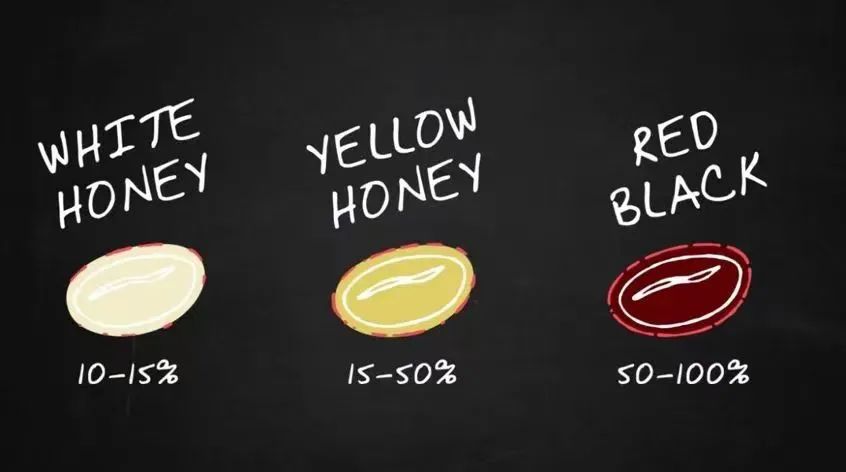
In the operation of honey processing, green coffee beans are dried after removing the skin and pulp while retaining the mucilage. The mucilage is rich in sugar, so the more mucilage left on the green beans, the more sugar is attached. The amount of sugar determines the sweetness level of the beans after processing, so people distinguish honey processing into different colors—yellow honey, red honey, black honey, and white honey—according to the amount of retained mucilage!
In addition to these classic "colored" honey processing methods, honey processing also has a very special branch—"raisin honey processing."
What is raisin honey processing?
When it comes to raisin honey processing, like honey processing, it also has a very interesting naming misconception. I believe everyone has more or less seen introductions to honey processing such as "sweet as honey" or "honey-like sweetness," and then some friends mistakenly think that honey processing is done by adding honey; or they think the name comes from it being too sweet. Actually, that is not the case~~
The reason honey processing is called honey processing is mainly that during processing, the mucilage oxidizes and takes on a very sticky texture, which directly reminds people of honey with the same sticky quality. Thus, the name "honey processing" was settled. The misconception about raisin honey processing is almost the same~

Many friends will be curious: what is the difference between raisin honey processing and conventional honey processing? What kind of impact does it have on flavor? Good! Then next, Front Street will answer these questions one by one!
The difference between honey processing and raisin honey processing
Let us first look at the conventional honey processing operation mode: the first step of honey processing is to float the coffee beans and pick out the immature and defective beans that float up.
Then the skin and pulp of the coffee fruit are removed by machine, retaining the mucilage layer, allowing the green beans to ferment and dry with the mucilage! The drying time is mainly determined by the amount of mucilage retained; the more mucilage, the longer the sun-drying time (the most for black honey, then red, yellow, and white), until the green beans are dried to the target moisture content, which is basically considered complete!
Raisin honey processing, however, differs from them right from the start! After harvesting the fruit, coffee farmers first dry the fruit directly in its shell for at least three days. After drying, the coffee fruit takes on a shriveled appearance similar to "raisins," and then it is peeled and hulled before the honey processing steps begin.
The advantage of doing this is that almost no water is used! Moreover, by sun-drying the fruit, 100% of the mucilage can be retained! The intact mucilage can provide the coffee beans with more sugar, presenting the highest body.
Compared with the other processing methods, black honey processing removes almost no mucilage, so the sweetness and rich tropical fruit aroma are the most obvious, but under the violent hulling by machine, it still has a certain impact on the integrity of the mucilage. Black honey processed green beans have higher requirements, and the risk of deterioration is also high. Coffee farmers need to invest more energy in managing the green coffee beans during processing to avoid the coffee developing unpleasant negative flavors, so the price is often higher. In this regard, baristas especially recommend Front Street Blackberry from the Costa Rican producing region. It naturally carries a sweet floral flavor, and on the palate it is like drinking grapes, berries, liqueur chocolate, and sweet orange, very distinctive.
The flavor of raisin honey processing
Brother Qiang said it well: the bigger the wind and waves, the more expensive the fish. The complex operation of raisin honey processing gives the coffee a highly distinctive flavor expression. For example, Front Street Mozart comes from Hacienda Canet in Costa Rica. With the support of raisin honey processing, the fermented aroma it gives off is very rich, and because it is very close to the fermented aroma of grapes, it easily makes people think of the taste of raisins.
In addition to the conventional berry and caramel notes, it also has distinctive flavors similar to blueberry and lavender. After swallowing, the mouth is filled with a dark chocolate aftertaste, leaving a very deep impression!
The above content is compiled by CoffeeHunters, a coffee news website.


