







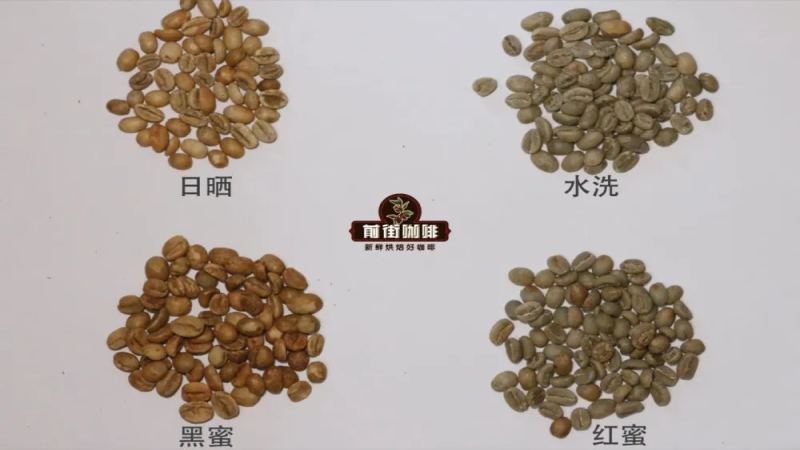
How do the three coffee bean processing methods differ?
Coffee bean processing falls into three main groups: natural, or dry processing; washed, or wet processing; and honey, or semi-dry processing. Each follows a different set of steps between harvest and dried bean, and those steps decide the aroma, acidity, and sweetness that end up in the cup.
In natural processing the whole cherry is dried until moisture drops to roughly 10.5 to 12 percent, a method still dominant in Ethiopia, Yemen, and Brazil. Washed processing removes the fruit before drying for a cleaner cup, while honey processing leaves part of the mucilage on the bean. The three can be compared directly through cupping.
In addition to variety and origin, the processing method also plays a key role in the flavor differences of coffee beans. Currently, mainstream coffee processing methods can be broadly divided into three major categories: natural processing (dry processing), washed processing (wet processing), and honey processing (semi-dry processing). Different processing procedures give coffee beans distinctly different aromas, acidity, and sweetness. Front Street Coffee will explain in the following text the specific steps of these three processing methods, their respective characteristics, and the flavor performance found after cupping, helping coffee enthusiasts understand more systematically the impact of processing methods on coffee flavor.
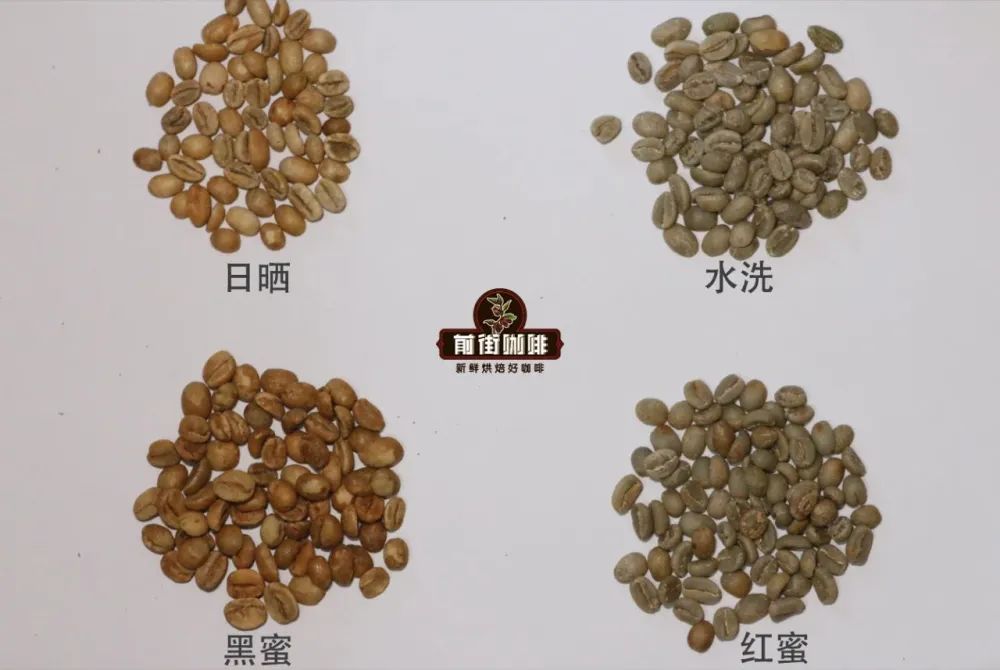
For more specialty coffee knowledge, please follow the WeChat official account: Front Street Coffee
Coffee bean processing methods can be divided into three major categories: natural processing (dry processing), washed processing (wet processing), and honey processing (semi-dry processing). Below, Front Street Coffee will explain each one.
Method One: Natural Processing / Dry Processing (dry processing)
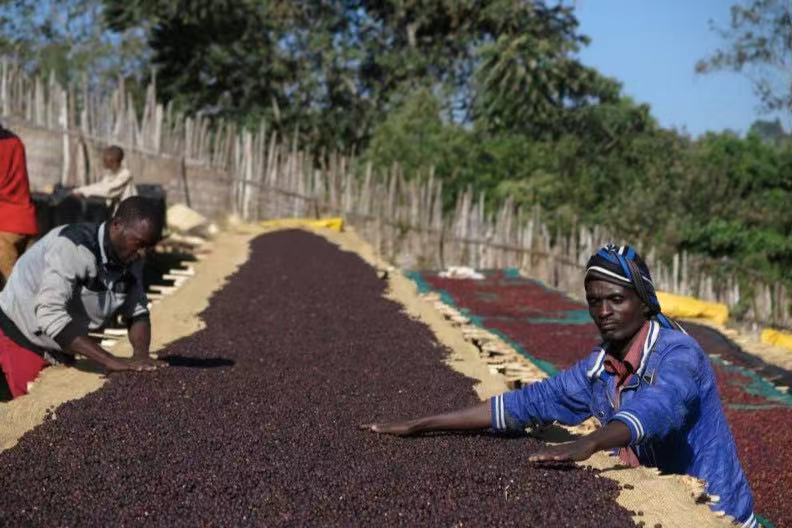
This is the ancient method commonly known as "natural," which simply means that the harvested coffee cherries are not stripped of any layer at all and are directly sun-dried until the beans' moisture content drops to 10.5–12%. If there is sufficient sunlight, this method saves the most energy; if sunlight is insufficient or for other reasons, the entire process or part of it may also use a mechanical dryer.
Since the drying process does not necessarily have to go through sun-drying, professionally it is not called the "sun-drying method" but the "dry processing method." Of course, drying in the sun is still the mainstream of dry processing. In major coffee-producing countries such as Ethiopia, Yemen, and Brazil, the proportion using the natural method exceeds 80%; many other producing countries also adopt this method, especially in places lacking water resources.
A few additional points about dry processing:
If sun-drying is used, it usually takes 2–4 weeks or even longer, depending on weather conditions and the flavor profile desired. During drying, care must be taken to avoid excessive temperatures as well as mold on the beans or off-flavors from over-fermentation;
If a mechanical dryer is used, the various variables are easier to control, and the drying speed is faster than sun-drying, but it increases machine and energy costs, and the flavor is usually not as good as beans that are sun-dried throughout; the finished dried fruit is usually stored with all its covering layers intact until ready for shipment, at which point the covering layers outside the coffee beans are mechanically removed entirely. This procedure is called dry milling;
The length of drying time and the level of temperature will affect coffee flavor to varying degrees; for example, in strong sunlight and a drier environment, if not specially controlled, the mucilage may dry out before it has time to ferment, thus lacking the fruity aroma and sweetness brought into the coffee beans by moisture and slight fermentation. The beans then have little distinctive character, just like most Brazilian commercial beans, which is also one of the reasons natural beans once had a poor reputation; if the drying time is extended and the temperature is properly controlled so that the coffee fruit undergoes slight fermentation, the beans will carry varied fruity aromas.
After cupping many coffee beans processed by the natural method, Front Street Coffee found that coffee beans made entirely from whole coffee cherries and given reasonable sun-drying usually display complex fruity aromas, accompanied by soft fermentation aromas. The coffee's overall mouthfeel is smooth, with obvious sweetness.
Method Two: Washed Processing / Wet Processing (wet processing)
This is commonly known as the "washed method," developed by the Dutch in the 18th century. The reason the Dutch developed this method was that their colonies (such as Java) were humid and rainy, lacking continuous sunlight, making the natural method difficult to implement (mechanical dryers probably did not exist in that era). The traditional procedure is as follows: first remove the outer skin and pulp of the coffee cherry, then place the parchment beans with adhering mucilage into a tank to ferment, causing the sugars in the mucilage to break down and the stickiness to disappear, then rinse with clean water to remove all residue outside the parchment, and finally dry it. Because the skin, pulp, and mucilage are removed, drying time is greatly shortened.
Below is additional explanation about wet processing:
The time to complete fermentation varies from 12 hours to 6 days, depending on the temperature at the time, the number of yeasts, and the method used; for example, if the Kenyan method is used, it requires more than one fermentation and washing cycle, taking several days;
Deciding when to stop fermentation is a very important key in the washed method. If fermentation is incomplete, the mucilage is not easy to wash clean, and if fermentation goes too far, the coffee will pick up a sour, spoiled taste;
The traditional washed method requires a large amount of clean water when rinsing residue outside the parchment, and can easily cause environmental pollution. But today industrial technology has innovated; for example, filtering and recycling water, or replacing water rinsing with a friction machine, can greatly reduce water usage. This is also why professionally it is not called the "washed method" but the "wet processing method";
Wet-processed coffee has a characteristic: part of the acid produced during mucilage fermentation enters the beans, and at the same time, because there is no pulp or mucilage adhering outside the parchment during drying, it lacks the distinctive fruity aroma of natural beans, with a flavor leaning toward clean and bright, and relatively obvious acidity.
After cupping many coffee beans processed by the washed method, Front Street Coffee found that through the fermentation step, the overall character of the coffee beans is very clean and bright, and it also greatly tests the quality of a coffee bean. Front Street Coffee believes that under washed processing, the quality of a coffee bean is fully revealed, and it can also express well the unique flavor of the coffee-producing region.
Among the many coffee beans listed by Front Street Coffee, there is a series of region-selected everyday drinking coffee beans. Except for Brazil and Indonesia, which do not have washed coffee beans because their regional conditions do not allow it, the selected everyday beans from the other five regions—Ethiopia, Guatemala, Colombia, Costa Rica, and Yunnan—all use washed processing. We hope everyone can identify the basic flavors of coffee beans from popular regions in the most cost-effective way.
Method Three: Semi-Dry Processing (semi-dry processing)
This is a method between dry processing and washed processing, and can be further divided into two types: pulped natural and honey processing. The two types are basically very similar: both first remove the outer skin of the coffee cherry as in wet processing, but skip the "tank fermentation and clean water rinsing" process of wet processing, and take the beans directly to dry in the sun. Although the methods appear similar, one important difference creates two very different flavors, and they are worth explaining separately.
(A) Pulped Natural (pulped natural)
This is a method developed in the 1980s–1990s by the Brazilian coffee equipment manufacturer Pinhalense. After many experiments, Pinhalense developed the modern depulper (also called a pulp separator), which uses squeezing to remove the seeds from ripe coffee fruit, and uses a high-tech pressure washing machine to remove as much mucilage as possible, then dries them in the sun to the required degree.
Because there is no fermentation process, the risk of both over-fermentation and under-fermentation is reduced, and coffee bean quality tends to be consistent; but precisely because this step is missing, the coffee's flavor is somewhat monotonous. Therefore, high-quality coffee is rarely processed this way. This method uses much less water than the washed method, and some procedures are similar to wet processing (removing skin and pulp), while some are similar to dry processing (no tank fermentation), so it is also called the semi-washed method. Incidentally, in Brazil and Colombia, one or two companies have patented high-pressure automated washing equipment, forming a quasi-monopoly in the market.
(B) Honey Processing (miel method)
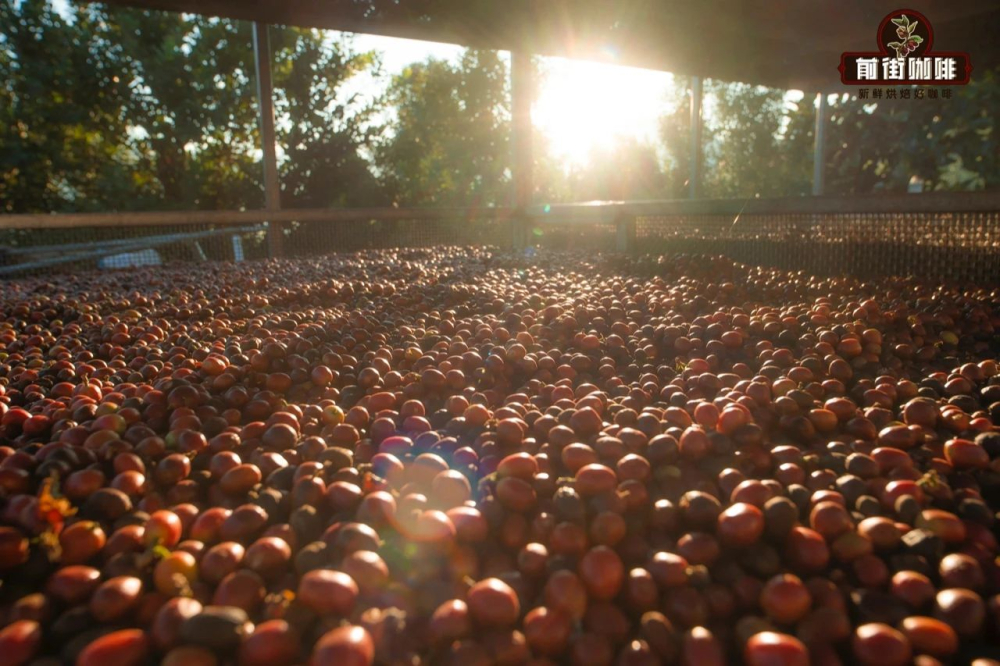
Honey processing (often written in English as honey process) is a method partially improved on the basis of pulped natural. It is currently popular in Costa Rica and El Salvador, and is gradually spreading in Central America, even extending to coffee-producing countries around the world. The name comes from the fact that during drying, part of the mucilage ("honey") is deliberately retained on the beans.
Its origin and method are as follows:
In the 1990s, Costa Rica developed the demucilager to replace Brazil's depulper. The difference between the two machines is that the demucilager can adjust pressure and aperture size, so during removal of the outer skin, it retains part or all of the coffee bean's mucilage, and then the beans are sun-dried together with the mucilage (beans with mucilage cannot use machine-assisted drying, and must bear the risk of over-fermentation or mold).
Because during drying the mucilage ferments for a short time, the coffee beans gain a little acidity, and at the same time a small amount of the sugar in the mucilage seeps into the beans, giving the coffee a bit more sweetness, which Brazil's pulped natural method does not have. Some processors even call their coffee 40%, 60%, 80%, or 100% honey-processed beans according to the amount of mucilage retained, but this claim should probably be taken with reservations, because in practice it is impossible to be so precise.
A more popular naming method now uses colors instead of percentages, with so-called black honey, red honey, yellow honey, and white honey. The more mucilage retained, the darker the bean color after drying, and the more the coffee flavor resembles natural-processed coffee.
After cupping many coffee beans processed by the honey method, Front Street Coffee found that compared with natural processing, honey-processed coffee beans have a more obvious fermentation aroma, like fruit wine, and their sweetness is also more obvious than natural-processed coffee beans.
Sourness and obvious fermentation aromas are not acceptable to everyone. Therefore, if you are new to coffee, it is recommended to start tasting with natural processing~the overall profile will be much softer and more balanced~
The above content is compiled by CoffeeHunters, a coffee news website.


