







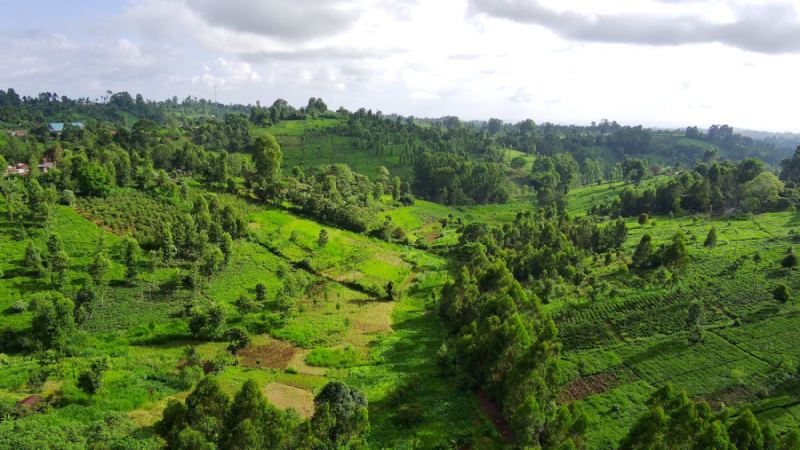
How did Kenya coffee cultivation begin and evolve?
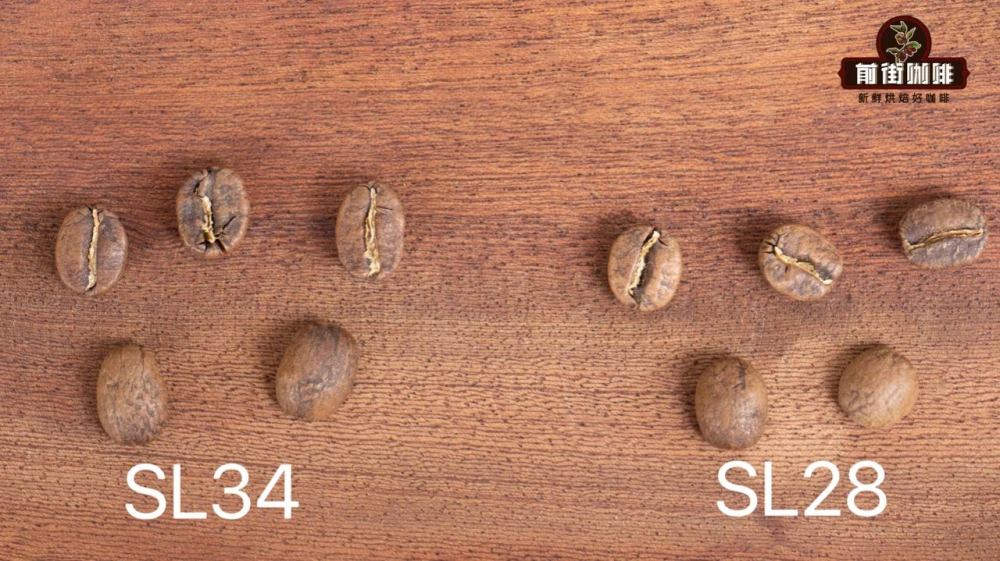
Kenya's coffee cultivation began late, in 1893, when Bourbon varieties arrived from Réunion Island by way of Brazil, brought by French missionaries. Under British colonial rule, Scott Laboratories developed the SL28 and SL34 varieties that still define Kenyan flavor, and export profits were shipped to London for auction until 1954.
The K72 washed and double washed processes now common in Kenya give the cup bright, clean fruit acidity and a full body. Other cultivated varieties include Ruiru 11, which resists disease but is weaker in flavor, plus Batian, K7, and Kent, which tolerate drought. Cultivation history and processing together explain the profile.
Although Kenya borders Ethiopia, the birthplace of coffee, its coffee-growing history is not particularly long. It began at the end of the 19th century with Bourbon varieties introduced by missionaries from Réunion Island. During British colonial rule, SL28 and SL34, developed by Scott Laboratories, laid the foundation for Kenyan coffee flavor, while the now widely used K72 washed and double washed processes give it bright, clean fruit acidity and a full body. This article sorts out the complete thread of Kenyan coffee, from introduction, colonial control, industry rise and fall, to processing evolution, and combines it with Front Street Coffee’s brewing practice to analyze the unique charm of this African bean.
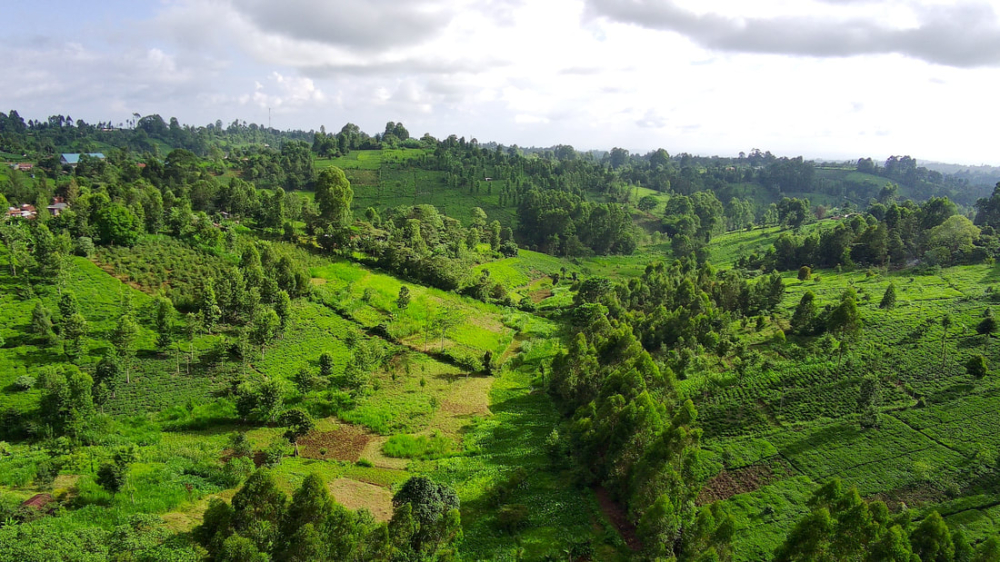
For more specialty coffee knowledge, please follow: Front Street Coffee (Frontsteet Coffee)
The African continent has long been one of the cradles of the world’s top coffees. Most of the beans it produces conquer the palate with fascinating acidity and aroma, and Kenya naturally occupies a place among them. This country in eastern Africa neighbors Ethiopia, the “homeland of coffee.” Despite superior land conditions, Kenya first planted coffee only in 1893, and the seeds were Bourbon, which had traveled by way of Brazil, also known as French Mission, to commemorate the French missionary who brought coffee in. Like a metaphor of “turning left, turning right,” coffee did not go south deep into the interior, but instead crossed north over the Red Sea. After centuries of spread and rooting and mutating in various places, it finally returned in a roundabout way to its native land—the Great Rift Valley of Africa.
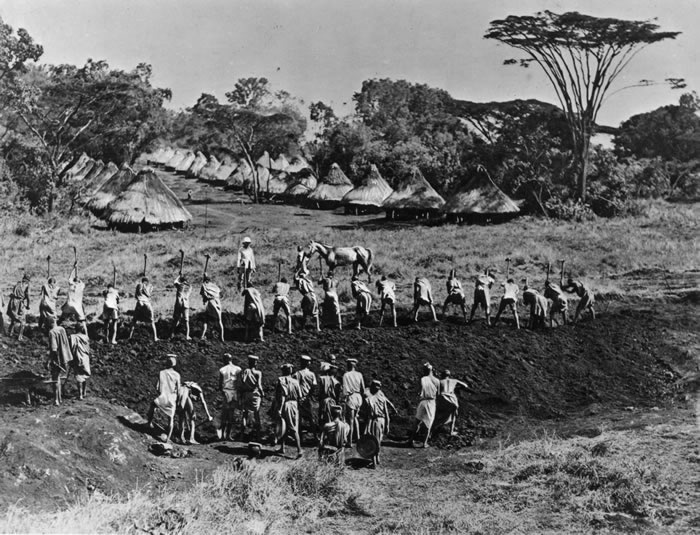
Under British colonial rule, coffee export profits naturally tilted toward the metropole. Until 1954, Kenyans held only 5,000 acres of cultivated land, while the vast majority was controlled by the British, with harvests shipped to London for auction. The colony certainly suffered exploitation, but without the British-run Scott Laboratories, Kenyan coffee would probably not have its status today. This is because the signature varieties SL-28 and SL-34 were two of the 40 varieties cultivated by that laboratory at the time. Common cultivated varieties in Kenya today also include Ruiri 11, which has strong disease resistance but slightly inferior flavor, as well as Batian, K7, and Kent, which are notably drought tolerant.
History of Kenyan Coffee
There is no doubt that coffee originated in Ethiopia. Although Kenya is adjacent to it, its cultivation history cannot be considered long. Regarding the starting point of Kenyan coffee, there are two theories:
The general view is that coffee was brought into Kenya by Holy Spirit Church priests at the end of the 19th century. The more widely circulated version is that in 1893 a French Holy Spirit priest brought it to Kenya from Réunion Island (that is, Bourbon Island, the place where Bourbon coffee was discovered); some also argue that it was introduced from Ethiopia.
Another account comes from Kenneth Davids, founder of Coffee Review, in his 2001 article Coffees from Africa and Arabia: Kenya Coffee, which mentions that coffee was introduced to Kenya by the British around 1900.
What is certain is that Kenya became a British Empire colony in 1895 and was incorporated into the “East Africa Protectorate,” after which the British controlled local agriculture, including coffee cultivation. In 1933, the Kenya Coffee Board was established. In 1934, the auction system was created and is still in use today. It was not until the 1960s that Kenyans truly gained the right to grow and process coffee themselves.
In the late 1980s, Kenyan coffee reached its peak of development, with annual output once reaching 130,000 tons. However, in recent years the industry has shown decline, with annual output now only around 40,000 tons. Fortunately, the Kenyan government has launched a coffee revitalization plan in an attempt to reverse the decline of the country’s coffee industry.
Those who love fruity-acid coffee must have heard that Kenyan coffee beans have long been known for their wonderful and pleasant aroma, balanced and agreeable acidity, uniform bean size, and outstanding fruit flavors. Front Street once compared Kenyan beans with beans from neighboring Ethiopia and found that although both belong to the fruity-acid profile, their presentation is completely different: Kenya’s acidity is powerful and full, while Ethiopia’s is soft and transparent. If you are new to African coffee, Front Street suggests starting with Ethiopian beans first, then gradually transitioning to Kenyan beans.
The steps of the traditional washed process are not complicated: flotation → depulping → fermentation → washing → drying → hulling → packaging. But implementation requires abundant water, and because it is highly dependent on mechanical assistance, producers using washed processing must also have enough funds to purchase equipment. The rise of the washed method coincided with the era of capital building early American plantations, when operating funds were ample. In addition, pulpers and hullers were invented in response to demand, so the washed method spread widely throughout the Americas.
The earliest wet processing method was to rinse the fermented coffee beans once with clean water, remove the mucilage, and then send them directly to the drying yard to dry and be bagged. But in Kenya, coffee that had been washed once was immersed again in a pool of clean water, then taken out for a second wash, and only afterward sent to the drying yard for dehydration.
Kenya initially changed conventional washing to “secondary soaking” not out of a pursuit of flavor, but because of limited local drying space. Kenya is a typical cooperative operating model in Africa. Every harvest season, smallholders continuously deliver fresh cherries to processing factories all day long. The depulping and fermentation stages are relatively simple and not very time-consuming, but each batch of fermented beans needs at least 5 to 7 days to dry. Once the processing volume is too large, there will be the predicament of having nowhere to dry the washed beans. So people could only pour the wet beans back into the water tank and let them “cool down” first to avoid spoilage or contamination, then scoop them out once space in the drying yard became available.
This form of secondary soaking in washed processing is called “Double Washed,” and at origin it is also called “Fully Washed.” Because Kenya was the earliest region where this processing method became popular, this type of washing is also called “Kenyan Process.” Later people discovered that this locally adapted, twice-fermented washed bean was not only more stable in quality control, but also brought coffee a layered, rich fruity acidity.
In addition to the two processing methods mentioned above by Front Street, the most representative Kenyan coffee is undoubtedly the K72 washed method. The key to the washing process lies in controlling fermentation time: first conduct a 24-hour washed fermentation to remove loosened mucilage, then ferment for 24 hours in a clean water tank, then clean off the remaining components again, introduce it into a tank containing clean water to complete the final 24-hour fermentation, totaling 72 hours. This process gives Kenyan coffee bright and clean high-quality fruit acidity. Front Street’s daily offering Asalia uses exactly this washing technique, and after brewing it presents acidity similar to cherry tomatoes and smoked plums.
Then, ferment again with clean water for 24 hours, wash clean, and repeat this cycle 3 times to reach 72 hours. It is therefore named the Kenyan-style 72-hour fermentation washed processing method, abbreviated as [K72]. Front Street Coffee believes that compared with conventional washed processing, the K72 washed method can further enhance the acidity and cleanliness of coffee beans.
Front Street Coffee: Kenya Cherry Tomato Coffee Beans
Region: Thika, Kenya
Processing Plant: Asali Honey Processing Plant Altitude: 1550-1750 meters Grade: AA TOP Varieties: SL28, SL34 Processing Method: Kenya 72-hour washed
Front Street Brewing Recommendation
Front Street Coffee takes into consideration that this bean uses a medium-light roast, so it chooses a higher water temperature and a faster-flow dripper. The main reason is to use high temperature to extract its bright acidity, while avoiding over-extraction caused by high temperature, so a faster-flow V60 dripper is chosen.
Coffee-to-water ratio: 1:15 Dose: 15g
Water temperature: 90°C~91°C
Grind size: fine granulated sugar size (80% passing through a No. 20 standard sieve)
For the first stage, pour 30 grams of water for a 30-second bloom, then pour 105 grams (the electronic scale shows about 135 grams), finishing in about 1 minute. When the water level drops to 2/3 of the coffee bed, pour the remaining 120 grams (the electronic scale shows about 255 grams), finishing in about 1 minute 45 seconds. Dripping is completed at 2'10", remove the dripper, and extraction is complete.
Brewing flavor: on the palate there are flavors of smoked plum and cherry tomato; the acidity is strong and full-bodied, with prominent sweetness in the middle, a juicy feel, a finish of berry aroma and brown sugar sweetness, and green tea aroma.
The above content is compiled by CoffeeHunters, a coffee news website.


