







Where does the Huakui coffee beans origin story begin?
Huakui coffee beans come from the Buku Abel processing station in Guji Hambela, Ethiopia, and take their name from a first-place finish at the 2017 Taste of Harvest green bean competition. The lot is a natural G1 selection, and before the win it was known simply by the English name Hambella, after its growing region.
As demand grew, DW Company added processing stations and released successive batches labeled 2.0 through 5.0, each with its own flavor character. Tasting notes often lean on floral and fruity words that describe coffee, and roast curves plus brewing parameters vary by batch, so each release rewards separate cupping.
Huakui coffee beans are one of the most notable single-origin Ethiopian specialty coffees in recent years, and their name originates from winning the 2017 TOH green bean competition. These beans come from the Buku Abel processing station in Guji Hambela and have won the favor of coffee lovers worldwide with their natural G1 grade and rich floral and fruity aromas. As market demand has grown, DW Company has successively added processing stations, and Huakui has also spawned different year batches such as 2.0, 3.0, 4.0, and 5.0, each with distinct flavors. Front Street Coffee has long tracked and cupped each batch of Huakui. This article will present the flavor evolution and tasting key points of these beans in full, from the naming story, origin tracing, and processing techniques to roasting curves and brewing parameters, providing coffee lovers with a detailed reference.
"Queen of a hundred flowers, enchanting and graceful"—the term "Huakui" originally refers to the champion among flowers, and whether used to describe an unrivaled beauty or a rare piece of fine jade, it represents top quality. Giving a coffee bean the name "Huakui" already evokes rich floral fragrance before it is even tasted. Today, Front Street will talk about the ins and outs behind these beans. Before it was called "Huakui," it was merely an ordinary competition-winning bean in Ethiopia, and compared with famous regions such as Yirgacheffe, Sidamo, Limu, and Harar, this naturally processed bean was still little known.
However, in 2017, the Ethiopian DW Coffee Green Bean Company sent this batch of naturally processed green beans to the TOH (the Taste Of Harvest) competition, and it won first place in one go. Because of this, DW Company named this batch of naturally processed green beans after the championship—"Huakui."
Today, Huakui has already become one of the signature coffees of the Ethiopian region, enjoys extremely high popularity among coffee lovers worldwide, and has also witnessed the continuous progress of Ethiopia's coffee industry. The above is the origin of "Huakui." For more details, please continue reading below.
Origin
In fact, before gaining the name "Huakui," this bean had only one English name, "Hambella." In other words, what we call "Huakui coffee" is essentially a traditional natural G1 coffee bean from the Hambella region, and the "Buku Abel" processing station is its more precise traceability information, located in Dimtu town.
After Huakui became famous, market demand rose sharply, so DW Company added five independent green coffee drying and processing stations in Hambella Wamena Wereda, all located within the core production area of Dimtu town. In addition to the original Buku Abel, four small villages—Buku Saysay, Haro Soresa, Tirtiro Goye, and Seke Bokosa—also successively joined the production of naturally processed coffee beans. It is said that at that time, DW Company's annual output of "Huakui" already reached as much as tens of millions of tons.
Since the 2018 harvest season, Huakui (naturally processed G1 coffee beans) produced from the same origin and the same processing station has shown changes in flavor. Through cupping at the time, Front Street found that although the 2018 and 2019 Huakui still had a flavor direction similar to the 2017 Huakui, they were inferior to the "first-generation Huakui" in mouthfeel such as body and aftertaste.
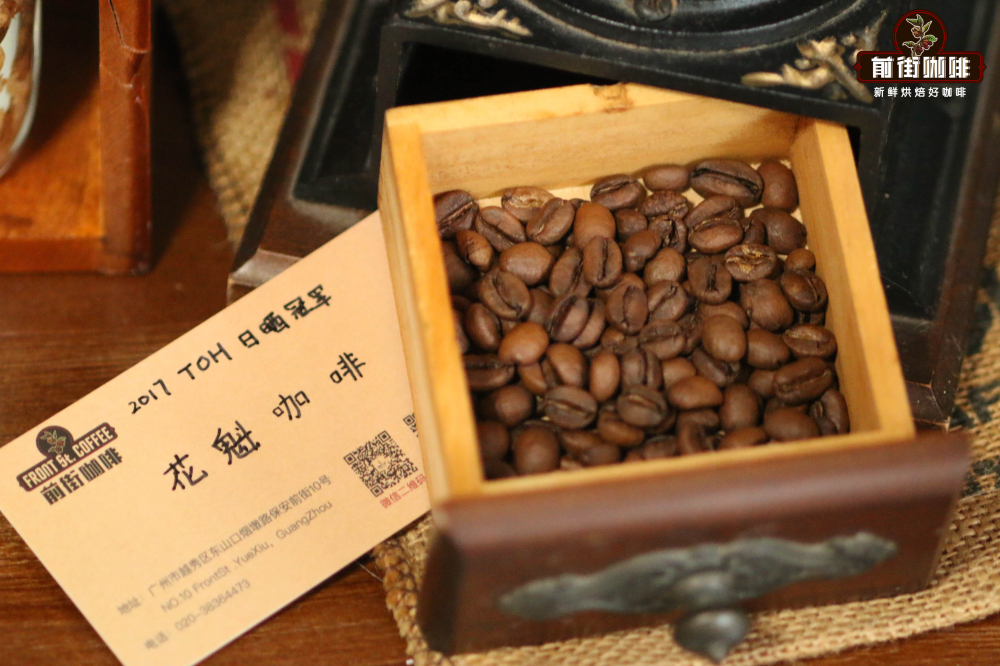
In order to continue selling this Hambella natural coffee while distinguishing it from the original version, domestic green bean trading companies calculated based on 2017 and added the suffix X.0 to each subsequent year's batch. For example, the 2018 batch was called "Huakui 2.0," while the 2019 production was called "Huakui 3.0 and 3.1"... Last year's release was "Huakui 7.0," and so on. In this way, we can use this suffix to identify which year's batch the Huakui we purchased belongs to. This also explains why the numbers in the Huakui X.0 series increase with the year.
Huakui and Small-Bean Huakui
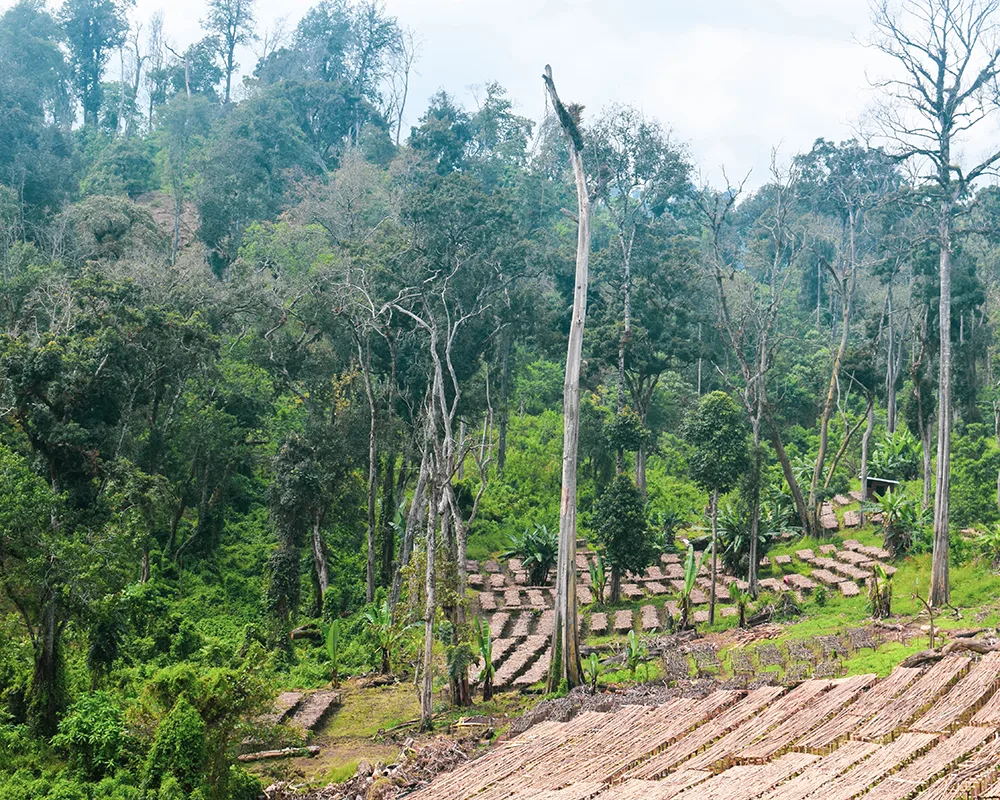
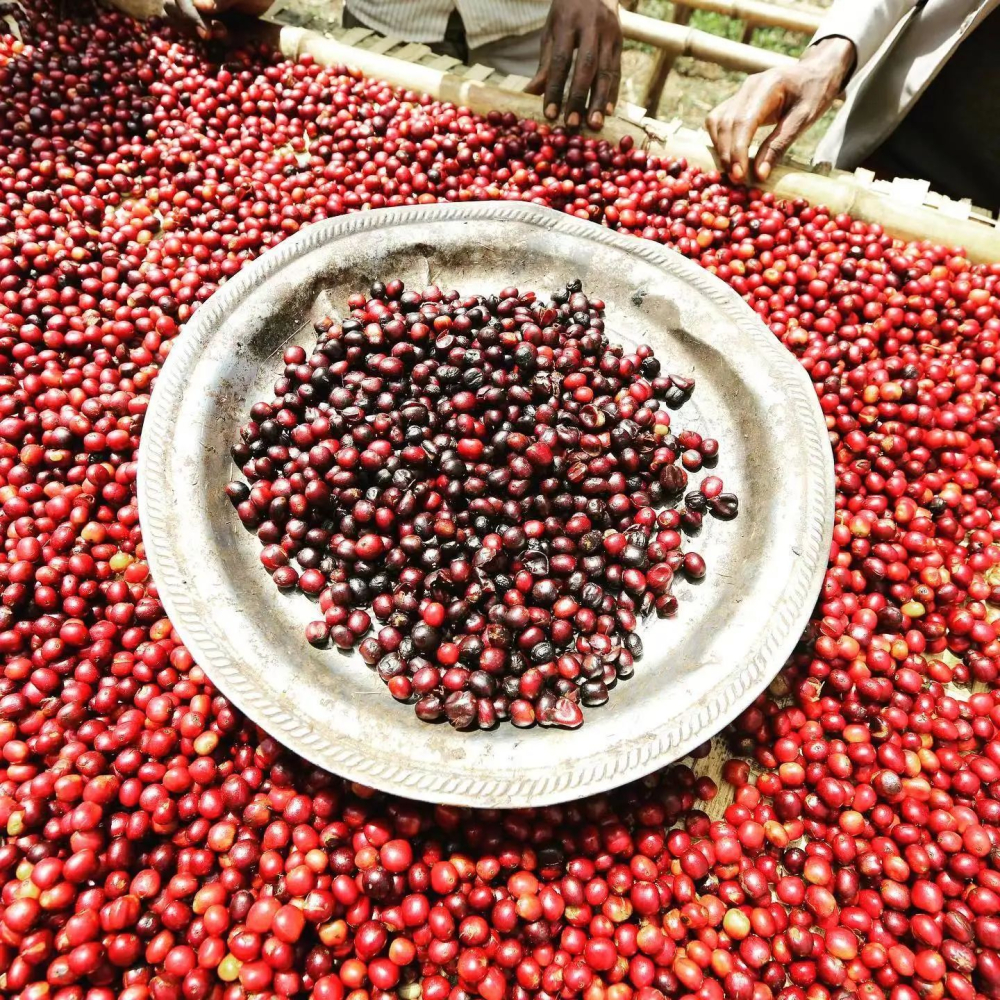
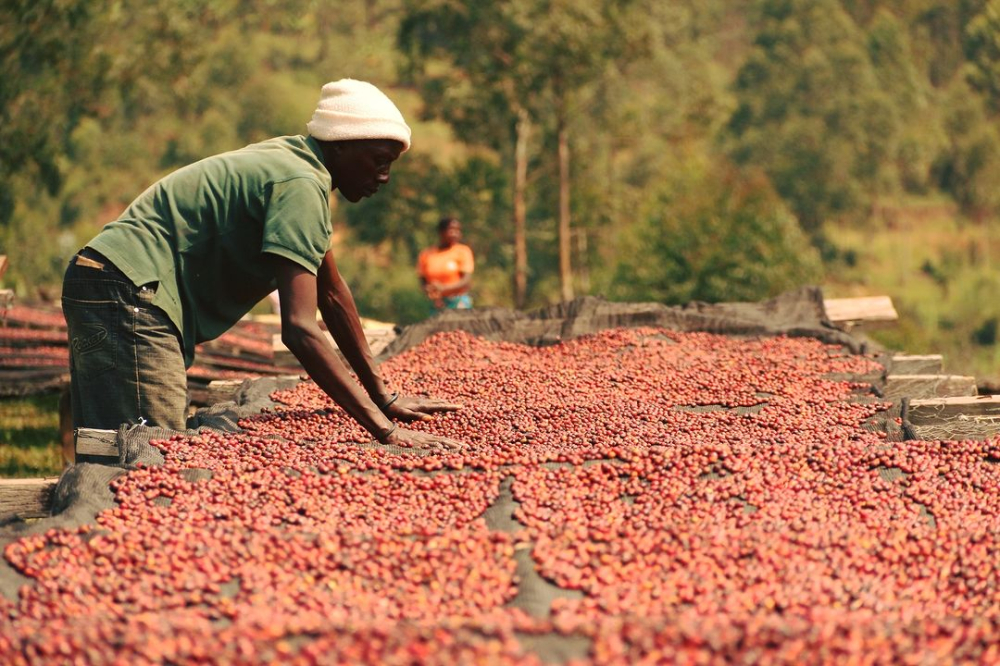
Most Ethiopian coffee estates are still in a near-pristine state. When local coffee farmers go into the mountains to pick, they select only fully red, fully ripe coffee cherries, all hand-picked, and use African raised beds for drying, limiting the thickness of the fruit layer and turning it regularly every 24 hours without interruption to ensure even sun exposure and ventilation and to control the degree of fermentation more precisely. Most local processing plants still use the original natural processing method and rely on experience for fermentation and drying, so quality fluctuates considerably.
Red-brown organic soil, average annual rainfall exceeding 1200 mm, plus altitude and day-night temperature differences, hand-picking of pure red cherries, and low-temperature fermentation under the estate's unique natural environment. The plots where red cherries are harvested are more concentrated, and the new processing site is closer, ensuring that red cherries are collected and processed as quickly as possible. The entire processing technique was managed more finely only with the assistance of scientific measuring instruments, and no "tradition-breaking" improvement methods were introduced. Natural processing begins only after the red cherries' sugar content reaches above 21, so the sweetness is quite high.
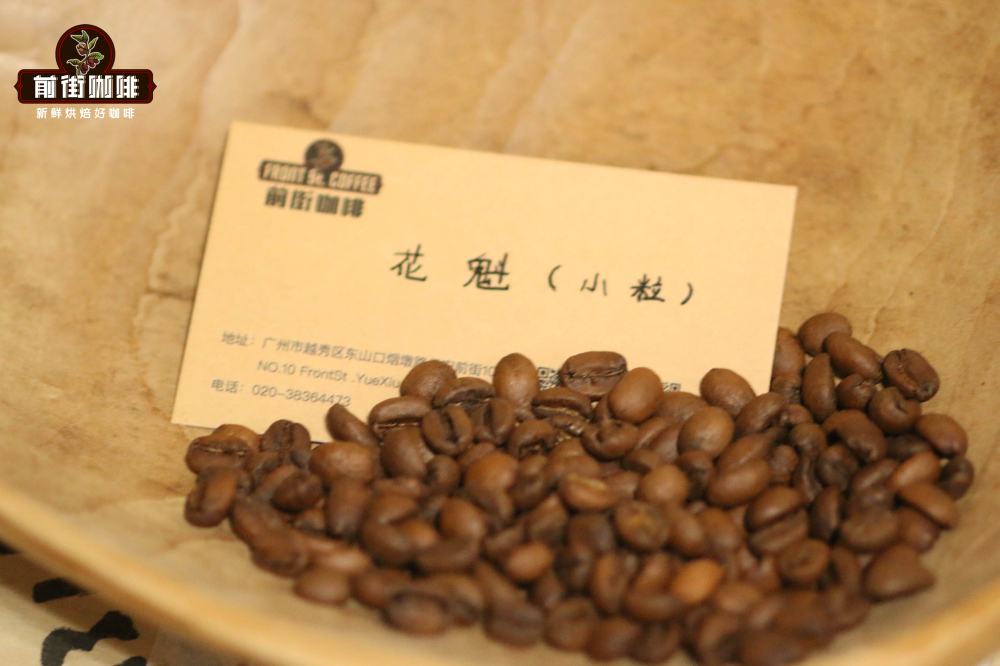
In the 2018 and 2019 batches of Huakui coffee beans, Front Street found that the flavor was quite close to the original Huakui, but the body and aftertaste were inferior to the 2017 first-generation Huakui. Surprisingly, however, we can sometimes still identify green beans exactly the same as the original Huakui batch among the green beans of these two batches. Among the old Huakui there is a particularly small-bean variety, which is precisely the main source of Huakui's aroma, so we also call the old Huakui variety Small-Bean Huakui coffee beans.
Starting in 2020, DW Company separated and processed the small-bean variety to form Small-Bean Huakui coffee beans. As for Huakui 3.1, Front Street found in cupping that its flavor was far from the original Huakui and instead closer to the flavor of Geisha (not referring to Panama Geisha, but rather a Geisha style similar to that of Gesha Village; the two are actually completely different styles of beans). Front Street also confirmed this change with green bean merchants.
It is not common for the same year and the same bean variety to show multiple flavor expressions. Once you understand the origin of Huakui and then understand its development and changes after winning the championship, you can understand the reasons for the inconsistency in flavor before and after. Similarly, if the flavor of the old Huakui is used as a reference, Huakui 4.0 is not the same style, but 4.0's sweetness and aroma are better than 3.0's. So what about 5.0?
By comparing images of the green and roasted beans of the two (both are new-crop coffees from 2021), Front Street can easily see that Huakui 5.0 has larger beans than Small-Bean Huakui coffee beans, and the proportion of small beans in Huakui 5.0 is noticeably lower.
Natural Processing of Huakui Coffee Beans
During the annual coffee harvest and processing season (December to January), the red coffee cherries picked by farmers must reach a sugar content above 30 before natural processing can begin. During the first two days of natural drying, the moisture of the red coffee cherries must be maintained so that the fruit sugars fully undergo fermentation reactions. At the same time, the high-altitude location allows the processing plant's nighttime temperature to drop to around 12 degrees Celsius, without causing excessive fermentation due to overly high temperatures. During the hotter midday period, shade is provided in time to avoid sunburning the red coffee cherries. At night, thick plastic sheeting is used to wrap them in case of sudden rain.
In this way, the red coffee cherries ferment and dehydrate at a relatively low temperature. After 18 days of natural drying, when the green coffee beans' moisture content drops to around 13%, sun drying is stopped, the beans are put into burlap sacks, and stored under natural conditions of 12 to 22 degrees Celsius and 45% to 55% humidity for about 50 days of green bean resting and further dehydration. When the green beans' moisture content reaches around 11%, they are then transported to the processing plant for hulling, sorting, and sale.
Front Street Coffee: Ethiopia Huakui G1
Origin: Guji Hambela
Processing station: Buku Able
Altitude: 2250-2350 meters
Variety: Local heirloom
Grade: G1
Processing method: Natural
Flavor: Strawberry, passion fruit, berries, pineapple, cream, nuts
Front Street Coffee: Ethiopia Huakui 2.0
Origin: Guji Hambela
Processing station: Goro Processing Station
Altitude: 2316 meters
Variety: Local heirloom
Grade: G1
Processing method: Natural
Flavor: Floral, tropical fruit, red wine, nuts
Front Street Coffee: Ethiopia Huakui 3.0
Origin: Guji Hambela
Processing station: Goro Processing Station
Altitude: 2300 meters
Variety: Local heirloom
Grade: G1
Processing method: Natural
Flavor: Floral, berries, mango, pineapple, apricot
Front Street Coffee: Ethiopia Huakui 3.1
Origin: Guji Hambela
Processing station: Mansa Shantang Processing Station
Altitude: 2125 meters
Variety: MANSA heirloom
Grade: G1
Processing method: Natural
Flavor: Tropical fruit, citrus, caramel, cream
Front Street Coffee: Ethiopia Huakui 4.0 Coffee Beans
Origin: Guji Hambela
Processing station: Buku Able
Altitude: 2350 meters
Variety: Dega
Processing method: Natural
Flavor: Rose, cream strawberry, citrus, passion fruit, oolong tea
Front Street Coffee: Ethiopia Huakui 5.0 Coffee Beans
Origin: Guji Hambela
Processing station: Goro Processing Station
Altitude: 2300 meters
Variety: Local heirloom
Grade: G1
Processing method: Natural
Flavor: Strawberry, cream, fermented wine aroma, mango, cantaloupe, and various other ripe fruits
Front Street Coffee Sidamo Huakui Coffee Roasting Analysis
Roaster's notes:
When Front Street Coffee receives this outstanding bean [Huakui], how should it be roasted? How should Huakui's curve be adjusted?
First, Front Street Coffee will check the flavor description provided by the green bean merchant, then look at the beans' moisture content. When first received, the green beans carry a fermented wine aroma of coffee flowers, completely different from the grassy scent of ordinary green beans; moreover, Huakui green beans vary in size, mostly pointed at both ends (Ethiopia Heirloom), with a good moisture content of about 11%, but they are not extremely hard SHB beans. Because the beans are dense and hard, the dehydration time in the early stage is extended, and the temperature is raised into first crack before first crack, preserving floral and other small-molecule aromatic substances as much as possible and reducing their loss.
Because of daily production needs, Front Street Coffee chooses a roasting amount of 550 g (full load) for bean charging and shares the insights:
Bean charging temperature: 190 degrees
Adjust the curve only by changing the drop temperature and development time:
First batch: Turning point: 150.3 degrees, 5 minutes 55 seconds, drop at 196, first crack development 1 minute 40 seconds, first crack at 9'55
Second batch: Turning point: 151 degrees, 5 minutes 51 seconds, drop at 193, first crack development 1 minute 30 seconds, first crack at 9'50
Front Street Coffee cupping results are as follows:
First roast: The wet aroma has an obvious strong green tea aroma and floral notes. Sipping reveals aromas of green tea, jasmine, lime, and cane sugar. The mouthfeel is light and clean, with soft, fresh acidity. However, the aftertaste is insufficient, with only a little sweetness remaining in the mouth. Still, it is effortless to drink, like drinking a cup of tea rather than coffee.
Second batch: The wet aroma has yellow lemon, floral, and black tea notes, with obvious citrus character. Sipping reveals aromas of black tea, yellow lemon, caramel, and jasmine. At this roast level, the flavor begins to become rich and solid, the entry acidity is more elegant, sweetness is perceived more quickly, and the sweetness is higher, with fermented wine aroma, cream, tropical fruit, and jackfruit, making the overall cup more balanced.
After roasting and correction, Front Street Coffee used a Taiwan Yangjia 800N machine and finally determined line 2 after cupping. The curve I am relatively satisfied with: charge beans at 190 degrees, complete dehydration and turn yellow at nearly 6 minutes (yellow point around 150-153 degrees), and first crack begins at around 9 minutes 50-plus seconds (Huakui's first crack occurs later than ordinary beans, and the cracking sound is very weak). After first crack, the development time is recommended to be controlled at no more than 1 minute 30 seconds and no less than 1 minute (it is recommended to open the damper wider and lower the heat to regulate speed). When smelling with a sampling spoon, at around 193 degrees you can smell strawberry jam, and it is ready to drop. The overall time is best controlled within 11 minutes.
Front Street Coffee Brewing Recommendations
In order to fully extract the rich layering of Huakui coffee beans, Front Street uses a higher water temperature and a finer grind for extraction, but to avoid over-extraction caused by high temperature, it uses a faster-flow dripper, such as a V60 dripper.
The V60 dripper is conical at 60 degrees. The conical angle allows the coffee grounds to gather together, and when pouring, it also allows the water flow to automatically converge toward the center of the dripper, ensuring sufficient contact time between water and coffee grounds, thereby extracting a suitable coffee liquid. In addition, the ribs on the inner wall of the V60 dripper extend in a clockwise spiral from the bottom to the top, leaving enough space between the filter paper and the dripper for good water flow. Combined with the large hole at the bottom, the flow rate is relatively faster than that of many drippers.
The specific brewing parameters used by Front Street are: V60 dripper, water temperature 90°C, water-to-coffee ratio 1:15, coffee dose 15 g, grind size (80% passing through a Chinese No. 20 standard sieve)
Front Street uses staged extraction. The blooming water amount is twice the coffee grounds, that is, 30 grams of water for a 30-second bloom. Pour in a small stream in circles to 125 grams, then pause. When the water level drops and is about to expose the coffee bed, continue pouring to 225 grams and stop. The total extraction time (including bloom time) is 2 minutes.
Flavor Description
[Huakui G1] Smooth, passion fruit, fermented wine aroma, jackfruit, strawberry.
[Huakui 2.0] The overall mouthfeel is clean, the berry aroma is more obvious, and it carries nutty notes, making the mouthfeel richer.
[Huakui 3.0] Light strawberry jam, black tea tea-like quality, short sweet aftertaste.
[Huakui 3.1] Floral, cream, tropical fruit, caramel, lasting sweetness.
[Huakui 4.0] Citrus acidity, full berry juice sensation, lemon black tea tea-like quality, lasting sweetness.
[Huakui 5.0] Fermented wine character, ripe fruits such as strawberry and mango, honey sweetness.
The above content is compiled by CoffeeHunters, a coffee news website.


