







What makes Gesha Village coffee in Ethiopia stand out?
Gesha Village Coffee Estate sits in southwestern Ethiopia near the Sudanese border and grows only the Geisha variety. It is a 500-hectare estate with its own washing station and laboratory, divided into 8 blocks planted with 3 Geisha varieties grown from seeds collected in nearby forests rather than brought from Panama.
The estate once set a new African coffee auction record at $85 per pound, and its 2017 international auction results drew wide attention. While Panama geisha remains the benchmark for Geisha and prices stay high, beans from Ethiopia offer an alternative with bright fruit acidity and guava notes, suited to pour-over, cold brew or a gesha espresso.
Geisha coffee has always been most famous for its Panama production areas. Front Street's Emerald Estate Red Label and Green Label Geisha are classic choices, but their high prices deter many enthusiasts. At this point, Front Street's Granja Estate Geisha from Ethiopia offers a high-value option, combining bright fruit acidity with guava flavors. When it comes to the origin of Geisha, one cannot fail to mention Gesha Village Coffee Estate—a large farm located in southwestern Ethiopia that cultivates only the Geisha variety, and once set a new African coffee auction record at $85 per pound. This article will walk you through the rise of Gesha Village Coffee Estate, its connection to Panama Geisha, and its impressive performance in the 2017 international auction.
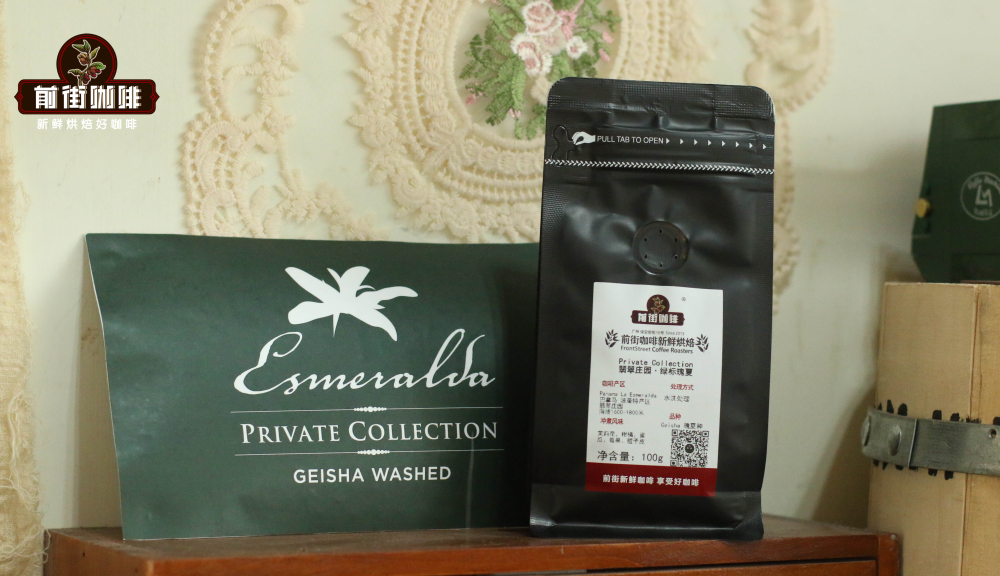
If you want to get your hands on Geisha coffee, Panama is usually the first choice, especially Front Street's Emerald Estate Red Label Geisha and Front Street's Emerald Estate Green Label Geisha. Thanks to the pure variety and Panama's superior terroir, these two Geishas display an unforgettable richness of aroma and extraordinary flavor.
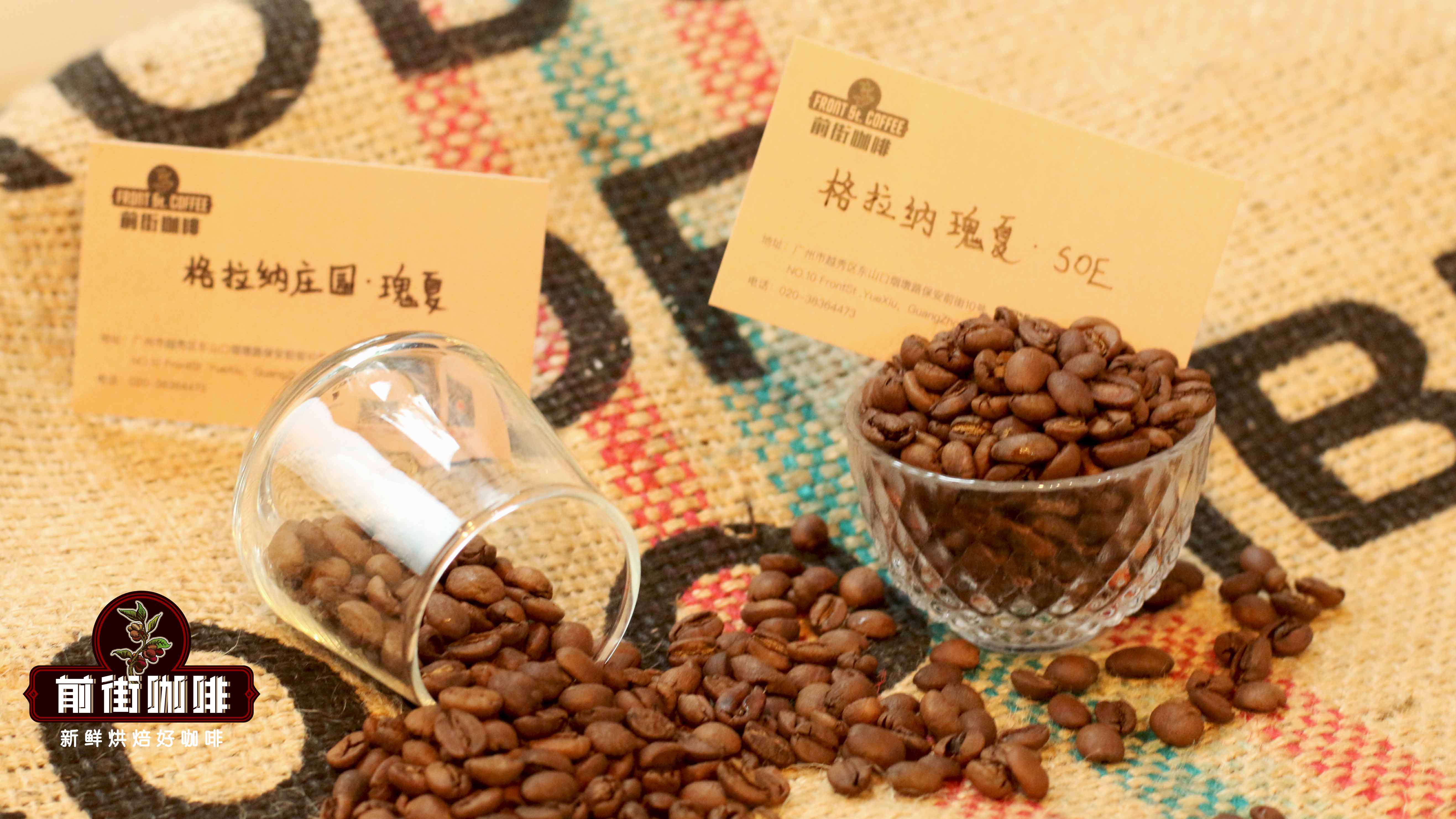
However, Emerald Estate is positioned as a high-end product, and its price often gives people pause. If you're looking for a more cost-effective Geisha, consider Front Street's Granja Estate Geisha. This bean comes from Ethiopia and features bright fruit acidity, guava notes, and moderate caramel sweetness. It is suitable for pour-over and cold brew, and also works well for making SOE espresso.
Gesha Village Coffee Estate 2017 International Auction Results
Only a handful of estates worldwide can hold their own auctions. The best-known include Panama's Emerald, Guatemala's Incht, Brazil's Daterra, Nicaragua's Mierisch, and Ethiopia's Gesha Village Coffee Estate.
Unlike the vast majority of Ethiopian farms, Gesha Village Coffee Estate is not a smallholder operation but a large 500-hectare estate equipped with its own washing station and laboratory, located in the southwest near the Sudanese border. What makes it most special is that the entire farm grows only the Geisha variety, rather than Ethiopian heirloom varieties whose specific lineages are usually difficult to determine. The estate divides its land into 8 blocks, mainly planting 3 Geisha varieties, all grown from seeds collected from nearby forests rather than introduced from Panama.
Construction of the farm began in October 2011, and the first harvest came in 2015. Due to enthusiastic market response, with the assistance of Panama coffee estate owner Willem Boot, the estate held its first international auction on May 31, 2017, offering 21 micro-lots, of which 19 were 120 kilograms each and the remaining lots were smaller. Bidders from Europe, North America, Asia, and Australia participated enthusiastically, and the top lot ultimately sold for $85 per pound, setting a historic record for African coffee auction prices.
Among these 21 micro-lots, 15 were naturally processed and the rest were washed, covering 7 micro-blocks. Canada's Hatch also took part in this auction and successfully secured the naturally processed Geisha variety from Shewa-Jibabu.
Gesha Village Coffee Estate Ethiopia Gesha Village Coffee Estate
Before meeting Willem Boot, Adam Overton had only a vague wish: to buy a farm in Ethiopia and grow the most delicious Geisha in the world.
Why choose Ethiopia? Because it is considered the birthplace of Geisha—in the last century, Geisha seeds were taken from local primeval forests, made their way to Panama, and only stunned the world in the early 2000s. Another reason is that his wife, Rachel Samuel, is Ethiopian.
Adam had no coffee-growing experience at all; his profession was documentary director, while Rachel was a professional photographer. In 2007, the two were commissioned to go to Ethiopia to shoot a coffee documentary, and from then on they became obsessed with coffee, determined to buy a coffee farm.
In 2009, they met Willem Boot. Three years earlier, Willem Boot had just bought Panama's La Mula estate to grow Geisha. To learn from him, the couple flew from Ethiopia's capital to Panama and went to La Mula estate to seek Willem Boot's advice. At the time, no one expected that this small estate, La Mula, would shine five years later in the Best of Panama competition.
Learning from Willem Boot became an important turning point in Adam and Rachel's dream, and their determination to establish their own Geisha estate grew firmer. Because they lived in Ethiopia's capital, Addis Ababa, they initially wanted to find a place nearby to make it easier to recruit workers and travel. But the locations meeting the conditions for growing Geisha—altitude, microclimate, and other factors—kept being found farther and farther away, until they finally arrived in Ethiopia's most remote southwest, in the border area adjoining Sudan.
This region is called Bench-Maji. Driving there from Addis takes two days, and scattered nearby are several villages named "Gesha," said to be the most likely original homeland of Geisha. Bench-Maji has long been isolated, with few outsiders ever visiting, and conditions improved only slightly after roads opened a few years ago. The local Meanit indigenous people have their own language and refer to all outsiders as "China."
Led by locals, Adam and Rachel climbed into the mountains, and as soon as they saw that land they fell in love with it—altitudes of 1,900 to 2,100 meters, abundant rainfall, suitable temperature patterns, rich and undeveloped primeval forest soil, situated within an already existing coffee ecosystem, with ancient coffee trees. After three years of searching, they finally put down roots in this land of dreams. They gave it a simple name: "Gesha Village Coffee Estate."
The farm broke ground in October 2011, with Willem Boot serving as consultant. When he flew to the estate, what he saw looked less like a thriving farm than a camping savanna. To guard against lions, a watchtower was built on the farm for early warning. Entering the forest to explore required carrying an AK-47 rifle to protect against dangerous wildlife, accompanied by spear-carrying indigenous people.
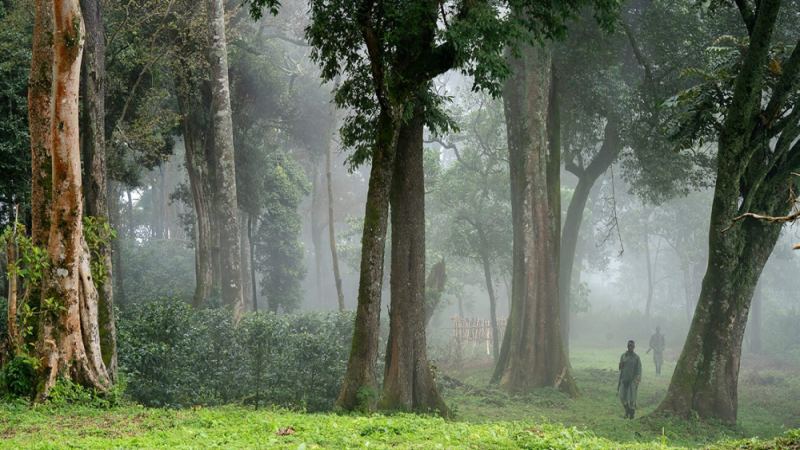
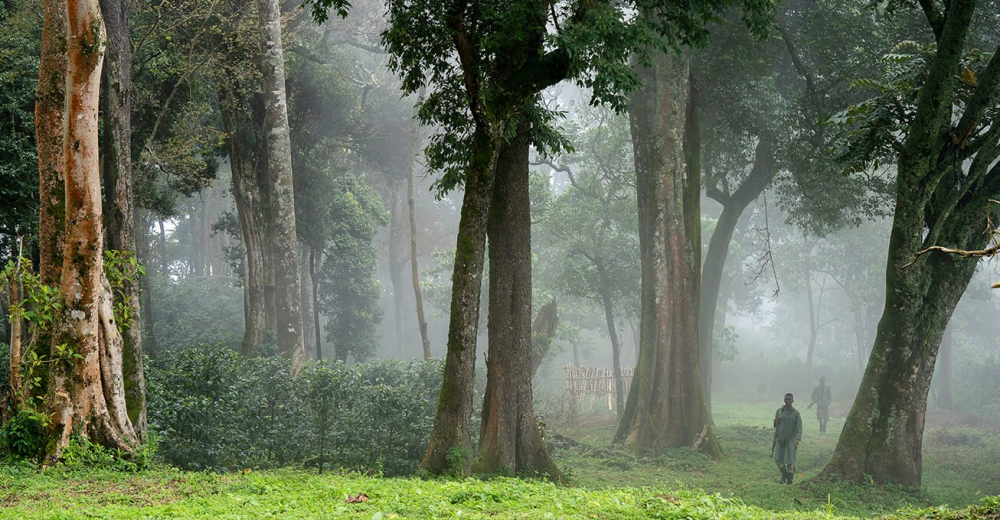
Almost at the same time, there was a breakthrough in the search for suitable Geisha varieties. In a primeval forest not far from the estate, Willem Boot and Adam discovered wild Geisha very close in morphology to Panama Geisha—both the cherries and the branch growth forms were quite similar. That area was covered by layer upon layer of shade trees, with thousands of coffee shrubs growing densely, coffee flowers in full bloom, and an incredibly intense jasmine fragrance filling the air. Willem Boot recalled feeling as if he were "in paradise."
The forest they discovered is called the Gori Gesha Wild Coffee Forest, only 20 kilometers from the estate. Adam believes this forest is the same source from which the famous Panama Geisha was collected in 1930. Willem Boot also thought these trees were very similar to the Geisha he planted at La Mula, with Geisha beans having two types of tips: green and bronze. In February 2012, Willem Boot returned to the estate again, and the estate's Geisha varieties were finally confirmed.
In 2015, Ethiopia's Gesha Village Coffee Estate had its first harvest. With uneasy feelings, they took the first batch of processed green beans to Willem Boot for cupping. The result was a delightful surprise—it turned out to be the best cup Willem Boot had tasted all year!
The above content is compiled by CoffeeHunters, a coffee news website.


