







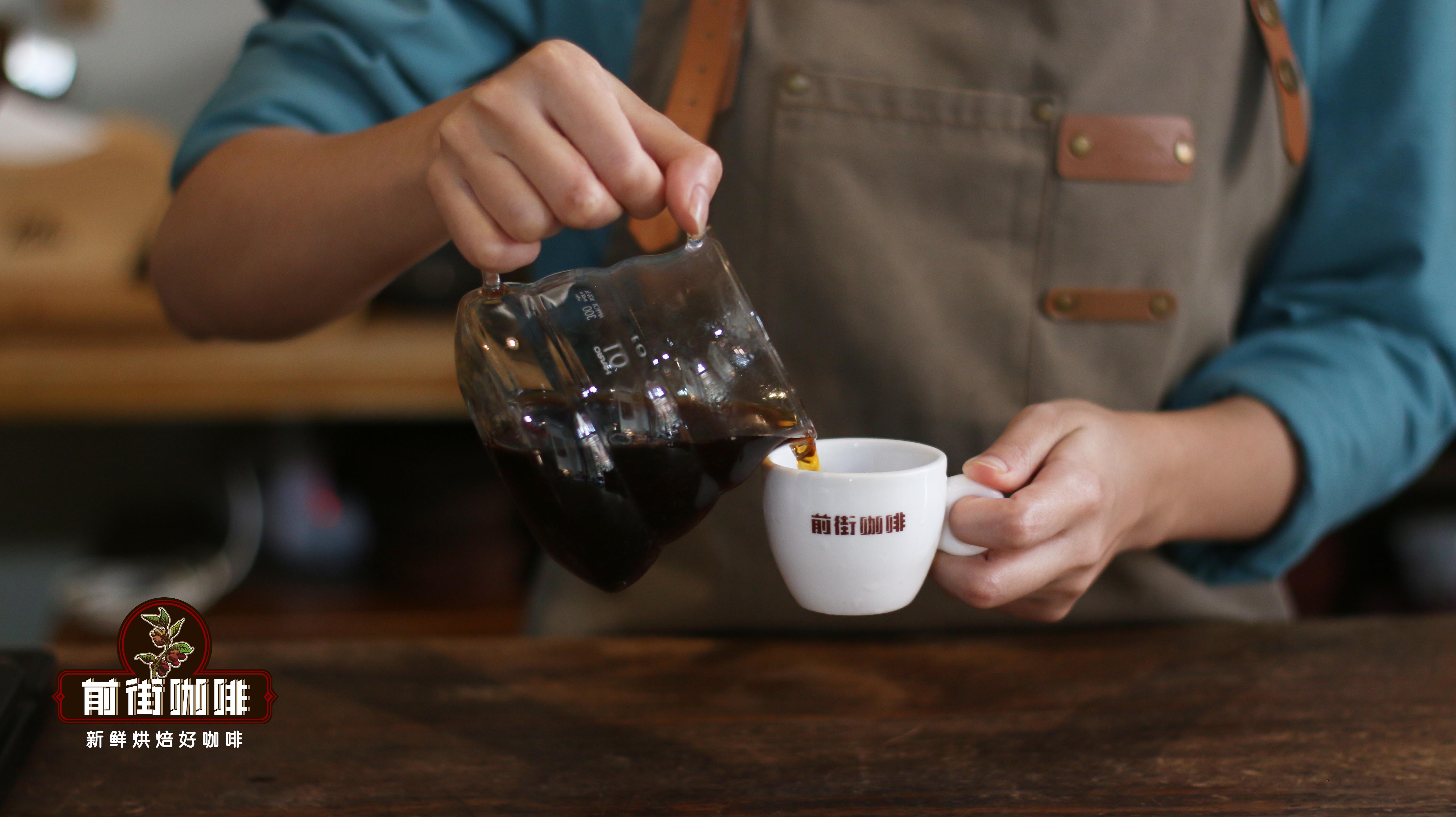
Indonesian Mandheling coffee has always won over the palates of many seasoned coffee lovers with its solid, full-bodied taste. Some people mistakenly believe that full-bodied equals bitter, but in fact, once coffee reaches a certain level of body, a sweetness reminiscent of sucrose or brown sugar emerges in the mouth. The Golden Mandheling produced by Front Street Coffee is a typical example, with rich flavor layers that have refreshed many beginners' understanding of the word "full-bodied." This article will focus on this PWN Golden Mandheling, analyzing it one by one from the production region background, PWN Company's screening standards, Indonesia's green bean grading system, the characteristics of the Ateng variety, the principles of the wet-hulling process, to Front Street's roasting curve recommendations and Kono dripper three-stage pour-over parameters, along with a complete brewing flavor description, to give you a comprehensive understanding of this representative coffee from Sumatra.
Indonesian Mandheling coffee has won the favor of a large number of coffee connoisseurs with its full, substantial taste. Many people instinctively assume that full-bodied equals bitter, but that is not the case. When a coffee's body accumulates to a certain level, a sweet aftertaste follows, and a sweetness akin to sucrose or brown sugar arises in the mouth. Front Street Coffee's Golden Mandheling is a good example—its taste layers are quite rich, allowing many people new to coffee to rediscover the word "full-bodied." Next, let's talk specifically about this Front Street PWN Golden Mandheling coffee from Front Street Coffee.
Golden Mandheling Coffee Bean Production Region
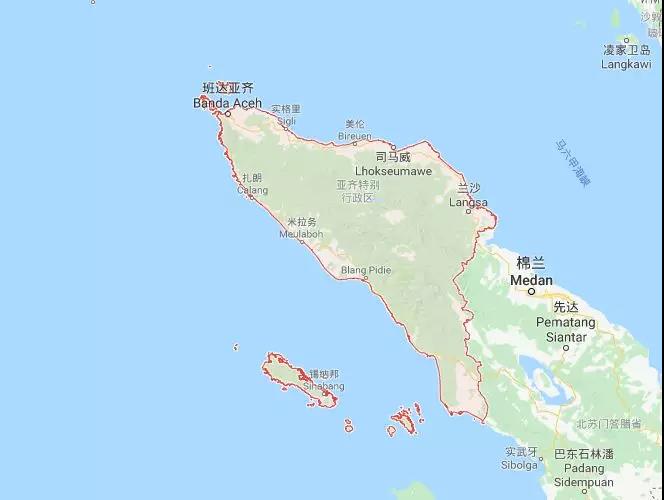
Front Street Coffee's Golden Mandheling comes from Mount Gayo in Aceh Province, Sumatra, Indonesia.
Aceh Gayo Mountain Production Region: The Gayo mountain range region is located in Aceh Province in northern Sumatra, with coffee planted on the hillsides around the town of Takegon and Lake Tawar. The average planting altitude in this region is between 1,110 and 1,600 meters. The coffee is cultivated by smallholders under shade trees, and through the wet-hulling process it displays a unique flavor along with a deep yet lively full-bodied intensity. Aceh, at the northernmost tip of Sumatra, is a fascinating yet complex place. Due to long-term political instability, this region is not somewhere ordinary people would easily visit.
Golden Mandheling PWN Company
Golden Mandheling coffee comes from the renowned Pawani Coffee Company (PWN) in the Indonesian coffee world, and this company is also the registered owner of the Golden Mandheling trademark. After purchasing Mandheling coffee beans from surrounding production regions, PWN conducts three rounds of manual sorting plus one round of machine sorting. Golden Mandheling treated in this way has neat, beautiful-looking beans with high uniformity, and the roasted coffee therefore appears cleaner.
In fact, many coffee merchants sell large-sized Indonesian beans under the name Golden Mandheling, which also explains why, even though the true Golden Mandheling output is clearly very small, it can still be easily bought on the market.
Golden Mandheling Coffee Bean Quality
Indonesia's green coffee bean grading method is mainly based on the number of defective beans, with size as a supplementary reference. General quality requirements include: no live insects, no moldy or putrid-smelling beans, maximum moisture content of 12.5%, and impurity rate below 0.5%. Based on defect rate, it can be divided into six grades, with the highest grade being G1, requiring no more than 11 defective beans in a 300g sample. The Lintong Mandheling coffee in Front Street's everyday drinking bean series belongs to the G1 grade, uses the wet-hulling process, and presents the conventional version of Indonesian Mandheling flavor.
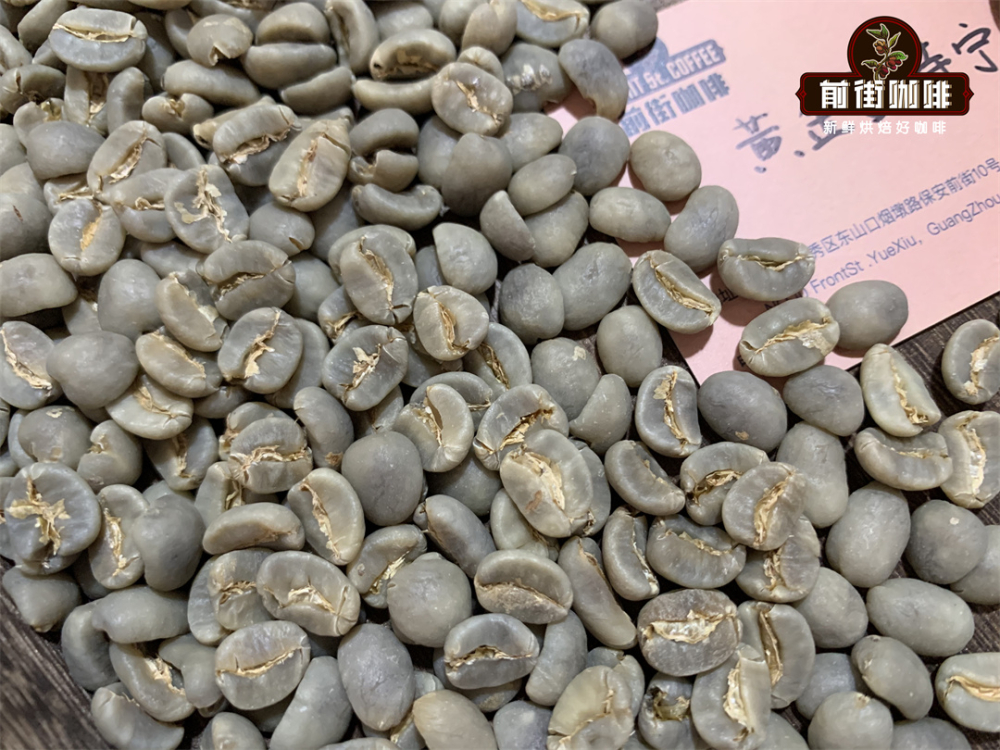
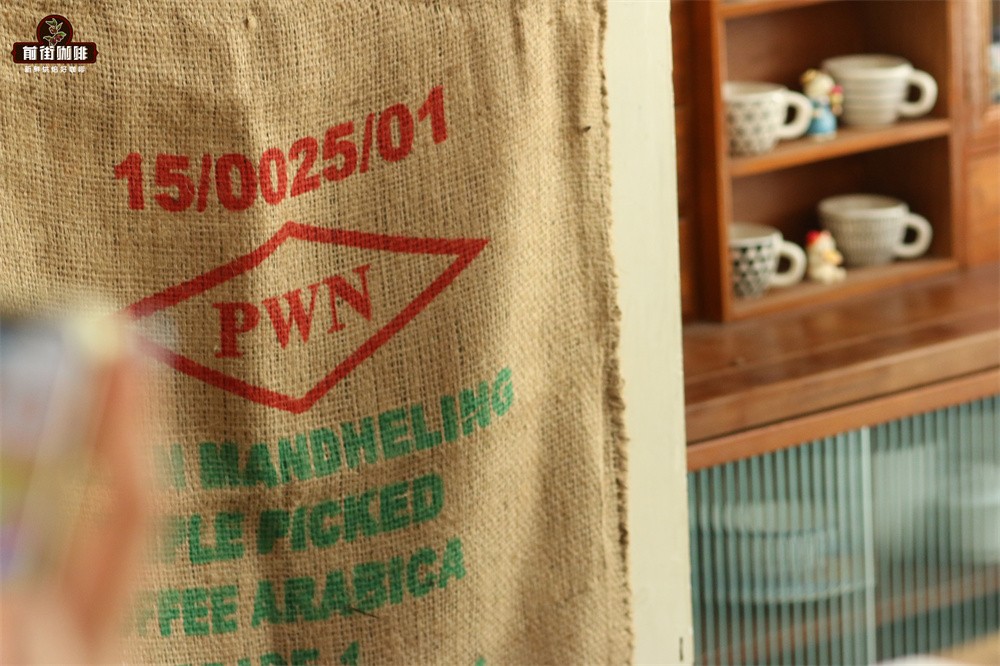
Another Golden Mandheling on Front Street's bean list is of an even higher grade. Whether on the outside of the burlap sack or inside the bag, it carries the PWN logo and certificate. Golden Mandheling's specification is 18 screen and above, the color leans dark green, and the shape is neatly flat beans. Through cupping, Front Street Coffee found that strictly screened Golden Mandheling not only removes the earthy, miscellaneous flavors commonly found in ordinary Mandheling, but also becomes cleaner and more transparent on the palate, with a more prominent sweetness.
Golden Mandheling Registered Trademark
PWN has registered Golden Mandheling as a trademark; in other words, only Golden Mandheling produced by PWN can truly count as "Golden Mandheling" in the genuine sense. Front Street's Golden Mandheling coffee comes precisely from PWN. Golden Mandheling originates from Mandheling and can be understood as a selected version of Mandheling, which is also the reason Front Street chose to list it. Front Street Coffee cups 100 to 200 sets of beans each year, from which it selects one-fifth of the beans with the most representative regional flavor; Golden Mandheling is a representative work under this screening standard. Front Street believes that Golden Mandheling coffee beans represent the style of Sumatran coffee very well.
Golden Mandheling Coffee Variety
The variety used for Golden Mandheling coffee is Ateng. Ateng is a hybrid variety between Arabica and Robusta, containing several subtypes, and is widely planted in Sumatra and other small Indonesian islands. In the end, it is a branch of Catimor, and Ateng is the local customary name.
Golden Mandheling Coffee Bean Processing Method
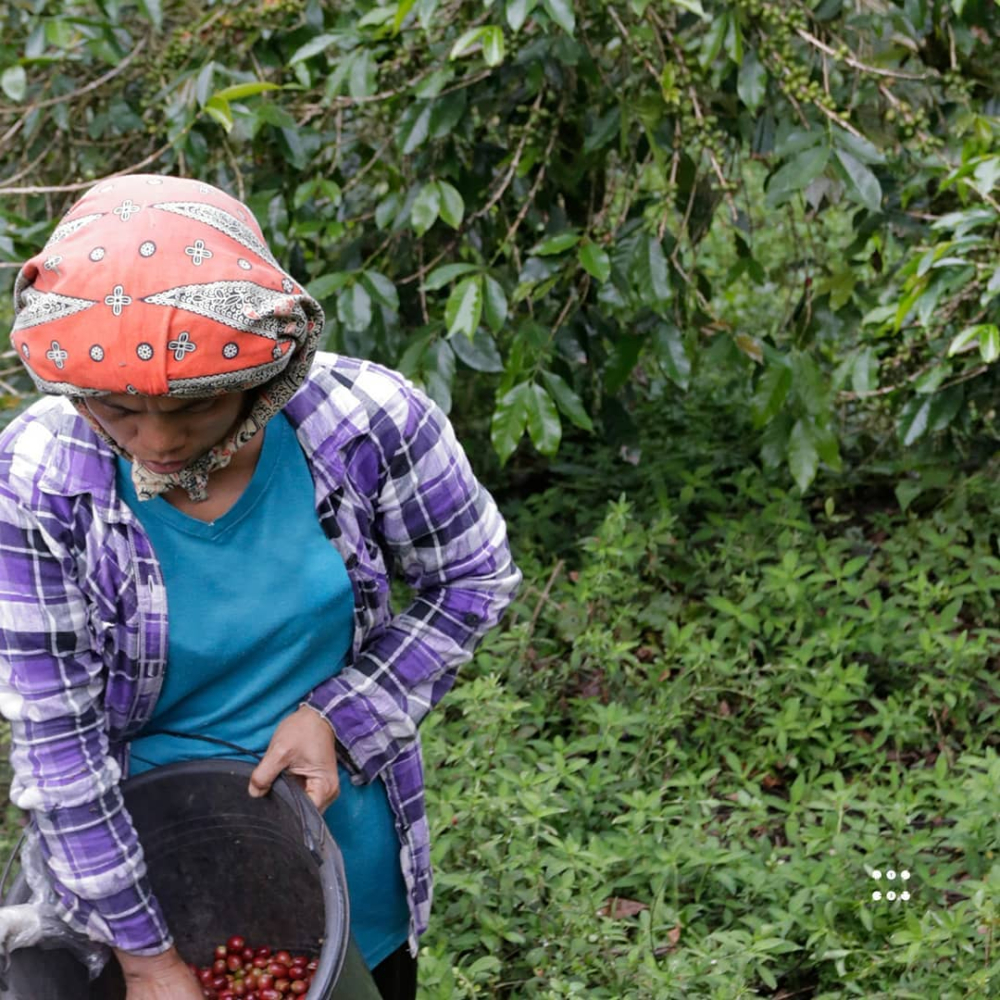
Golden Mandheling coffee beans use the wet-hulling process. Local economic conditions are limited, making it hard to afford higher-cost methods such as the washed process. Under the combined influence of various factors, the highly localized wet-hulling method came into being—that is, within the conventional washing process, the beans are first sun-dried with parchment still on for 2 to 3 days, and once the moisture content drops to 20% to 24%, the parchment is removed.
The wet-hulling process is extremely fast, which also leads to a relatively high defect rate in Mandheling. Golden Mandheling does a good job of avoiding this shortcoming. Its specification is 19 screen and above, with fewer than 3 defective beans (in a 300g green bean sample), belonging to the highest grade G1, leaning dark green in color, and neatly flat in shape.
Front Street Coffee's Recommendations for Roasting Golden Mandheling Coffee Beans
When the temperature rises to 200°C, charge the beans, set the airflow damper to 3, and after 1 minute adjust the heat to 160°C while keeping the damper unchanged; roast until 5 minutes 40 seconds, at 148°C, when the bean surface turns yellow, the grassy smell completely dissipates, and dehydration is complete, then lower the heat to 140°C and adjust the damper to 4; at 9 minutes 40 seconds, rough wrinkles and dark patches appear on the bean surface, and the toast-like smell clearly turns into coffee aroma, which can be regarded as the prelude to first crack, and at this point one must carefully distinguish the sound of the first crack point; at 9 minutes 54 seconds first crack begins, reduce the heat to 60°C and open the damper fully (be sure to adjust the heat cautiously, and do not reduce it so much that the cracking sound cannot be heard), then discharge the beans at 204.5°C.
Front Street Coffee's Insights on Brewing Golden Mandheling Coffee Beans
Brewing Parameters: Use a Kono dripper Water temperature: 88°C Dose: 15 grams Coffee-to-water ratio: 1:15 Grind size: medium-fine grind (70-75% passing rate on China standard No. 20 sieve)
For coffee beans with a darker roast level, in order to highlight the full-bodied feel, Front Street chooses the Kono dripper for brewing. The Kono dripper's characteristic lies in its immersion function; through immersion, more coffee substances can be extracted, thereby enhancing the full-bodied mouthfeel. Its ribs are few in number and positioned low, allowing the filter paper to cling tightly to the dripper wall and restrict airflow, so the water flow speed slows down and the contact time between water and coffee grounds is extended.
Front Street Coffee uses staged extraction, also called three-stage brewing: first bloom with 30 grams of water for 30 seconds, then pour in a small stream in circles until reaching 125 grams for the stage break, and when the water level drops and is about to expose the coffee bed, continue pouring until 225 grams and stop; when the water level drops again and is about to expose the coffee bed, remove the dripper, with the extraction time (timed from the start of blooming) being 2 minutes 05 seconds to 2 minutes 15 seconds.
Brewing flavor: spices, herbs, varied layers, full-bodied and clean, high balance, rich nut and brown sugar aromas, with chocolate notes, and a lasting finish.
The above content is compiled by CoffeeHunters, a coffee news website.


