







What defines the Peru coffee beans taste in a washed Geisha?
Peru coffee beans taste mild, balanced, clean and delicate. That profile comes from high-altitude cultivation, where low temperatures slow fruit development and let beans accumulate more nutrients and density. Peru grades its green beans mainly by altitude and hardness, a system that sets it apart from other South American origins.
A washed Geisha from the northern Cajamarca region shows the profile clearly: white florals and prunes with citrus. Front Street's pour-over recipe uses a V60 dripper, 91°C water and a 1:15 coffee-to-water ratio, so the same cup can be recreated at home.
Among South American coffee-producing countries, Peru has carved out a differentiated path with its unique altitude-based grading system and washed processing techniques. The high-density beans brought by high altitudes give it a mild, balanced, clean and delicate flavor profile. This article starts with Peru's coffee variety structure, grading logic, and washed process, then gradually focuses on the northern specialty region of Cajamarca, and uses a washed Geisha as an example to present Front Street Coffee's cupping impressions and pour-over recipe in full, including specific parameters such as V60 dripper, 91°C water temperature, and 1:15 coffee-to-water ratio, helping coffee lovers recreate the Peruvian flavor interwoven with white florals and prunes with citrus at home.
To unlock more specialty coffee knowledge, welcome to follow: Front Street Coffee (Frontsteet Coffee)
Like most South American producing countries, Peru's main crop is also Arabica. However, Peru has a practice that clearly distinguishes it from its neighbors: its green bean grading system centers on the altitude/hardness grading method, with other grading methods playing only a supplementary role.
The logic of the altitude grading method is straightforward—it looks at how high the coffee beans were grown. The higher the altitude, the harder the beans. The reason is that the low-temperature environment at high altitudes slows down the development pace of the coffee fruit, giving the beans more time to accumulate nutrients. The mildness and balance mentioned earlier by Front Street is precisely the typical label of high-altitude Peruvian beans; the more substantial the internal matter of the bean, the more outstanding the layering and flavor expression on the palate.
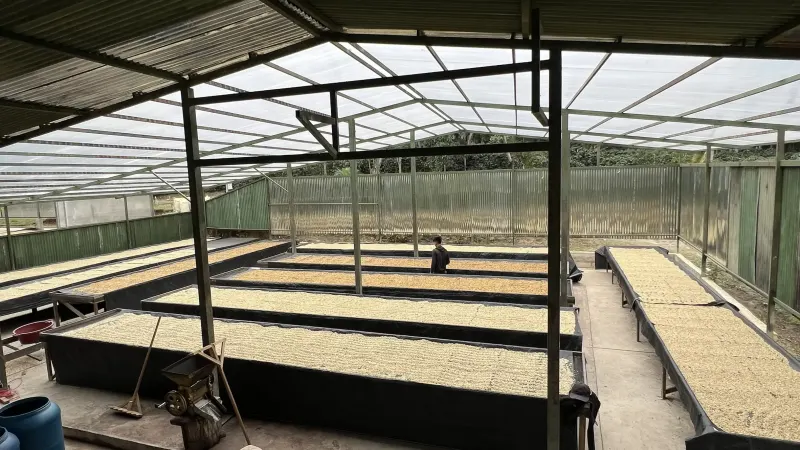
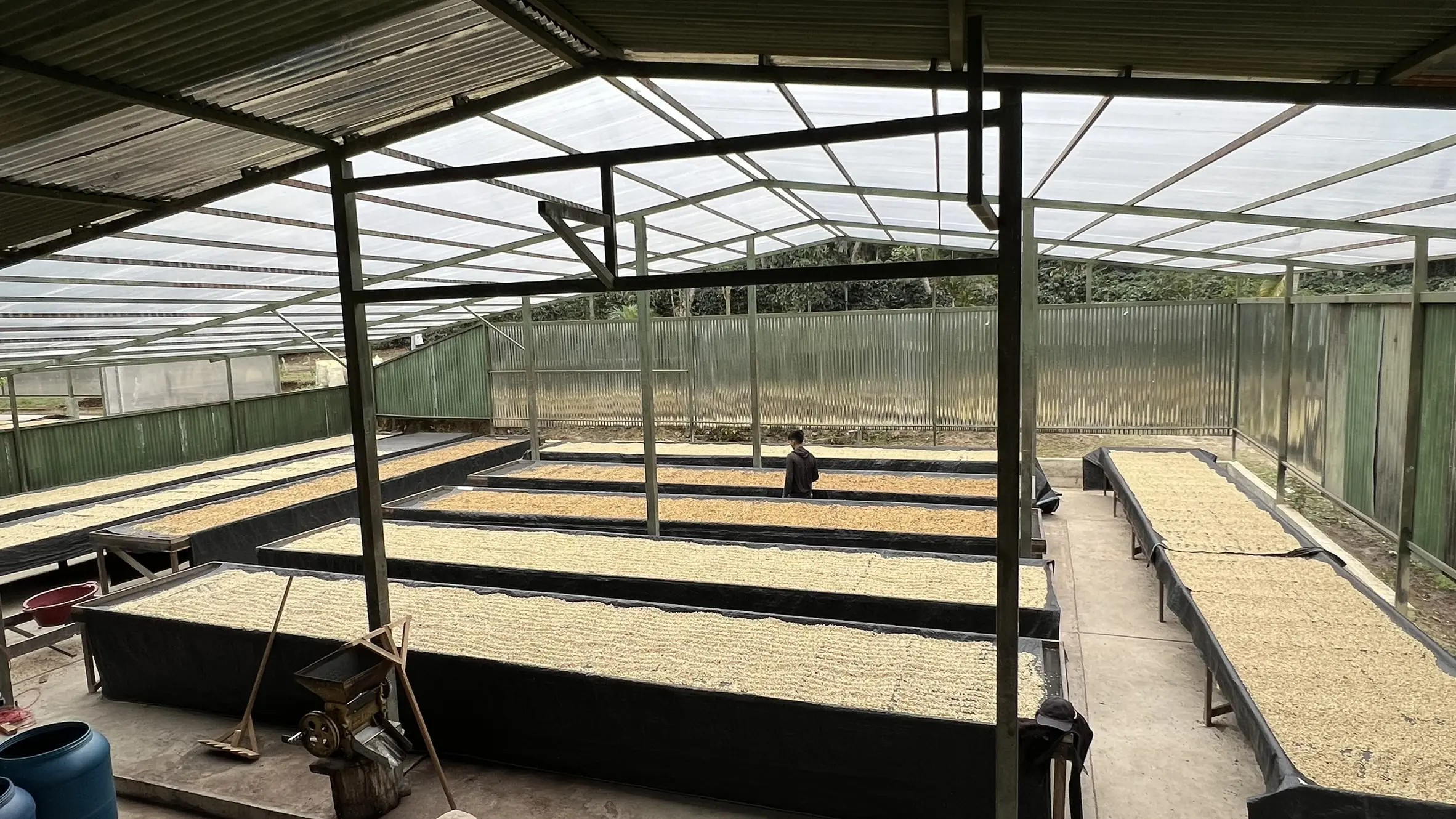
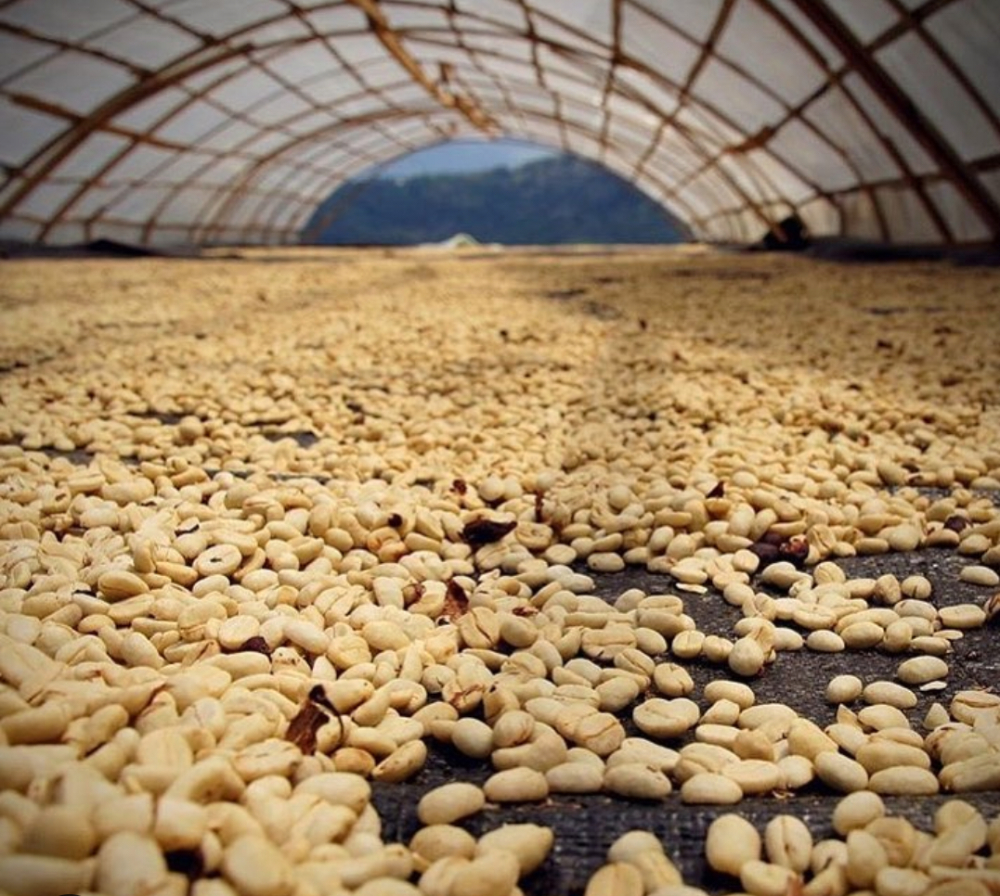
Peru is quite abundant in water resources, so the mainstream way local coffee is processed is washed. The traditional washed process is: first pour the harvested coffee cherries into water for flotation, and scoop out the defective fruits floating on top; then use a pulper to remove the skin and pulp; next place the parchment beans still coated with mucilage into a tank to ferment, allowing the mucilage to break down and fall off; afterward move the processed parchment beans to a drying yard to dry; finally send them into a huller to remove the parchment, and the entire processing is complete.
The advantage of the washed method is that it can effectively remove defective beans and bad fruits, and the fermentation degree is lighter and easier to control, so the cleanliness of the final product is often extremely high. Peruvian washed beans are not only clean, but also carry soft and delicate fruity acidity and a silky, rich mouthfeel, which is also why they have won countless fans in recent years.
At this point Front Street couldn't help but swallow its saliva. To personally verify the charm of Peruvian coffee, Front Street specially acquired a washed Geisha, produced in Cajamarca, the most core specialty region in northern Peru.
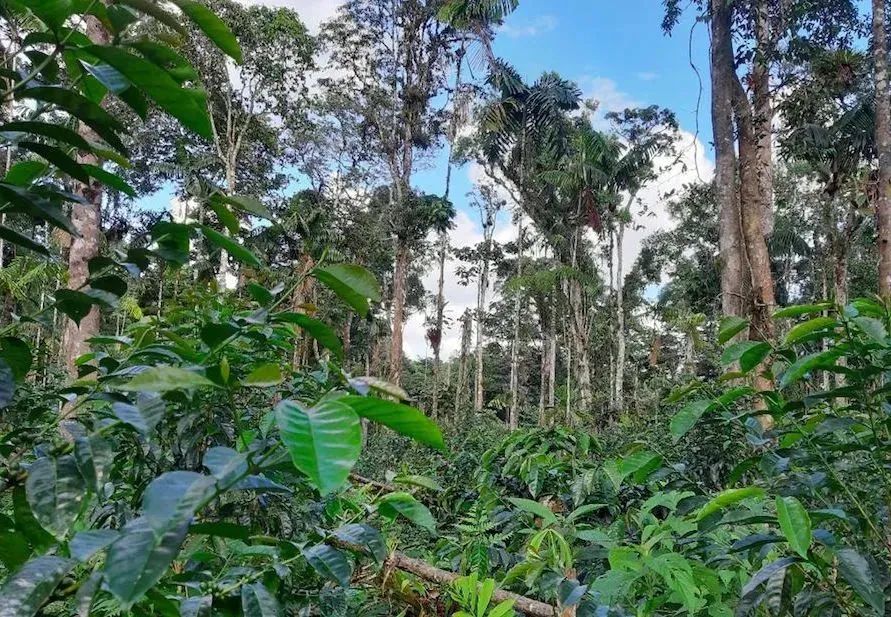
Cajamarca is close to the Ecuadorian border and sits in the high-altitude zone of the Andes. It has fertile volcanic soil, rich and diverse microclimates, and towering altitudes that make the temperature difference between day and night very wide, making it an ideal place for coffee cultivation. No wonder early European immigrants chose this place as their main base when opening plantations in Peru.
After a long period of development, coffee has become deeply integrated into Cajamarca's economy and culture. Local smallholders possess experience and techniques ahead of other producing regions, so the coffee quality in this region is exceptionally outstanding, making it worthy of being called the "rising star" of today's specialty coffee scene.
In addition to traditional varieties such as Typica, Cajamarca also cultivates popular varieties like Geisha. So the Peruvian beans Front Street acquired this time are exactly a washed Geisha from the Cajamarca region! To fully showcase this Geisha's floral aroma and regional character, Front Street chose a medium-light roast profile to "prepare" it.
Front Street Coffee (FrontStreet Coffee): Peru · Cajamarca Geisha
Country: Peru
Region: Cajamarca
Altitude: 1,800–1,950 meters
Variety: Geisha
Processing method: Washed
Grade: SHB
Flavor: White florals, prunes, citrus, juicy mouthfeel, black tea
During the cupping session, Front Street perceived that this Peruvian Geisha's dry aroma was very intense, with white florals, berries, preserved plums, and citrus aromas clearly distinguishable. After pouring in hot water, sweet aromas similar to peach and caramel could also be captured.
Front Street Peruvian Coffee Beans Pour-Over Reference
Dripper: V60
Water temperature: 91°C
Coffee dose: 15 grams
Coffee-to-water ratio: 1:15
Grind size: 80% passing through a No. 20 standard sieve
After coffee beans are roasted, they need a 4–7 day degassing and resting period before entering their optimal tasting stage. As storage time lengthens, the aroma dissipates more quickly, and the flavor and mouthfeel decline noticeably. In order to let everyone drink coffee in its best-flavored state, Front Street only ships fresh beans within 5 days after roasting—fresh coffee beans help us extract the high-quality flavors of Peruvian Geisha more effectively.
In terms of brewing, Front Street Coffee (FrontStreet Coffee) baristas habitually use a three-pour method:
In the first pour, add 30 grams of water and bloom for 30 seconds; then pour until 95 grams (about 125 grams shown on the scale), finishing in about 1 minute; when the water level drops to two-thirds of the coffee bed, pour the remaining 100 grams (about 225 grams shown on the scale), finishing in about 1 minute 35 seconds. Dripping is completed at 2 minutes 10 seconds, remove the dripper, and extraction is finished.
On the first sip, what Front Street captured first was the elegant white floral aroma, followed by full acidity like grapes, citrus, and prune juice; after swallowing, a finish like black tea and caramel remained in the mouth, with a thick yet still clean mouthfeel, a unique experience like holding a preserved plum candy in the mouth. After the temperature drops slightly, the bright acidity begins to release, the juicy mouthfeel becomes more prominent, and you can taste a rounded sweetness like apricot, very pleasant!
The above content is compiled by CoffeeHunters, a coffee news website.


