







Why choose blending coffee beans over single-origin for espresso?
Blending coffee beans designed for espresso machines are the reliable choice. Their roast level is generally darker than pour-over beans, so flavor and output stay stable under pressure. Light-roasted beans, by contrast, see their acidity amplified during extraction and often turn sharply sour in the cup.
Single-origin beans meant for pour-over usually do not hold up in an espresso machine, because an agricultural crop fluctuates with climate, soil and roasting. SOE uses single-origin beans roasted darker than pour-over lots. Crema on the surface comes from carbon dioxide released under pressure, and Front Street also shares a latte ratio.
Making espresso is not simply a matter of grabbing a handful of beans and expecting a good flavor. When light-roasted beans meet pressurized extraction, the acidity is multiplied, easily producing a sharp, astringent taste. Front Street Coffee generally recommends choosing blend beans specifically designed for espresso machines; their roast level is generally darker than pour-over beans, and their flavor and quality are more stable. So how should SOE be understood? Why are most blend beans dark-roasted? What exactly is the connection between the crema on the surface of an espresso and carbon dioxide? This article will explain these questions one by one, while also recommending several espresso beans such as Front Street Strawberry Candy Espresso, and sharing the recipe ratio for making a latte.
Recently a friend asked Front Street Coffee: "Can any coffee bean be used to make espresso?" The answer is no. Not all beans are up to the task of espresso extraction, especially light-roasted beans. Once extracted under pressure, the acidity is noticeably amplified, and the sip easily turns into a sharp sourness. So what kind of coffee beans are actually suitable for making espresso?
When Front Street Coffee recommends beans for espresso use, it usually puts espresso blend coffee beans first, because this type of bean was tailor-made for espresso machines from the very beginning. Its two most prominent points are, first, that the roast level is generally darker than beans used for pour-over, and second, that it can maximize the stability of espresso flavor and output quality.
Generally speaking, single-origin coffee beans used for pour-over are not suitable for putting into an espresso machine. The reason is that single-origin beans cannot guarantee stable output for every cup of espresso. Coffee beans are, after all, an agricultural crop. Even for the same bean, flavor expression fluctuates under the influence of climate and soil conditions, differences in roasting approach, and daily changes in condition.
So how should SOE (Single Origin Espresso) be understood? SOE does use single-origin coffee beans to extract espresso, but the single-origin beans used for SOE are roasted darker than single-origin beans used for pour-over, French press, ice drip, cold brew, and other purposes. This is because light-roasted beans often carry pronounced acidity; when extracted by drip filtration or immersion, the acidity may be just right, and the coffee grounds will also have a relatively rich layering.
However, an espresso machine uses pressure to force water hotter than pour-over water quickly through coffee particles, extracting an extremely concentrated coffee liquid (the pour-over coffee-to-water ratio is usually 1:13, while the espresso coffee-to-liquid ratio is 1:2). Therefore, the acidity in the beans is presented more strongly, and the coffee easily develops unpleasant flavors such as sharpness and astringent sourness.
Light-roasted coffee beans have a harder texture, and soluble substances are not easily released into water. The pressurized extraction water flow is fast, and it also cannot dissolve mellow substances, only carrying away sweet-and-sour components, so the final espresso appears very thin. Therefore, to make SOE, single-origin beans of medium roast or darker should be given priority. If you want fragrant floral notes, you can choose Front Street Sun-Dried Huakui SOE; if you prefer rich fruity aromas, try Front Street Mozart SOE; if you do not accept acidity, Front Street Brazil Queen's Manor is recommended.
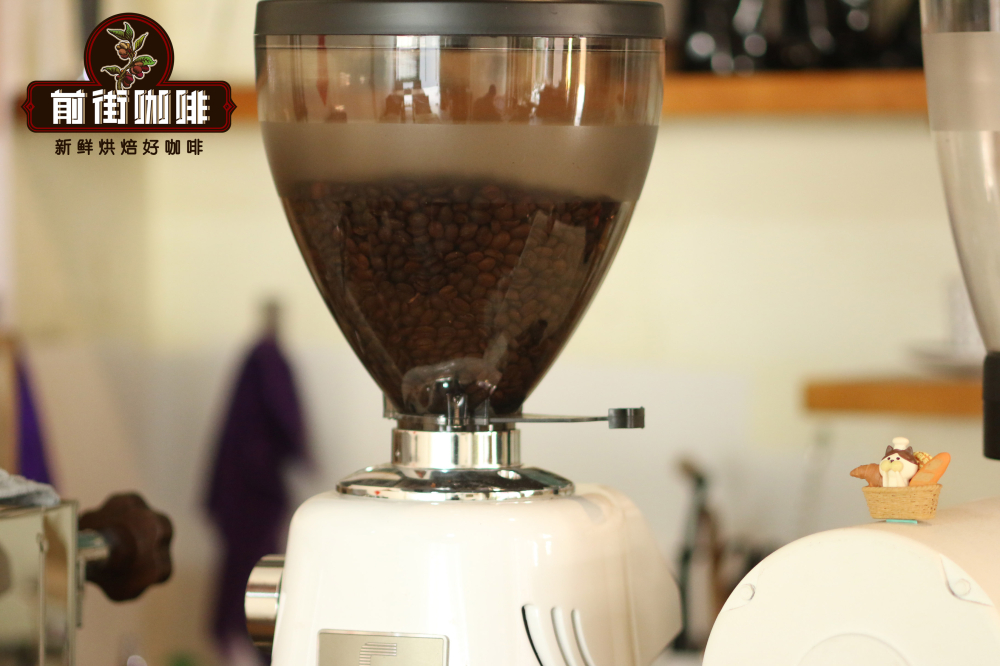
The practice of blending coffee beans emerged because coffee people in earlier years found that single-origin beans were difficult to keep flavor-stable over the long term, and not every single-origin bean could extract delicious coffee, so they used blending to improve flavor. In this way, whether harvest times differ, roasting approaches vary slightly, or a certain bean has a poor crop, the espresso flavor of the same shop will not differ too much, and severe output differences caused by different baristas' extraction approaches can also be reduced. In addition to improving flavor and making espresso output more stable, there is another important reason: it can lower costs.
Most espresso coffee beans use a dark roast. First, to weaken the amplification of acidity by pressurized extraction and increase the release of soluble substances (the darker the roast, the looser the bean texture and the easier it is to extract flavor), increasing the coffee's body; second, because a longer roasting time is needed so that more carbon dioxide remains within the beans, thereby forming a richer espresso crema.
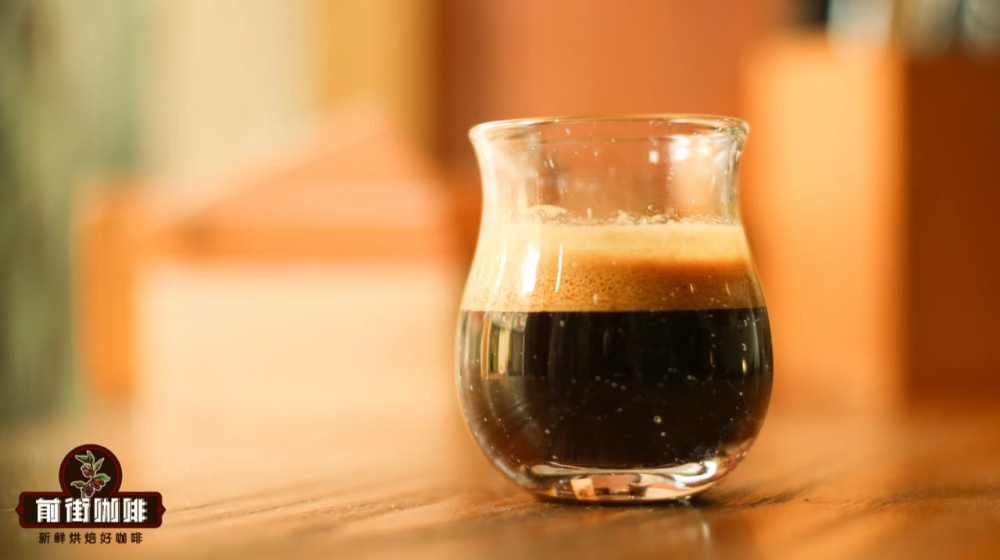
"Wait! What is the relationship between espresso crema and carbon dioxide?" The crema on the surface of an espresso is actually not all coffee oil. During extraction, an espresso machine applies more than 9 bar of pressure to "squeeze" the coffee puck. Because the carbon dioxide in the coffee grounds is under excessive pressure, the water becomes supersaturated with carbon dioxide. The carbon dioxide cannot escape and can only dissolve directly into the coffee liquid.
During extraction, the fats in the coffee are also emulsified. These fats wrap around the carbon dioxide and precipitate out together. Because oil is lighter than water, a layer of golden crema floats on the surface of the finished espresso.
By this point, I believe everyone can roughly understand why Front Street recommends using dedicated espresso blend beans when making espresso. So which good espresso blend beans are worth recommending?
If you want espresso with a prominent sweetness, we first recommend Front Street Strawberry Candy Espresso. This is a blend bean customized for espresso machines and moka pots, combining three major producing regions: Costa Rica, Colombia Huila, and Ethiopia Yirgacheffe. The honey process brings the sweet aroma of raisins, Yirgacheffe provides elegant floral notes, and Colombia Huila contributes chocolate and cocoa aromas, giving Strawberry Candy Espresso both moderate crema and no lack of rose, grape, and dried blueberry flavors.
In addition, considering that everyone's usage scenarios and production purposes differ, besides Front Street Strawberry Candy Espresso, we have also launched Front Street Front Street Classic Blend, which is very suitable for beginners; Front Street Black Cocoa Blend, an espresso bean recommended by many baristas for daily drinking; Front Street Commercial Blend, the first choice for opening a shop; and Front Street Specialty Blend, for those pursuing a rich nutty flavor... four espresso coffee beans. Next, Front Street Coffee will share the recipe ratio for making a latte.
The coffee beans sold by Front Street are all freshly roasted beans shipped within 5 days after the roast date. After receiving espresso beans, do not rush to use them, because too much carbon dioxide will affect the overall extraction of espresso, easily causing uneven extraction and prolonging extraction time, ultimately giving the coffee unpleasant flavors such as bitterness. Although carbon dioxide is key to whether the crema is rich, too much carbon dioxide will make the crema very thick. If used to make a hot latte, overly thick crema will hinder the integration of milk and coffee, ultimately affecting the formation of patterns and the overall mouthfeel of the coffee.
The above content is compiled by CoffeeHunters, a coffee news website.


