







Which arabica variety dominates Yunnan small-bean coffee?
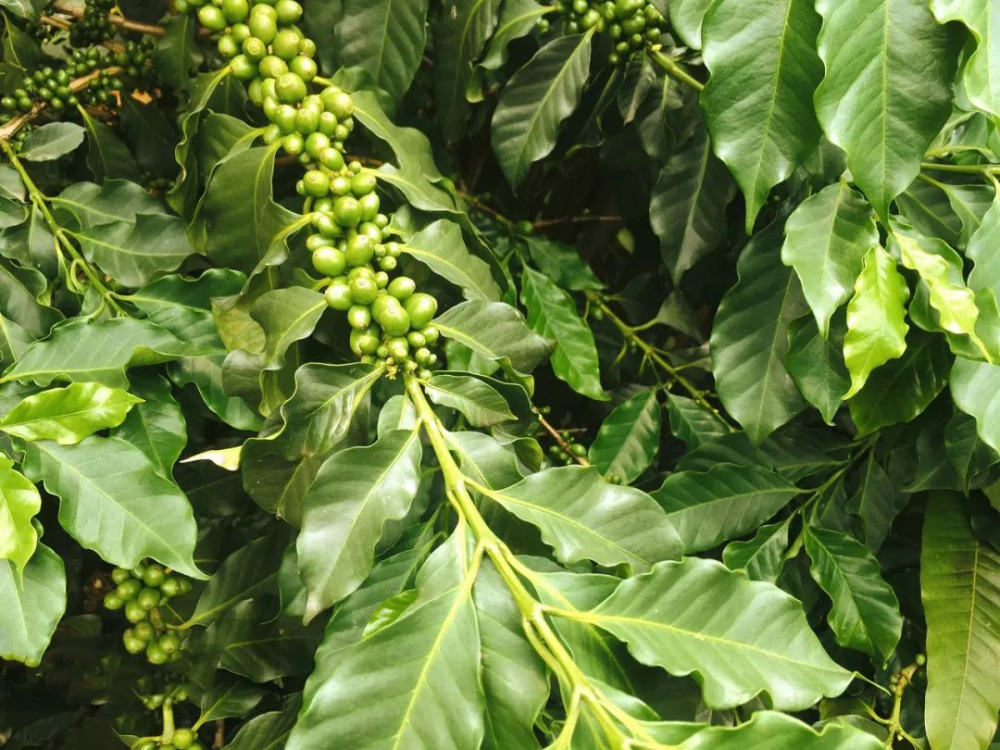
Yunnan grows Arabica, which local farmers call small-bean coffee to distinguish it from the larger-beaned Robusta grown on Hainan. Catimor makes up the vast majority of plantings, alongside Typica and Bourbon. Catimor is a cross of the Arabica variety Caturra with Robusta Tim Tim, valued for disease resistance, cold tolerance and high yield.
Yunnan sits on the coffee belt, and small-bean cultivation needs high altitude, no frost, filtered sunlight and ample rainfall. For home brewing, the article covers pour-over, cold brew, American drip machines, moka pots and espresso machines, plus V60 three-stage parameters for Front Street everyday beans, including water temperature, ratio, grind and pouring rhythm.
Yunnan small-bean coffee is a representative of Chinese coffee, but many people wonder whether it actually tastes good. This article begins with the origin of the name Yunnan small-bean coffee, its historical background, and its main varieties, sorting out the characteristics of different bean types such as Catimor, Typica, and Bourbon. It also combines household scenarios such as pour-over, cold brew, American drip machines, moka pots, and espresso machines to give corresponding Front Street brand bean list recommendations and flavor descriptions. In addition, it breaks down in detail the V60 three-stage brewing parameters for Front Street Yunnan small-bean everyday beans, including water temperature, coffee-to-water ratio, grind size, and pouring rhythm, helping coffee lovers reproduce the nutty sweetness and balanced sweet aftertaste at home.
When it comes to China's local coffee, Yunnan small-bean coffee is naturally an unavoidable topic. Next, let's talk about Yunnan small-bean coffee together and get a sense of what Chinese coffee actually tastes like.
Why is Yunnan coffee called small-bean coffee?
Yunnan is the earliest province in China to begin cultivating coffee, with a cultivation history dating back to 1904, when a French missionary brought seedlings into Yunnan and planted them in Zhukula Village, Binchuan County, thus opening the prelude to coffee cultivation in China. After more than a century of taking root and evolving, Yunnan coffee has gradually become an iconic presence in Chinese coffee.
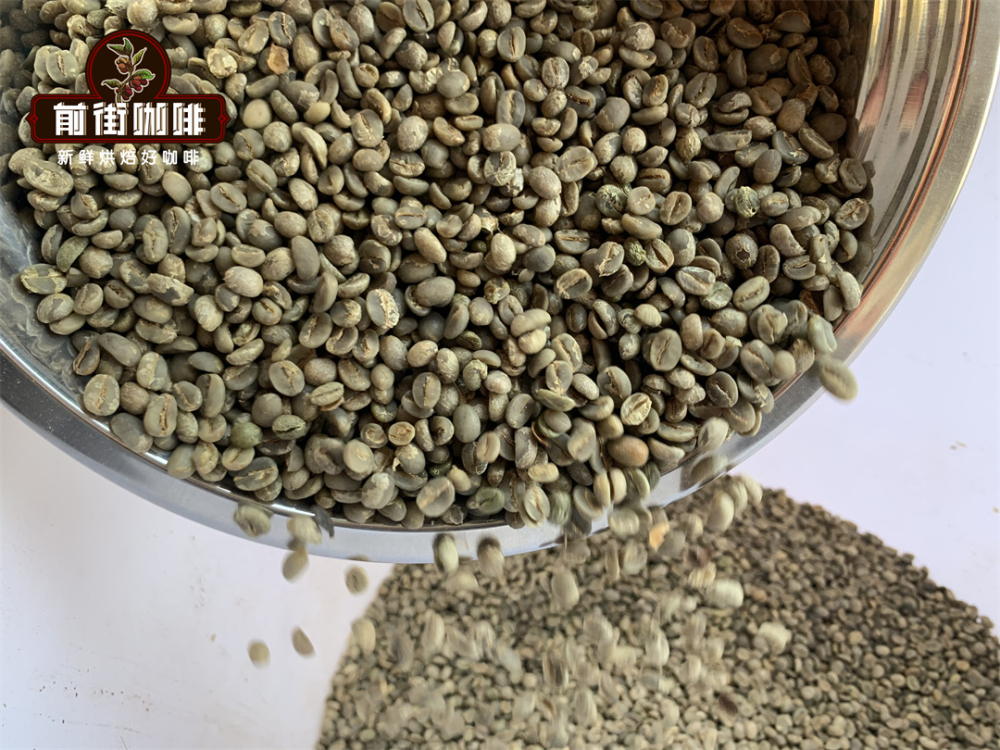
The coffee varieties currently grown commercially can be broadly grouped into two categories: Arabica and Robusta. Hainan coffee is mainly Robusta, with relatively large beans; Yunnan grows the smaller-beaned Arabica, which local coffee farmers habitually call Yunnan small bean. At present, the small-bean coffee varieties grown in Yunnan include Catimor, Typica, and Bourbon, among which Catimor accounts for the vast majority.
Catimor is a hybrid of the Arabica variety Caturra and the Robusta variety Tim Tim. It has outstanding disease resistance and cold tolerance, is vigorous, does not require shade, and also has high yield, so it is very popular among local farmers.
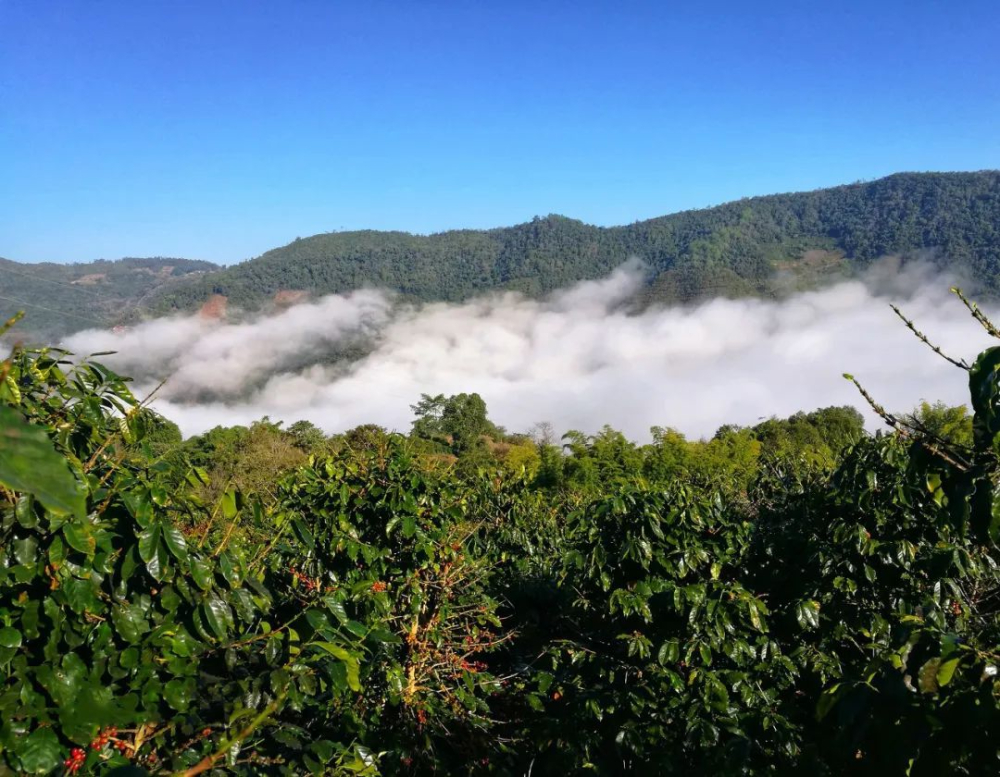
The cultivation of small-bean coffee requires high altitude, no frost, suitable sunlight but not direct baking sun, and also abundant rainfall, and Yunnan, located on the coffee belt, happens to meet these conditions. Yunnan lies between the Tropic of Cancer and 15 degrees north latitude, with mostly slopes above 1,000 meters, a concentrated rainy season, and fertile red soil, allowing the small-bean coffee here to absorb ample nutrients and taste rich and fragrant without being bitter.
Does Yunnan small-bean coffee taste good?
With advances in Yunnan's cultivation management and green bean processing techniques, coffee bean quality has continued to improve, and the types and uses of Yunnan coffee beans have also become increasingly diverse. Therefore, you can choose Yunnan coffee beans that suit you according to the brewing method:
1. Yunnan coffee recommended for pour-over, cold brew, and drip bag scenarios: Front Street 2013 Sun-Dried Typica
Region: Lincang, Yunnan, China
Estate: Front Street Estate Altitude: 1300m Variety: Typica Processing method: Sun-dried processing
Flavor: dried apricot-like sweet acidity, nutty notes, brown sugar sweetness, tea-like finish
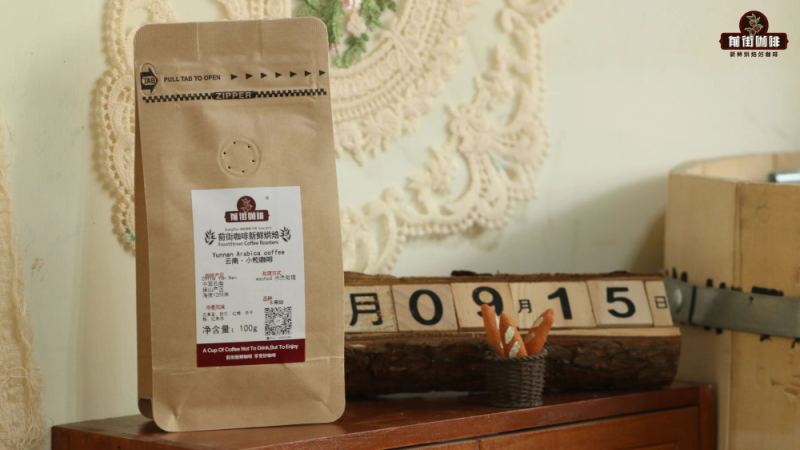
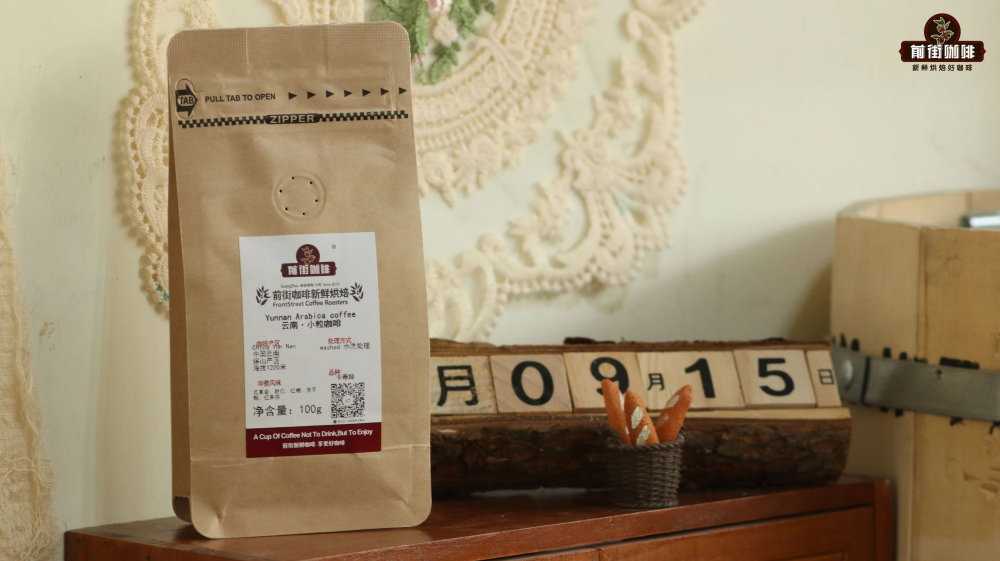
2. Yunnan coffee recommended for American drip machines or beginners learning pour-over: Front Street Yunnan Small Bean
Region: Baoshan, Yunnan, China Altitude: 1200m Variety: Catimor Processing method: Washed processing
Flavor: nutty aroma, herbal, chocolate, caramel, with a faint fruity acidity in the finish.
3. Yunnan coffee recommended for moka pots and espresso machines: Front Street Basic Espresso Blend
Region: Brazil Red Bourbon + Yunnan AA
Flavor: chocolate, roasted nuts, butter, cocoa, moderate crema
In cupping, Front Street Yunnan small-bean everyday beans show nutty and herbal aromas, the sweetness of brown sugar and melon and fruit, and the acidity of plum, with moderate sourness, sweetness, and bitterness, a balanced mouthfeel, and an obvious sweet aftertaste. The flavor profile of Front Street Yunnan small-bean everyday beans is relatively neutral, so a medium roast is chosen for roasting, highlighting the nutty sweetness while retaining some acidity.
During brewing, too high an extraction yield easily becomes bitter, while too low easily tastes "flat," so a medium-coarse grind is chosen, with water temperature at about 90 degrees Celsius. Paired with a V60 dripper. The V60 dripper has a relatively large outlet, and the spiral ribs connecting the top and bottom make it easier for steam to escape during extraction, thereby improving flavor layering.
Brewing parameters for Yunnan small-bean everyday beans: Dripper: V60, Water temperature: 90-92℃, Coffee-to-water ratio: 1:15, Grind size: medium grind (75% passing rate on China standard No. 20 sieve), three-stage extraction
First, pour 15 grams of ground coffee into the dripper and tare the weight. For the first stage, pour in 30g of water and bloom for 30 seconds while starting the timer. Throughout, pour with a small stream from the center point and begin spiraling outward, making sure to wet the entire coffee bed.
For the second stage, begin pouring with a slightly stronger stream and add 120g of water, with the aim of lifting the entire coffee bed. The water column needs to be poured vertically and evenly. At this point the scale shows 150g, and the pour is finished in about 55 seconds.
When the liquid level drops to about halfway, begin using a small stream to pour the third stage of 90 grams in a small spiral, trying to control the stream so it does not spiral too widely, as it can easily disturb the coffee bed and cause under-extraction. The final total poured water is 240 grams, and the drip completion time is about 2 minutes 10 seconds. After removing the dripper, swirl the coffee liquid in the server to mix it evenly and it is ready to taste.
Finally, as for the question of whether Yunnan small-bean coffee tastes good, Front Street will answer: you have to drink it to know.
The above content is compiled by CoffeeHunters, a coffee news website.


