







Why Does Coffee Make Me Feel Drunk? Espresso and Alcohol Pairing
Espresso is concentrated coffee liquid extracted under pressure: water held at 85 to 95 degrees Celsius passes through a tamped puck in 25 to 35 seconds. It serves as the base for mocha, cappuccino, and latte, and it can also be served straight, with milk, with water, or paired with alcohol. That last pairing is one reason people ask why coffee can feel intoxicating.
Drinking espresso alongside alcohol does not add alcohol to the coffee itself; the caffeine simply masks fatigue and can make the effects of alcohol harder to judge. Italian espresso blends are built for this range, and roasters compare pre-roast versus post-roast blending. Where coffee tastes like alcohol, the cause is usually fermentation or roasting, not the drink.
Espresso is the core foundation of the Italian coffee system and a required course for many coffee enthusiasts just starting out. From the perspective of Front Street Coffee, this article systematically sorts out the definition and extraction standards of Espresso, introduces three common ways of drinking it—straight, with milk, and with water—as well as the less common pairing with alcohol, and takes a deep dive into the origins and role of Italian espresso blends. The article also compares in detail the pros and cons of two blending methods, pre-roast blending and post-roast blending, and finally shares the flavor characteristics and recipes of Front Street Coffee's four espresso blends, including Sunflower Warm Sun, Specialty Blend, Commercial Blend, and Black Cocoa Blend, helping readers fully understand the coffee knowledge behind Espresso.
For more specialty coffee knowledge, please follow: Front Street Coffee (Frontsteet Coffee)
When it comes to Italian coffee, Espresso is inevitably a topic that cannot be avoided. Friends who often visit Front Street Coffee (FrontStreet Coffee) will notice that Espresso is not listed as a separate option on the menu, yet some regulars still directly order an Espresso when placing their order—does this count as a hidden menu? What exactly is Espresso, and what kind of connection does it have with Italian coffee? Next, Front Street Coffee (FrontStreet Coffee) will sort out the relevant knowledge about Espresso for everyone.
What is Espresso?
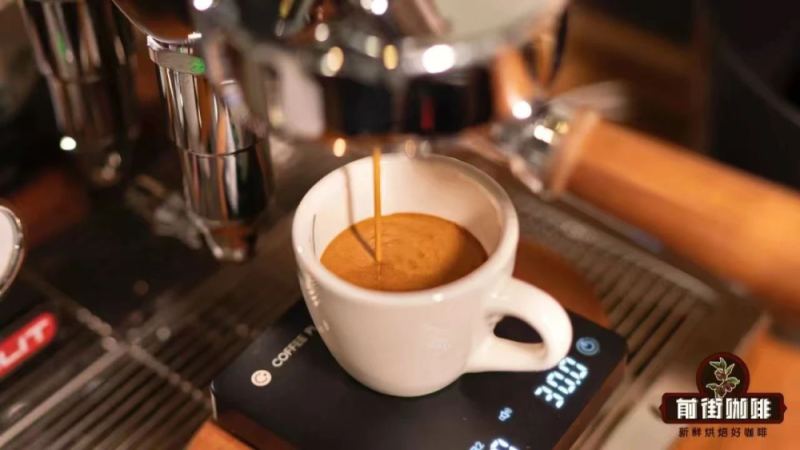
In fact, Espresso can be understood as a way of extracting coffee with the help of a machine, with specific parameters being a water temperature controlled at 85 to 95 degrees Celsius and a filtration time maintained at 25 to 35 seconds. In plain terms, it is the concentrated coffee made with an espresso machine under the above standards, so Espresso refers to pure concentrated coffee liquid.
The reason customers of Front Street Coffee (FrontStreet Coffee) order Espresso is that the mouthfeel of concentrated coffee is very thick and smooth, and it gives a strong sense of satisfaction after drinking. The reason Front Street Coffee (FrontStreet Coffee) also serves Espresso is precisely to cater to the needs of this group of coffee enthusiasts. Generally speaking, Espresso mainly serves as the base of Italian coffee, as mocha, cappuccino, latte, and others all require milk to be added to concentrated coffee before they can be made, so Espresso and Italian coffee are closely bound and inseparable.
What ways are there to drink Espresso?
Front Street Coffee (FrontStreet Coffee) has already explained earlier that Espresso is mainly used as the base of Italian coffee, and of course it can also be drunk on its own. Besides that, there is a third common way, namely the Americano seen everywhere on the market—the method is to first prepare a cup of ice water or hot water, then pour Espresso into it and stir evenly, and a cup of Americano is complete. In other words, there are three common ways to drink Espresso.
1 . Drunk straight, with a mellow and smooth flavor and a relatively high concentration.
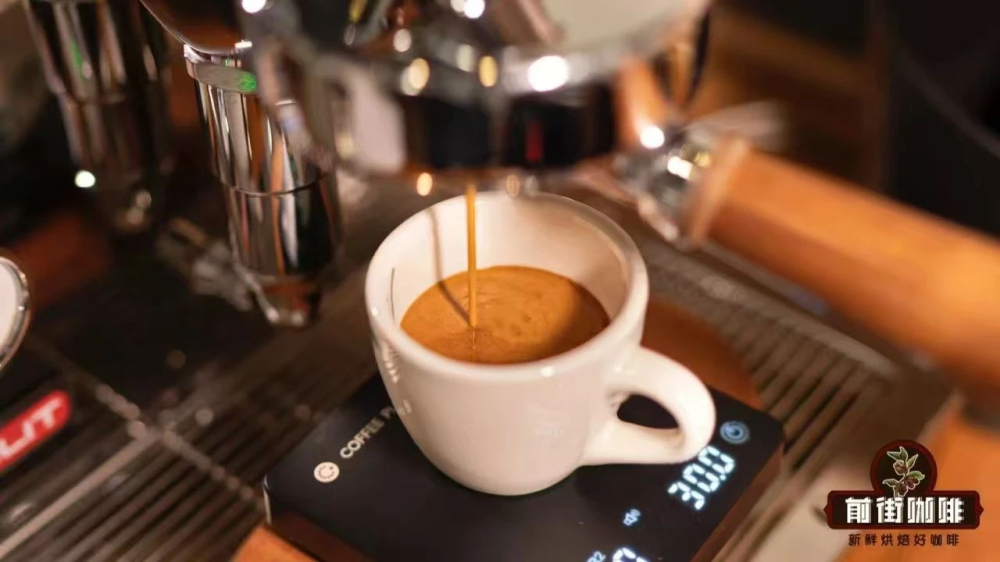
2. With milk added, to make creative coffee; the aroma of the concentrated coffee will gradually diffuse within the warm sensation in the mouth.
3. With water added, that is, Americano black coffee, with a relatively refreshing taste.
In addition, there is a less common way of drinking it, which is mixing it with liquor, such as whiskey and others that can all be tried. Taking Front Street Coffee (FrontStreet Coffee)'s in-store Sunflower Warm Sun espresso blend as an example, it carries a mellow fermented wine aroma, but this is not because alcohol has been added; rather, it is due to the Honduran Sherry coffee beans themselves—this bean has undergone whiskey barrel fermentation, and thus carries a fermented wine aroma, contributing a unique wine-aroma tone to the Sunflower Warm Sun blend.
What exactly are Italian espresso blend coffee beans?
So then what are Italian espresso blend beans? Friends who often drink Italian coffee all know clearly that concentrated coffee is mainly made with an espresso machine, and espresso machines have a notable characteristic, which is that they multiply and magnify the most prominent flavors of the coffee beans. For example, the dominant flavor of Ethiopian Yirgacheffe is a citrus-lemon-like acidity, and an espresso machine will magnify this sourness; Indonesian Mandheling is mainly bitter with herbal and earthy notes, and an espresso machine will further intensify the bitterness. Precisely because of this, Front Street Coffee (FrontStreet Coffee) does not choose single-origin coffee to make Italian coffee, because the coffee obtained this way has very poor balance and the taste is also affected, and this is also the reason why concentrated coffee must be made with blend beans.
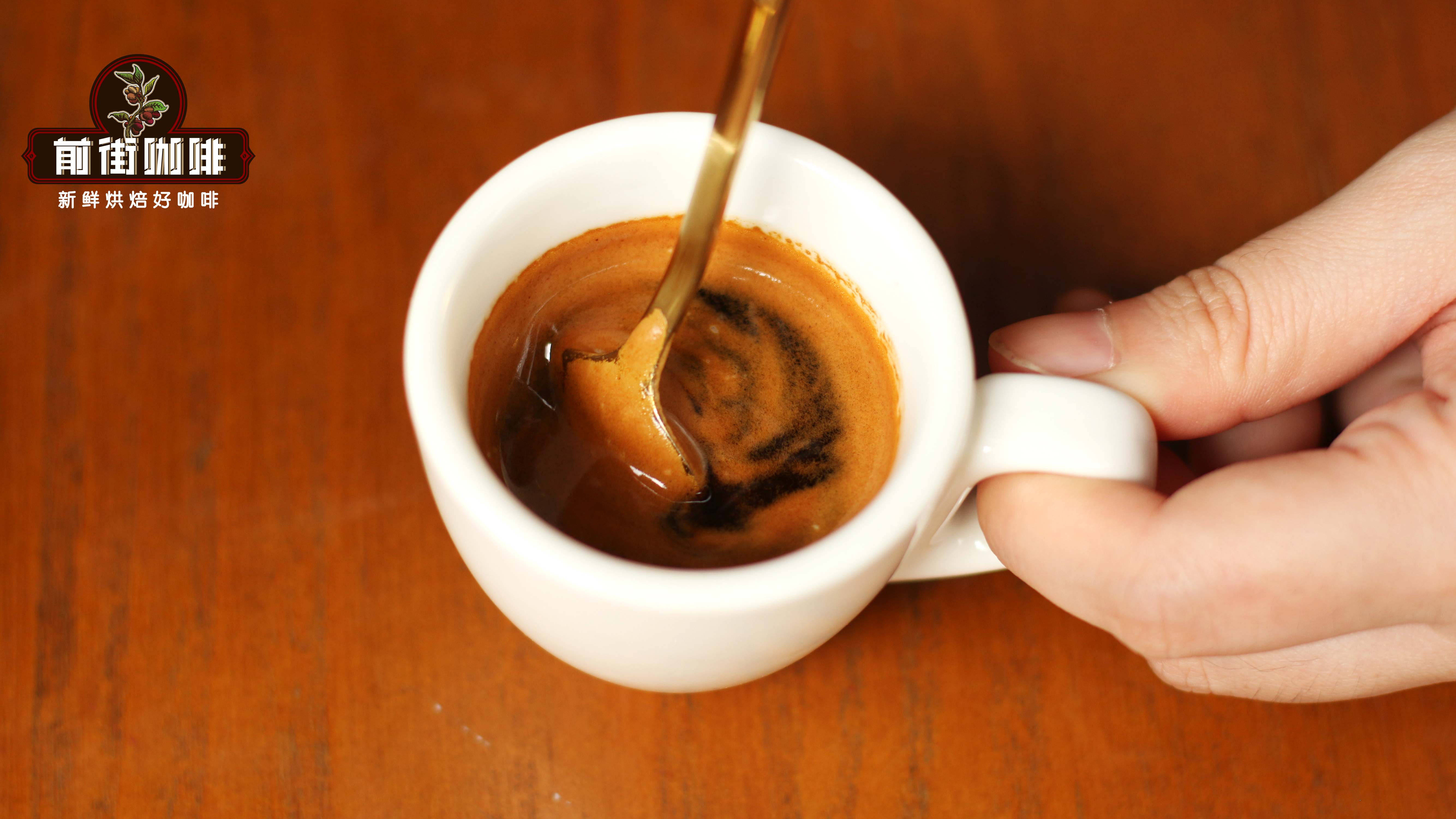
So-called blend coffee beans are coffee beans from different origins and different varieties mixed together, usually with two or three kinds of beans paired together. The intention of blending is very clear: to gather the flavor advantages of each bean and present a brand-new taste experience, thereby achieving a more balanced effect, while also being able to become a signature product of a shop.
For example, if a certain bean is smooth in taste but lacks aroma, then another bean full of aroma can be added, making up for each other's shortcomings and compensating for each other's flaws. Italian espresso blends have another purpose, which is to reduce costs. Traditional Italian blends mix in Robusta varieties, because Robusta has a mellow flavor; although its cupping score cannot reach the level of specialty single-origin beans, when paired with single-origin beans it can bring richer and denser crema to Italian coffee, and when used as the base of milk coffee it can also provide a viscous and smooth mouthfeel.
In addition, according to Front Street Coffee (FrontStreet Coffee)'s understanding, Italian blend coffee first appeared because at the time people preferred rich, sweet-bitter espresso, while single-origin coffee often had strong flavor tendencies, with both advantages and disadvantages equally prominent. Add to that the fact that high-quality single-origin coffee beans were not cheap, and blend coffee had higher cost performance, with a price lower than single-origin beans while still having a distinctive flavor of its own. Therefore, at that time many Italians preferred blend coffee over single-origin, and blend coffee thus gradually developed and has been passed down to this day.
There is one more point: the most core goal of blend coffee is to maintain flavor stability and balanced taste. Coffee fruit is ultimately an agricultural product, and each year, affected by climate and environment, the flavor of the fruit fluctuates; it may be sweeter this year, and next year the sweetness may decline. Mixing several kinds of coffee beans together can effectively resolve this problem, at least allowing the coffee flavor tasted each year to remain relatively consistent.
How is blend coffee blended?
So how exactly is blend coffee operated? Front Street Coffee (FrontStreet Coffee) would like to introduce two concepts in blending here—"pre-roast blending" and "post-roast blending." Pre-roast blending is mixing the coffee beans first and then roasting them, while post-roast blending is roasting them separately first and then mixing them.
Through practice, Front Street Coffee (FrontStreetCoffee) believes that the strength of pre-roast blending lies in its ability to use the same roast degree to make the coffee flavor stable and unified; it can be completed in one roast, and the same roast degree also greatly reduces the difficulty of quality control and improves efficiency.
But pre-roast blending is not without its shortcomings, and its limitations are quite obvious. Therefore, Front Street suggests that when pre-roast blending, one should try to choose several beans with relatively similar density; otherwise the flavor will be inferior to the original expression of their respective origins. For example, a bean suitable for light roasting must be roasted together with beans also suitable for light roasting in order to achieve a doubled effect, while putting a light-roast bean and a dark-roast bean together to roast is obviously mismatched and will lead to an unsatisfactory flavor.
The advantage of post-roast blending, in Front Street's view, is that each bean can be handled separately according to its most suitable roast degree, maximizing the release of each bean's individuality. But the shortcoming of post-roast blending is that daily quality control and management are more difficult, and when roast dates are not unified, extra attention must be paid to the resting period. Imagine using four or five kinds of coffee beans for post-roast blending—then their roast dates must be tracked one by one.
So post-roast blending and pre-roast blending each have their strengths and weaknesses, but their goal is the same, which is to make the coffee flavor even better.
Of course, blend coffee also has two blending approaches. One is blending between coffee beans from different origins. For example, the Warm Sun Blend launched by Front Street Coffee (FrontStreet Coffee) uses Honduran Sherry mixed with Yirgacheffe sun-dried Red Cherry, in which the Sherry beans contribute most of the fermented wine aroma, while the sun-dried Red Cherry is responsible for providing aroma and acidity.

In addition, Front Street Coffee (FrontStreetCoffee) believes that blend coffee beans are an art, because the blender must be familiar with the flavor characteristics of coffee from major origins in order to create charming aromas and make the coffee even more delicious. This depends not only on rich coffee experience and inspiration, but also on precise ratio calculations, so it is no exaggeration to call blend coffee beans an art. And Espresso is actually also made from Italian espresso blend coffee beans. Next, Front Street will share the respective flavor characteristics of the four blend coffee beans developed over several years by Front Street Coffee (FrontStreetCoffee)'s blender.
What blend coffee beans is Espresso made from ?
1. Front Street Coffee (FrontStreetCoffee) Sunflower Warm Sun Blend
Flavor: obvious fruit acidity, faint berry aroma, wine aroma, rich chocolate flavor, with a noticeable sweet aftertaste.
Recipe: Honduran Sherry : Yirga Red Cherry
For this blend, Front Street chose Yirgacheffe sun-dried Red Cherry combined with Honduran Sherry. Front Street's original intention in designing this bean was for it to be usable for both espresso and pour-over. When used to make espresso, the flavor it gives off carries an obvious fermented wine aroma; on entry, the acidity of citrus and berries immediately emerges, accompanied by a whiskey-like wine aroma, with a black chocolate finish.
When this Warm Sun Blend is brewed by pour-over instead, the richness of flavor is not as great as that of espresso; after brewing, it has a fermented wine aroma and a bit of citrus aroma. When drunk at high temperature, it presents only an obvious wine aroma and a black chocolate aftertaste, and only after the temperature drops does it slightly reveal the acidity of citrus and berries. Overall it is clean and fresh, without a vanilla-cream-like mouthfeel.
2. Front Street Coffee (FrontStreetCoffee) Specialty Blend
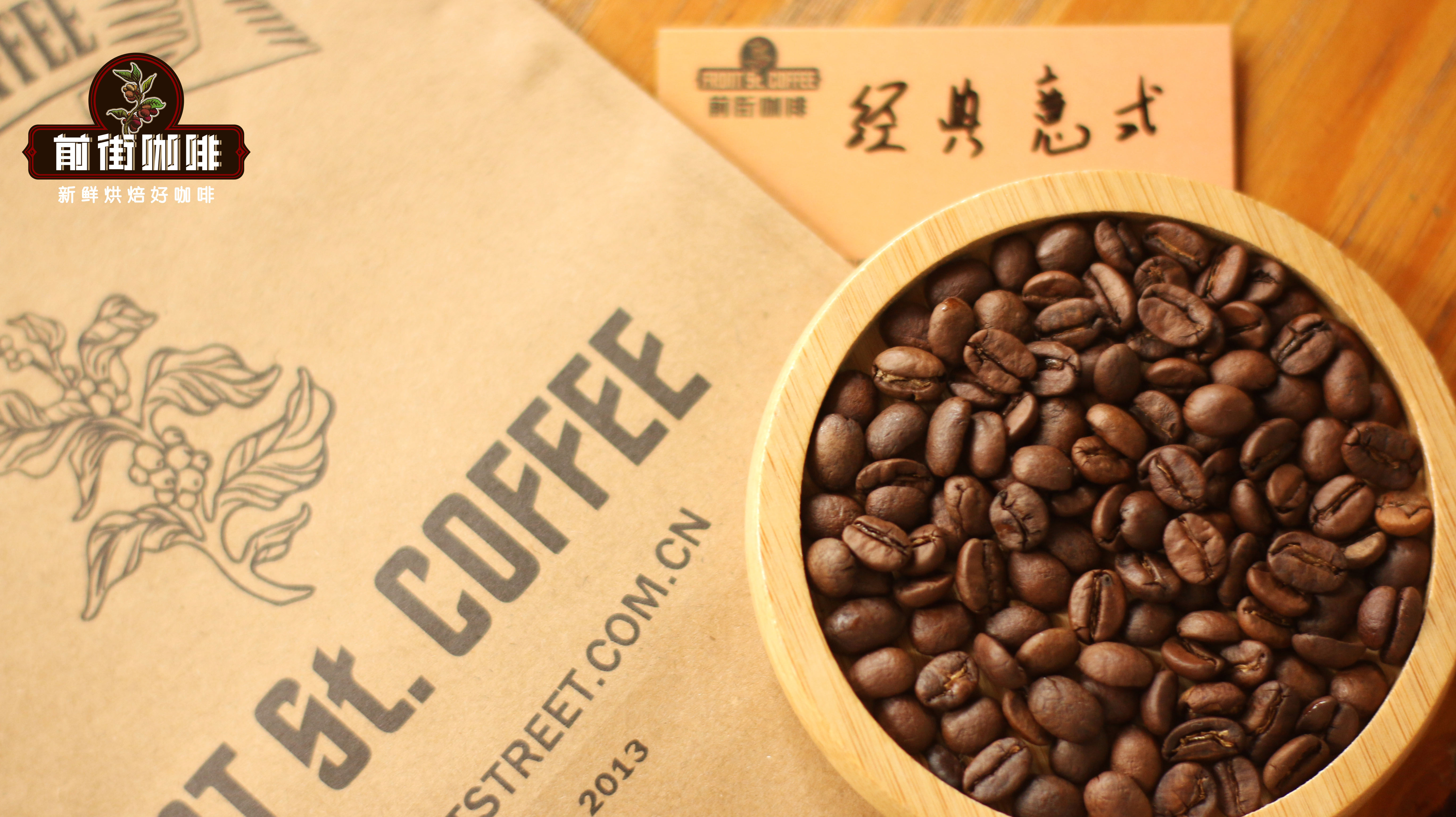
Flavor: soft and slightly sour, lightly sweet, with a nutty sweet aftertaste; the overall impression is not too stimulating, rather mild, and the crema is medium.
Recipe: Colombia : Brazil
For this blend, Front Street uses a combination of Brazil and Colombia. It tastes of a faint roasted grassy aroma, with a light fragrance accompanied by slight bitterness, sweet and smooth on the palate, and a pleasant aftertaste. This is because coffee beans from Colombia's Huila region carry a pleasant sourness, with a mellow aroma, moderate acidity, and rich sweetness that is very thought-provoking; coffee beans from Brazil's Cerrado region have a comfortable sweet-bitter taste and are extremely smooth on entry. The combination of the two can be called absolutely wonderful.
3. Front Street Coffee (FrontStreetCoffee) Commercial Blend
Flavor: caramel sweetness, flavors of nuts, cocoa, and black chocolate, balanced acidity and sweetness, with a slight sweet-bitterness and a lasting aftertaste.
Recipe: Colombia : Brazil : Robusta
For this blend, Front Street uses Brazilian and Colombian coffee beans and adds 10% Robusta coffee beans. The taste is classic; Front Street believes this blend tastes of rich crema and mouthfeel as well as caramel sweetness, and also carries flavors of nuts, cocoa, and black chocolate, with balanced acidity and sweetness, a slight sweet-bitterness, and a lasting aftertaste. This commercial blend, like Front Street Coffee (FrontStreetCoffee)'s Specialty Blend, uses a ratio of Colombian and Brazilian beans; the difference is that Robusta is additionally added, thereby providing rich crema and making the coffee taste even more mellow.
4. The espresso coffee beans recommended by many baristas—Front Street Black Cocoa Blend
Flavor: carries soft fruit acidity, caramel sweetness, nutty and black chocolate flavors, smooth and viscous, but the taste is on the lighter side.
Recipe: Yunnan : Brazil
For this blend, Front Street uses a combination of Brazil and Yunnan. Front Street believes it tastes of soft fruit acidity and caramel sweetness, as well as nutty and black chocolate flavors, smooth and viscous, but the taste is on the lighter side. This is because Yunnan's natural conditions are very similar to those of Colombia—high altitude, large temperature difference between day and night—and its flavor belongs to the mellow-aroma type, with moderate acidity, a rich and mellow taste, even-sized beans, high oil content, and fruity aroma; its quality and mouthfeel are close to Colombian coffee. However, the taste is still slightly lighter than Colombian coffee, while coffee beans from Brazil's Cerrado region have a comfortable sweet-bitter taste and are extremely smooth on entry. Therefore, these two kinds of coffee beans also mix into a quite good flavor, and this espresso coffee bean recommended by many baristas—Front Street Black Cocoa Blend coffee beans—is very cost-effective and suitable for espresso beginners and small coffee shops.
For more specialty coffee beans, please follow the WeChat public account: Front Street Coffee (FrontStreetCoffee)
The above content is compiled by CoffeeHunters, a coffee news website.


