







How Does a Coffee Maker Handle Cold Drip and Cold Brew?
Cold drip and cold brew are both low-temperature extractions, but they produce different cups. Cold water releases bitter compounds slowly, so both methods need six to twelve hours to pull the pleasant flavors out. Within that shared logic, grind size, coffee-to-water ratio, and extraction time separate the two drinks.
A controlled test using the same medium-light roast Yirgacheffe Natural Red Cherry bean showed how much grind and ratio shift the result. Neither method is the same as iced Americano or iced pour-over, which extract hot first and chill afterward. Matching the coffee maker setup to the method is what lets how to make coffe with coffee maker steps translate into a repeatable cup.
Cold brew coffee and cold drip coffee both belong to the low-temperature extraction camp, yet they present completely different flavor profiles due to their different extraction methods. Many coffee enthusiasts want to recreate these two drinks at home, but to produce a satisfying result, one must first understand their respective extraction logic. Drawing on the hands-on experience of Front Street Coffee, this article provides a detailed comparison of the two coffees' specific differences in grind size, coffee-to-water ratio, extraction time, and final taste, and uses the same medium-light roast Yirgacheffe Natural Red Cherry bean for a controlled experiment to help you find the cup that best suits your taste.
For more specialty coffee knowledge, please follow our WeChat public account: Front Street Coffee (FrontStreet Coffee) Among the coffee family of low-temperature extraction, cold drip coffee and cold brew coffee are undoubtedly the two most representative members. They are completely different from iced Americano or iced pour-over, which first extract with hot water and then add ice to cool down—both cold drip and cold brew rely entirely on low-temperature water to complete the extraction, so they also take an especially long time. Many friends have said they want to try making these two coffees at home. Front Street believes that the first step to making them taste good is to understand the extraction principles behind them. What is low-temperature extraction coffee? When hot water comes into contact with coffee, the vigorous movement of hot molecules accelerates the release of the larger-molecular-weight bitter substances in coffee; cold water is exactly the opposite. When extraction is carried out in cold water, ice water, or a low-temperature environment, bitter components are not easily released, and at the same time, the release rate of other high-quality flavor molecules also slows down, so a longer time is necessary to compensate for the lack of efficiency.
For this reason, low-temperature extraction coffee usually requires 6 to 12 hours to allow those pleasant positive flavor substances to fully dissolve into the water, ultimately presenting a fuller, more fragrant cup performance. Grind size for cold drip coffee and cold brew coffee When making low-temperature extraction coffee, Front Street Coffee (FrontStreet Coffee) generally selects medium-light to medium roast coffee beans, with the grind controlled at a medium coarseness—roughly comparable to granulated white sugar, with a passing rate of about 75% through a Chinese No. 20 standard sieve.
If ground too fine, the water dripping from the upper chamber of the cold drip coffee maker will not be able to pass evenly and fully through the entire coffee bed; after water is added to cold brew coffee, the coffee grounds also tend to clump together. These situations will cause uneven extraction and imbalanced flavor. The difference between cold drip coffee and cold brew coffee Cold drip coffee follows the drip extraction route. It uses an ice-water mixture below 5°C; after the ice naturally melts, a valve is used to regulate the speed at which ice water drips onto the coffee grounds. The ice water passes through the coffee bed drop by drop, slowly dissolving out the flavor substances, and the entire extraction process lasts about 2 to 8 hours.
To obtain a better flavor performance, after extraction is completed it still needs 12 to 48 hours of refrigerated fermentation. The ratio for each extraction is relatively low—Front Street Coffee (FrontStreet Coffee) uses a 1:10 coffee-to-liquid ratio, that is, 60 grams of coffee grounds to extract 600 milliliters of coffee liquid. Without adding ice, the concentration is very high; if it feels too strong, you can dilute it with ice according to personal taste. The taste is excellent. Cold brew coffee, on the other hand, belongs to immersion extraction. The method is to mix room-temperature water or ice water directly with coffee grounds, seal it, and place it in the refrigerator for an extraction process lasting 8 to 12 hours. Unlike cold drip coffee, cold brew involves direct contact between grounds and water, so the extraction is very thorough. After filtration is complete, it can be drunk directly.
When Front Street Coffee (FrontStreet Coffee) makes cold brew coffee, it usually uses a coffee-to-water ratio of 1:10 to 1:12. If you prefer a richer ratio, that is, 30 grams of coffee grounds with 300 grams of cold water or ice water for extraction, the final coffee liquid's concentration is on the strong side for most people and has a thick mouthfeel. You can first put 2 to 4 ice cubes in the cup, which both keeps it cold and conveniently lowers the concentration, thus preserving the flavor while also achieving a palatable concentration.
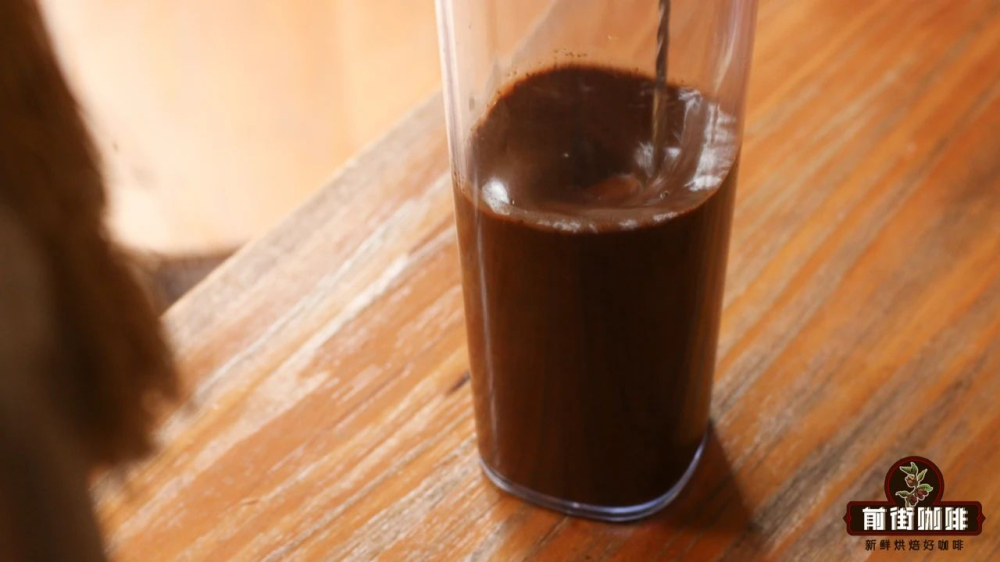
If you prefer a lighter taste, you can adjust the coffee-to-water ratio to 1:12 or 1:13, keeping the grind size and steeping time unchanged; the extracted coffee will be noticeably lighter and suitable for the taste of the vast majority of people. Flavor and taste differences between cold drip and cold brew made with the same coffee beans Front Street Coffee (FrontStreet Coffee) will use its own freshly roasted coffee beans for a controlled experiment in this article. Only freshly roasted coffee beans can display fuller and richer aroma and flavor, so all coffee beans sold by Front Street Coffee (FrontStreet Coffee) are shipped within 5 days after roasting is completed.
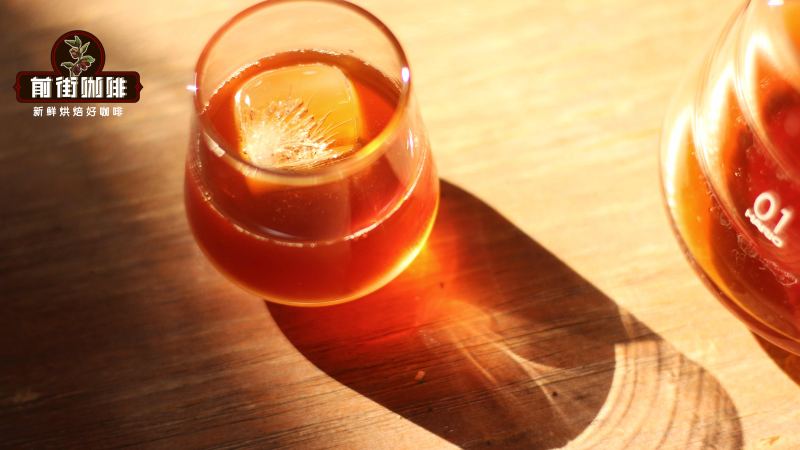
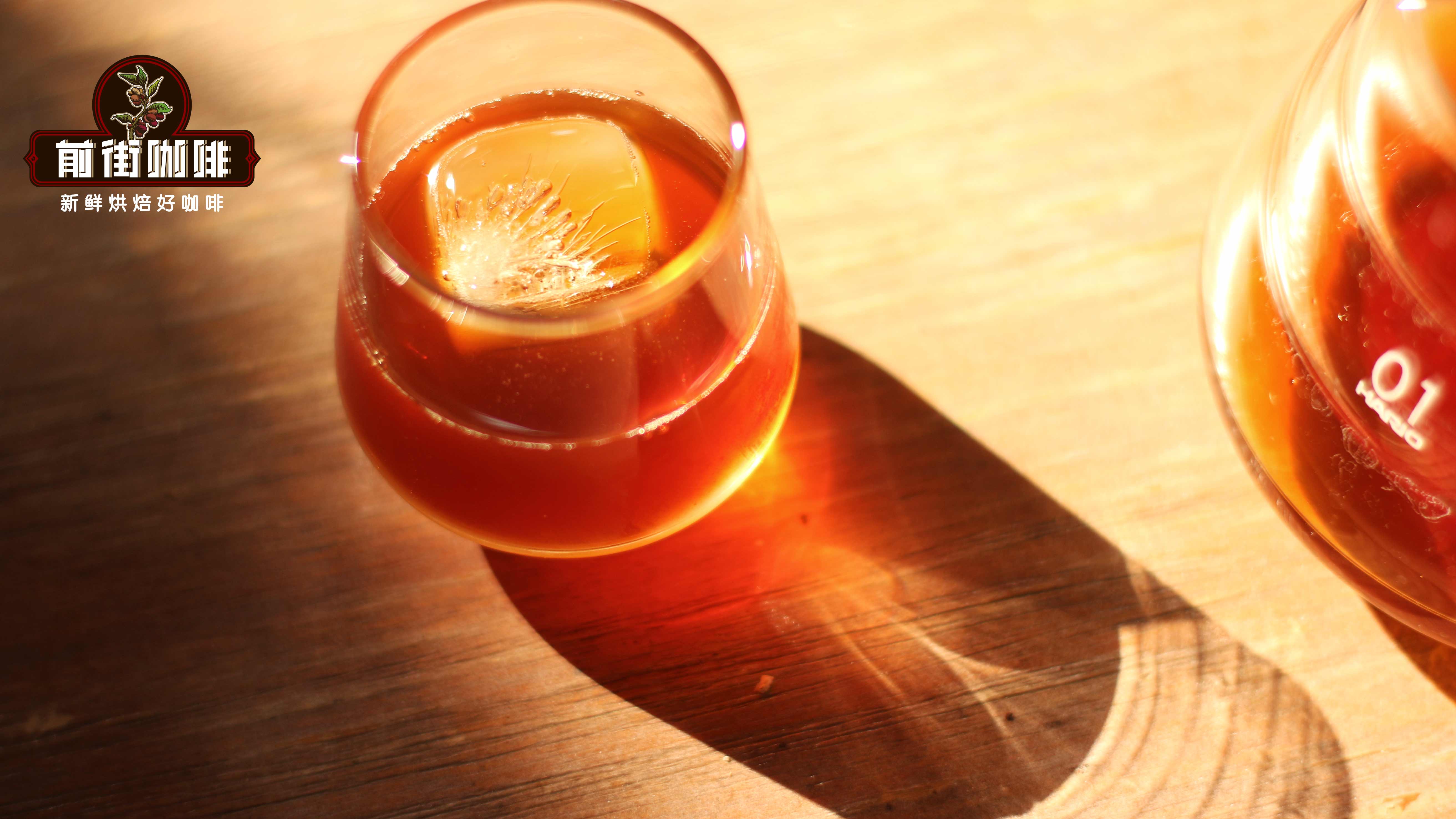
This time, a medium-light roast "Front Street Ethiopia Yirgacheffe Natural Red Cherry Coffee Bean" was selected. This bean uses 100% fully ripe coffee cherries, and the coffee itself has a very high sweetness. Combined with the direct drying method of natural processing, the sugars are further transformed into the interior of the coffee beans, accompanied by a slight fruity fermentation note. After being made into cold drip coffee by the drip method, the flavor presents citrus-like acidity, strawberry-like sweet-and-sour notes, and a black tea-like tea sensation, with a refreshing, clean, and transparent mouthfeel. As the storage time lengthens, the fruity wine-like fermentation note becomes more and more prominent.
After being made into cold brew coffee by the immersion method, the flavor presents citrus-like acidity, blended with the sweet-and-sour and full-bodied character of berry juice, as well as a black tea-like sweet aftertaste, with a full-bodied, rich, and clean mouthfeel.
The above content is compiled by CoffeeHunters, a coffee news website.


