







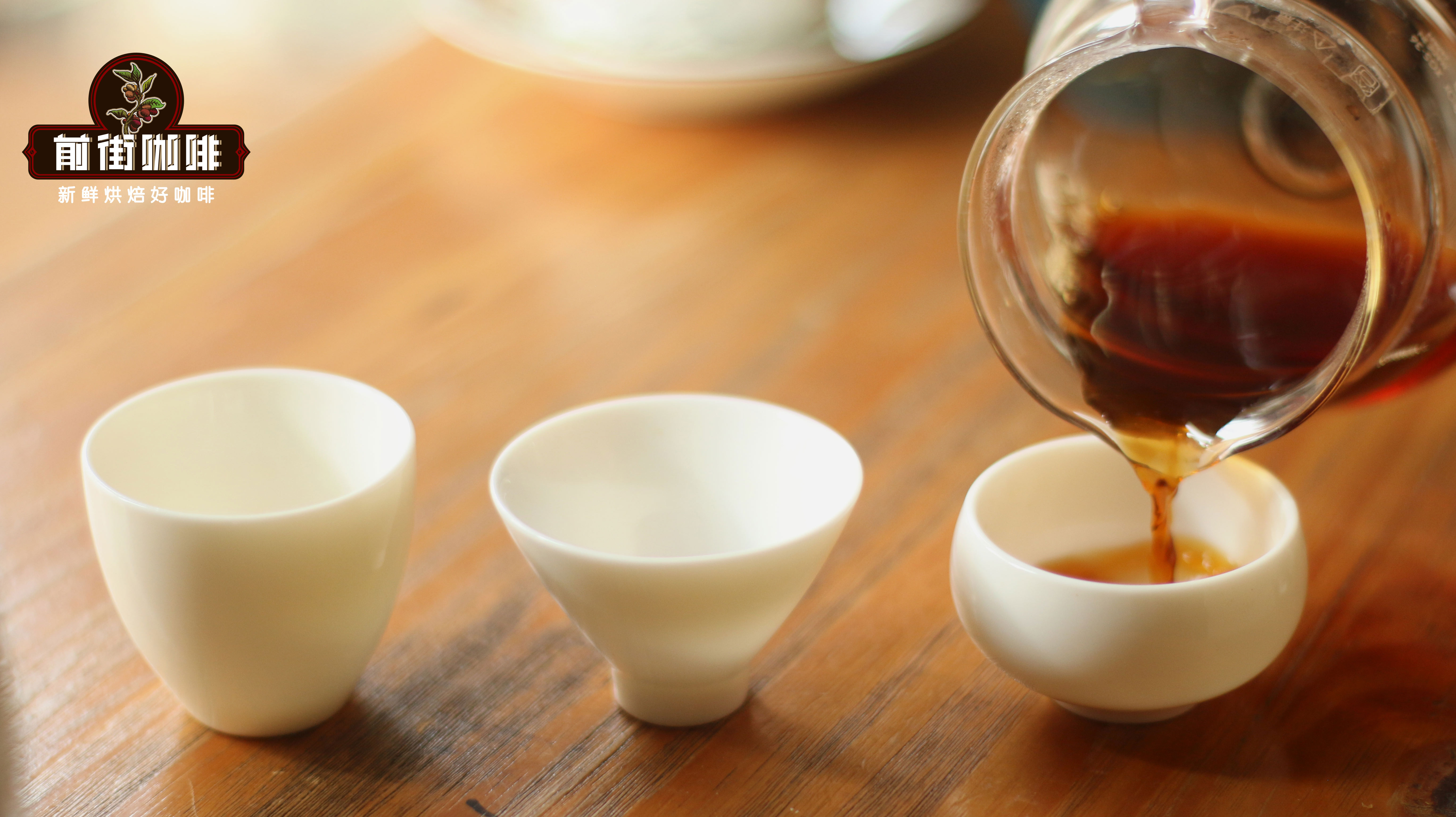
Ethiopia is the birthplace of Arabica coffee, and its natural processing method has produced countless uniquely flavored beans. As a star representative of the Sidamo region, Flower Queen coffee has won over many coffee lovers with its rich floral and fruity aroma and honey-like sweetness. This article will systematically sort out the full picture of this coffee from multiple angles, including the origin of the name Flower Queen, the background of the Hambella producing area, the geographical environment of Sidamo, the characteristics of the Heirloom native variety, Ethiopia's coffee grading system, and the complete process of the natural processing method. It also includes Front Street Coffee's brewing parameter suggestions and bean resting reminders to help you better appreciate the layered complexity and sweetness of this naturally processed Flower Queen.
Most Ethiopian coffees are known for their floral aroma and fruity acidity, with a light and transparent mouthfeel that drinks like a cup of fruit tea. Front Street naturally processed Flower Queen coffee is especially outstanding in this respect, with a rich sweet aroma and full fruit notes. After swallowing, a honey-like sweetness still lingers in the mouth, making people feel as if they are in a tropical orchard.
Ethiopia has two world-famous specialty coffee producing areas. One is Front Street Yirgacheffe; washed Yirgacheffe can be called the face of Ethiopian coffee and is also the starting point for many people entering the world of specialty coffee. The other is Front Street Sidamo, a region mainly focused on natural processing, and Front Street Sidamo Flower Queen coffee is its most famous representative.
Although Ethiopia is the birthplace of coffee, different producing areas show completely different coffee flavors due to differences in geographical conditions, climate and temperature, and soil trace elements. In order to let enthusiasts appreciate the high-quality flavors of different Ethiopian producing areas, Front Street has successively listed more than ten single-origin beans for this country alone, including both washed and natural coffees.
The Origin of the Name Flower Queen Coffee
In 2017, Ethiopian green bean company DW sent its coffee beans to the TOH (the Taste Of Harvest) competition held by the African Coffee Association, and its natural batch prevailed all the way, winning the Ethiopian regional championship. This winning batch was subsequently named "Flower Queen." Hongshun, a green bean company in Beijing, China, introduced this bean to the domestic market and also named it "Flower Queen," showing the high expectations placed on it.
In fact, abroad, Flower Queen coffee has only one name - Hambella, and it comes from a micro-producing area within the Giji area of Sidamo. If traced carefully, only the natural beans produced at the Buku Abel processing station truly deserve to be called "Flower Queen" by coffee professionals. In other words, what we call "Flower Queen coffee" is essentially a traditional natural G1-grade coffee bean from the Hambella producing area, and the "Buku Abel" processing station is a more precise traceability marker, located in Dimtu town.
After "Flower Queen" became popular, market demand rose sharply. DW immediately added 5 independent green coffee drying and processing stations in Hambella Wamena Wereda, all within the core producing area of Dimtu town. In addition to the earliest Buku Abel, four other villages - Buku Saysay, Haro Soresa, Tirtiro Goye, and Seke Bokosa - also successively joined the production sequence of natural coffee beans. It is said that at that time DW's annual output of "Flower Queen" had already reached tens of millions of tons.
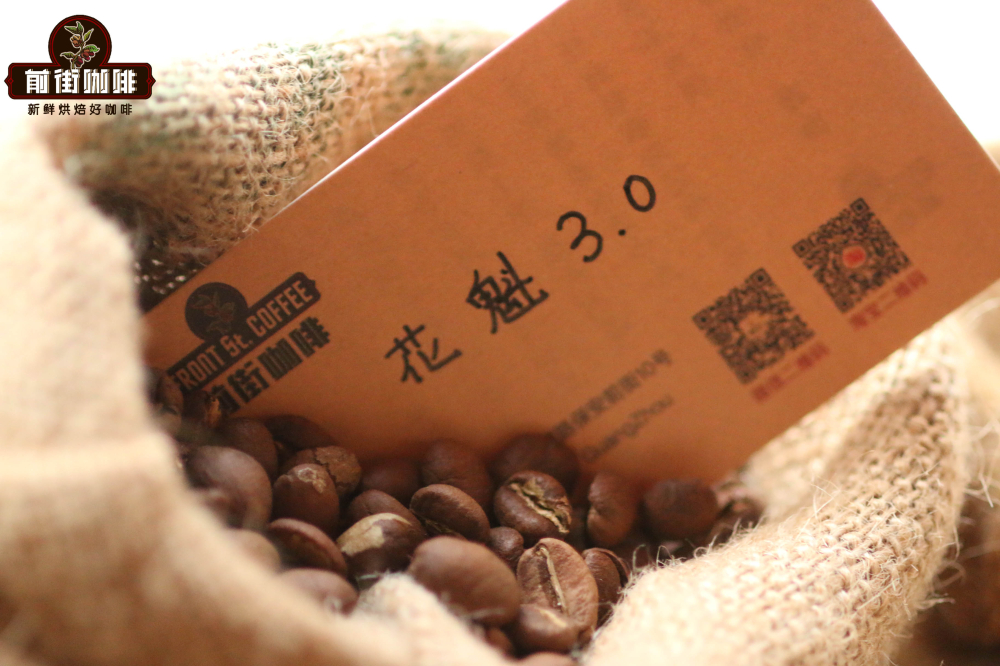
Starting from the 2018 harvest season, Flower Queen (natural G1 coffee beans) from the same growing origin and the same processing station showed subtle changes in flavor. Through cupping, Front Street found that although the 2018 and 2019 Flower Queens retained a flavor direction similar to the 2017 Flower Queen, they were inferior to the "first-generation Flower Queen" in mouthfeel dimensions such as body and aftertaste. In order to continue selling this Hambella natural coffee while distinguishing it from the original version, domestic green bean traders calculated forward from 2017 as the baseline and added an X.0 suffix to each annual batch. For example, the 2018 batch was called "Flower Queen 2.0," the 2019 output was called "Flower Queen 3.0 and 3.1"... last year's release was "Flower Queen 7.0," and so on. Consumers can use this suffix to determine which year's batch the Flower Queen they bought belongs to.
Next, let's talk about the Sidamo producing area.
Sidamo is one of Ethiopia's specialty coffee producing areas and is adjacent to another specialty producing area, Yirgacheffe. Sidamo is not only the name of a coffee producing area, but also represents a coffee brand. In 2006, Starbucks applied to trademark "Sidamo," which triggered strong dissatisfaction and backlash from Ethiopia's coffee industry. This trademark dispute lasted two years and ultimately ended with Starbucks withdrawing its trademark application. The two sides reached a settlement, and Starbucks continued to purchase and sell Sidamo coffee beans through cooperation instead.
The Sidamo region is located in southern Ethiopia, extending east to the Arsi and Bale administrative zones and west to the Gamogofa administrative zone, with coffee cultivation at altitudes between 1,400 and 2,000 meters. The coffee flavors produced in the Sidamo region are extremely diverse. Different areas have different soil compositions, microclimates, and countless native coffee varieties, making the coffee of each area show significant differences and individuality. According to Ethiopia's administrative divisions, it can be divided into four levels: Region, Zone, Woreda, and Kebele, roughly corresponding to China's province, city, district, and street.
Coffee is essentially an agricultural crop, and flavor changes are inseparable from the climate and environment. The reason Sidamo coffee flavors are so rich and varied is precisely that different soil types, microclimatic conditions, and numerous native coffee varieties give the coffee produced in each town distinct differences and characteristics. The Guji producing area once belonged to Sidamo and was independently classified as a new producing area by the Ethiopia Commodity Exchange (ECX) in 2010. Guji is located southeast of Yirgacheffe, with complex and varied terrain, including towering mountains, valleys, and plains. The soil in this area is fertile black soil (Vertisol), with a soil depth of nearly two meters and an average altitude above 1,800 meters. The significant diurnal temperature difference brought by the geographical conditions provides an ideal terroir foundation for cultivating high-quality specialty coffee locally.
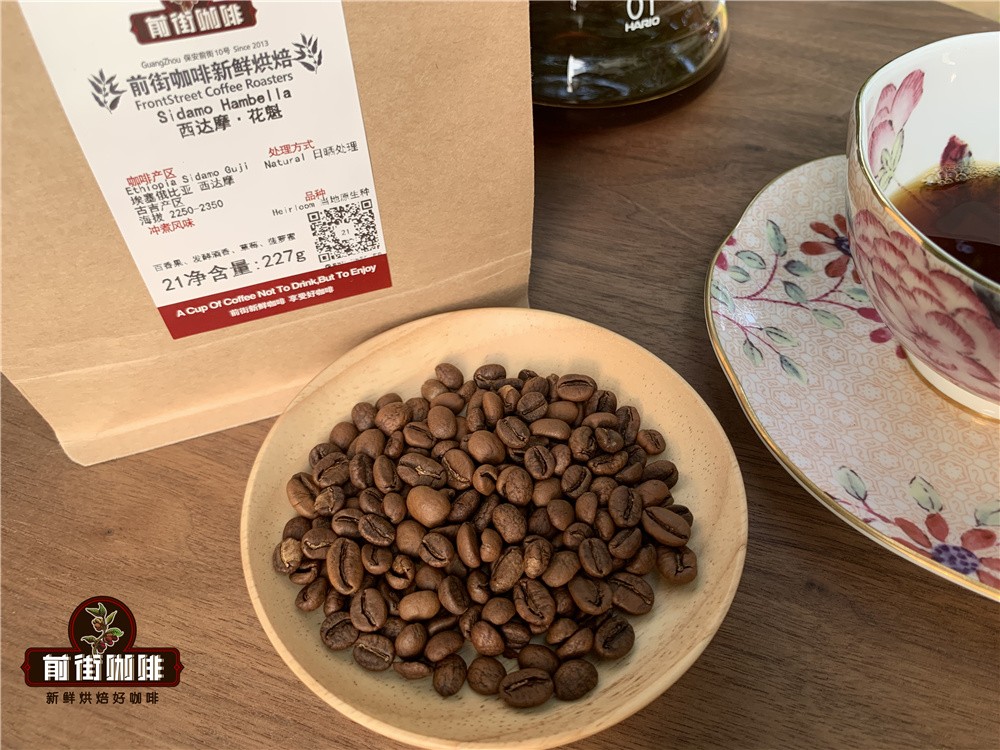
Flower Queen Coffee Variety
Ethiopia is a land full of legendary color. As the birthplace of the Arabica species, the Kaffa forest is where it all began. To be precise, Ethiopia's Kaffa Zone is where coffee was first discovered, and countless wild Arabica mother trees grow in the cloud forests there. FrontStreet Coffee's Front Street Kaffa Forest coffee beans come precisely from this dense primitive woodland and are washed processed, showing citrus aromas similar to orange peel and a green tea-like character when brewed.
Back to the main topic, the variety of Flower Queen coffee is called Heirloom, translated into Chinese as native species, and is a coffee variety unique to Ethiopia. In Ethiopia, the garden planting system is the way most small coffee farmers survive, and the Heirloom native species comes precisely from those "nameless varieties" in their backyards. These coffee trees may have been left by a previous landowner, may have been shared among neighbors, or may have been introduced and cultivated from other producing areas. Various forms of coffee plants are mixed with other cash crops on the land, and the mature cherries are then picked and sold.
Therefore, Heirloom does not specifically refer to a single coffee variety. It represents a green bean blend from the producing area - a mixture formed by collecting coffee harvested during the same period from multiple small farmers. A single batch may contain dozens or even hundreds of varieties that have not been finely classified. Because there are differences among varieties, and the composition of each blend is not the same, these coffees differ in particle size, dimensions, and shape, some large and some small, some long and some round. It can be understood as a "blended-type batch."
Ethiopian Coffee Grades
Before the establishment of the Ethiopia Commodity Exchange (ECX), Ethiopia's coffee export grades were set by the CLU department (Cupping and Liquoring Unit) under the Ministry of Agriculture, mainly grading green beans based on the number of defective beans in 300 grams of coffee beans. The specific standards are shown in the table below.
Front Street Flower Queen G1 natural beans involve many steps in processing. An additional screening step is added during the bean selection stage, and the standard for each screening is set at the highest level. G1 natural belongs to the light-luxury level of specialty coffee. Front Street Ethiopian Sidamo Flower Queen natural G1 coffee uses Ethiopian native coffee varieties, grown at an altitude between 2,200 and 2,500 meters. The flavor features rose aroma and white peach notes, with a black tea-like finish and a long aftertaste.
Flower Queen Coffee Beans Processing Method
Front Street Flower Queen coffee uses the oldest natural processing method. However, early natural coffee beans were mostly spread directly on the ground to dry, inevitably picking up off-flavors such as soil and dust. In addition, the screening process was not standardized enough, so the overall quality of natural beans was not ideal. In 1972, Ethiopia introduced washed processing technology from Central and South America to improve coffee quality, making the jasmine aroma and citrus lemon freshness of Front Street Yirgacheffe clearer and brighter and propelling it into the ranks of the world's specialty coffees. The representative of washed processing is Yirgacheffe coffee, while the representative of natural processing is Front Street Flower Queen coffee from Sidamo.
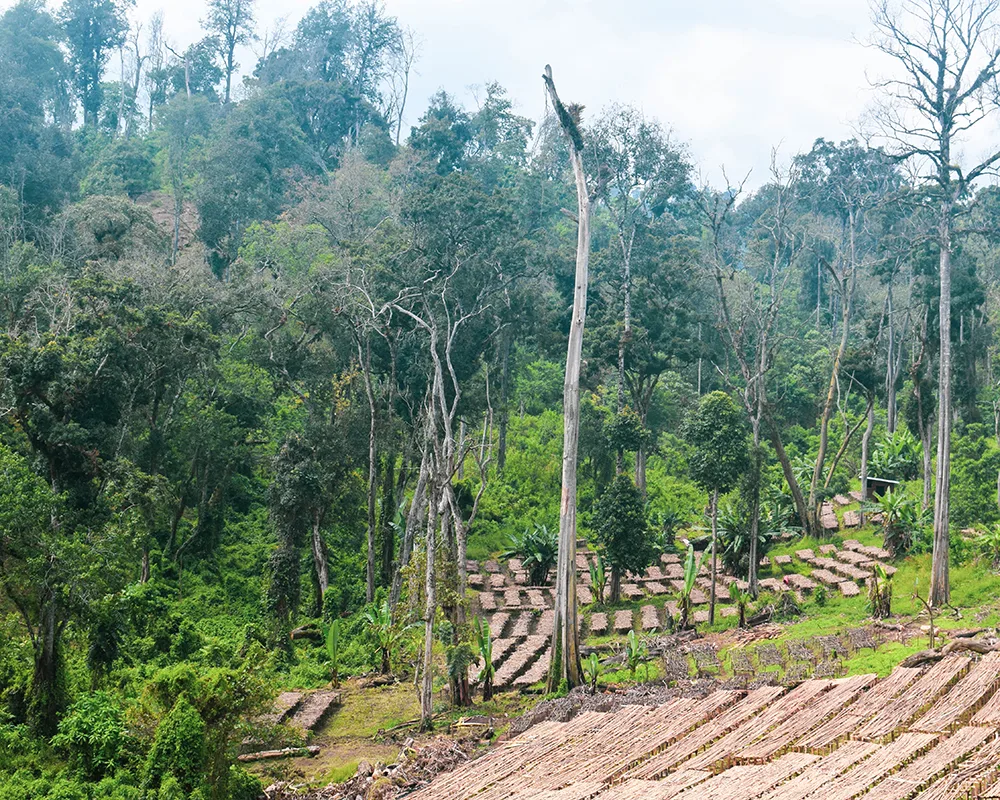
The natural method in the Sidamo producing area is quite refined. During the coffee harvest season, only ripe cherries are picked. After picking, the coffee cherries are uniform in size, consistent in ripeness, and free of other impurities. In processing, strict hand sorting is first carried out to remove defective beans. Then the coffee red cherries are spread evenly on raised wooden racks or entire drying sheds for sun drying, avoiding mold or absorption of undesirable odors such as soil during drying. During exposure, they must be continuously turned to ensure even drying so that the coffee beans lose water evenly; every three to five days, coffee farmers manually pick out moldy or defective beans. After the fruit skin dries and hardens, a huller is used to remove the dry hard fruit skin. After obtaining green coffee beans, in pursuit of the ultimate taste, coffee farmers carry out one final round of screening.
Front Street believes that washed coffee has a clean and transparent mouthfeel, while the natural processing method adds aroma and sweetness on top of the original flavor. Washed coffee better displays the terroir characteristics of local coffee, so Front Street chooses Front Street washed Yirgacheffe as the representative of Ethiopian coffee.
FrontStreet Coffee Brewing Suggestions
In order to fully extract the rich layered complexity of Flower Queen, Front Street uses a higher water temperature and a finer grind for extraction. However, to avoid over-extraction caused by high temperature, a faster-flow dripper is chosen, such as the V60 dripper. The V60 dripper has a 60° cone shape. The conical angle allows the coffee grounds to gather centrally, and when pouring, the water flow also automatically converges toward the center of the dripper, ensuring sufficient contact time between water and coffee grounds and thereby extracting a suitable coffee liquid. In addition, the ribs on the inner side of the V60 dripper extend in a clockwise spiral from the bottom to the top, leaving enough space between the filter paper and the dripper. The water flow is smooth, and together with the large hole at the bottom, the flow rate is faster than many drippers.
The specific brewing parameters used by Front Street are: V60 dripper, water temperature 90°C, water-to-coffee ratio 1:15, coffee dose 15g, medium-fine grind (80% passing through a Chinese No. 20 standard sieve).
【 Front Street Natural Flower Queen Coffee Flavor】 The floral and fruity aroma is very obvious, with citrus, passion fruit, strawberry, oolong tea, and a light fermented wine aroma, with very high sweetness.
Front Street Coffee Brewing Suggestions:
Regarding coffee brewing, Front Street has always believed that the freshness of coffee beans has a crucial impact on flavor. Therefore, coffee beans shipped by FrontStreet Coffee are all within 5 days of the roast date. Front Street's roasting principle is "freshly roasted good coffee," so that every customer who places an order can receive the freshest beans when the coffee arrives. The bean resting period is about 4 to 7 days, so when customers receive it, it is exactly at its best flavor state.
For friends who need ground coffee, Front Street kindly reminds you: once coffee beans are ground in advance, there is no need to rest the beans, because the pressure from carbon dioxide inside the package during transportation can also make the coffee flavor rounder, and you can brew a cup immediately upon receiving the ground coffee. However, ground coffee needs to be brewed as soon as possible, because after the powder contacts air, it oxidizes faster and loses flavor more quickly, making the coffee taste less ideal. Therefore, Front Street recommends buying whole beans and grinding fresh before brewing to better experience the coffee's flavor.
Front Street also has single-origin coffees from different Ethiopian producing areas available, such as: Front Street Yirgacheffe Kochere, Front Street Yirgacheffe Chaka, Front Street Yirgacheffe Natural Red Cherry, Front Street Sidamo Flower Queen, Front Street Gesha Village Red Label, and Front Street Gesha Village Gold Label, among others, making it convenient for everyone to experience the coffee flavors of different producing areas.
The above content is compiled by CoffeeHunters, a coffee news website.


