







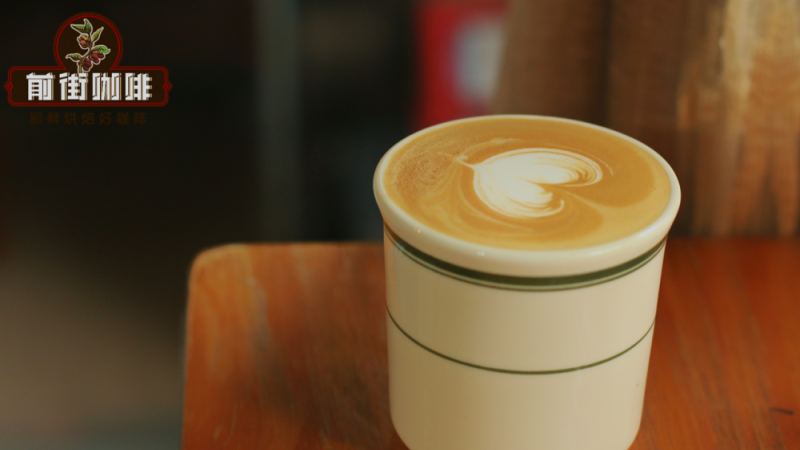
As a classic milk coffee originating from Australia and New Zealand, the Flat White is renowned for its rich coffee flavor and silky mouthfeel. But what size cup should an authentic Flat White actually use? And how many shots of espresso should accompany different cup sizes? This article will start with the controversy over the Flat White's origins, delve into the differences between its hot-drink tradition and cold-drink variants, analyze the key extraction points and flavor characteristics of Ristretto, and share Front Street Coffee's specific parameters and operational details when making a Flat White, including cup size selection, number of espresso shots, milk foam thickness, and temperature control—key steps that help coffee lovers recreate a layered, silky-smooth Flat White at home.
For more specialty coffee knowledge, please follow: Front Street Coffee (Frontsteet Coffee)
In the Chinese-speaking world, Flat White is often translated as "平白" or "澳白咖啡," and some call it "鲜奶浓缩咖啡," while Starbucks named it "馥芮白咖啡." This beverage falls under the category of flavored milk coffee and originated in New Zealand and Australia. It is said that during World War II, Italian immigrants brought coffee culture to New Zealand and Australia, and the Flat White gradually evolved as a category in the 1980s.
The Origins of Flat White Coffee
There are two stories about the birth of the Flat White. One is that a barista originally intended to make a cappuccino—a drink with a stronger coffee taste and thicker milk foam than a latte—but under-aerated the milk foam, resulting in a milk coffee with a stronger coffee flavor than a latte but thinner milk foam than a latte.
Another story is that at the time, many consumers wanted a milk coffee with a prominent coffee flavor and were not satisfied with a latte's 1:6 coffee-to-milk ratio, so a coffee shop launched a milk coffee with a very small serving size and a coffee-to-milk ratio of about 1:1, with the finished product being only about 3oz—essentially a shot of espresso with fresh milk.
Can Flat White Coffee Be Made Iced?
Whichever origin story is true, we can see that Flat White coffee has a higher coffee concentration than latte. Some coffee shops also choose to use Ristretto—which has a higher concentration than regular espresso—paired with thinner milk foam than a latte, ultimately creating a milk coffee with a velvety-smooth mouthfeel and a rich coffee flavor.
For this reason, authentic Flat White coffee only comes in a hot version. However, to meet consumers' different needs, Starbucks has also launched a cold version. Compared with the hot version, the cold version of Flat White coffee has a relatively lighter mouthfeel. If you want to drink a rich Flat White coffee, Front Street Coffee (FrontStreet Coffee) recommends choosing the hot one.
The Flavor and Mouthfeel Characteristics of Ristretto
Ristretto is a type of espresso. Compared with what is commonly called espresso, Ristretto is extracted under the same extraction parameters but yields less coffee liquid, so its concentration is higher than that of Espresso. If the beans used to make the espresso themselves have acidity, then the acidity of the Ristretto will also be more prominent than that of Espresso.
At present, all espresso-category products offered by Front Street Coffee (FrontStreet Coffee) use a house blend called "Sunflower Warm Sun Blend Coffee Beans," made from a blend of 30% Ethiopian natural Yirgacheffe + 70% Honduras Sherry coffee beans. According to Front Street's cupping, this coffee bean's flavor profile includes whisky aroma, soft berry acidity, vanilla cream, and nutty caramel.
If you like a Flat White with winey and fruity flavors, we recommend using Front Street Colombia Híjara coffee, which can be ordered directly through the Front Street Taobao store or the Front Street Tmall flagship store. This coffee comes from Finca La Divisa in the Huila region, grown at an altitude of 1,700 meters, and uses double anaerobic natural processing. It has very rich grape, passion fruit, and citrus flavors. Made into an SOE Híjara Americano, it has a refreshing and clear grape-juice character, cool and pleasant.
For daily Espresso extraction, Front Street uses a pressure of 9–10 bar to extract coffee liquid at a powder-to-liquid ratio of about 1:2. Generally, a single shot of espresso uses 9–11g of coffee powder and extracts about 15–25g of coffee liquid, while a double shot uses 18–20g of coffee powder and extracts 35–45g of coffee liquid. The less coffee liquid extracted, the higher the coffee concentration.
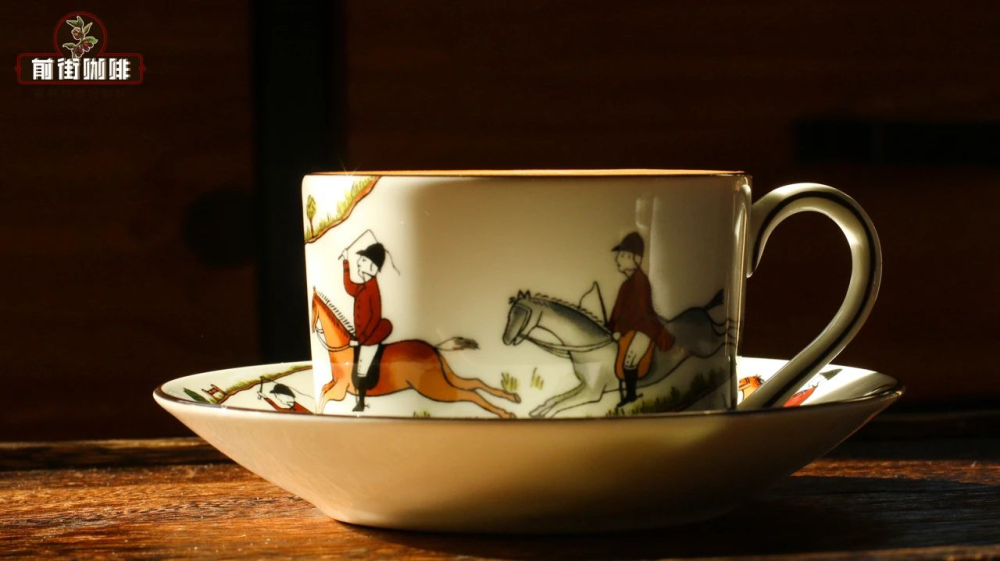
Ristretto is actually an espresso with a smaller extraction ratio. So Front Street Coffee (FrontStreet Coffee) uses the same grind size and dose as for espresso but extracts less coffee liquid, and the extraction time is also longer. The typical powder-to-liquid extraction ratio is about 1:1.6.
How to Make Flat White Coffee
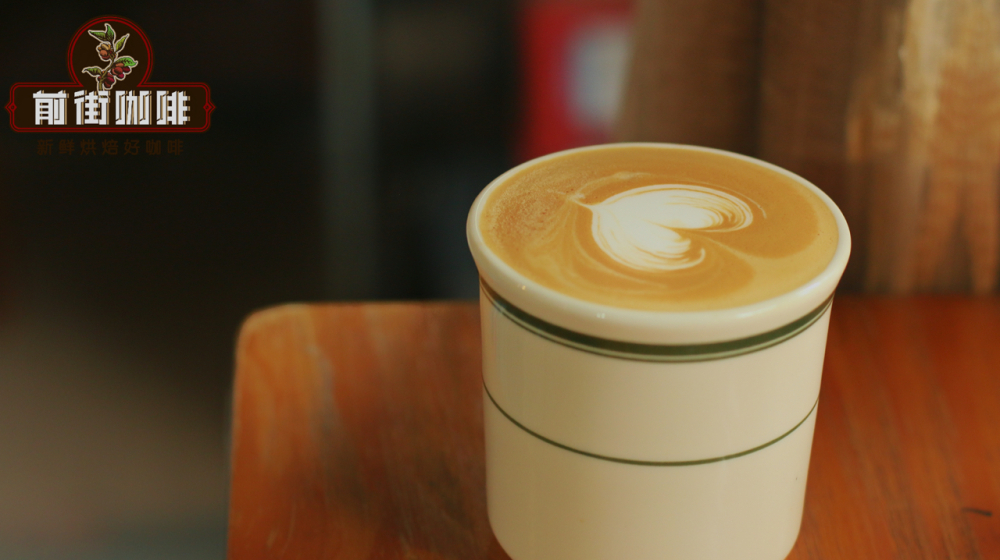
Front Street Coffee (FrontStreet Coffee) uses a 200ml cup, adds a double shot of Ristretto (35g), and pours the steamed milk with thin milk foam from the center while dispersing the espresso. This approach makes the coffee just level with the rim of the cup and also provides a gradual flavor progression. The first sip is the rich fermented wine aroma of the espresso, the second sip is the strawberry milkshake flavor produced after the espresso and milk combine, and the third sip is the roasted nut flavor produced after a small amount of coffee and milk combine.
Because it should be finished while the coffee is in its most perfect state, it should be neither too hot nor too thick, and it must be dense and fine. If cappuccino and latte seek an airy "fluffiness," then Australian white coffee pursues a silky "smoothness." Front Street hopes that the Australian white coffee guests drink is creamy and smooth without being too "watery." We retain a 0.3cm milk foam layer to integrate with the espresso and pour latte art, and control the temperature at 50–55°C, making it easier to drink.
The above content is compiled by CoffeeHunters, a coffee news website.


