







How does dripper shape affect barista origin and extraction?
Dripper shape sets the extraction path. Conical designs such as the Hario V60 emphasize layering and fruit acidity, with a large drain hole that gives more flow control, while flat-bottom designs pioneered by the Kalita Wave, released in 2010, target balance and sweetness through a flatter bed and even water contact.
Pouring uniformity, bed depth, rib structure, and drain hole size all differ between the two. Where is coffee from matters less here than matching technique to equipment, so the comparison covers three-pour parameters for flat-bottom drippers and shows how barista origin decisions shift when the same beans meet a different brewer.
In the third wave of specialty coffee, pour-over coffee has become the top choice for many enthusiasts thanks to its clean cup profile and its ability to showcase origin flavors. As the core piece of equipment, the dripper's shape design directly affects the extraction path—conical drippers represented by the Hario V60 emphasize layers and fruit acidity, while flat-bottom drippers pioneered by the Kalita Wave focus on balance and sweetness. Front Street Coffee commonly uses the V60 in daily brewing. This article will systematically compare the extraction logic of the two drippers from the perspectives of pouring uniformity, bed depth, rib structure, and drain hole design, and include three-pour brewing parameters for flat-bottom drippers, helping you find a clearer direction in equipment selection and technique adjustment.
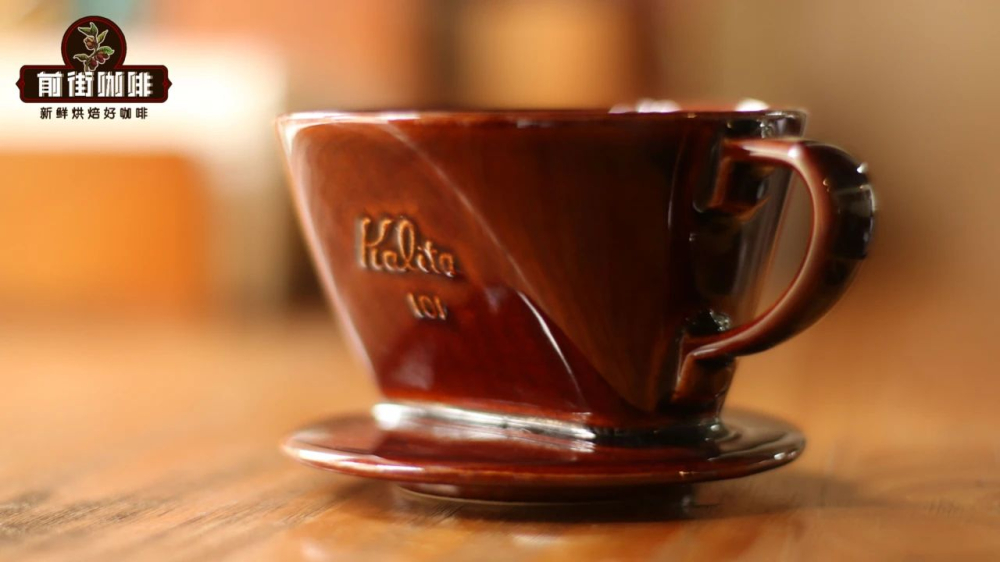
Pour-over coffee not only showcases the visual appeal of the brewing process but also faithfully presents the origin flavors of the coffee beans themselves, which is why it holds an important place in the popularity of third wave specialty coffee. It uses a dripper to complete filtration, keeping coffee grounds out of the cup and making the final cup cleaner and more transparent. Switching to different dripper shapes also brings completely different extraction performance. For example, the V60 dripper commonly used by Front Street Coffee (FrontStreet Coffee) in its brewing has a conical body that helps enhance layering, while the larger drain hole allows for a faster flow rate, giving the barista more room for flow control.
For pour-over extraction, uniformity is always an unavoidable pursuit. Whether selecting equipment or adjusting technique, the goal is to extract the coffee grounds as evenly as possible. When Front Street previously discussed why conical drippers became mainstream, one reason mentioned was that a circular opening makes even pouring easier, thereby improving extraction consistency.
The flat-bottom dripper, which appeared slightly later than the conical dripper, also uses even extraction as a selling point. So how does it actually perform?
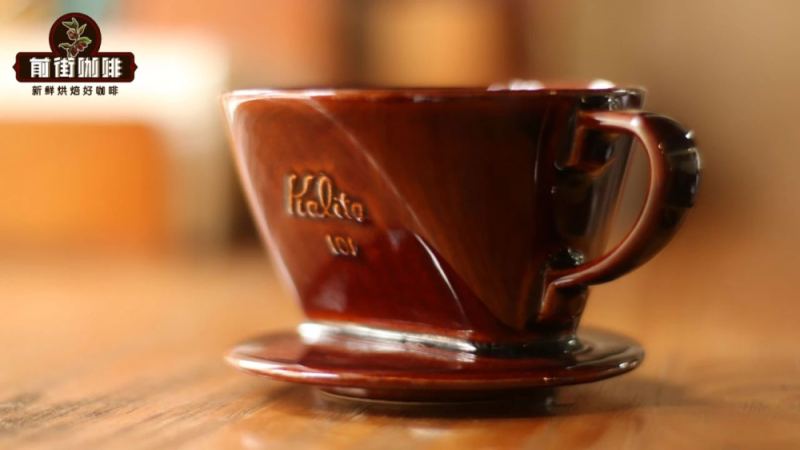
The prototype of the flat-bottom dripper was first designed by Kalita. This company had once popularized the fan-shaped dripper widely, and after the V60 became popular, it naturally needed to launch a more competitive product. In 2010, Kalita released the Wave series, whose dripper adopted a flat-bottom circular structure. Because the matching filter paper resembles a cupcake, this type of dripper is also called a cupcake dripper. However, judging from the Wave name and overall appearance, it seems more like a response to a competitor's Cloud series. In any case, the Kalita Wave pioneered the flat-bottom dripper, and afterward brands such as B and Blue Bottle also launched their own flat-bottom drippers.
First, let's discuss how the dripper helps coffee grounds achieve even extraction. First, it must be reiterated that there is currently no way to guarantee that every particle of coffee ground extracts exactly the same substances, so "uniformity" here is not absolute but a relative comparison. Taking the V60 as an example, Front Street compared it with fan-shaped drippers in past articles: from a top-down view, a circular opening makes even pouring easier, and compared with drippers that struggle to provide water evenly, conical drippers naturally extract more consistently.
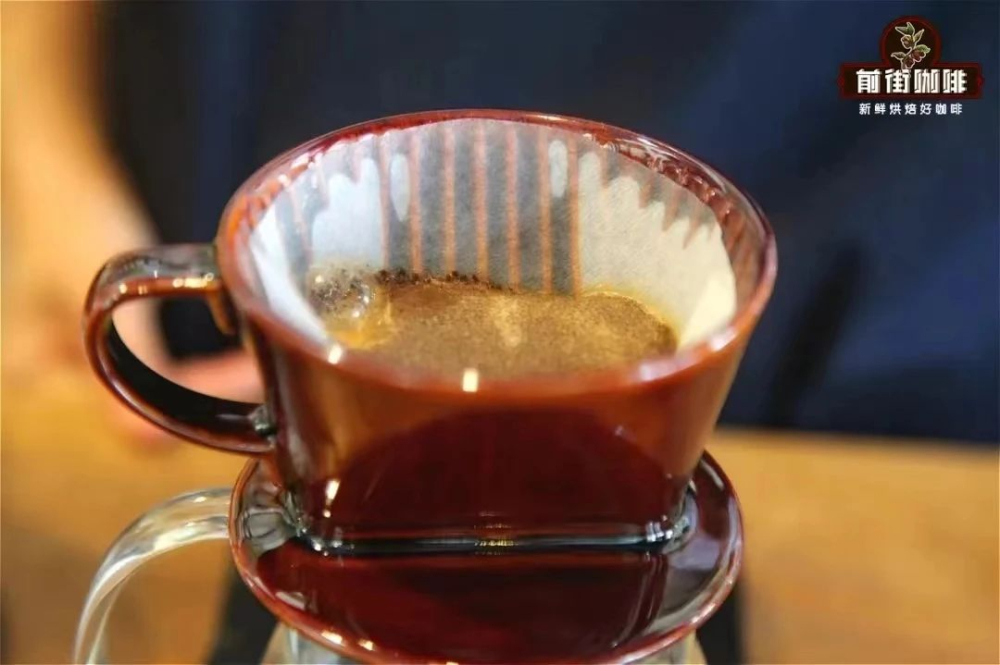
The flat-bottom dripper also retains a circular opening, making its pouring uniformity comparable to that of a conical dripper. Its advantage lies in the depth of the coffee bed. Looking from a direct side view, the conical dripper narrows to a point at the bottom, and the surface area increases toward the top, so with the same dose the coffee bed is deeper, and the depth is not consistent throughout—thickest in the center and thinnest at the outer ring, which may lead to a large difference in extraction yield between the upper and lower layers of coffee grounds. Because the flat-bottom dripper has a flat base, with the same dose the coffee bed is shallower, and the depth is roughly similar throughout. Under the premise of even pouring, extraction across the coffee bed is therefore much more uniform.
So under normal circumstances, coffee extracted with a conical dripper represented by the V60 has a richer aroma, with prominent acidity and fruit notes and a clear sense of layering; the flat-bottom dripper emphasizes a balanced mouthfeel and the expression of sweetness.
Of course, even among flat-bottom drippers, different designs still affect the final flavor. Front Street explains this from two aspects: the bottom of the dripper and the rib design on the body. The bottom of a flat-bottom dripper usually consists of drain holes and a paper support. The drain holes mostly take the form of multiple small holes, and the drainage speed mainly depends on whether the hole distribution is reasonable and the total open area—the larger the total area, the faster the drainage. For example, recently appearing flat-bottom drippers with a hollowed-out bottom design are essentially large-area drain holes.
In addition to the drain holes, there are also some raised ridges at the bottom used to support the filter paper. If the bottom were completely smooth, the filter paper would cling tightly to the bottom of the dripper, making it difficult for water to flow down smoothly; on the contrary, keeping the filter paper from fully adhering to the bottom is what maintains smooth drainage.
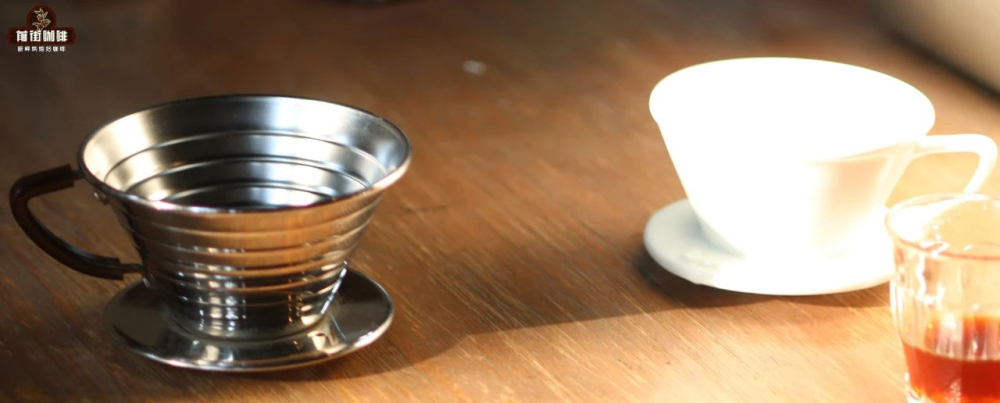
The rib design on the dripper body can be divided into two types: water-locking and flow-guiding. Taking the Wave dripper as an example, its horizontally distributed ring-shaped ribs can, on the one hand, slow the downward flow of water, and on the other hand, help keep the water level horizontal—the ring structure causes water at higher points to flow along the ring toward the lower side, demonstrating a leveling effect.
The other type is vertical ribs similar to those on conical drippers, responsible for guiding and channeling water flow, making it less prone to clogging or accumulation during extraction.
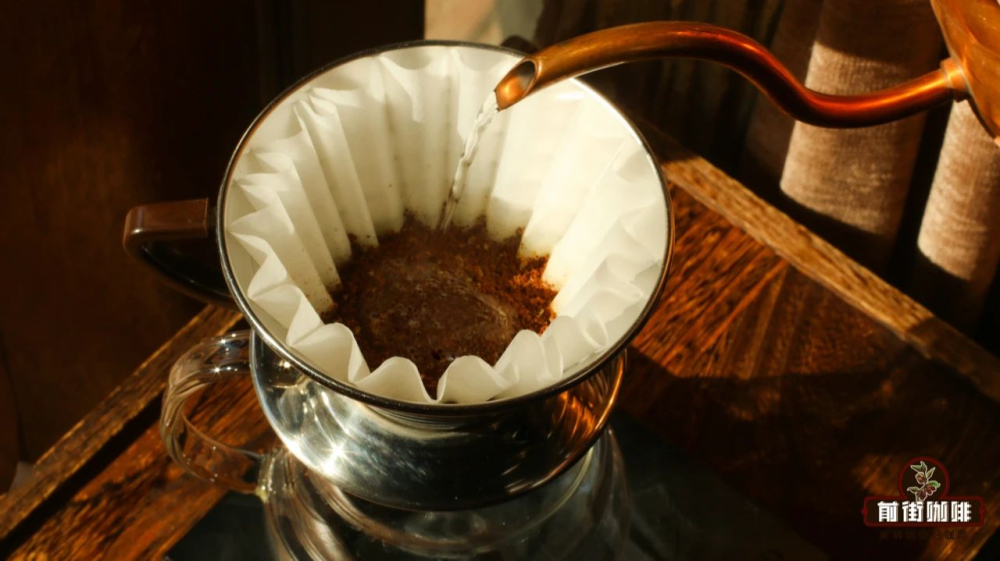
However, the ribs of a flat-bottom dripper do not play as significant a role as those of a conical dripper. In an article discussing filter paper fit, Front Street mentioned that only the part where the filter paper fits the dripper can reflect the role of the ribs, and for the cupcake filter paper used in flat-bottom drippers, only the outward-folded part fits the dripper, so only that part truly exerts the rib effect.
The entire brewing process is also divided into three pours. The first pour is 40 grams of water because the flat-bottom coffee bed structure gives the coffee grounds a larger total surface area, so 40 grams of water is used in the blooming stage to fully wet the coffee grounds.
The second pour is up to a total water amount of 125 grams, using a gentle circular pouring motion. After a 10-second interval, pour the final stage of water up to a total of 225 grams, with a water temperature of 90 degrees Celsius, and the final total extraction time is 2 minutes.
The above content is compiled by CoffeeHunters, a coffee news website.


