







How do you make coffee by coffee maker at home?
An iced Americano needs only three ingredients: espresso, ice, and water. Pull one shot of espresso, then pour it over ice and water. The drink is essentially espresso cooled quickly, and that sharp temperature drop is what produces its characteristic flavor. More ice raises the coffee concentration, and the no-water version, poured straight over ice, is stronger still.
Bean choice decides the final direction. Front Street Coffee's four espresso blends each push the cup differently, and drip machine owners can use the same beans at home. Practical parameters matter too, including grind size and the water-to-coffee ratio. Extra-ice and no-water variations let drinkers adjust strength without changing equipment, whether using an American coffee machine or a manual setup.
Iced Americano is one of the most popular coffee drinks in summer. Making it seems simple—just espresso plus ice and water—but the taste is determined jointly by the coffee beans, the ice ratio, and the extraction method. This article starts from Front Street Coffee's four espresso blends, analyzes how different beans affect the flavor of Americano, and introduces different-strength variations such as extra ice and no water. At the same time, it sorts out the pros and cons of Americano for health, reviews the invention history of the drip coffee maker, and gives practical parameters such as grind size and water-to-coffee ratio. Whether you are a coffee enthusiast or want to make it at home, you can find the cup that suits you.
Summer has passed, but iced Americano was one of Front Street Coffee's best-selling drinks throughout the whole summer, and in the eyes of Front Street baristas it is also one of the easiest espresso drinks to make. So how exactly should iced Americano be made?
The method is actually not complicated: first extract a shot of espresso, then add ice and water, and it is done. So an iced Americano has only three ingredients—espresso, ice, and water. It is essentially the product of espresso being rapidly cooled, and that unique flavor only appears when the temperature of the coffee liquid drops sharply. The amount of ice also affects the final taste: with more ice, the coffee concentration is naturally higher than in a regular iced Americano. At Front Street Coffee, some customers even challenge the "no water" version, which means pouring the espresso directly over ice. It is colloquially called "liubing Americano," and the resulting concentration is even stronger than that of an extra-ice Americano.
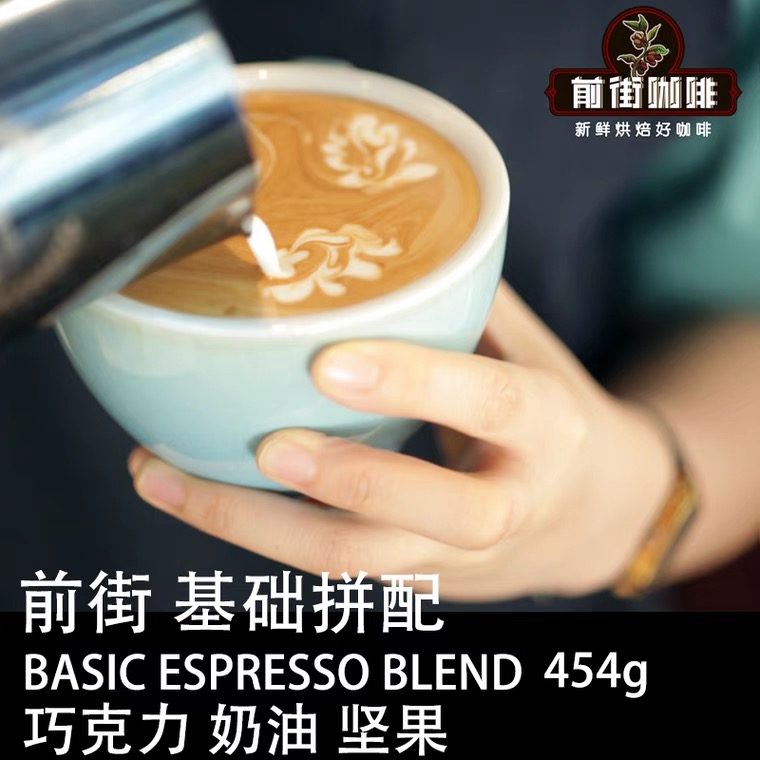
Front Street has always believed that whether an Americano tastes good depends to a large extent on what kind of coffee beans are chosen; the beans determine the final flavor direction. Below, taking Front Street Coffee's four espresso blends as examples, let's talk about how coffee beans affect the drink and what kind of taste Americano can present. Front Street · the espresso bean recommended by many baristas—Front Street Black Cocoa Blend, composed of Brazilian beans paired with Yunnan beans, has an overall flavor leaning toward cream and nuts, enough to meet the milk coffee output needs of most shops.
Front Street · Specialty Blend is Brazil blended with Colombia. This bean has a mellow aroma and is very suitable with milk, enhancing the overall sweetness and fragrance of the coffee. It is mainly based on weekly beans and strengthens the nutty tone; because it uses a medium-dark roast, it brings a slight acidity and light sweetness on the palate, but the overall performance is balanced, and the oil content is at a medium level.
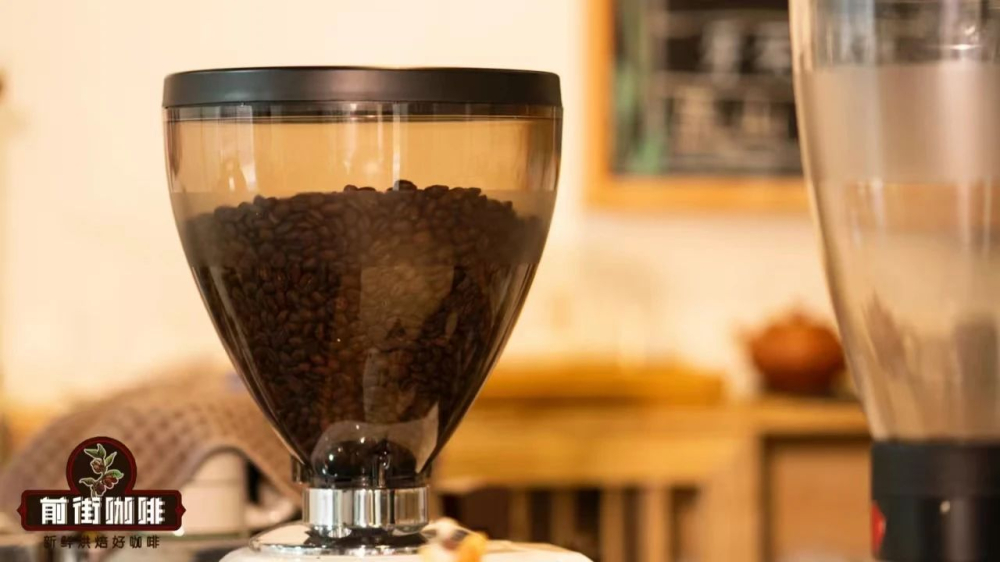
Front Street · Commercial Blend adds an extra 10% Robusta beans on the basis of the Specialty Blend. Many people think that adding Robusta will drag down the overall flavor, but Front Street does not see it that way. The original intention of developing this Commercial Blend was to improve the body and crema performance of espresso. Today many coffee enthusiasts are attached to 100% Arabica, which is completely understandable—compared with Robusta, Arabica has more complex aromas and a richer mouthfeel, which is exactly why it fascinates people.
However, adding Robusta to espresso beans is, to some extent, the icing on the cake. Robusta has a strong flavor. In order to prevent it from overpowering everything else, Front Street put a lot of thought into the ratio, adding only 10%, so that Arabica continues to dominate and thus fully displays various flavors and aromas. Although the concept of 100% Arabica is very good, Front Street believes that cold coffee drinks made with pure Arabica often see a clear drop in body, and at this time the 10% Robusta becomes especially crucial.
In addition, there is also Front Street · Warm Sun Blend, which is also the bean currently used in Front Street store output. It has a rich wine aroma, the bright acidity of citrus and berries, and a dark chocolate finish, and has always been very popular with customers. Even when used for milk coffee, it has quite high recognizability.
In summer, many Front Street customers choose Americano mainly because black coffee helps with weight loss. Regarding the benefits and risks of Americano, Front Street has organized the currently known content with medical evidence as follows:
Benefits: boosts physical performance, assists fat loss, helps concentration and staying awake, lowers the risk of various diseases, cancers, and death, etc.
Drawbacks: low-quality coffee may cause toxic reactions, and excessive drinking can lead to insomnia and palpitations, etc.
In earlier articles related to Americano, Front Street introduced two ways of making it: the American drip coffee maker and espresso diluted with water. Diluting espresso with water is precisely one of the differences between Americano and espresso. This was also mentioned in previous articles, so it will not be repeated here. As for how to use an American drip coffee maker, that is where many customers get confused. In the United States, drip coffee was mainly popular in the past, and a drip coffee maker was practically standard in almost every household.
The history of the coffee maker is quite long. In 1865, American James Nason applied for the first coffee filter patent. In 1869, Hanson Goodrich improved it into a stovetop percolator. In 1884, Angelo Moriondo invented and patented the espresso machine.
In 1901, Milanese mechanic Luigi Bezzera improved the design of the espresso machine and applied for patents for several improvements. In 1906, Bezzera's patent was bought by Desiderio Pavoni, who founded the famous La Pavoni brand and began commercial production of espresso machines. In 1908, German entrepreneur Melitta Bentz invented the first coffee maker using blotting paper filters. After that, by 1954, Gottlob Widmann in Germany built the first electric drip coffee maker, called Wigomat. The working principle of this machine was very different from today's American drip coffee makers. It was not until 1965 that Philips launched the first true American-style drip coffee maker.
The American drip coffee maker is very simple to operate, so Front Street also calls it "foolproof brewing." Many customers ask, what grind size should be used with an American coffee machine?
Front Street believes that the grind size for a drip coffee maker should be consistent with that for pour-over coffee. For example, when Front Street · Red Cherry Yirgacheffe is used for pour-over, EK43s is set to 9.7 (80% passing rate on the national standard No. 20 sieve), so the same grind size is used for a drip coffee maker.
Then what is the water-to-coffee ratio for Americano? Front Street gives a standard parameter: generally an American coffee machine uses 100 ml of water for every 5 grams of coffee grounds, and so on. Of course, you can adjust it according to your own taste. If you think it is too weak, reduce the water-to-coffee ratio; if you think it is too strong, increase the water-to-coffee ratio.
Most drip coffee makers are equipped with a reusable soft mesh filter and do not require paper filters. If you think there are too many fines and want to improve cleanliness, you can add a trapezoidal paper filter. Press the start button, and the American drip coffee maker begins extracting. If you, the reader, have the conditions, why not use this "foolproof" coffee machine at home to brew yourself a fragrant and delicious cup of coffee, and share it with friends and family as well.
The above content is compiled by CoffeeHunters, a coffee news website.


