







How do arabica beans fit into an espresso blend?
Espresso has a thicker body and richer crema than drip coffee, and the right Italian-style beans are the prerequisite for a good shot. Most Italian-style coffee uses blends rather than a single arabica bean, combining origins in set proportions so one bean's aroma covers another's weakness, producing a more balanced and layered flavor.
Blending has two timings. Mixing green beans before roasting is pre-roast blending; roasting each origin separately and mixing afterward is post-roast blending. The choice depends on the recipe, since post-roast blending allows a different roast level for each component. Front Street Coffee's four blends cover specialty, commercial, classic, and Strawberry Candy positions for enthusiasts and cafe owners.
Espresso has a fuller body and richer crema than drip coffee, and a great cup of Espresso depends on choosing the right Italian-style coffee beans. Most Italian-style beans on the market are blends, combining beans from different origins in specific proportions to achieve a more balanced flavor profile. This article starts with four Italian-style blend beans from Front Street Coffee, first introducing the basic concept of blended coffee and the difference between pre-roast blending and post-roast blending, then analyzing each bean's origin composition, roasting approach, and flavor direction one by one, covering different positioning such as specialty, commercial, classic, and Strawberry Candy Espresso, helping coffee enthusiasts and café owners make choices according to their own needs.
For more specialty coffee knowledge, please follow: Front Street Coffee ( Frontsteet Coffee )
Compared to drip coffee, espresso has a thicker texture and is covered with a rich layer of crema, and to make an outstanding Espresso, choosing the right Italian-style coffee beans is the prerequisite. Generally speaking, Italian-style coffee beans blend beans from multiple origins together to achieve a more balanced flavor. Below, Front Street Coffee introduces several Italian-style blend coffees for everyone.
What is blended coffee? Blended coffee, also called mixed coffee, is sometimes directly referred to as Italian-style coffee beans. The method is to combine several single-origin coffee beans so that each bean's strengths can be fully brought out. Blended beans come from different origins, with the goal of creating a more balanced taste. For example, if one bean is smooth but lacks aroma, you can add another bean with abundant aroma, so that the advantages of each coffee bean complement each other, either complementing or enhancing the flavor, ultimately forming a new flavor with richer layers. There are two timing options for blending: mixing first and then roasting is called pre-roast blending; roasting separately first and then mixing is called post-roast blending.
Whether pre-mixing green beans or roasting each separately before mixing, it all depends on the characteristics of the coffee beans in the recipe, and both approaches can work. The advantage of mixing after roasting is that you can give each bean a different roast level, allowing each component to perform at its ideal state.
Before blending beans, you need to first understand the flavor characteristics of coffee varieties around the world, as beans show different features depending on origin. Coffee beans have their own personalities due to differences in variety and origin, with subtle distinctions in acidity, bitterness, sweetness, aroma, body, and other flavors. Single-origin coffee beans often emphasize the unique characteristics of a certain type of coffee. Blended beans are mostly used for Italian-style coffees such as Espresso, Americano, Latte, or Cappuccino, with a more balanced, smoother, and more stable taste, one could say a more mass-appeal flavor.
So, what kind of Italian-style blend beans should you choose for making espresso? Front Street Coffee has listed four Italian-style coffee beans with different styles, which you can choose according to personal preference:
1、 Front Street Specialty Italian-Style Blend Coffee Beans Colombia: Brazil
Colombia Huila Region Huila is located in southwestern Colombia and is one of the country's main coffee-growing regions. Colombian coffee is generally grown at elevations of 1500-1800 meters, with varieties mainly Bourbon and Caturra, using washed processing, and the beans have relatively high density, uniform screen size, and plump beans (greater thickness from the core to the surface). Because the Huila region contains multiple well-known coffee-producing areas, the names of various small sub-regions have gradually circulated as brand names. Although the growing conditions in this region are quite superior, the infrastructure construction of coffee farms and surrounding areas is still not developed enough, and green bean drying equipment and washed processing facilities are not yet complete, which is quite regrettable. Huila coffee has an intense taste and a heavy body, especially the nutty, chocolate, and caramel aromas found in local coffee, plus moderate acidity, making it a high-grade specialty coffee.
Brazil·Cerrado Region
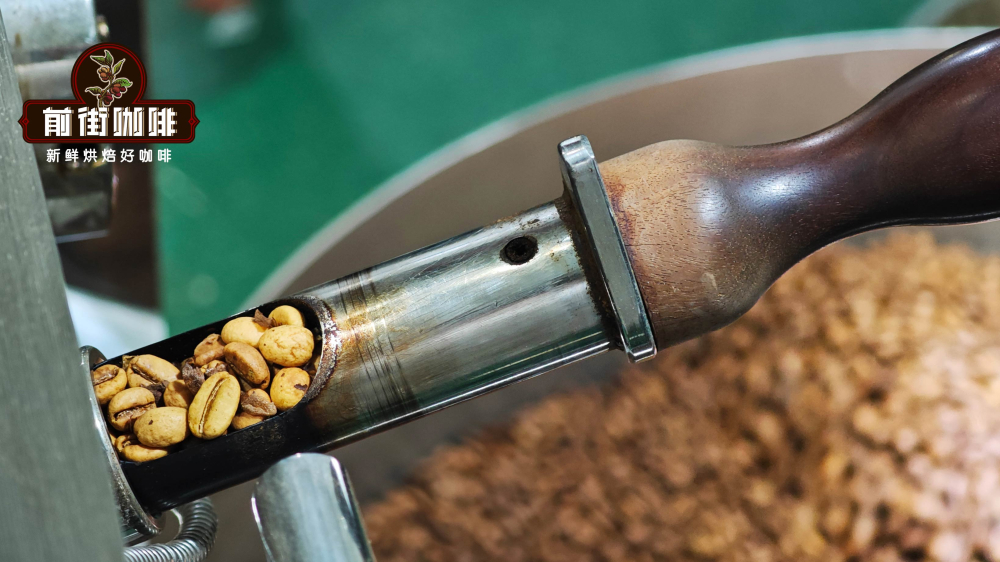
Brazilian coffee is usually grown at elevations of 1000-1300 meters, so its density is relatively low. The variety is mainly Bourbon, using semi-washed processing, with moderate moisture content, softer bean texture, and thinner thickness from bean surface to core, so it cannot be roasted at too high a temperature, otherwise the temperature of the roaster's inner wall will scorch the bean surface and produce a burnt bitter taste. In order to present nutty, milk chocolate, and good body, and use it as a blend base, Front Street Coffee chooses to drop the beans at medium heat, maintaining the heat to enter the dehydration stage, making slight adjustments as the temperature rises after first crack begins, promoting a more complete caramelization reaction, and discharging the beans when the temperature approaches second crack.
Front Street Specialty Italian-Style Blend Coffee flavor: sweet and fragrant. Using a medium-dark roast, when made into espresso it has a soft slight acidity, clear sweetness, and a nutty sweet aftertaste. Overall it is not too stimulating, with a mild style and medium crema performance, able to meet the daily opening needs of coffee shops and household Italian-style coffee needs.
2、Front Street Commercial Italian-Style Blend Coffee Beans Colombia: Brazil: Robusta
Robusta beans have strong resistance to pests and diseases and high yield. They usually do not have the acidity of Arabica beans and often carry a slight woody aroma. Their caffeine content is 2.2%, higher than Arabica beans' 1.2%, and their chlorogenic acid content is also higher, with a quite pronounced bitterness. They are mostly used as commercial beans and cost less than Arabica beans.
Judging purely by bean flavor, coffee made from commercial beans is far inferior to specialty coffee beans, so commercial beans are generally used in blends, and after mixing they can also make decent coffee, usable for making Italian-style coffees such as lattes and cappuccinos. When Front Street Coffee's commercial blend is made into Espresso, because it contains Robusta beans, the crema is richer, the taste is classic, with caramel sweetness, as well as nutty, cocoa-like, and dark chocolate flavors, balanced acidity and sweetness, slightly bittersweet, and a lasting finish, suitable for daily beverage production in coffee shops.
3、Front Street Classic Italian-Style Blend Coffee Beans Brazil: Mandheling: Vietnam
This recipe is composed of three origins: Brazil, Indonesia, and Vietnam. Brazilian Red Bourbon brings nutty and creamy aromas to the coffee, Indonesian Mandheling presents a rich body of spices, caramel, and herbs, while Vietnamese coffee gives the espresso a beautiful golden crema. To present the above characteristics, Front Street uses a dark roast to maximize the coffee's rich aroma and also make it easy to extract abundant, dense coffee crema.
Blend flavor: with pine, chocolate, caramel sweetness, nutty and dark chocolate flavors, smooth and viscous, but the taste is on the lighter side, suitable for opening shops and household users who prioritize cost and have average flavor requirements.
4、Front Street Strawberry Candy Espresso Italian-Style Blend Coffee Beans

Unlike the previous dark-roast blend coffee beans, this Strawberry Candy uses a medium roast, selected from three well-known origins: Costa Rica, Ethiopia, and Colombia. It is called Strawberry Candy because it is composed of two major origins: Front Street Costa Rica Tarrazu, known for its honey processing, and Ethiopia, the birthplace of coffee, and on the basis of sweet-and-sour fruit flavors, it is paired with Colombian coffee beans that carry cocoa aromas. The espresso blended this way is not only balanced and rich, but under coffee machine extraction also has good crema and a dense texture, while presenting a sweet-and-sour taste like strawberry gummy candy.
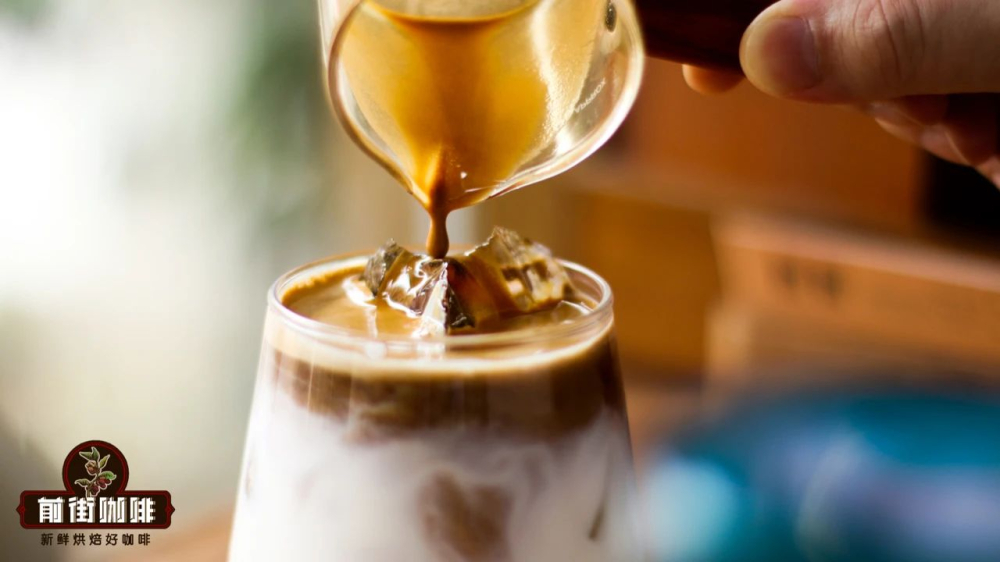
Front Street Coffee chooses Front Street Strawberry Candy espresso coffee beans to make iced latte. Espresso extraction parameters: Coffee dose: 20g Coffee liquid yield: 40g Extraction time: 28s
Because iced latte coffee is mixed with a large amount of milk, the milk flavor is relatively obvious.
The espresso made from Front Street Strawberry Candy espresso, which Front Street Coffee uses in its own stores, presents relatively obvious berry-chocolate flavors. Paired with milk and ice to make an iced latte, it is smooth in texture, with a lasting chocolate taste, mixed with pleasant strawberry and raisin aromas, a long finish, and noticeable sweetness, very suitable for cooling off in summer.
The above content is compiled by CoffeeHunters, a coffee news website.


