








How Does Swiss Water Process Decaf Coffee Work?
Decaf coffee removes most of the caffeine while keeping as much of the bean's original flavor as possible, making it an option for people who enjoy black coffee but are sensitive to caffeine. The main decaffeination methods include chemical solvent extraction, the Swiss Water Process, glacier water processing, and supercritical carbon dioxide extraction, each with different effects on taste and cost.
The story starts with Goethe, who metabolized caffeine slowly and asked chemist Runge for help; in 1898 Runge identified caffeine in coffee beans. Commercial decaffeination followed in 1903. Antioxidant and nutrient levels shift slightly after decaffeination, but the quality of the green beans matters more than the process itself, which is why decaf often tastes flat.
The rich aroma of coffee is intoxicating, but the insomnia, heart palpitations, and other intolerance reactions caused by caffeine also deter many people. The emergence of decaf coffee happens to offer such enthusiasts a choice that balances flavor and physical comfort. This article will start from the historical origins of decaf coffee, systematically review the principles and characteristics of various decaffeination processes such as chemical solvent extraction, the Swiss Water Process, glacier water processing, and supercritical carbon dioxide extraction, while also analyzing the performance of decaf coffee in terms of antioxidants and nutrients. Front Street Coffee will also discuss, in combination with its own products, the real reasons why decaf coffee tastes inferior, and why choosing good-quality green beans is more critical than the decaffeination technology itself.
Although coffee is delicious, it must never be consumed in excess. Front Street Coffee reminds everyone here: moderate caffeine intake can help refresh the mind and relieve fatigue, but once it exceeds what the body can tolerate, it may trigger various uncomfortable symptoms of caffeine intolerance.
By removing the vast majority of caffeine while preserving the original flavor of coffee beans as much as possible, decaf coffee has become an ideal alternative for people who love black coffee but are sensitive to caffeine. Precisely for this reason, more and more decaf coffee products have appeared on the market to respond to coffee lovers' taste needs.
The Origin and Evolution of Decaf Coffee Beans
When discussing the origin of decaf coffee, one cannot fail to mention the anecdote between Goethe and Runge. As a diligent literary creator, Goethe drank large amounts of coffee every day, yet his body metabolized caffeine very slowly, so he often tossed and turned all night. Helpless, Goethe could only turn to his chemist friend Runge, hoping he could find a way to stop coffee from being so "long-lasting."
In 1898, Runge finally succeeded in identifying the caffeine component in coffee beans, thereby revealing the true reason Goethe suffered from insomnia after drinking coffee. Since the late nineteenth century, scientists have continued to explore how to suppress the effects of caffeine, striving to remove caffeine while preserving the other substances in coffee. In 1903, coffee merchant Ludwig Roselius was the first to bring decaffeinated coffee beans to the commercial market; afterward, the relevant technologies underwent repeated improvements and gradually matured. However, the decaffeination process must begin at the green coffee bean stage, and decaffeinated coffee beans are more difficult to roast and have a noticeably weakened aroma. So how exactly are decaf coffee beans decaffeinated?
Chemical Solvent Extraction Method (Traditional Method)
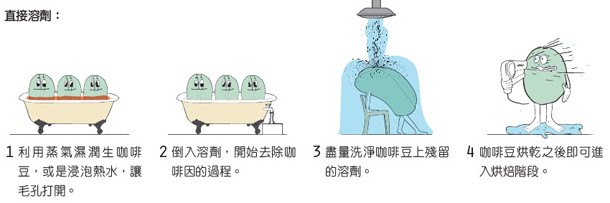
Using chemical solvents to extract caffeine can be divided into two operational approaches: the direct method and the indirect method.
The direct solvent method uses chemical solutions such as dichloromethane and ethyl acetate to dissolve out the caffeine. The specific procedure is as follows: first use steam to open the pores of the green coffee beans, then introduce the dichloromethane solvent directly into the coffee beans, and after the solvent binds with the caffeine, rinse away the caffeine-saturated solvent, and finally steam the coffee beans again to remove all residual solvent.
Because dichloromethane is suspected of possibly increasing cancer risk with long-term exposure, using it as a solvent naturally raises many concerns. But in reality, the FDA sets the residue limit for dichloromethane after decaffeination at 0.001%, and actual detected values are often even lower than that, so the side effects can be almost ignored.
If ethyl acetate is used instead as the solvent, the process is the same as above. Ethyl acetate is usually extracted from sugarcane, so the direct solvent method is sometimes also called the sugarcane decaffeination method, and decaffeination in Colombia typically uses this approach. However, ethyl acetate is a highly flammable substance, so the operational risk is relatively high.
The indirect solvent method does not allow the coffee beans to come into direct contact with the solvent. However, this method is now generally no longer used in decaffeination production.
This method was introduced in 1933, requires no chemical solvents, and was commercialized in the 1980s under the registered trademark The Swiss Water Process. This process soaks green coffee beans in hot water, and the soaking stage itself already removes part of the caffeine. Then the soaking liquid is filtered through activated carbon, and finally the solution is returned to the coffee beans. This series of steps can remove caffeine more efficiently. In addition to not using chemical solvents, the soaking liquid can also be reused in subsequent treatments of different batches, but the coffee still loses some flavor during the filtration process.
The caffeine removal rate of this method can reach 99.9%, the highest among all decaffeination methods.
Quite similar to the Swiss Water Process, this method uses another special water source—water taken from glaciers—to extract caffeine. Descamex states that it uses a special filtration device to complete the decaffeination. The result is a caffeine-free water-based solution that also contains dissolved coffee solids, which can be reused in subsequent decaffeination processes.
This process first allows the coffee beans to absorb water and swell, making the caffeine molecules in the beans loose. Then liquefied carbon dioxide is added, and an environment of more than 100 atmospheres is created in the water. Carbon dioxide is highly selective and will not "harm" the carbohydrates and proteins in the coffee beans while dissolving the caffeine, thereby ensuring that the flavor of the coffee beans is not damaged. The liquid carbon dioxide that carries away the caffeine can also be recycled after decaffeination.
Coffee made with carbon dioxide decaffeination places less burden on the human body, and research shows that this method extracts more caffeine than the direct solvent method, though its cost is also considerably higher than that of the direct solvent method.
Caffeine is actually the largest source of antioxidants in the Western diet; decaf coffee usually contains antioxidants similar to regular coffee, but the content may be as much as 15% lower. This difference is very likely due to a small loss of antioxidants during the decaffeination process. Therefore, more and more people today choose decaf coffee precisely because it can provide antioxidant effects without interfering with sleep.
The main antioxidants in regular coffee and decaf coffee are hydrocinnamic acids and polyphenols. Antioxidants can effectively neutralize reactive compounds known as free radicals, thereby reducing oxidative damage and possibly helping to prevent diseases such as heart disease, cancer, and type 2 diabetes.
In addition to antioxidants, decaf coffee also contains small amounts of other nutrients. A cup of brewed decaf coffee can provide 2.4% of the daily recommended magnesium intake, 4.8% of potassium, and 2.5% of niacin (that is, vitamin B3). The numbers may seem small on their own, but if you drink 2 to 3 cups or even more every day, the cumulative amount of these nutrients can be quite significant.
Taking all the above decaf coffee processing methods into account, Front Street Coffee believes that the poor taste of decaf coffee cannot be blamed on the processing technology itself. The reason lies in the fact that most decaf coffee favors cheap, commercial-grade coffee beans when it comes to raw material selection. Modern decaffeination technology is actually quite complex, and in most cases, companies producing decaf coffee naturally tend to choose varieties with higher caffeine content (such as Robusta beans) when selecting raw materials. Before decaf coffee beans undergo decaffeination, these beans themselves are already not good-tasting. Like other coffee beans sold in coffee shops, if decaf coffee beans use high-quality Arabica coffee beans from the start, then even after decaffeination, decaf coffee can still perform quite excellently.
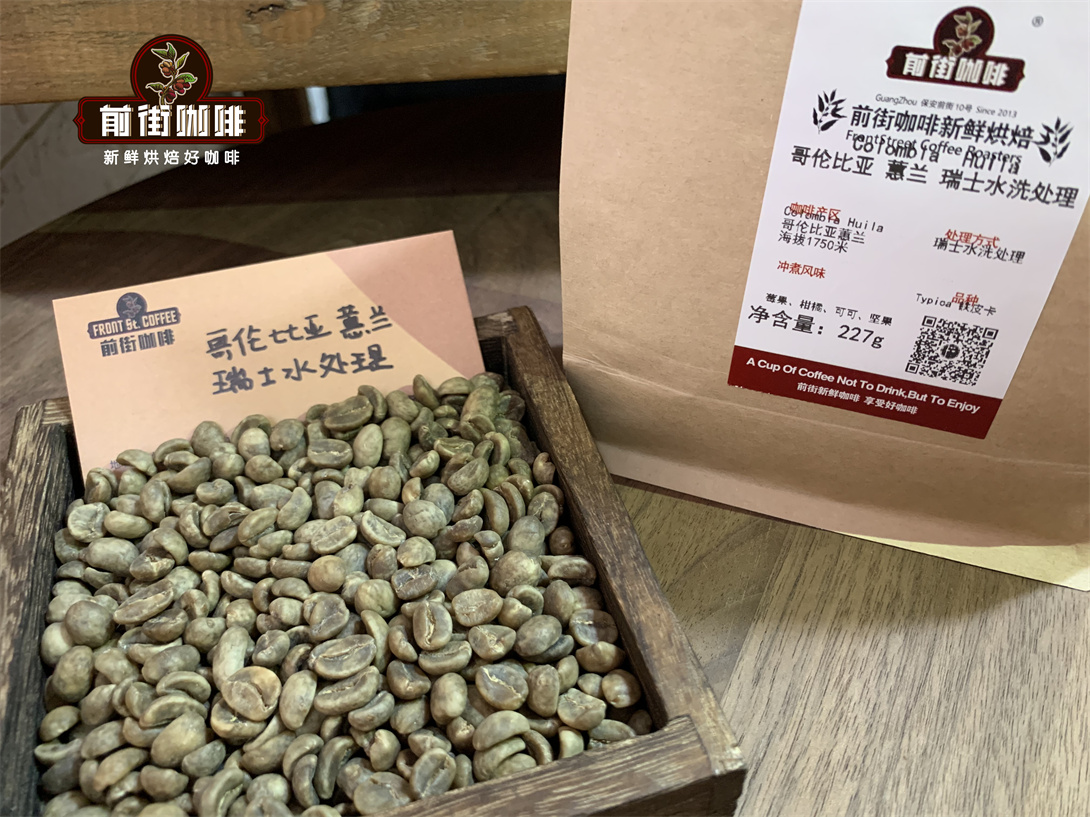
Having said so much about decaf coffee processing methods, Front Street has a decaf coffee bean from Huila, Colombia, and the processing method used is precisely the Swiss Water Process, whose caffeine removal rate can reach 99.9%, also the highest caffeine removal rate among them.
After decaffeination, green coffee beans take on a dark green color.
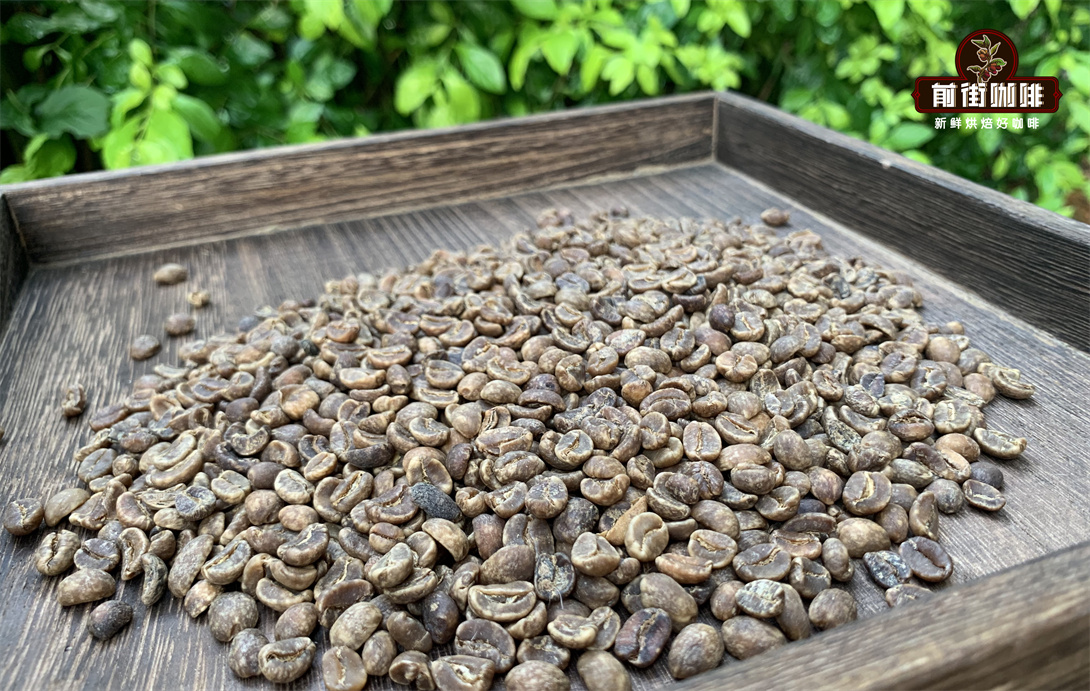
After the roasted beans have been left for several days, the bean surface becomes rather oily and shiny. The reason may be that during the decaffeination process, the coffee beans need to be soaked in hot water to release caffeine and then dried, and during this process the fiber structure of the coffee may have changed, causing oils to be released more easily when roasted to a medium-dark roast level.
The above content is compiled by CoffeeHunters, a coffee news website.


