







Which Elements of Coffee Extraction Actually Decide the Taste?
The elements of coffee that shape pour-over taste are water temperature, coffee-to-water ratio, grind size, pouring technique, total time, and water quality. All six matter, but grind size and water temperature usually drive extraction most directly, which is why two people following the same tutorial can still end up with very different cups.
Blooming, rinsing the filter paper, and cutting off the tail end of the brew are not mysticism once you understand extraction and flavor. When a cup tastes off, adjust one variable at a time: go finer or coarser for strength, or lower the temperature if the cup turns bitter. Keep notes so each change can be traced back.
Many coffee enthusiasts encounter the same confusion when practicing pour-over: they follow the tutorial strictly, yet the taste comes out vastly different each time, and whether it's good or not seems to depend entirely on luck. The variables affecting pour-over coffee are indeed numerous—from water temperature, coffee-to-water ratio, grind size, pouring technique, time, and water quality, each one can influence the final flavor in the cup. Based on Front Street Coffee's practical experience, this article will break down these six elements one by one, helping readers understand which parameters truly determine the taste of coffee, which steps play a key role in extraction, and how to accurately identify the root cause when problems arise and flexibly adjust the brewing plan.
Many friends, after reading our articles, make a special trip to visit Front Street Coffee and chat about the puzzles they encounter when brewing coffee, especially questions about pour-over parameters. A while ago, a customer asked Front Street Coffee this very question: pour-over coffee is affected by so many variables—which one is actually the decisive factor?
The reason he had this confusion was that he found himself carefully following tutorials every time, pondering how to brew a good cup of coffee, yet the final taste was always erratic—whether it was good or not seemed to depend on luck. So he suspected that some key step might be going wrong. Taking this opportunity, Front Street Coffee will analyze with everyone today which parameters are actually influencing coffee flavor and who is the real key player in the extraction process~
The charm of pour-over coffee: variation
You've probably all heard a saying—"Coffee is a mystical art." For example, you must cut off the tail end at the end of brewing so the coffee won't taste bitter; you need to wet the filter paper before adding grounds; the bed must puff up during blooming; switching to a different cup seems to make the coffee more aromatic... When we don't understand the principles behind these operations, almost every one of them sounds like "mysticism." But once we explore the logic from a scientific perspective and truly understand what extraction is and what flavor is, these questions are no longer mysterious.
The same goes for parameters. There are many details that affect pour-over coffee—every time you switch to a new bag of beans, change to a different dripper, or adjust a variable, it can be a completely new experience for brewing. From experience, brewing a delicious cup of coffee comes down to six elements: water temperature, coffee-to-water ratio, grind size, pouring technique, time, and water quality. Among these, the first four get the most attention, time is influenced by the first three, and for water quality you can refer to Front Street Coffee's previous articles. Next, please follow Front Street Coffee as we break down these elements one by one.
|Water Temperature
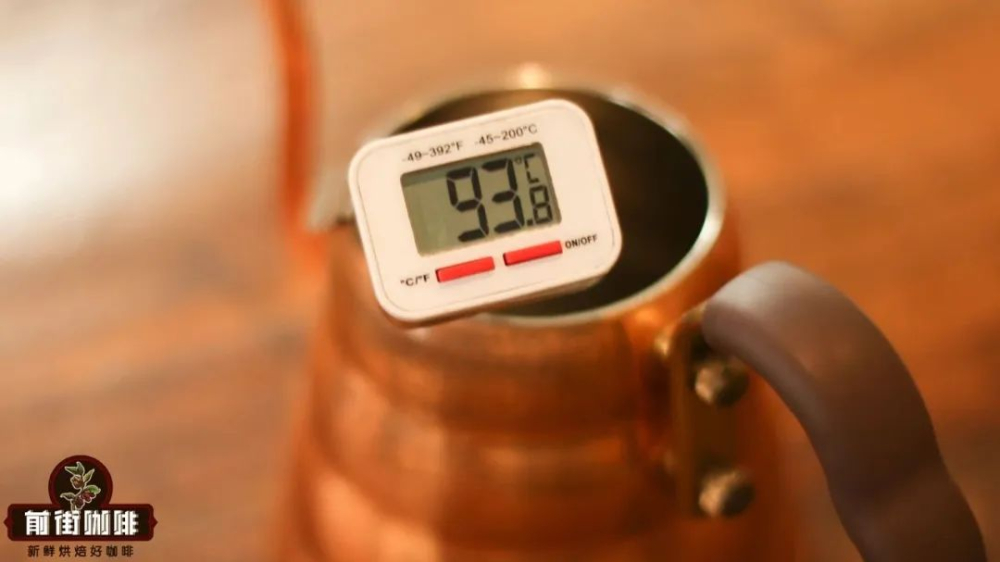
If you ask whether water temperature is important for extraction, Front Street Coffee's view is: it's important, but not as critical as you might imagine. Water temperature is a tool for adjusting extraction speed—the higher the temperature, the easier it is to extract soluble substances, but when the temperature is too high, coffee tends to release bitterness, so a relatively conservative range should be chosen. Generally speaking, the vast majority of coffee beans on the market are suitable for brewing with water at 86–93°C.
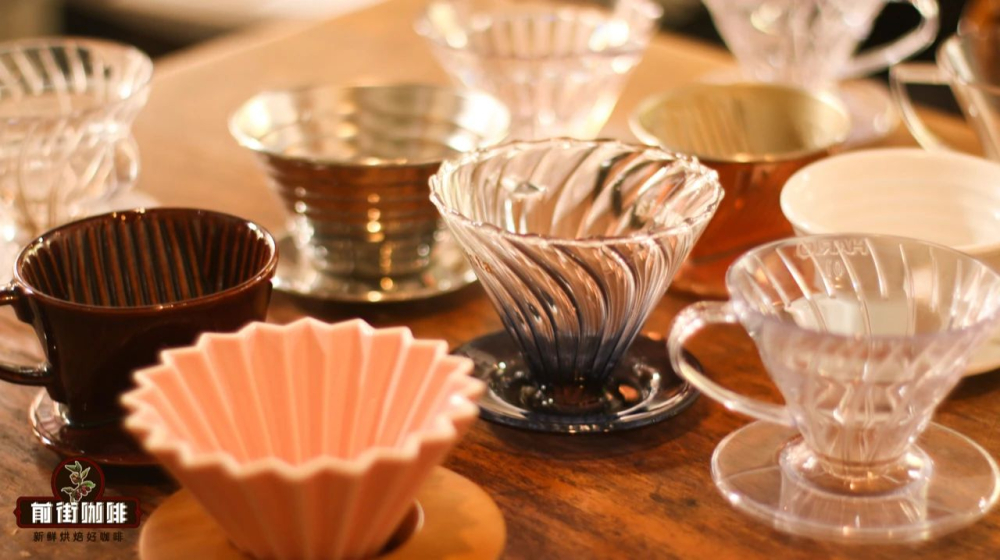
Based on Front Street Coffee's production experience, medium-light roasted beans that are resistant to extraction can use 91–93°C, deep roasted beans that are not resistant to extraction are recommended at 86–89°C, and if the coffee has both acidity and bitterness, just use 90°C.
But precisely because water temperature is an easy parameter to control and its impact on flavor is fairly intuitive, many friends fall into a misconception: thinking that a 1°C difference can bring about a huge change. For example, a customer bought a bag of Sidra coffee beans and brewed at home following Front Street Coffee's recommendation (91°C), felt the aroma was insufficient and the bitterness was on the heavy side, and subconsciously concluded it was caused by water temperature being too high. But after lowering it by 1°C, then 2°C more, he found the mouthfeel still hadn't improved. After some communication, it turned out the real culprit was actually grinding too fine.
Front Street Coffee once conducted a comparative experiment: coffee brewed at 91°C and 93°C had very similar flavor. Although there were subtle differences in mouthfeel, it was almost impossible to distinguish obvious differences without a direct comparison. Therefore, as long as you're not using a temperature that severely deviates from Front Street Coffee's recommendations above, when the coffee shows obvious abnormalities, we can rule out the water temperature issue and instead suspect other parameters.
|Coffee-to-Water Ratio
Coffee-to-water ratio refers to how many grams of coffee grounds are used and how much hot water is poured in at a fixed ratio. The more water poured, the more substances are brought out, and the extraction yield increases accordingly, but the coffee concentration decreases. So choosing a ratio is essentially about controlling extraction yield and concentration within a range that tastes comfortable.
For example, Front Street Coffee's most commonly used 1:15 means using 15 grams of grounds for a cup of coffee and pouring 250 grams of water. Some friends feel that at this ratio the coffee flavor is too concentrated and the strength is on the high side—in that case, you can increase the proportion of water, adjusting to 1:16 or 1:17, which means increasing the amount of water poured to make the mouthfeel more balanced while highlighting the coffee's aftertaste.
But if the coffee concentration is moderate and there's no unpleasant mouthfeel, with the shortcomings mainly showing in aspects like insufficient aroma, Front Street Coffee would not recommend adjusting by changing the coffee-to-water ratio. Because once you deviate from the appropriate concentration, too much or too little water can easily cause under-extraction or over-extraction.
|Grind Size
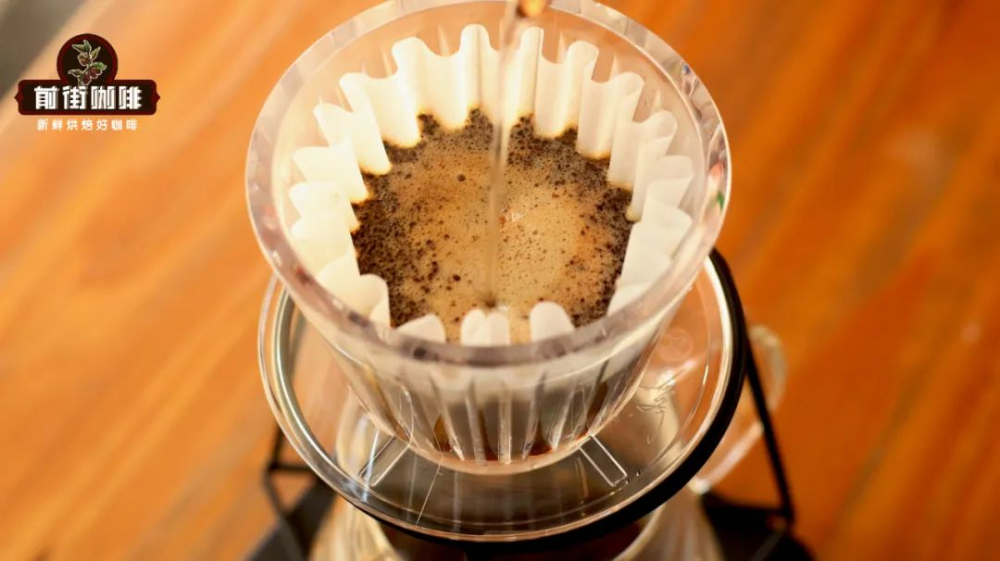
Grind size is not only the number one challenge for countless beginners, but also a great science in extraction. In fact, no matter which coffee brewing method you use, grind size is of paramount importance. To brew coffee that tastes right, you need to ensure both a moderate particle size and relatively uniform particles, so that the coffee releases substances evenly under the impact of hot water. On the operational level, the former requires us to find the right grind setting, while the latter requires the grinder to have good grinding quality.
For example, some beginners use an analogy to judge coarseness, adjusting the grinder setting to the "fine sugar" level that Front Street Coffee suggests, only to find severe clogging when brewing coffee. They think the grind setting wasn't found correctly, but it's actually caused by poor grinding quality. This is because after brewing, the coffee bed looks like mud as shown in the picture below, and the time often exceeds 2.5 minutes. There are mainly two solutions: either buy a tool to sift out some of the fines, or directly switch to a grinder with better grinding quality.
Then there's the more commonly discussed issue of particle size. Simply put, the finer the grind, the more the particles tend to accumulate on the filter paper, the greater the resistance to water, the slower the flow rate, the longer the extraction time, and the more intense the brewed coffee flavor.
Because this parameter affects the total time, baristas usually judge whether the grind setting is appropriate by combining extraction time and coffee taste. The method is simple: if the time is less than 1 minute 40 seconds and the taste is sharply sour and thin, the particles are too coarse; if the time exceeds 2 minutes 20 seconds and the taste is bitter, astringent, heavy, and dull, it may be ground too fine.
|Pouring Technique
Pouring technique is a combination and arrangement of details such as water distribution, flow rate, and pouring path. Once the previous parameters are set within a reasonable range, the brewing technique can be seen as a means of maintaining dynamic balance in the coffee.
Whether you use a single-pour, three-stage, 4:6 method, or the more tricky tornado brewing, even extraction is the primary goal—that is, achieving even water distribution. The simplest way to judge is to observe the coffee bed after brewing and analyze each case individually. You can find answers in the article "The Complete Guide to Pour-Over Coffee Beds!" published by Front Street Coffee last week.
Compared to the previous visual parameters, pouring technique is more subject to human control, so it is actually the biggest uncertainty factor. If you're at the stage of just starting to explore and learn, Front Street Coffee recommends a more stable brewing method, such as the three-stage pour. After all, as long as you master the flow rate and circular pouring, this method can brew any coffee bean—it's truly the "universal remedy of the pour-over world."
Of course, pouring technique can also be a parameter that adapts on the fly, helping us achieve more thorough extraction.
For example, Front Street Coffee plans to brew Front Street Coffee's Colombia Ombligon coffee beans using conventional parameters (15 grams of grounds, 1:15 coffee-to-water ratio, 91°C, grind size with 80% passing rate) paired with a three-stage pour (30ml, 95ml, 100ml).
But after pouring the second stage, the coffee liquid had already fully drained into the server in less than 1 minute. To avoid under-extraction caused by too short a contact time between grounds and water, Front Street Coffee temporarily changed the pouring plan, splitting the remaining 100ml of hot water into two parts—50ml + 50ml poured slowly in a circular motion with a small flow rate—finally bringing the time to 1 minute 55 seconds, and the coffee presented a full, juicy mouthfeel.
The above content is compiled by CoffeeHunters, a coffee news website.


