








How Does the Wet-Hulled Coffee Bean Process Shape Sumatra Flavor?
Sumatra Mandheling is Indonesia's calling card, and Tiger Mandheling from Aceh is known for its 19-mesh screen selection and agarwood aroma. The bean is Typica and Caturra grown at roughly 1,500 meters and processed wet-hulled, a coffee beans process that produces the wood, spice, and herbal notes associated with the region.
Aceh sits at the northern tip of Sumatra. After years of conflict, the region gained special-region status, and its coffee industry developed steadily. Aceh's Lake Tawar and Lintong's Lake Toba are known as the two lakes, two Mandhelings, but Aceh Mandheling now leads Lintong in quality and output. Pawani, Indonesia's largest green bean trader, has shifted attention there. A 100-gram Lintong small pack covers everyday home pour-over.
Sumatra Mandheling is the calling card of Indonesian coffee, and the Tiger Mandheling from the Aceh region is especially renowned for its 19-mesh selection and its distinctive agarwood aroma. This article begins with the geography and history of the Aceh region, tracing the naming origins of Tiger Mandheling and the characteristics of the Typica and Caturra varieties, and explaining in detail how the wet-hulling process shapes a regional flavor interwoven with wood, spice, and herbal notes under humid conditions. It also presents Front Street Coffee's roasting curve, cupping report, and Kono dripper brewing parameters, and introduces the 100-gram small-package Lintong Mandheling everyday drinking beans for coffee lovers to reference for home pour-over.

For more specialty coffee knowledge, welcome to follow our WeChat official account: Front Street Coffee (FrontStreet Coffee)
When it comes to Indonesian coffee, most people first think of Sumatra Mandheling. The bean to be introduced today has an intriguing connection with the Sumatran tiger—it is precisely the protagonist of this edition of Front Street: Tiger Mandheling coffee (Front Street Sumatra Tiger·Mandheling).
Front Street Coffee (FrontStreet Coffee) Indonesia Sumatra Tiger·Mandheling Region: Aceh, Sumatra, Indonesia Variety: Typica, Caturra Process: Wet-hulled Altitude: 1500m
Sumatra·Aceh Region
Aceh occupies a pivotal position on the Mandheling coffee map, located at the northernmost tip of Sumatra Island. In its early years, the region saw an independence movement break out due to religious and political factors; later, through negotiation, the local armed government of Aceh abandoned its independence demands and continued to exist as a special region. In recent years the situation has stabilized, and the local coffee industry has consequently achieved considerable development. Aceh's Lake Tawar and Lintong's Lake Toba have long been known as the "Two Lakes, Two Mandhelings," and in terms of current quality and output, Aceh Mandheling has already overtaken the Lintong region—even Pawani, Indonesia's largest green bean trader, has turned its attention to Aceh.
The Origin of the Name Tiger Mandheling
The Sumatran tiger is a native animal of Indonesia and is now an endangered species. In people's minds, the Sumatran tiger has always represented majesty and composure. The producing region of Tiger Mandheling is precisely the homeland of the Sumatran tiger—Sumatra Island. This bean uses 19-mesh coffee cherries (that is, strictly filtered through a 19-mesh screen, striving for each bean's diameter to be as uniform as possible), and only after three rounds of manual hand-sorting to pick out ripe cherries does it enter the green bean processing stage. For this reason, locals use the "Sumatran tiger" as a metaphor for the preciousness and rarity of these 19-mesh select coffee beans. In Front Street's cupping, this coffee has a relatively high viscosity, a smooth mouthfeel, a rich agarwood aroma, and a prominent sweetness, with a long-lasting sweet aftertaste on the palate, evoking the image of a Sumatran tiger prowling low to the ground.
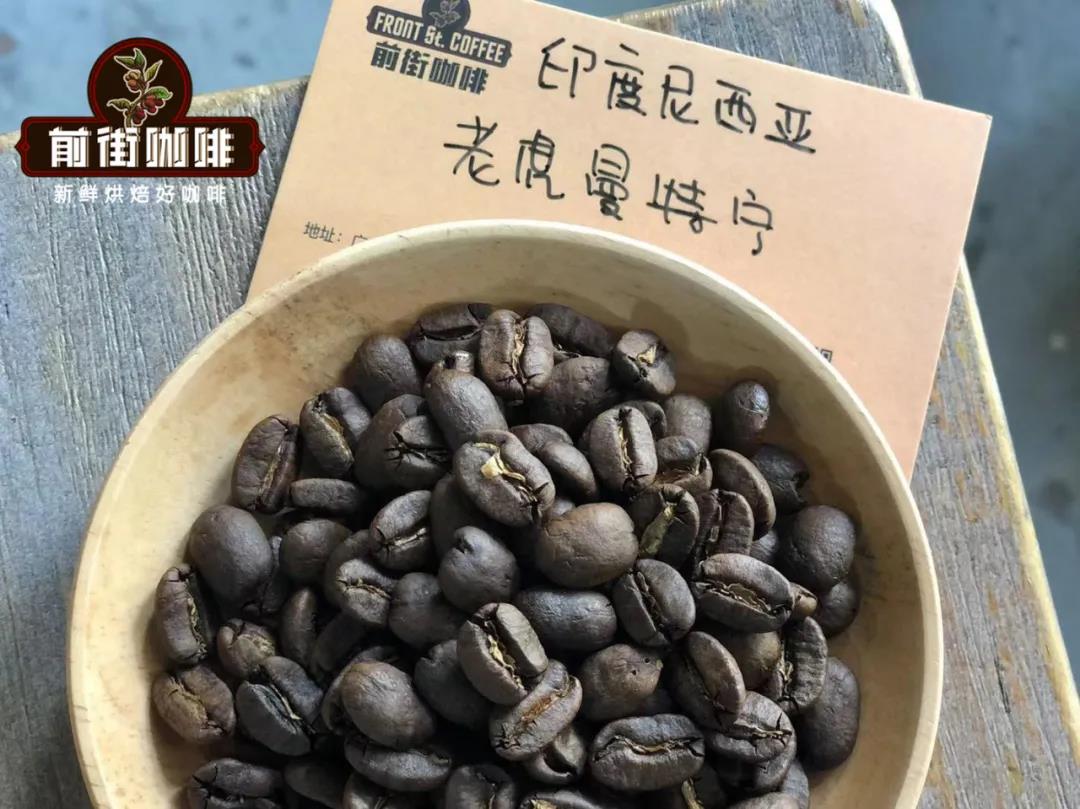
The most prominent characteristic of Tiger Mandheling is its special aroma interwoven with pine wood and agarwood, which other Mandheling coffees do not possess.
Coffee Bean Varieties
This Tiger Mandheling uses two varieties with distinct sweetness: Typica and Caturra. Typica has bronze-colored top leaves, oval or slender pointed beans, and an elegant flavor, but the plant itself is rather weak, has poor disease resistance, and low fruit yield. Front Street Coffee (FrontStreet Coffee) has cupped Typica from multiple producing regions, and its distinctive serene, clean flavor and balanced character are consistently presented. Caturra is a variant of Bourbon, with a curved tip on the coffee bean and a round yet slender shape; its productivity and disease resistance are both superior to Bourbon, its flavor is overall bright, and its sweetness is quite good as well.
Wet-Hulling Process
The wet-hulling process first removes the skin and pulp of the coffee cherry, then after a brief fermentation it is sun-dried, after which the mucilage and parchment layer are stripped off, and the latter stage of drying continues until the moisture content drops to 12%. Mandheling coffee beans processed by the wet-hulled method often show varying degrees of compression cracks on their surface (such beans are horseshoe-shaped, hence also called horseshoe beans), and the bean color tends toward dark greenish-blue.
Because the drying cycle is compressed to only two to four days, the fermentation time of the coffee beans is shortened accordingly, and the acidity is greatly reduced; on the contrary, the body is enhanced, caramel and fruity notes become prominent, and it even carries herbal, grassy, and woody aromas—this is how Sumatra's distinctive regional flavor is formed.
Introduction to the Wet-Hulling Process
The biggest difference between Indonesia and many coffee-producing regions lies in the local humid climate conditions. Indonesia's year-round humidity stays between 70 and 90%, typhoons can strike at any time, and annual rainfall even exceeds 2000mm. Under such harsh weather, it is simply impossible to carry out the 2-to-3-week sun-drying used in Africa; the washed process is not only time-consuming but also consumes more labor and water resources, which Indonesia—aiming for mass production—cannot afford. Thus, locals developed a unique semi-washed method—the wet-hulling process.
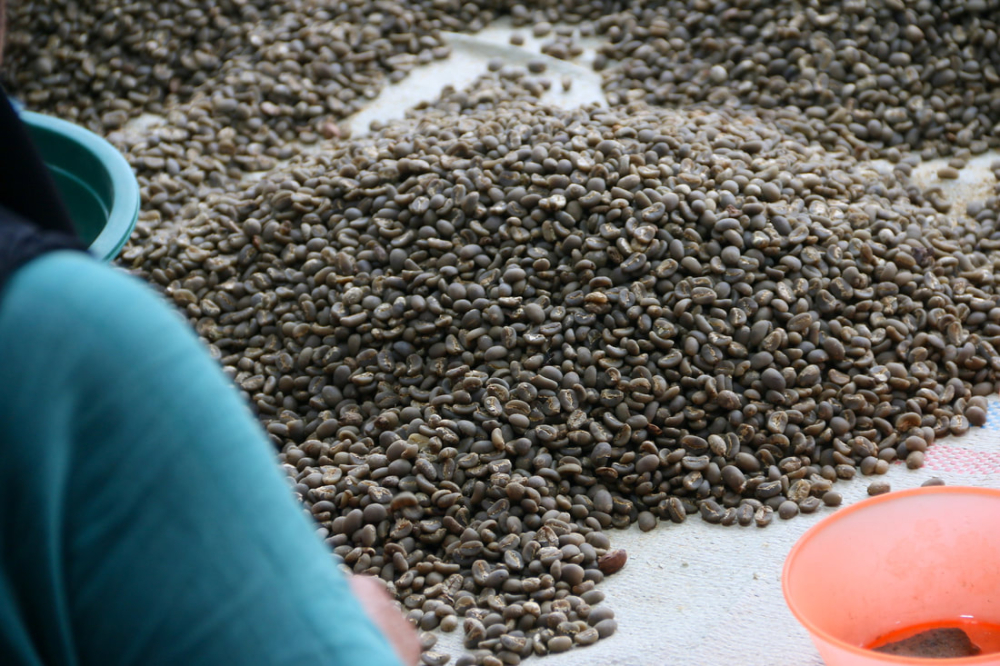
Coffee cherries with the skin and pulp removed are poured directly into a pool for a brief fermentation of several hours; at this point a small amount of mucilage still remains on the bean shell, and the mucous membrane needs to be removed by brushing. The parchment beans are then spread out to dry; the first drying only needs to reduce the moisture content to 30–40%, taking about 2–3 days, after which the coffee farmers resell the green beans to collectors. After the collectors receive these semi-dry parchment beans, they directly hull them by machine to obtain the innermost green beans.
When the huller operates, the friction is relatively high, tearing open the parchment layer clinging tightly to the green beans; at this stage a white or green viscous liquid usually flows out. Due to prolonged soaking in the mucilage and the influence of the humid environment, the green beans ultimately become soft, pale, and swollen, taking on a grayish-green color. Under the agitation of friction, the green beans are also more likely to be crushed or bruised, especially at both ends, forming small notches—namely horseshoe beans. The "naked beans" with the parchment layer removed dry extremely quickly, and are also directly exposed to the humid air, where various types of fungi then breed, endowing Indonesian coffee with its unique woody, spicy, and herbal plant aromas—what we commonly call the "regional flavor."
To let more people taste the Southeast Asian flavor, Front Street has specially launched a 100-gram small-package Lintong Mandheling everyday drinking bean. This bean uses the locally common wet-hulling process, comes from Medan, the largest port in Sumatra, and presents the classic Mandheling flavor, suitable for enjoying as home pour-over.
Front Street Coffee (FrontStreet Coffee) Roasting Analysis
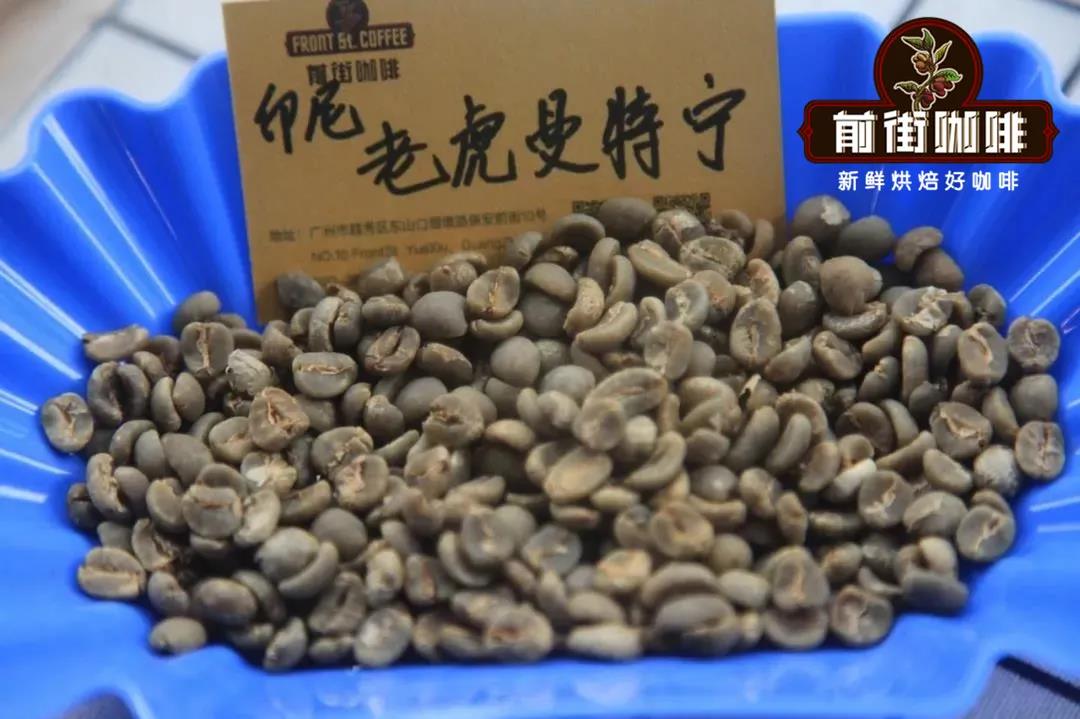
Front Street's roaster observed that Tiger Mandheling green beans are plump in shape, green with a yellow tint in color, fairly uniform, and relatively high in moisture content. The roasting goal is set as a medium-dark roast, intended to erase excess acidity while enhancing body and balance.
When the drum temperature rises to 200°C, the beans are charged, the damper is set to 3, and after 30 seconds the heat is adjusted to 160°C, with the damper kept unchanged; the turning point is at 1'45, maintaining the heat; at 5'18 the bean surface turns yellow, the grassy smell completely dissipates, and the dehydration stage begins, with the heat lowered to 140°C and the damper adjusted to 4;
At 7'30" dehydration ends, and the heat is lowered to 140°C; at 8'55" obvious wrinkles and dark mottled streaks appear on the bean surface, and the toast aroma gradually turns into coffee aroma, which can be judged as the prelude to first crack—at this point one must carefully distinguish the sound of the first crack's onset; at 9'00" first crack begins, the heat is reduced to 110°C, and the damper is fully opened to 5 (be sure to adjust the heat cautiously, and do not reduce it so much that the cracking sound cannot be heard); after first crack, develop for 4'00", and drop the beans at 203°C.
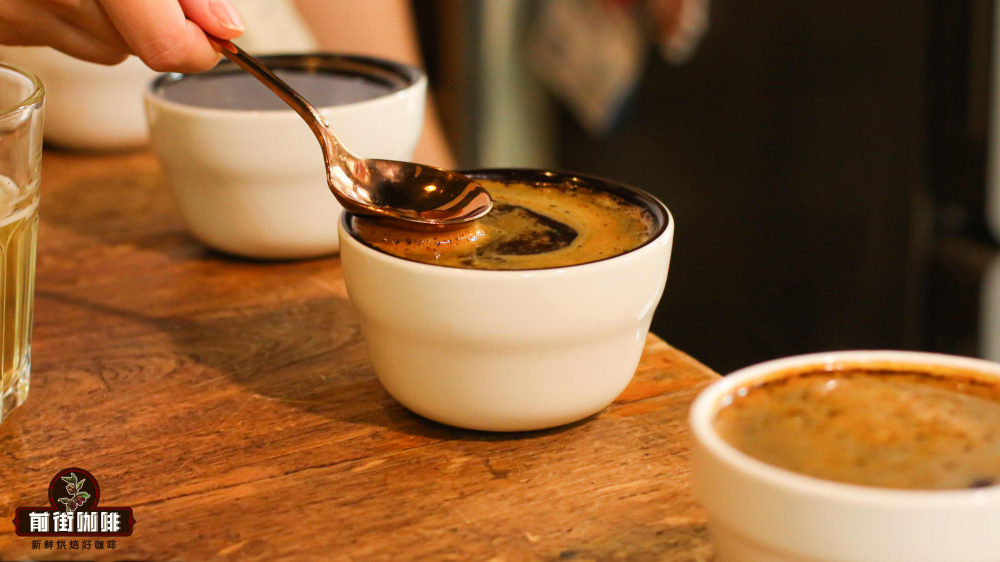
Front Street Coffee (FrontStreet Coffee) Cupping Report Dry aroma: herbal, pine wood Wet aroma: Chinese herbal medicine, caramel Flavor: herbal, nuts, cream, dark chocolate
Front Street Coffee (FrontStreet Coffee) Brewing Sharing
For coffee beans with a darker roast level, in order to highlight the body, Front Street Coffee (FrontStreet Coffee) will choose the Kono dripper for brewing. The Kono dripper's feature is that it has an immersion function, which can extract more coffee substances through immersion, thereby enhancing the full-bodied mouthfeel. This dripper has few ribs, concentrated at the lower end, which allows the filter paper to cling tightly to the wall of the dripper, achieving a flow-restricting effect, slowing the water flow rate and extending the contact time between water and coffee grounds.
Parameters Dripper: Kono Meimon Dose: 15g Coffee-to-water ratio: 1:15 Water temperature: 88°C Grind size: medium-coarse grind (passing rate of about 73% on a 0.85mm standard sieve)

Front Street Coffee (FrontStreet Coffee) uses staged extraction: first bloom with 30 grams of water for 30 seconds, then pour in a small stream in circles until 125 grams for a stage break; when the water level drops and is about to expose the coffee bed, continue pouring until 225 grams and stop; when the water level drops again and is about to expose the coffee bed, remove the dripper, (timing starts from the beginning of the bloom) with a total extraction time of 2'05".
Brewed flavor: nuts, cream, dark chocolate, caramel, Chinese herbal medicine, with prominent sweetness and a clean, clear flavor.
For more specialty coffee knowledge, welcome to follow our WeChat official account: Front Street Coffee (FrontStreet Coffee)
The above content is compiled by CoffeeHunters, a coffee news website.


