







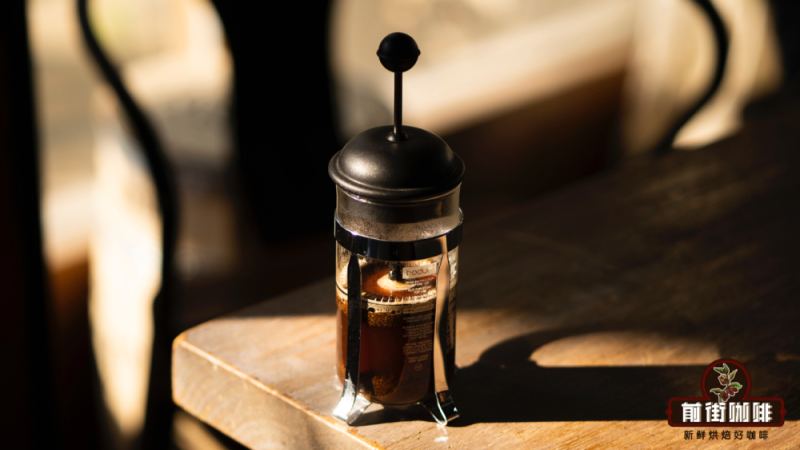
Is a French Press One of the Simplest Coffee Extraction Methods?
A French press is an immersion brewer: coffee steeps in hot water for about four minutes, then a metal plunger separates the grounds from the liquid. Unlike pour-over, it needs no kettle, dripper, filter paper, or thermometer. Getting a good cup comes down to three settings: coffee-to-water ratio, water temperature, and grind size, with a coarse grind to avoid bitterness.
The device traces back to around the 1850s, when a craftsman and a merchant patented a piston-filter pot; a Milan company registered an improved version in the late 1920s. Early units were used mainly for steeping tea, since tea filters are coarser than coffee filters. Because the metal mesh extracts thoroughly, medium-to-dark roasted beans suit it when aiming for refined coffee in the cup.
Want to enjoy a good cup of coffee without being tied down by a bunch of gear like a pour-over kettle, dripper, and thermometer? A French press might be the most hassle-free choice. This article starts with the history of the French press, then breaks down the coffee-to-water ratio, water temperature, and grind size parameters for a Starbucks French press, and uses Front Street Coffee's Huakui coffee beans as an example to walk you through the complete French press brewing process step by step—helping you avoid the pitfalls of over-extraction and bitterness so you can easily make a cup of coffee that's rich and full of flavor.
French Press Sludge Removal Tips: Make Your French Press as Clean as Pour-Over
Starbucks French Press Coffee-to-Water Ratio ?
If you want to enjoy a proper pour-over coffee at home, you need a full set of equipment—a pour-over kettle, server, dripper, filter paper, thermometer, and more. It's quite a production to use, and when it sits idle, it just takes up space for nothing. Does that mean without pour-over gear, you're doomed to miss out on refined coffee? If you posed this question to a barista at FrontStreet Coffee, chances are they'd just pull out the dusty French press from the corner.
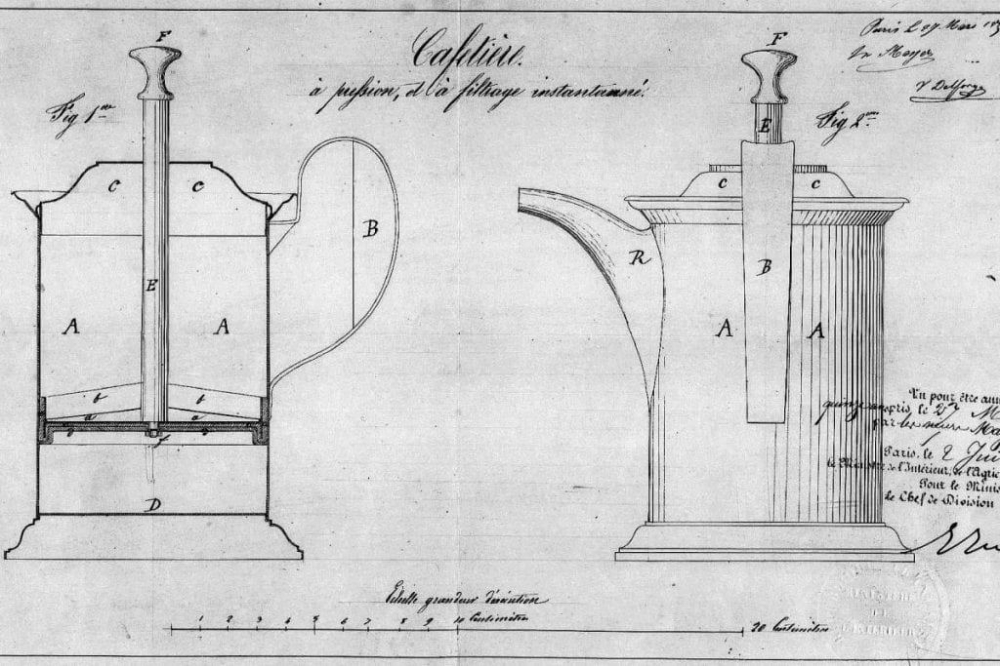
The French press, also known as the press pot or coffee plunger (French Press in English), is one of the simplest and most hassle-free coffee extraction methods. This device actually dates back quite far—around the 1850s, a craftsman and a merchant jointly obtained a patent for a "piston-filter coffee device": a metal cylinder connected to a movable rod, with holes at the bottom of the rod and a layer of flannel sandwiched on each side. By manually pressing the rod all the way down, the coffee grounds are trapped at the bottom of the pot, and a relatively clean cup of coffee is ready.
After continuous technological improvements, it wasn't until the late 1920s that a company in Milan, Italy, registered a patent for a modified version of the French press. Only then did the form we're familiar with today take shape and gradually gain acceptance around the world.
However, in the early days, the French press wasn't primarily used for brewing coffee—it was used for steeping tea. Generally speaking, tea filters are coarser, while coffee filters are finer. If you love coffee but can't spare the time, or don't have an expensive coffee machine at home, a French press is a pretty great alternative.
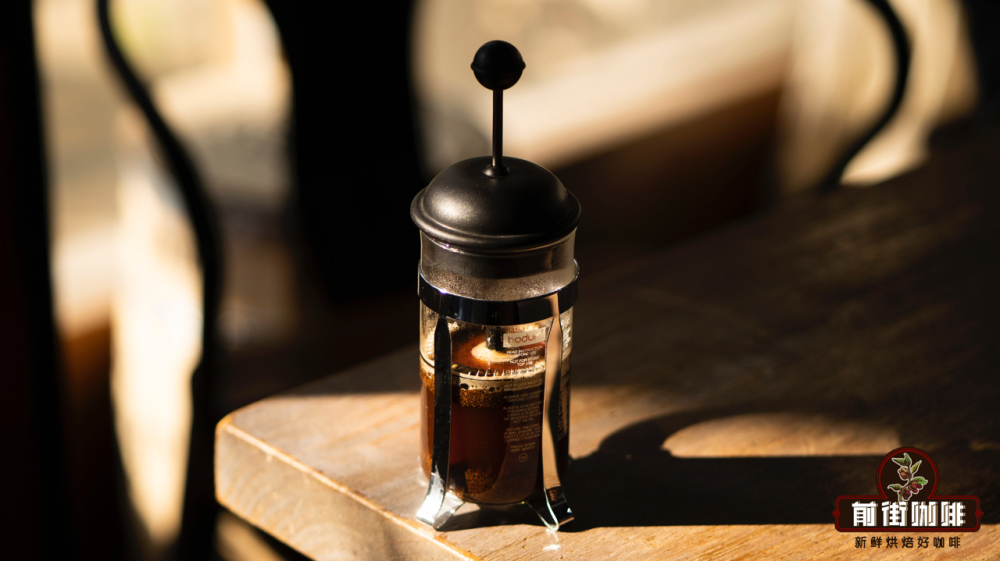
Coffee brewed with a French press has a heavier body and fuller flavor. Below, using Front Street Huakui coffee beans as an example, let's talk about how to brew a delicious cup with this kind of pot. As per usual, Front Street will first introduce the background of these beans.
Huakui coffee beans come from the Buku Abel processing station in the Hambela sub-region of the Guji zone in Ethiopia, and are processed using the natural (sun-dried) method. In 2017, the Ethiopian company DW sent naturally processed beans from the Buku Abel station to compete in that year's TOH competition, where they won the championship in the natural group of the TOH Ethiopian region with an intense strawberry-cream flavor. A green bean merchant in Beijing brought the same lot of champion beans into China. Because that strawberry-cream flavor was so outstanding, they believed that with further optimization of the post-harvest processing, these beans had the potential to become the next breakout hit. So they named them "Huakui" with high hopes, meaning "leader of a hundred flowers."
In the same year, at the World Brewers Cup China regionals, almost every competitor was using Geisha varieties, but Li Jianfei took second place with the same lot of Huakui coffee beans. When people looked into it, they discovered it was Huakui coffee beans from Ethiopia, and Huakui's fame skyrocketed from there.
Huakui coffee beans are named in the format "Huakui X.0," with the number increasing each year—Huakui 2.0 in 2018, Huakui 3.0 in 2019, Huakui 4.0 in 2020, Huakui 5.0 in 2021. With 2022 arriving, that means Huakui 6.0 is coming soon. FrontStreet Coffee has already reserved its lot in advance, and it's believed that before long, everyone will see Huakui Coffee 6.0 on FrontStreet Coffee's bean list.
Today, on FrontStreet Coffee's list of nearly fifty coffee beans, you'll find Huakui 5.0 and Peaberry Huakui coffee beans. Front Street once discovered small peaberry beans among the Huakui coffee beans from 2018 and 2019. After comparison, Front Street found that these small peaberry Huakui beans were precisely the main source of Huakui coffee's aroma. In 2020, DW processed the small peaberry Huakui beans separately, giving rise to the Peaberry Huakui brand.
After cupping and comparing Huakui 5.0 coffee beans with Peaberry Huakui coffee beans, Front Street found that Peaberry Huakui's flavor is closer to the strawberry-cream profile of the 2017 naturally processed champion lot, while Huakui 5.0 leans more toward the citrus and berry notes and tea-like quality of the Guji zone.
Your own hands aren't a barista's hands, after all. No matter how delicious the Huakui you drink at a café may be, brewing it yourself at home always falls a bit short. Compared to the complexity of pour-over brewing, many people turn their eyes to the simplest brewing method—making Huakui in a French press.
But problems follow: How do you brew it to avoid Huakui turning bitter and astringent? How do you get a delicious cup of Huakui?
FrontStreet Coffee French Press Brewing Tutorial
Brewing vessel: French press
Water temperature: 90°C
Coffee dose: 15 grams
Coffee-to-water ratio: 1:15
Grind size: 70% passing through a Chinese standard No. 20 sieve
Step one: Pour an appropriate amount of hot water into the French press to fully preheat it, then discard the hot water.
Step two: Add 15 grams of coffee grounds to the French press, then pour in 225 grams of 90°C hot water.
Step three: Pull the plunger to its highest position and put on the lid, then let it steep for 4 minutes.
Step four: After 4 minutes, gently and slowly press the plunger down to one-quarter of the way into the French press, pour out the coffee, and it's ready to enjoy.
Brewed with the parameters and steps above, the Huakui coffee greets you with a mixed-berry aroma on the first sip, with an obvious complex berry-juice quality and a creamy mouthfeel—full-bodied and rich overall.
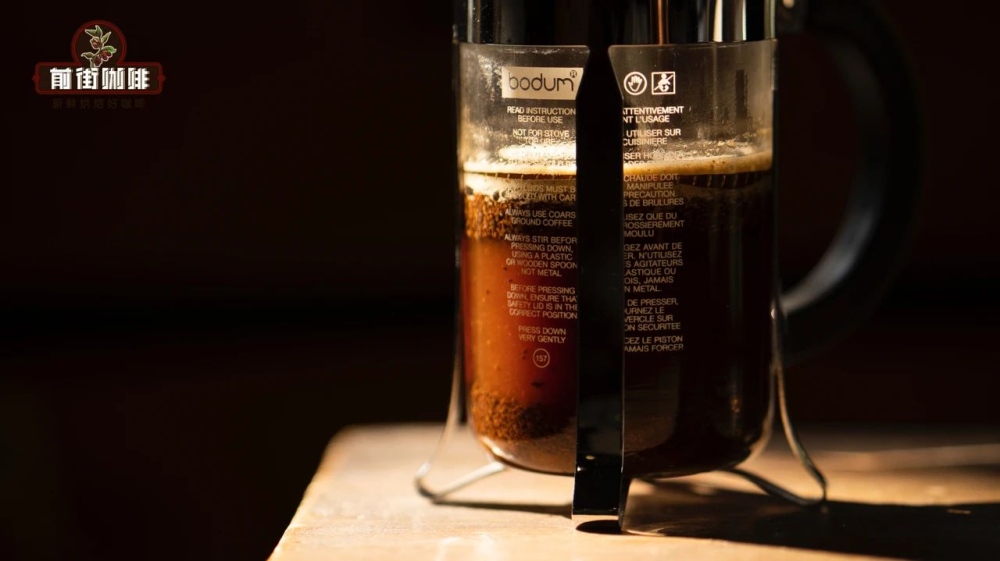
Huakui coffee beans are a medium-light roast, and when the flavor compounds in the coffee come into contact with hot water, they dissolve relatively slowly. So Front Street recommends using a higher water temperature to speed up the release of flavor compounds.
When Front Street produces coffee, it typically uses a three-pour extraction with a dripper. Since the hot water poured in contacts the coffee particles within a relatively short time and eventually drips into the server, Front Street generally uses a grind size of 80% passing through a Chinese standard No. 20 sieve when brewing Huakui—that is, finer than what's used for a French press.
However, French press brewing ultimately lets the coffee steep in relatively hot water for a long time. To avoid the bitterness that comes from over-extraction, Front Street recommends coarsening the grind and using 70% passing through a Chinese standard No. 20 sieve. The coarser the grind, the larger the coffee particle size and the smaller the contact area with hot water. Too fine a grind easily leads to over-extraction; too coarse a grind easily leads to under-extraction, resulting in a weak, watery mouthfeel and even noticeable sourness.
The above content is compiled by CoffeeHunters, a coffee news website.


