







Which Drinkers Suit Mandheling Coffee From Arabica Coffee Producing Countries?
Mandheling suits drinkers who want a robust, steady cup with noticeable bitterness, while Blue Mountain fits those who prefer balance and elegance. PWN Golden Mandheling is a reference point on the Sumatra side. The two differ in origin, green bean selection, and processing, so the choice comes down to personal taste rather than one being better.
Indonesia began coffee cultivation in 1696, with a second successful planting in 1699; exports started in the early 19th century and passed 12 million pounds by 1840, peaking near 21 million pounds around 1860 before coffee leaf rust destroyed most Arabica trees. By 1900 Robusta had replaced most Arabica plantings. Sumatra remains the country's largest producing island. Front Street Coffee offers five Mandheling versions and several Blue Mountain products.
Mandheling and Blue Mountain—one is the robust, steady representative of Sumatra, the other a balanced, elegant Caribbean classic. This article systematically examines the origin of Mandheling coffee's bitterness and the audiences it suits, from historical roots, green bean selection, and processing techniques to flavor characteristics, and provides a detailed analysis of what makes PWN Golden Mandheling unique and how it differs from Jamaican Blue Mountain coffee. It also introduces the various Mandheling and Blue Mountain products sold by Front Street Coffee (FrontStreet Coffee), helping coffee enthusiasts make clearer choices based on their personal taste preferences.
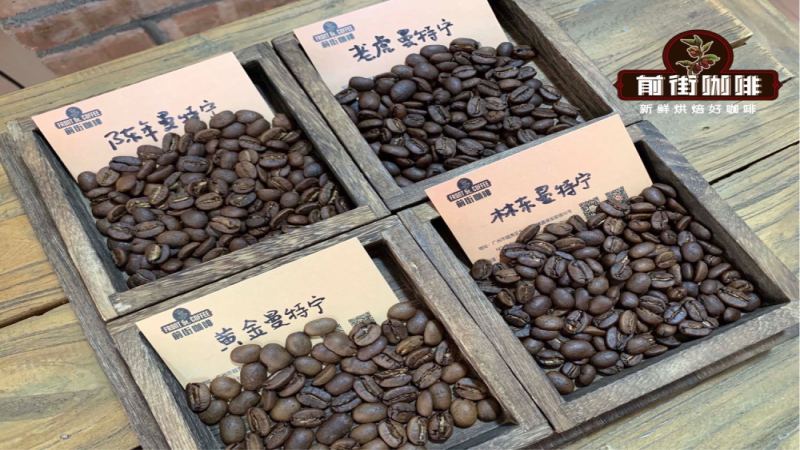
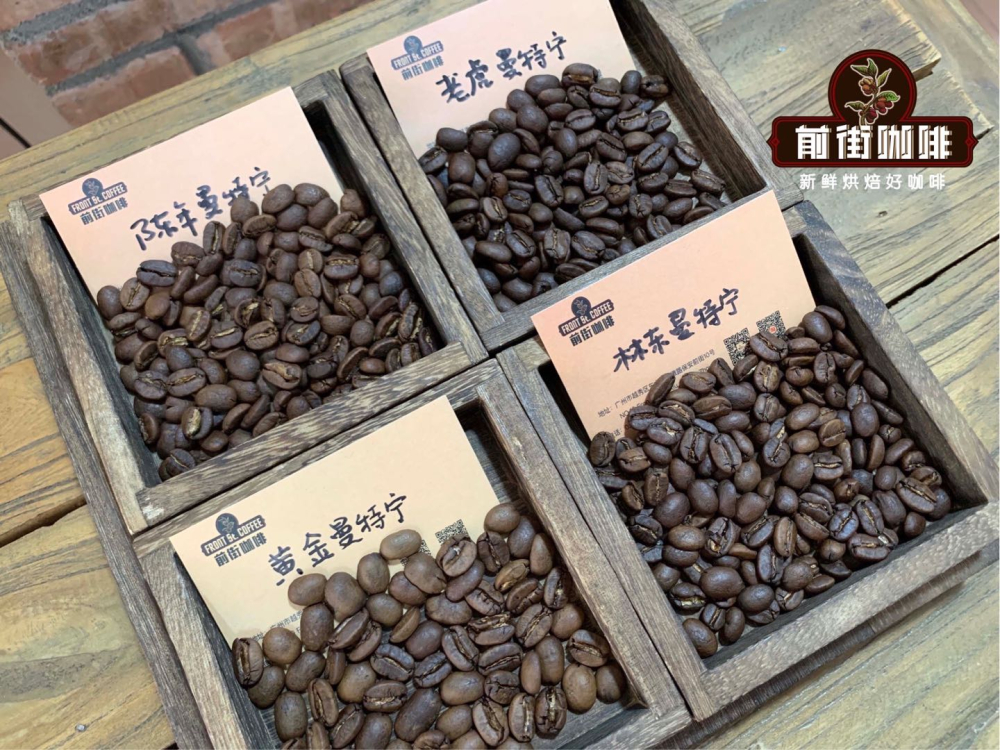
Front Street PWN Golden Mandheling has always been one of the flagship coffee beans that Front Street Coffee (FrontStreet Coffee) takes great pride in. At the entrance of Front Street Coffee (FrontStreet Coffee), the factory certificate for this bean is displayed on the wall. The background of PWN company will be introduced in detail later. The Mandheling family has many members—Front Street Coffee (FrontStreet Coffee) alone offers five: Golden Mandheling, Tiger Mandheling, Aged Mandheling, Lintong Mandheling, and Wahana Estate Natural Mandheling.
Indonesia's coffee cultivation history dates back to 1696. After a second successful trial planting in 1699, coffee gradually spread to Sumatra and other islands. However, the region's first coffee exports did not officially begin until the early 19th century. As production climbed, export scale expanded accordingly, with exports exceeding 12 million pounds by 1840. Production peaked around 1860 at approximately 21 million pounds, after which coffee leaf rust destroyed most of the Arabica coffee trees. By 1900, the more disease-resistant Robusta had replaced most Arabica plantings.
Indonesia is composed of over 17,000 islands, with Sumatra being the second largest and the region with the highest coffee production in the country. These islands were formed by volcanic activity, and the soil is rich in volcanic ash and diverse plant nutrients, with abundant mineral content, earning Indonesian coffee its prominent international reputation.
Mandheling is perhaps Indonesia's most recognizable coffee. While most coffees are named after their region or country, Mandheling's name derives from the Mandailing people who traditionally cultivated and processed coffee. The story takes place during World War II when Japan colonized Indonesia. A Japanese soldier stationed in Sumatra asked a local coffee shop owner where the coffee came from. The owner mistakenly thought he was being asked about his ethnicity and replied "Mandailing." The Japanese officer, unable to forget that cup of coffee after returning home, commissioned a local coffee trader to import it to Japan, but due to a pronunciation deviation, said "Mandailing" as "Mandheling." Through this double misunderstanding, the name Mandheling spread. And that Indonesian coffee trader was none other than the founder of the later renowned PWN company.
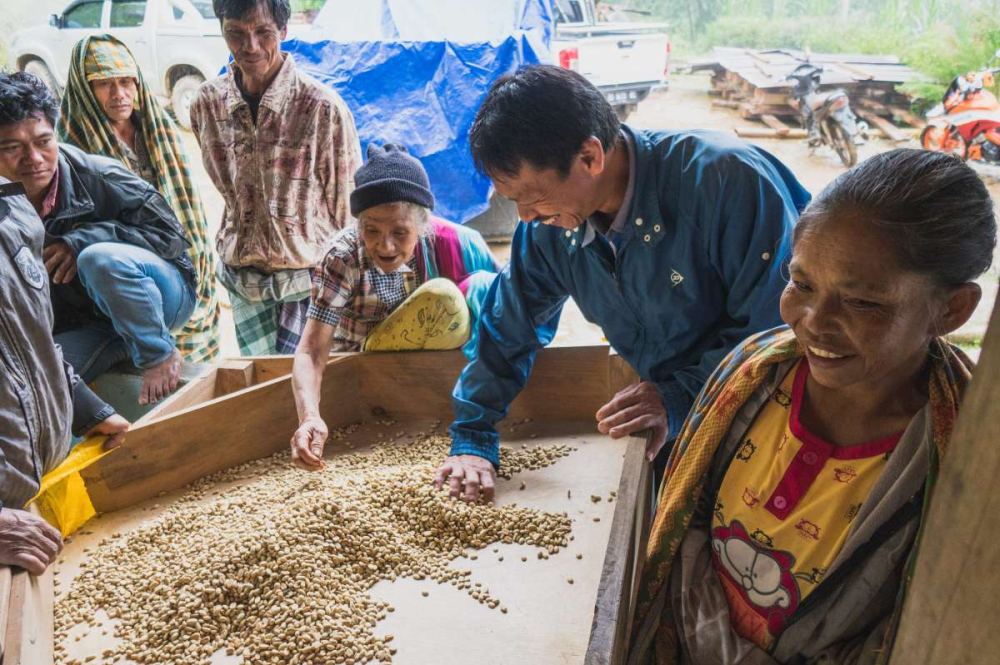
Beyond historical roots, outstanding green bean quality is also key to PWN becoming Indonesia's most well-known green coffee purchaser. The core difference between ordinary Mandheling and Golden Mandheling lies in the strictness of green bean selection standards. Most Indonesian coffee uses the wet-hulling method (Giling Basah, a traditional Sumatran-specific process). While this gives the coffee excellent body and unique earthy, herbal notes, it also increases the defect rate of green beans. Front Street PWN Golden Mandheling undergoes one mechanical sorting and three hand sortings to reduce the proportion of defective beans. It is said that when PWN company was selecting defect-free green beans, they discovered that some beans actually had a golden luster, which is how Golden Mandheling got its name.
Country: Indonesia
Region: Sumatra
Altitude: 1100-1600m
Variety: Ateng
Processing: Wet-hulled
Flavor: Baked toast, nuts, pine, caramel, herbs
Why does Front Street Coffee (FrontStreet Coffee) treasure the factory certificate of Golden Mandheling so much? On one hand, Front Street PWN Golden Mandheling is difficult to procure, with limited annual production; on the other hand, there are quite a few counterfeit Golden Mandhelings circulating on the market. Since "golden mandheling" has been registered as a trademark by Indonesian Pawani Coffee Company, Golden Mandheling is actually a PWN company exclusive product. To give consumers confidence in purchasing and to help them recognize this green bean certificate, Front Street Coffee (FrontStreet Coffee) displays the PWN certificate along with the burlap sack at the Dongshankou store for everyone to view.
However, today's focus at Front Street is neither to introduce each Mandheling variety one by one, nor simply to teach everyone how to distinguish authentic Golden Mandheling. Rather, it's because of a saying that has been heard: before Blue Mountain coffee was discovered, Mandheling was once hailed as the best-tasting coffee in the world. Therefore, customers often ask: what exactly is the difference between Blue Mountain and Mandheling? Front Street Coffee (FrontStreet Coffee) is here to answer.
For over a century, Jamaican Blue Mountain coffee has consistently ranked among the world's most precious coffees, with a rich, moderately full-bodied, and balanced flavor that coffee experts regard as representing near-perfect cup performance. True Blue Mountain coffee comes from the Blue Mountains of eastern Jamaica. This region lies in a seismic zone, and volcanic eruptions brought large amounts of mineral-rich fertile soil. The Blue Mountains have the highest peak in the Caribbean region (2256 meters) and are also a well-known tourist destination. The area receives frequent rain year-round, and coffee trees thrive in the moist, cool, misty environment. The high altitude creates a large temperature difference between day and night, giving coffee cherries ample time to accumulate nutrients and ultimately presenting a mellow, sweet flavor.
The Jamaican government has always placed great importance on coffee quality. In 1948, it established the Jamaica Coffee Industry Board (CIB) to enhance Blue Mountain coffee quality through supervision and management, and formulated a strict grading system. According to the Coffee Industry Regulation Act, Blue Mountain coffee cultivation areas are mainly distributed across four administrative regions: Saint Andrew, Saint Thomas, Portland, and Saint Mary. It is explicitly stipulated that only Typica variety grown between 910 and 1700 meters can be named Jamaica Blue Mountain. The total area of the four production regions accounts for only one-third of the entire Blue Mountain growing area, with the remaining two-thirds used for growing Jamaica High Mountain coffee and Jamaica Prime coffee. In recent years, less than 15% of coffee beans produced in Jamaica can bear the Blue Mountain label.
Similar to Golden Mandheling, Jamaican Blue Mountain coffee also enforces strict production standards. In terms of green bean quality control, the CIB has established a refined grading system, primarily based on bean screen size and defect ratio, classifying Blue Mountain coffee into NO.1, NO.2, NO.3, and Peaberry. The Jamaica Blue Mountain No.1 on Front Street's bean shelf belongs to the highest grade NO.1, with green bean specifications required to be between 17-18 screen size, defect rate below 3%, and uniform, plump beans. The Blue Mountain on Front Street's bean list is precisely this highest grade.
Front Street Coffee (FrontStreet Coffee) Jamaica Blue Mountain No.1
Region: Blue Mountain region
Farm: Clifton
Altitude: 1310m
Variety: Typica
Processing: Washed
Grade: NO.1
Having read this far, I believe you already have your own answer to the question posed in the title.
Front Street Coffee (FrontStreet Coffee) offers a summary here: Mandheling is generally on the bitter side, but a few natural-process Mandhelings (such as Front Street Coffee's (FrontStreet Coffee) Wahana Estate Natural Mandheling) present richer flavor layers. Bitterness is only one aspect of Mandheling's entry performance; beyond that, it has many other flavors, and its caramel-like sweet aftertaste is equally delightful.
Mandheling coffee is suitable for all coffee enthusiasts, though different flavor preferences will bring different evaluations. Those accustomed to light-roasted floral and fruity coffees may not quite adapt to Mandheling's bitterness, but for coffee lovers who prefer dark roasts, Mandheling is an excellent choice. It not only has an outstanding full body but also comes with elegant, steady aromas of spices, herbs, and pine, with a sweet aftertaste in the mouth that leaves a lasting impression.
Which is more bitter, Mandheling or Blue Mountain? If forced to compare, Front Street chooses Mandheling. Blue Mountain coffee's more prominent characteristic is its balanced flavor presentation, without deliberately emphasizing any one of acidity, sweetness, or bitterness. Blue Mountain coffee commonly found on the market is mostly labeled as medium roast, while Mandheling generally uses dark roast. The difference in roast level is also one of the reasons Mandheling's bitterness is more pronounced.
The above content is compiled by CoffeeHunters, a coffee news website.


