







What Is a French Coffee Press and How Should the Grind Be Set?
A French press is an immersion brewer common in European households. Coarsely ground coffee steeps in hot water for about four minutes, then a metal plunger pushes the grounds to the bottom, leaving the brewed liquid on top. Because the metal filter extracts thoroughly, grind size and bean choice matter more than technique, and the result is a full-bodied cup.
The device is usually glass or stainless steel with a metal plunger and handle; some models use polypropylene for the base, lid, and handle. It is lightweight and has a low barrier to use. Medium-to-dark roasts work well, such as PWN Golden Mandheling with its aroma, Brazil Queen Estate with roasted peanut notes, or Strawberry Candy with rose aroma. A five-step routine covers water temperature, ratio, and timing.
As a simple immersion brewing device, the French press is very common in European households. It relies on a metal filter to separate coffee grounds from the brewed liquid, allowing the flavor compounds of the coffee beans to be released more fully, which places certain demands on grind size and bean selection. This article will explain, one by one, the grind size suitable for a French press, recommended flavor directions for bean selection, and the specific water temperature, coffee-to-water ratio, and five-step brewing process. It will also draw on several medium-to-dark roasted beans from Front Street Coffee to help coffee lovers easily make a rich, full-bodied pot of brewed coffee.
It is unclear when it began, but pour-over coffee has become a trend among everyday drinks. However, pour-over is not the only brewing method that can produce a good cup of coffee. For those who are new to coffee, the French press is a choice worth trying, as it can present the flavor of the coffee beans themselves in a relatively direct way. The French press, as the name suggests, originated in France and is very widely used in Europe. The process is not complicated either—you simply steep the coffee grounds in hot water.
The French press comes with its own metal filter, so even filter paper can be omitted. Because this device extracts the components of the coffee beans quite thoroughly, it is more suitable to brew with specialty coffee beans ground to a moderate degree. The principle behind making French press coffee is: let coarsely ground coffee steep in hot water for a fixed period of time (generally four minutes), then manually separate the coffee grounds from the hot water using the plunger.
The French press is usually made of glass or stainless steel, with a metal plunger and handle. Some products use polypropylene for the base, lid, and handle. Overall, it is lightweight, has a very low barrier to use, and can be said to require almost no technique.
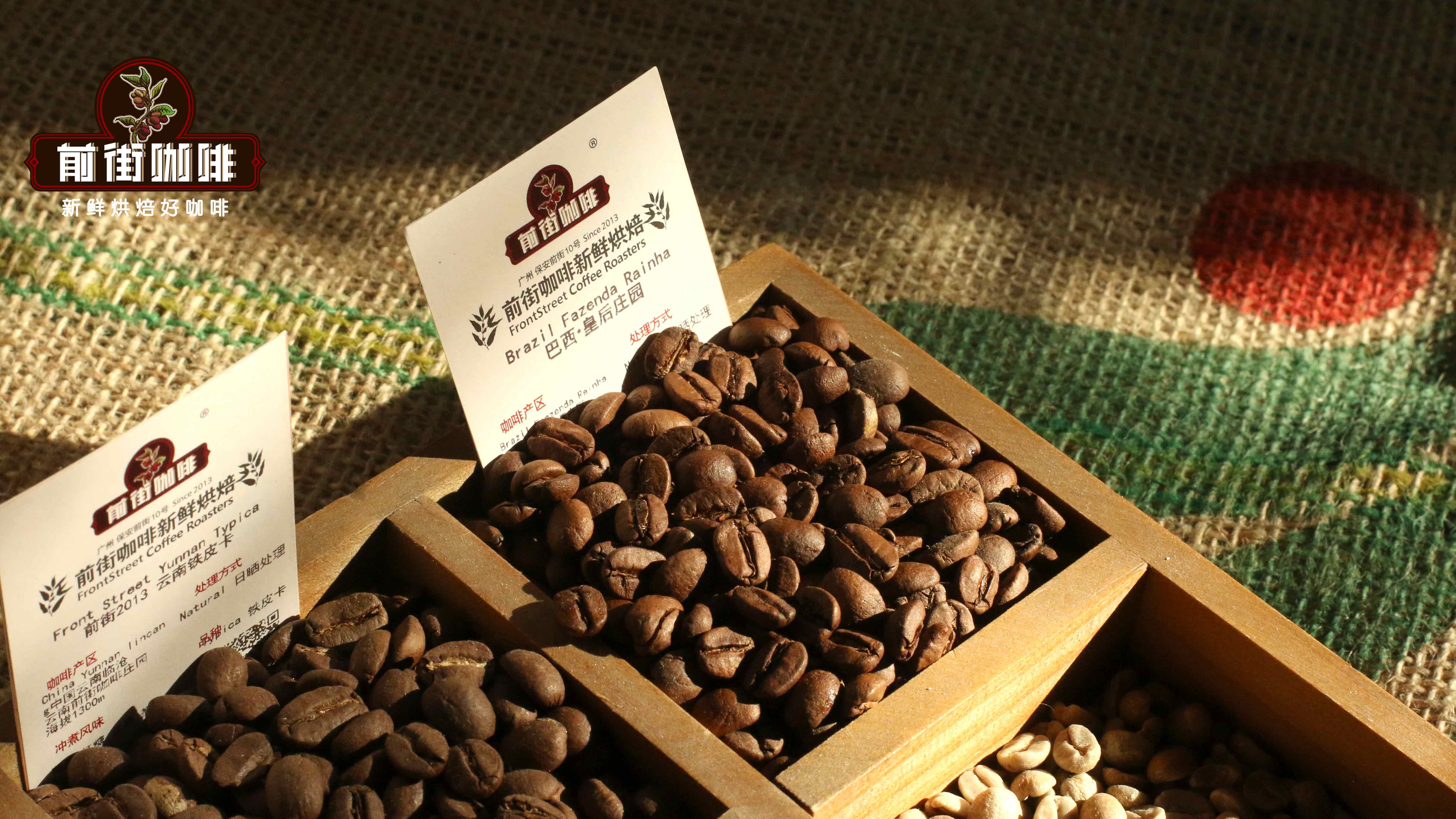
The French press uses immersion extraction, so the resulting cup tends to be full-bodied and rich. Therefore, the beans best suited to it include the aromatically expressive Front Street PWN Golden Mandheling, the Front Street Brazil Queen Estate with its creamy roasted peanut flavor, and the Front Street Strawberry Candy with its rose aroma—all coffees at medium roast or above. Whether in terms of mouthfeel or flavor, these beans all perform well in a French press.
Front Street suggests that when choosing coffee beans for a French press, priority can be given to beans with balanced flavor and notes leaning toward dark chocolate or nuts. As for beans roasted too light, Front Street Coffee does not particularly recommend them, because such beans have prominent acidity, and since the French press is an immersion extraction method, if the beans themselves have rich layers of flavor, it is actually harder to showcase their complexity with a French press.
How to use a French press
1. First grind the coffee beans into grounds, then pour them into the French press. At this point, there is no need to agonize over what many people say about grind size. It does not need to be too coarse; keeping it at a medium grind is fine, roughly a little coarser than what you would normally use for pour-over. Front Street Coffee believes it is best to grind the coffee particles relatively evenly, because when coffee grounds of uneven size are extracted in water, the very fine particles release compounds faster than the coarser particles. The result is that the fine particles are already over-extracted while the normally sized particles are not yet fully extracted, and the final brewed coffee naturally does not taste good.
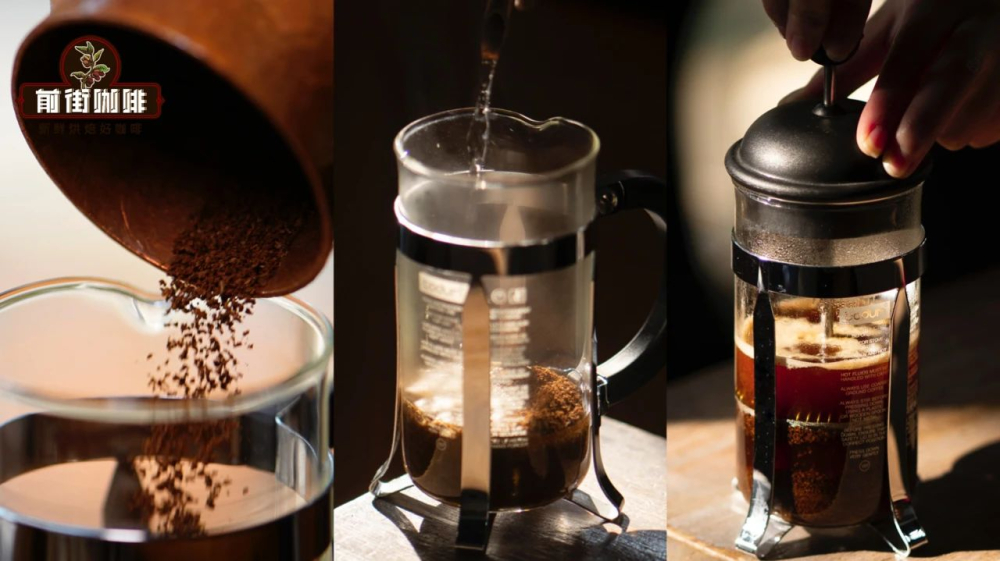
2. The water temperature is recommended to be controlled at around 88°C, and the coffee-to-water ratio is recommended to be 1:10 to 1:13. After pouring in the hot water, stir with a spoon so that the coffee grounds and water fully contact and combine.
3. Put the lid on the French press with the filter left at the highest position, then let it sit for 4 minutes.
4. Before pressing down the filter, you can first open the lid and use a spoon to scoop off the foam and fine particles floating on the surface, then press the filter all the way to the bottom.
5. After brewing is complete, immediately pour the coffee into another insulated container without delay, because the coffee grounds are still steeping in the pot. After that, pour it into a cup and enjoy it slowly.
The above content is compiled by CoffeeHunters, a coffee news website.


