







How Have Ethiopian Coffee Processing Methods Evolved Across Nine Regions?
Ethiopia is Africa's largest coffee producer and one of the birthplaces of specialty coffee. About sixty percent of its coffee is exported, while the remaining forty percent is consumed at home in traditional ceremonies, including wedding preparations that blend coffee with honey, herbs, or cherry pulp. The country's nine producing regions differ in cultivation system, flavor profile, and processing method.
In 2003 Starbucks introduced its Commitment to Origins plan and marketed fair trade coffee beans as support for farmers. From March 2006, the Ethiopian government applied to the United States Patent and Trademark Office to register Sidamo, Harar, and Yirgacheffe as trademarks, a dispute that shaped how origin names are protected. The ECX grading system, the Red Cherry Project, and Huakui version iterations all reflect changing processing choices.
Ethiopia is Africa's largest coffee-producing country and one of the birthplaces of specialty coffee. This article begins with the trademark lawsuit between Ethiopia and Starbucks, reviews the country's journey to secure rights for coffee farmers, and then systematically outlines the cultivation systems, flavor characteristics, and evolution of processing methods across Ethiopia's nine major coffee regions. Drawing on Front Street Coffee's cupping and roasting experience, it introduces representative products such as Front Street Yirgacheffe and Front Street Natural Huakui in detail, and analyzes the Red Cherry Project, the ECX grading system, and the logic of flavor changes behind the iteration of Huakui versions, offering coffee enthusiasts a regional guide that balances historical background with practical information.
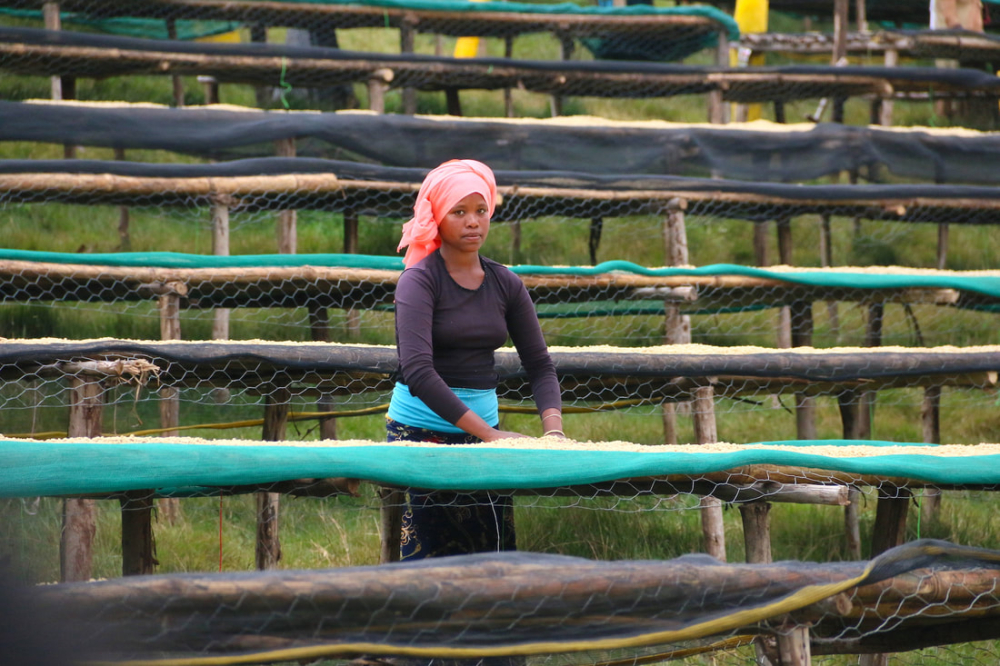
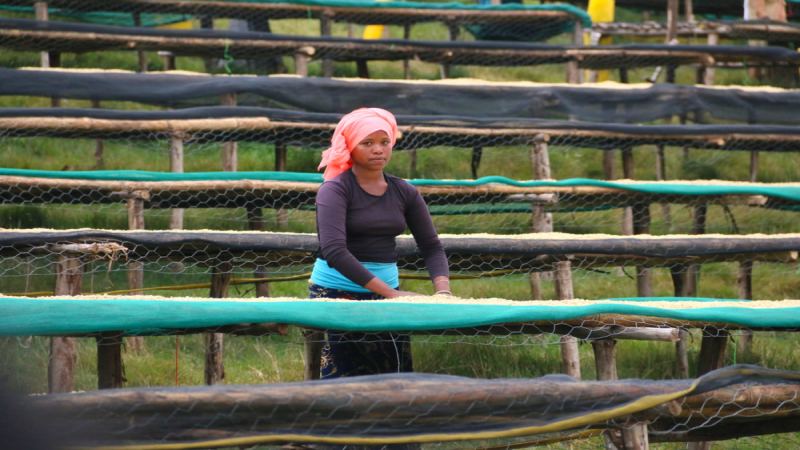
Ethiopia is the country with the highest coffee production in Africa, but not all of these coffee beans flow to overseas markets—about sixty percent is exported, while the remaining forty percent is consumed in various traditional ceremonies. For example, at weddings, locals mix coffee beans with coffee cherry pulp, or blend coffee with honey and various herbs into a potion used to ward off bad luck. These customs are enough to show that coffee has long permeated every aspect of Ethiopian daily life. Front Street Ethiopian Yirgacheffe is, in many people's minds, synonymous with Ethiopian specialty coffee. Among the Front Street Daily Bean series, there is a Front Street Washed Yirgacheffe that represents the most typical flavor of the Yirgacheffe region. Front Street launched the Front Street Daily Bean series precisely with the consideration of both showcasing the region's basic flavor to deepen recognition and offering the characteristics of low price and high value.
In 2003, Starbucks proposed the "Commitment to Origins" (CTO) plan and launched so-called "fair trade coffee beans," using this to shape care for coffee farmers into an important part of its brand image. However, there is a clear gap between the actual situation and this image.
In its publicity, Starbucks frequently emphasizes that Ethiopia is the birthplace of coffee, but starting in March 2006, the Ethiopian government began applying to the United States Patent and Trademark Office, hoping to register the coffees of three origins—Sidamo, Harar, and Yirgacheffe—as trademarks based on place names, thereby gaining more say in coffee marketing and promotion and seeking better prices for coffee farmers. This move, however, was opposed by coffee retail giants such as Starbucks.
When Ethiopian farmers sold coffee beans to Starbucks, they received only seventy-five cents per pound, while Starbucks resold them at thirteen dollars per pound, a price gap of as much as thirty-four times.
The lawsuit between Ethiopia and Starbucks
In order to gradually increase Ethiopia's coffee export income and improve the living conditions of the country's fifteen million people working in the coffee industry, the Ethiopian government launched the "Fine Coffee Trade Marking and Licensing Initiative," the core step of which was to obtain trademark protection for Ethiopia's distinctive coffees. Starbucks initially denied all allegations, arguing that trademark registration was not the best way to help farmers and that a regional certification model similar to France's fine wines should be adopted. But in the end, this American coffee chain signed an agreement with the Ethiopian government on May 9, 2007, agreeing to respect the patent rights of Ethiopia's unique coffee varieties on Starbucks product labels, and the trademark dispute between the two sides came to an end.
Through the success of this trademark case, people hoped to help tens of thousands of Ethiopian coffee farmers and their families escape poverty, give their children the chance to attend school, and obtain better healthcare services. FrontStreet Coffee has learned that almost all Starbucks coffee beans are roasted to a medium level. The main characteristic of Ethiopian coffee beans is floral and citrus notes, and Starbucks' medium roast masks their original flavors. FrontStreet Coffee recently also brought in coffee beans from different regions for tasting and evaluation, among them beans from Ethiopia. In fact, coffee tasting is something FrontStreet Coffee has always done. FrontStreet Coffee's original intention is not to sell beans, but to taste coffee beans from all over the world. In this process, FrontStreet Coffee aims to understand each coffee-producing region, different coffee varieties within the same region, different processing methods for the same variety, and to build a corresponding database, as well as comparisons among different coffee regions. FrontStreet Coffee hopes to let more coffee lovers understand the world of coffee.
Coffee cultivation in Ethiopia
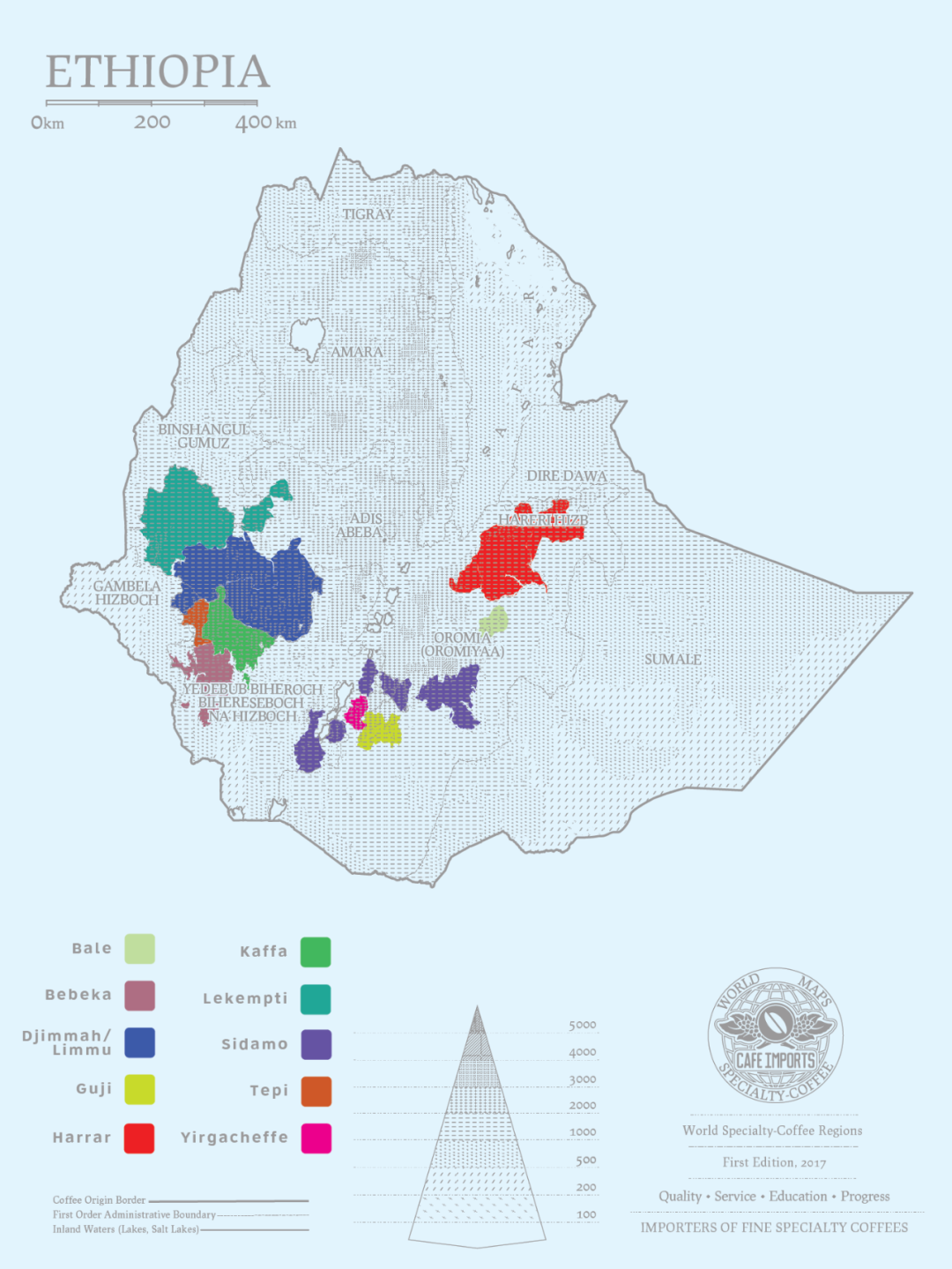
Ethiopia redrew its administrative regions around 1995, which had a considerable impact on coffee-producing areas: the original Sidamo province was split into the new Sidama (only a small part of the former province), while most of the area was incorporated into Oromia State; and Yirgacheffe, which originally belonged to Sidamo province, is now assigned to the new Gedeo Zone. Among the Ethiopian coffees currently circulating on the market, names based on both new and old regional names appear mixed together. Below, using the new regional divisions as the baseline and combining them with administrative regions, we can understand Ethiopia's coffee cultivation map.
Coffee cultivation in Ethiopia is mainly concentrated in the western and southern regions. Smallholder families account for 90% of all growers. Nearly 1.2 million smallholder families make a living from coffee cultivation, with each household cultivating less than 4 hectares. The average growing elevation is between 1,000 and 2,300 meters, planting density is 1,000 to 1,800 coffee trees per hectare, and yield per hectare is close to 600 kilograms.
Ethiopian coffee cultivation is divided by scale and model into:
● Forest coffee (8-10%) , where coffee trees coexist with other crops in primitive forest without any artificial management, and farmers periodically go to pick coffee cherries.
● Semi-forest coffee (30-35%) , where coffee trees are grown in areas between the forest and the surroundings of farmers' living areas. Like forest coffee, the coffee trees are naturally produced varieties, and farmers manage the coffee-growing areas and plant other cash crops.
● Garden coffee (50-55%) , where coffee trees are planted around farmers' living areas, and most are coffee trees cultivated by the farmers themselves.
● Plantation coffee (5-6%) , large private growers with more processing facilities and production capacity.
Ethiopia's nine major coffee regions
1, Yirgacheffe (specialty region): elevation 1,800–2,000 meters (garden coffee system)
Yirgacheffe is attached to the Sidamo region, but because of its unique flavor it has been separated out on its own. In addition to the town of Yirgacheffe, it also includes three sub-regions nearby: Wenago, Kochere, and Gelena/Abaya. Therefore, in the new Yirgacheffe grading system, Yirgacheffe A, Wenago A, Kochere A, and Gelena/Abaya A are more expensive than the B lots of the same names. The so-called Yirgacheffe flavor refers to intense jasmine aroma, lemon fragrance, peach and almond sweetness, and tea aroma. FrontStreet Coffee believes that "a hundred flowers in full bloom" is the most fitting description.
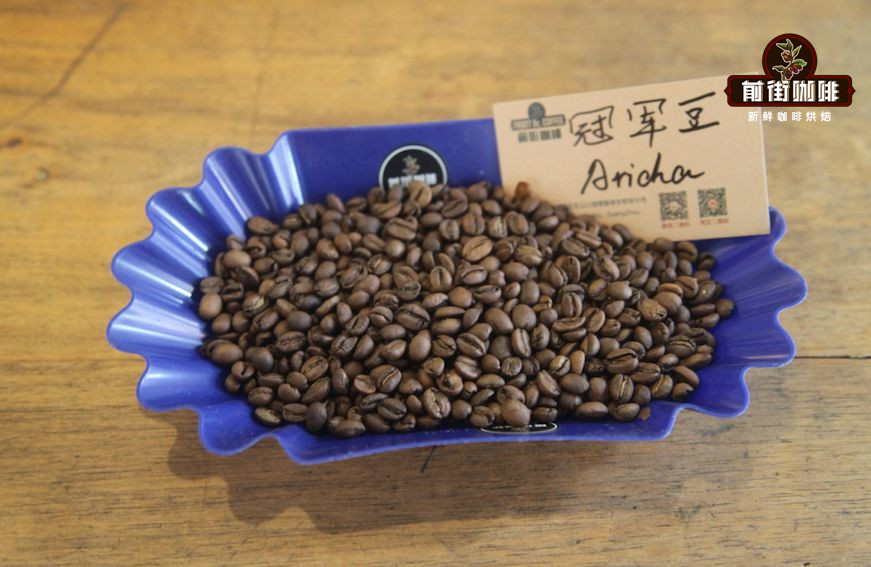
Traditionally, Ethiopia's Yirgacheffe used the oldest natural processing method, but in 1972 Ethiopia introduced washed processing technology from Central and South America in order to improve coffee quality, making the jasmine and citrus aromas of Yirgacheffe coffee clearer and brighter. FrontStreet Coffee believes that the most essential difference between washed and natural processing is that washed processing presents coffee's most basic flavor and can most directly reflect the special flavor of the region, while natural processing adds sweetness and fermented notes on top of this basic flavor. Because of the introduction of washed processing, Yirgacheffe leapt to become a representative of the world's specialty coffee. After the 1970s, this region was mainly washed and became Ethiopia's most flourishing washed-bean region. However, in the 21st century, natural processing techniques gradually improved, and stunning natural beans were introduced frequently. This is thanks to Yirgacheffe coffee trader Baghisi, who, missing the flavor of traditional natural beans and unable to bear seeing natural techniques gradually replaced by washed ones, improved the natural processing method, enhanced the flavor, reduced the defect rate, and launched three extremely famous Yirgacheffe natural beans: Idido Misty Valley, Beloya, and Aricha.
In addition to washed and natural, there are other processing methods, such as red honey and anaerobic. FrontStreet Coffee previously cupped a Front Street Red Honey Yirgacheffe, which, while maintaining the original basic flavor, added layers of complexity. Its mouthfeel is lighter than Front Street Natural Yirgacheffe and fuller than Front Street Washed Yirgacheffe.
2, Sidamo (specialty region): elevation 1,400–2,200 meters (garden coffee system)
Finely washed or natural Sidamo coffee usually has obvious sweetness, and its strawberry and berry flavors are loved by many coffee enthusiasts, with a status no less than Yirgacheffe. Sidamo and Yirgacheffe have similar varieties, with medium-sized beans but also small dwarf varieties, which farmers often sell separately. At present, the most closely watched Sidamo coffee bean is none other than Front Street Natural Huakui. After appearing in Ethiopia's TOH green bean competition in 2017, it made a stunning debut, breaking Gesha's monopoly in brewing competitions and becoming the only coffee currently able to contend with it. Huakui comes from Hambela, a sub-region under the Guji region, and the Guji region, like Yirgacheffe, originally belonged to Sidamo but became independent later because of its outstanding regional flavor. Still, when people mention Guji now, it is generally still defaulted to the Sidamo region.
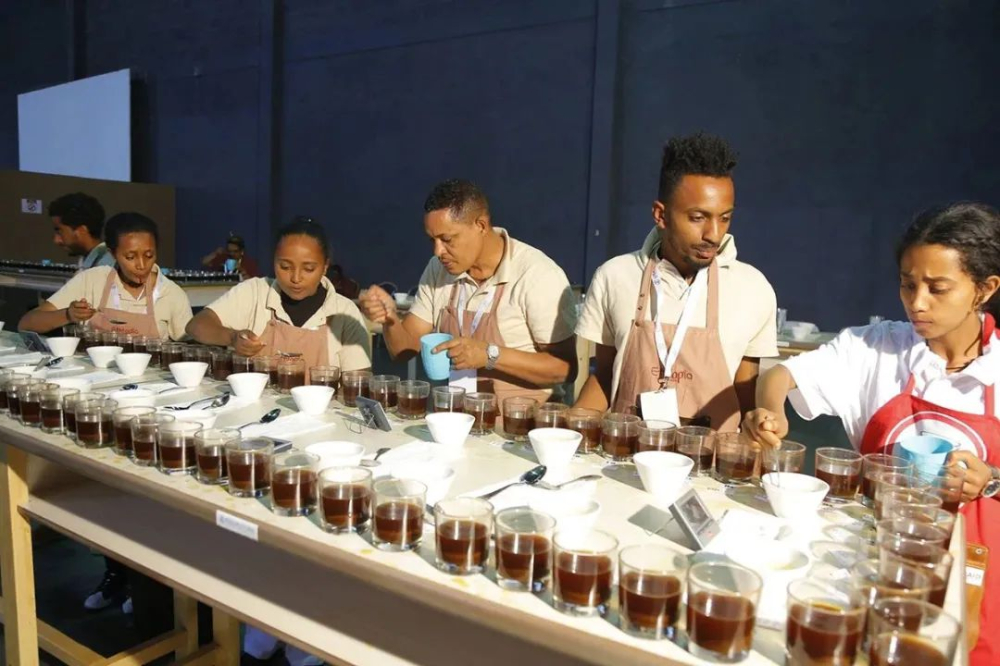
Front Street Huakui coffee has now developed to version 4.0. The original Huakui was included in Huakui 2.0 and Huakui 3.0. In the beans from the above two vintage batches, FrontStreet Coffee found that the flavor was very close to the original Huakui, but the body and finish were not as good as the original 2017 Huakui. Surprisingly, however, FrontStreet Coffee can sometimes still identify green beans exactly the same as the original Huakui batch among these two batches. As for Huakui 3.1, FrontStreet Coffee found in cupping that it was far from Huakui and instead closer to Gesha flavor (not Panama Gesha, but similar to the Gesha flavor of Gesha Village; these two are actually completely different styles of beans). FrontStreet Coffee also confirmed this change from green bean importers. It is uncommon for the same bean in the same year to show multiple flavor profiles. If you understand the origin of Huakui and then understand its development and changes after winning the championship, you will understand the reason for the inconsistency in flavor before and after. This is also why FrontStreet Coffee continually digs into coffee beans from all over the world: only through constant tasting can one understand the changes within them.
3, Limu (specialty region): elevation 1,200–2,000 meters (garden, forest, semi-forest, and plantation coffee systems)
Production is relatively low, mainly exported to European and American markets. It is not easy to buy in Taiwan, but it is very popular in Europe and the United States. It has three processing methods: washed, natural, and semi-washed. Limu's body is noticeably lighter, and its floral and citrus expression is also inferior to Yirgacheffe and Sidamo, but it has an extra grassy note and brown sugar aroma, with bright fruit acidity.

4, Harar (specialty region): elevation 1,500–2,400 meters (garden coffee system)
Harar is exclusively natural, and is an ancient eastern city, but coffee is not grown in the urban area itself. So-called Harar coffee refers to coffee produced in the Hararghe highlands of the greater Harar area. Because annual rainfall is only 1,000 millimeters, natural processing is used throughout. In flavor, Harar coffee has long been famous for its distinctive "wild mixed aroma," a typical example of ancient early flavors, and it stands alongside Yirgacheffe as the "twin stars." If the defective beans in Harar can be sorted cleanly, it is easy to taste berry notes with a slightly pleasant fermented wild aroma. However, due to various factors, Harar coffee quality has been unstable in recent years, and the grading system is also inaccurate, so when purchasing, be sure to cup or taste it first.
5, Jimma (large commercial coffee region): elevation 1,350–1,850 meters (forest/semi-forest system)
Jimma is the capital of the Kaffa forest or Kaffa province. The English spelling is very inconsistent: maps mostly use Jimma, but coffee burlap sacks spell it Djimmah. This is Ethiopia's largest coffee-producing region, accounting for one third of exports. The Kaffa forest is known for its primitive wild varieties. Jimma is the collection and distribution center for Kaffa in this area. Farmers habitually transport what is picked in the forest area to Jimma, then mix hundreds or thousands of varieties together and sell them as commercial beans, which causes the aromas of many delicious varieties to be obscured. Washed specialty Jimma, although lacking the citrus aroma and floral charm of Yirgacheffe, has a quite clean and transparent flavor profile, similar to Central American specialty coffee. Commercial-grade specialty Jimma is very common in Taiwan, and with luck one can even buy good-quality Jimma at a low price, with a clear lemon-peel aroma not inferior to Sidamo. Overall, Jimma has better flavor than Brazil's large commercial bean Santos, making it a good medium-to-low-priced blend component.
6, Illubabor (large commercial coffee region): elevation 1,350–1,850 (forest/semi-forest coffee system)
This region is located in western Ethiopia, right on the border with Sudan, making it the westernmost producing region. Its coffee genetic complexity is second only to the Kaffa forest. The beans are noticeably larger than those of Yirgacheffe and Sidamo. Fruit acidity is on the low side, body is good, and the flavor is balanced. Coffee from here is mostly transported to Jimma for blending, and is rarely sold independently.
7, Gimbi and Lekempti (large commercial coffee region): elevation 1,500–1,800 (forest/semi-forest coffee system)
This region has both natural and washed beans. The beans resemble Harar's longberry beans, and a small amount of specialty-grade coffee is quite popular in Europe and the United States. Most of it is called the poor man's Harar. Its fruit acidity and fruity notes are due to Illubabor, and the flavor is bright.
8, Teppi and Bebeka (large commercial coffee region): elevation 500–1,900 meters (garden/forest/semi-forest coffee system)
The two producing areas are very close. Teppi is north of Bebeka and has an enterprised and managerially run coffee plantation. In recent years it has promoted the garden system to increase farmers' income, with annual output of about 3,000 tons. Both places have wild coffee, output is not high, and the flavor is very different from Harar and Yirgacheffe. Low fruit acidity is the greatest characteristic, making it suitable for blend components. It has both natural and washed processing.
9, Lake Tana area (alternative region): elevation 1,840 meters (forest system)
Monastery coffee; the surrounding forest coffee has extremely low annual output, less than 10 tons, so it actually cannot really be called a producing region. The Orthodox monasteries, churches, religious murals, and myths that stand throughout the lake area have created the world's most "divine" coffee. European monks opened up the local coffee-growing industry, which was later run by coffee communities or cooperatives in villages around the town. There are no dedicated plantations here; coffee trees are naturally scattered in forests and gardens. During harvest season, the Ethiopian coffee trading company goes to the town to buy coffee beans collected by farmers.
The Red Cherry Project
The so-called Red Cherry actually refers to the Red Cherry Project, jointly initiated by Dutch trader Trabocca and local farmers, aiming to improve the quality of small-scale farms. When picking coffee cherries, not only must fully red, highly ripe cherries be selected, but they must also be picked entirely by hand. But this is only the most basic requirement. There are also corresponding requirements for coffee bean processing methods.
The Red Cherry Project is also a kind of reinforcement practice, making farms put more thought into the process of screening and sorting beans. These coffees are also relatively more expensive. The main implementing regions include Yirgacheffe, Sidamo, Bonga Forest, Lekempti, Kembata, Illubabor, Harar, and Limu. These all have unique flavors and can fully display the flavor of Ethiopian coffee. But FrontStreet Coffee believes that, in fact, today's specialty coffee all operates coffee production in the manner of the Red Cherry Project; it is just that the unique term "Red Cherry coffee" still belongs to Ethiopia. Red Cherry coffee produced will have Trabocca printed on the burlap sacks.
Ethiopian coffee varieties
Nearly 2,000 coffee bean varieties have been recorded in Ethiopia (of which 1,927 are native varieties and 128 are introduced foreign varieties). Ethiopian coffee is not cultivated by separated variety, which leads to coffee beans being mixed together at harvest, resulting in beans that look obviously uneven in size. In terms of coffee variety labeling, it is usually mainly marked as "local native species."
However, FrontStreet Coffee found that this year's COE held in Ethiopia no longer described coffee varieties as "local native species," and instead names represented by numbers appeared, such as 74158 and 74110, as well as Kurume and Typica. FrontStreet Coffee photographed the 22nd-place coffee bean, whose variety was Typica, located in the West Arsi producing region of Sidamo. At present, this producing region is far less famous than Yirgacheffe and Guji, but among the 28 winning beans in this year's COE, 9 came from this producing region.
Ethiopian coffee bean processing methods
Ethiopian coffee processing methods are mainly natural and washed, with washed accounting for a larger proportion. The biggest difference between washed and natural lies in the role of the coffee fruit pulp. In washed processing, after screening out ripe coffee cherries, the skin and pulp are removed and washing fermentation is carried out, and finally the beans are dried to 12% moisture content. Natural processing omits the washing fermentation process and directly dries the screened ripe coffee cherries until the moisture content is 12%, and only then removes the skin and pulp.
If you are trying Ethiopian coffee beans for the first time, FrontStreet Coffee would suggest starting with washed coffee beans, because washed coffee beans better reflect the most original flavor of Ethiopian coffee beans: clear acidity and elegant floral and fruity aromas. Natural coffee beans, on this basis, add aromatic intensity and sweetness.
Ethiopian coffee bean grading
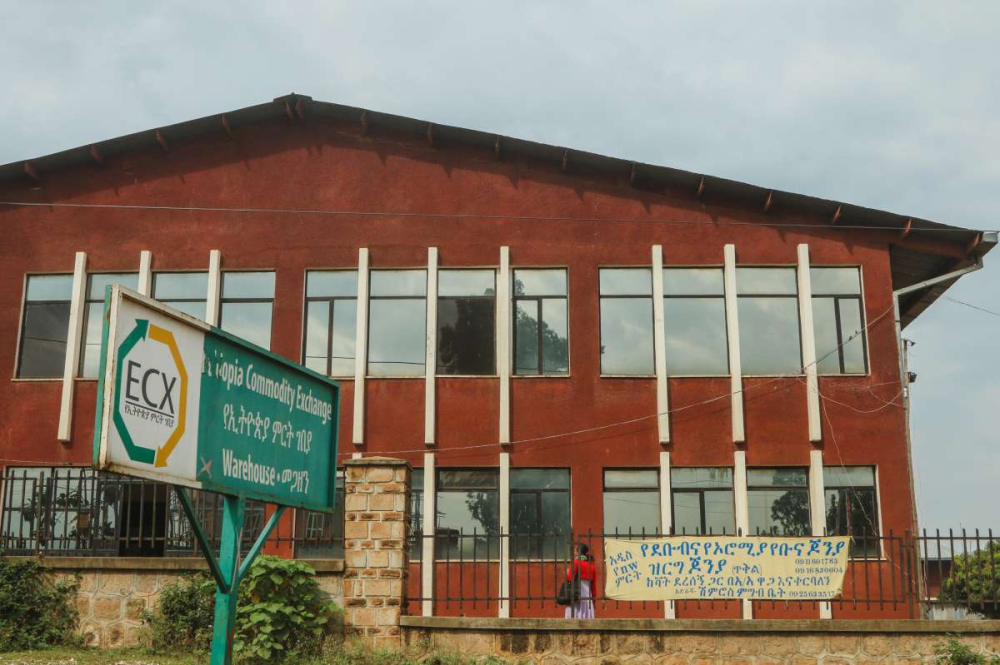
ECX (Ethiopian Commodity Exchange) has defined grading for coffee bean defect rates, namely G1 and G2. G1 means no more than 3 defective beans per 300g of green beans, and G2 means 4-12 defective beans per 300g of green beans. In addition, there are grading definitions for flavor evaluation. Using SCA (Specialty Coffee Association of America) cupping methods to evaluate the quality of G1 and G2 grade coffee beans, a score of 85 or above is rated Q1, and 80-84.75 is rated Q2.
Ethiopian Yirgacheffe coffee beans Front Street Yirgacheffe coffee roasting recommendation
The most iconic flavor of Yirgacheffe coffee is its delicate acidity and rich floral and fruity aroma. In order to highlight this flavor to the greatest extent, FrontStreet Coffee believes that a light roast is most suitable. Whether naturally processed or washed Yirgacheffe coffee beans, under a light roast, their special flavor can be maximized. But now there are also Yirgacheffe coffees on the market roasted to medium or above, which slightly weaken the acidity in mouthfeel and enhance the body. It depends on personal preference; the mainstream is still mainly light-roasted Yirgacheffe coffee.
Front Street Washed Yirgacheffe coffee bean roasting curve
Front Street Natural Yirgacheffe coffee bean roasting curve
Yirgacheffe coffee brewing recommendation
FrontStreet Coffee recommends using a V60 dripper for light-roasted coffee beans, with water temperature around 90°C, a water-to-coffee ratio of 1:15, 15g of coffee grounds, and a grind size like fine granulated sugar (80% passing through China's No. 20 standard sieve).
FrontStreet Coffee uses staged extraction. The amount of water for blooming is twice the coffee grounds, that is, 30 grams of water for a 30-second bloom. Pour in a small stream in circles until 125 grams, then pause. When the water level drops and is about to expose the coffee bed, continue pouring until 225 grams and stop. The entire extraction time is 2 minutes.
Flavor description
Front Street Natural Yirgacheffe coffee: It has a faint fermented wine aroma, rich body, with citrus aroma, honey sweetness, and cocoa flavor, and a lingering finish.
Front Street Washed Yirgacheffe coffee: The acidity is brighter and livelier, with citric acid and citrus aroma, a fresh and elegant mouthfeel, and some black tea tea-like notes in the latter part.
Overall, both natural Yirgacheffe coffee and washed Yirgacheffe coffee have fruit acidity and obvious fruity juice character, similar to fruits such as lemon and citrus.
Ethiopian Sidamo coffee beans Front Street Sidamo coffee roasting recommendation In fact, the roasting approach for Sidamo coffee is similar to that for Yirgacheffe coffee: both need to highlight their bright berry tonality. FrontStreet Coffee believes that a light roast is most suitable. Below, Front Street Sidamo Natural Huakui 4.0 is used for demonstration.

Front Street Sidamo Huakui 4.0 coffee bean roasting curve
Sidamo coffee brewing recommendation FrontStreet Coffee recommends using a V60 dripper for light-roasted coffee beans, with water temperature around 90°C, a water-to-coffee ratio of 1:15, 15g of coffee grounds, and a grind size like fine granulated sugar (80% passing through China's No. 20 standard sieve) Perhaps sharp-eyed readers will notice that the grind size for this Sidamo coffee bean differs from the Yirgacheffe grind size mentioned earlier. The grind size for each coffee bean will be different because of factors such as variety, elevation, processing method, and roasting. Therefore, when FrontStreet Coffee receives a newly roasted bean, it will first sift it to determine the appropriate pour-over grind.
FrontStreet Coffee uses staged extraction. The amount of water for blooming is twice the coffee grounds, that is, 30 grams of water for a 30-second bloom. Pour in a small stream in circles until 125 grams, then pause. When the water level drops and is about to expose the coffee bed, continue pouring until 225 grams and stop. The entire extraction time is 2 minutes.
Flavor description
Citrus acidity, full berry juice, strawberry, cream, lemon black tea tea-like notes, and lasting sweetness.
The above content is compiled by CoffeeHunters, a coffee news website.


