







Why do robusta coffee beans taste bitter and smoky?
Robusta coffee beans come from a hardy shrub grown at low altitudes of 200 to 800 meters, with strong pest and disease resistance, low cost, and high yield. Those growing conditions help explain the bitter, smoky, and harsh flavor profile that specialty coffee enthusiasts often criticize, and why robusta appears mostly in commercial espresso blends and instant coffee rather than on single-origin menus.
The coffee family has three main members: Arabica, Robusta, and Liberica, with the first two dominating the market. Arabica originated on the Ethiopian plateau, needs shade and higher altitudes, has weak disease resistance, and yields less per tree, yet accounts for roughly 70 percent of global production. Liberica coffee characteristics differ again, with a larger bean and its own distinct profile.
The coffee world is mainly composed of two major species, Arabica and Robusta, which differ significantly in flavor, growing conditions, and market positioning. Robusta, due to its strong adaptability and high yield, is widely used in commercial blends and instant coffee, but its bitter, smoky flavor profile is often criticized by specialty coffee enthusiasts. This article systematically reviews Robusta's botanical characteristics, the causes of its flavor, and its role in blends, while also introducing how Front Street Coffee uses a small amount of Robusta to create espresso beans with rich crema and a solid mouthfeel, and sharing practical tips on fresh roasting and bean resting.
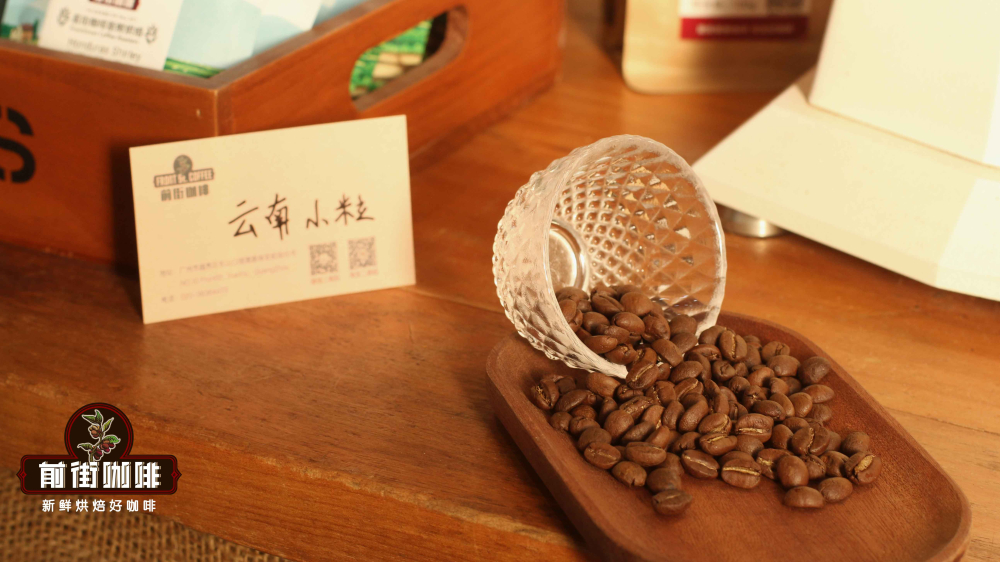
The coffee family has three main members: Arabica (the small-seeded species), Robusta (the medium-seeded species), and Liberica (the large-seeded species). However, in daily drinking and the market, the first two hold absolute dominance.
Arabica is mostly classified as specialty coffee and is quite demanding about growing conditions—it needs shade trees and higher altitudes, while also having weak disease resistance and low yield per tree. Robusta, by contrast, is highly tolerant of its environment and strong in resistance to pests and diseases. As is well known, high altitudes often produce superior flavors; for example, the quality gap between Geisha from Panama's Hacienda La Esmeralda and Geisha from Ethiopia is very obvious. Robusta is mostly grown at low altitudes, so its flavor naturally struggles to match Arabica, and thus it appears more often in commercial espresso blends or instant coffee products.
The Arabica coffee tree has a relatively clear shrub form, with oval green leaves, and can reach a natural height of 5 to 6 meters. Its economic lifespan is about 20 to 30 years, but its yield per tree is low, and its beans account for about 75% of total global production. The Robusta coffee tree, on the other hand, is a robust shrub type, suitable for growing in tropical or subtropical regions at altitudes of 200 to 800 meters. It is vigorous, undemanding about growing conditions, highly adaptable, low-cost, and productive.
Arabica
Arabica, the small-seeded species, originated on the Ethiopian plateau and, thanks to its outstanding flavor quality, has been widely introduced around the world; it currently accounts for about 70% of global coffee production. Familiar varieties such as Typica, Bourbon, and Geisha all belong to the extended Arabica family.
Arabica is extremely sensitive to its growing environment, so suitable planting areas are mostly concentrated in the coffee belt between the Tropic of Cancer and the Tropic of Capricorn, where mountainous terrain exists. Its ideal altitude is 800 to 2,000 meters, and the higher the altitude, the better the coffee quality usually is. Today Arabica is the most widely distributed coffee species, grown in Asia, Central and South America, and Africa. Ethiopia, Kenya, Panama, Colombia, and Brazil are all renowned Arabica-producing countries.
Robusta
Robusta, the medium-seeded species, should strictly speaking be called Canephora; Robusta is merely one sub-species of it that has been widely cultivated artificially, and over time it has almost become synonymous with Canephora. It originated in the Congo Basin region of West Africa and spread rapidly due to its low-altitude cultivation, high yield, and ease of growing, accounting for about 20% to 30% of global coffee production.
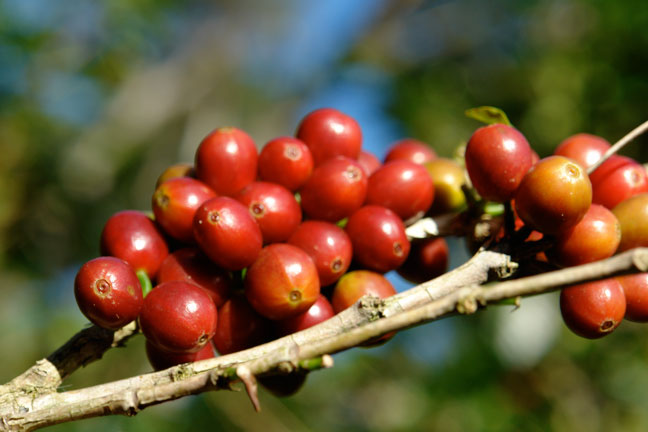
The appearance of Robusta coffee beans
Robusta coffee beans usually have one bean per fruit, are rather round in shape, form a C shape, and have a straight "1"-shaped center line; the green beans are yellowish-brown in color.
Robusta is extremely adaptable to its environment and can grow luxuriantly even at altitudes of 0 to 800 meters. Its chlorogenic acid content is relatively high, about 7% to 10%, and it is not easily affected by pests or climate fluctuations. Because it is grown at lower altitudes, it bears fruit quickly and in large quantities. Its main producing areas currently include Vietnam, Hainan, and Indonesia.
Liberica
Liberica, the large-seeded species, is native to the low-altitude forests of Liberia on the West African coast, hence its name. Due to its poor flavor performance, along with its tall tree height and difficulty of harvesting, its cultivation scale is currently very small, accounting for only 2% to 5% of global production.
The Liberica coffee tree is much taller than Arabica or Robusta, reaching 6 to 20 meters in height, and its coffee cherries are also larger, hence the name "large-seeded species." It is currently mainly grown in Southeast Asia, and the Philippines is the largest producer of Liberica.
Is Robusta coffee a specialty coffee?
Robusta coffee has a relatively high caffeine content and also rich crema. In the era when espresso swept the world, it was often used in espresso bean blends, since many people drank coffee precisely to get caffeine. Its caffeine content is about 3.2%, far higher than Arabica.
With the rise of the specialty coffee concept, people began to pay attention to origin flavors. Robusta inherently carries bitterness, as well as flavors such as walnut, peanut, hazelnut, and smoky notes, which are usually regarded as negative characteristics in coffee. More importantly, after Arabica was sorted by origin, its flavor performance far surpassed Robusta. This is something of an innate gap—Robusta's flavor is far less appealing than Arabica's, which is also why people tend to choose 100% Arabica. We recommend Front Street Dark Cocoa Basic Blend and Front Street Specialty Blend; these two espresso coffee beans use 100% Arabica, producing espresso with rich nutty aromas while retaining a slight fruity acidity to maintain a balanced taste.
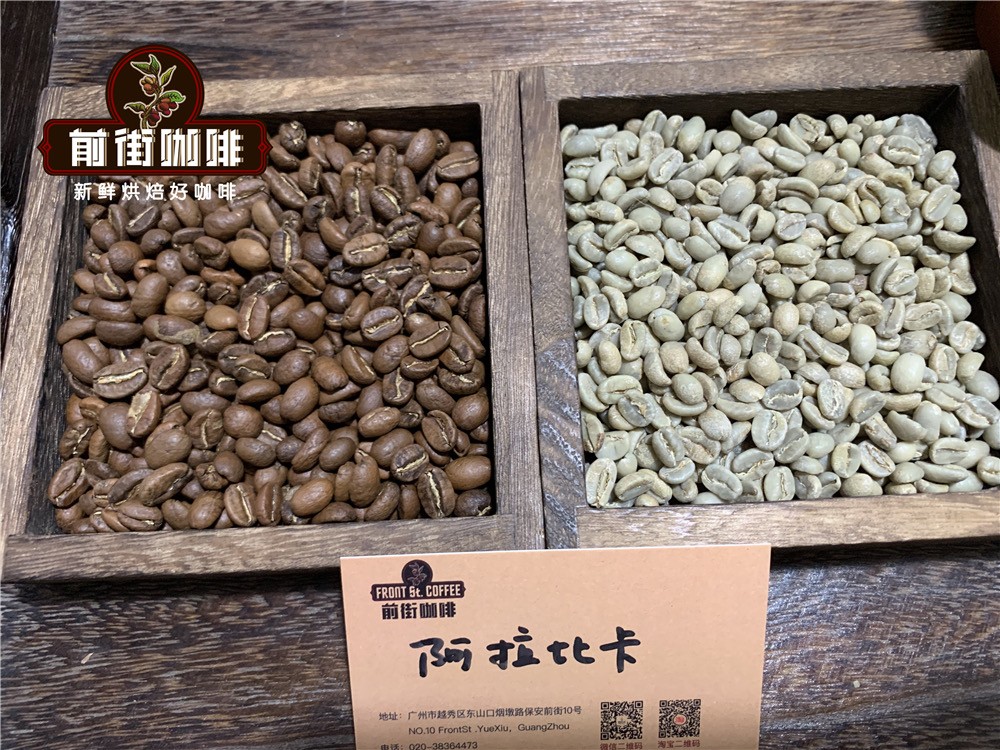
However, some Arabicas have low yields and balanced flavors yet are very expensive; some have high yields and ordinary flavors but are more moderately priced. Although Arabica is superior, not all Arabica is a high-end variety. Therefore, a small amount of Robusta can be added to Arabica to balance aroma, mouthfeel, value for money, and crema, so Front Street launched two "crema bombs," Front Street Classic Blend and Front Street Commercial Blend.
If you are after rich crema, you can choose Front Street Classic Blend and Front Street Commercial Blend; both espresso beans contain a small amount of Robusta. Front Street Classic Blend combines Brazil, Mandheling, and Robusta, uses a medium-dark roast, and gives off obvious aromas of butter, toasted bread, and caramel biscuits when extracted. It has a strong flavor, a solid mouthfeel, and delicate crema, and extracts very stably, making it an essential home coffee for beginners.
So most coffee on the market is Arabica, and specialty coffee is almost entirely Arabica. Although Arabica has outstanding flavor, brewing a good cup of coffee still requires attention to the freshness of the coffee beans. Front Street has always believed that freshness has a huge impact on coffee flavor, so all coffee beans shipped by Front Street are within 5 days of roasting. Front Street's roasting principle is "freshly roasted good coffee," so that every customer who places an order receives coffee in the freshest possible state. The bean resting period for coffee is about 4 to 7 days, so by the time customers receive it, it is at its best flavor.
For those who need ground coffee, Front Street offers a warm reminder: once coffee beans are ground in advance, they no longer need resting, because the pressure from carbon dioxide inside the packaging during transport can also make the coffee flavor rounder, so you can brew a cup immediately after receiving the ground coffee. However, ground coffee needs to be brewed promptly, because after exposure to air it oxidizes quickly, and the coffee's flavor will dissipate faster, making it less good. Therefore, Front Street recommends buying whole beans and grinding fresh before brewing, so you can better taste the coffee's flavor.
The above content is compiled by CoffeeHunters, a coffee news website.


