







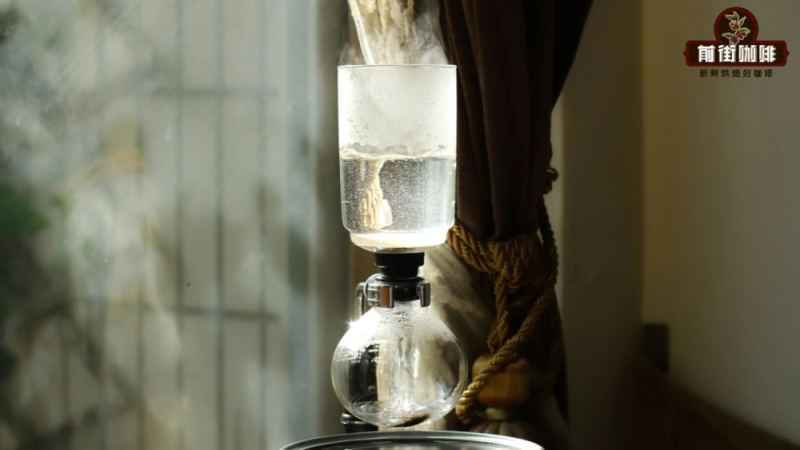
How does siphon coffee brewing work step by step?
A siphon pot has three parts: the upper pot, the lower pot, and the stand. Heating the lower pot creates steam and pressure that pushes water into the upper pot, where it meets the coffee grounds. Removing the heat source lets the coffee liquid fall back down through the filter. The result is a clean cup, and the method has a real sense of the history of siphon coffee.
Practical choices shape the outcome. Flannel cloth filters and circular paper filters trade off clarity against body, and gas stove, light-wave furnace, and alcohol lamp heat sources differ in control. Brewers also debate adding grounds first or later, grind scale, coffee-to-water ratio, and stirring technique. Many cafes no longer offer siphon coffee, treating it as a featured option instead.
The siphon pot is already a rare piece of equipment in the current specialty coffee wave, with many cafes no longer offering siphon coffee, or keeping it only as a featured single-origin option. But for siphon enthusiasts, external choices are limited, so it's better to do it yourself. This article from Front Street Coffee breaks down the complete siphon coffee brewing process in plain language, starting from the upper and lower pot structure and sealing principle, comparing the trade-offs between flannel cloth filters and circular paper filters, analyzing the pros and cons of three heat sources: gas stove, light-wave furnace, and alcohol lamp, and delving into the debate between adding coffee grounds first versus later, grinding scale references, coffee-to-water ratio suggestions, and tapping stirring techniques. At the end of the article, Front Street Coffee's usual segmented operation steps are attached, covering all stages of pouring water, inserting the pot, adding coffee grounds, stirring, and turning off the heat for reflux, suitable for beginners to follow step by step.
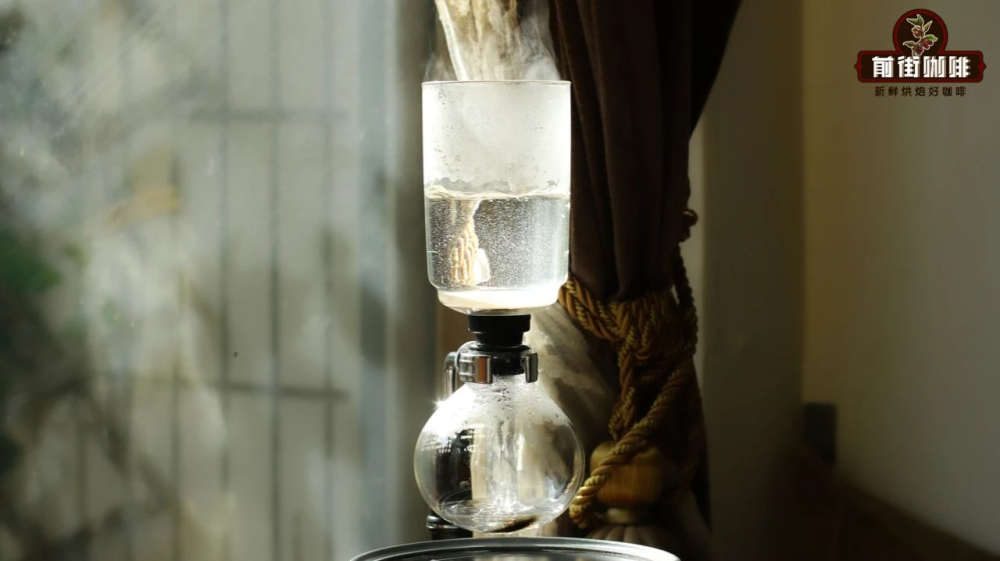
From today's perspective, the siphon pot can be considered a coffee equipment with quite a sense of history. Currently, many coffee shops no longer produce siphon coffee, or treat it only as a specialty option rather than a main product. Of course, for those who are fond of siphon, if they can't find it outside, they just do it themselves. This article from Front Street Coffee tries to use as colloquial expressions as possible to talk about siphon coffee.
-The structure of the siphon pot
Generally, a siphon pot consists of three parts: the upper pot, the lower pot, and the stand. The stand is connected to the lower pot, serving to fix and support it. The lower pot is shaped close to a sphere, a design that allows it to distribute heat more evenly when heated. The upper pot is cylindrical, with a narrow bottom that extends into a slender tube, and a rubber ring is installed at the narrowed part.
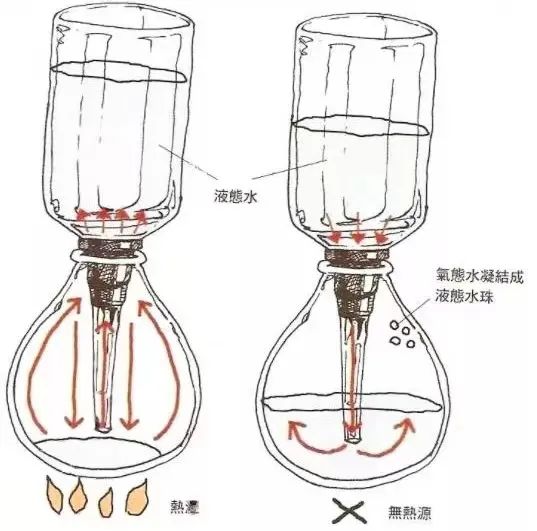
When the upper pot is inserted into the lower pot, the rubber ring provides a sealing effect. At this point, heating the lower pot causes the water to generate steam, increasing the pressure inside the pot, which pushes the water into the upper pot. The upper pot is exactly where the coffee grounds meet the water. When the heat source is removed, the coffee liquid will fall back into the lower pot, and thus the making of siphon coffee is complete.

-The choice between cloth filter and paper filter
No one wants to drink a mouthful of grounds, so a filtering medium is needed to hold back the coffee grounds. The most common choices are flannel cloth filters and circular paper filters. Flannel belongs to the traditional school of siphon filtering materials, with the advantage of retaining coffee oils, but the downside is that both use and cleaning are relatively troublesome.
Paper filters are a newer filtering solution, focusing on thorough filtration, able to intercept even fine particles (including but not limited to oils). If it's just for personal drinking with low brewing frequency, Front Street Coffee suggests choosing flannel, so you can experience the flavor profile of siphon coffee more completely.
-The trade-offs of heat sources
Currently common heating methods include gas stove, light-wave furnace, and alcohol lamp. Both gas stoves and light-wave furnaces can adjust the firepower, heat up quickly and stably, with the disadvantage of higher cost. Alcohol lamps cost less, but the heat source is not stable enough, and heating takes longer.
Front Street Coffee's view is that all three heat sources can make good coffee, the key is to make corresponding adjustments based on their respective heating characteristics. However, if conditions permit, it's still preferable to consider gas stove or light-wave furnace.
-Add coffee grounds first or later
In the step of adding coffee grounds in siphon brewing, there are two different practices. The traditional school advocates adding coffee grounds first. The other school believes that if coffee grounds are added first, the water will contact some of the coffee grounds during the process of rising into the upper pot, causing this portion of coffee to be "extracted prematurely", which may result in uneven extraction, so they insist on adding coffee grounds after all the water has risen into the upper pot. This is somewhat like the debate in pour-over between pouring water first and then timing versus timing simultaneously with pouring water.
Front Street Coffee thinks that for beginners, the method of adding coffee grounds later is safer, with fewer uncertainties than adding coffee grounds first.
-The grinding coarseness of coffee grounds
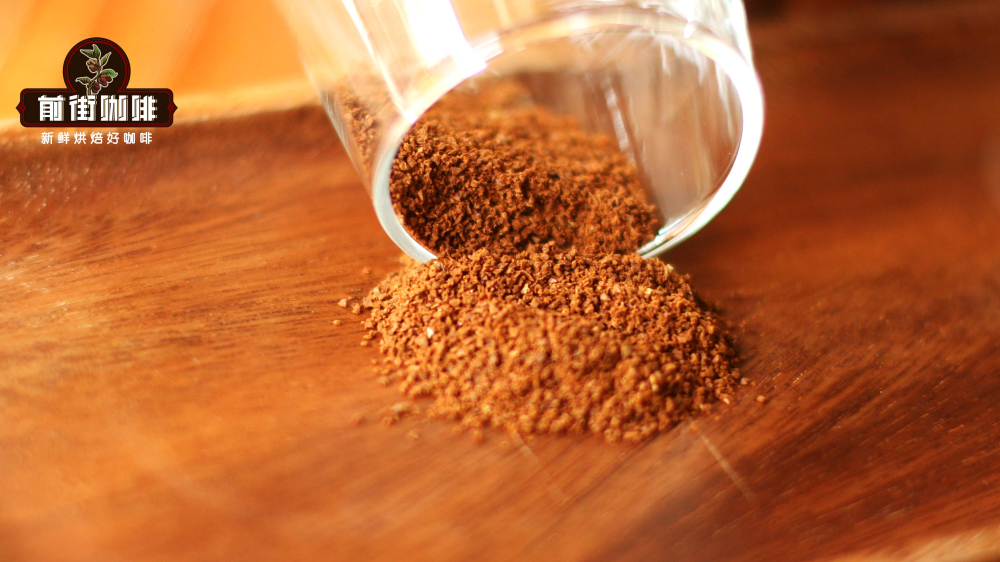
The grinding degree for siphon coffee is finer than pour-over. According to Front Street Coffee's measurement, it is about 90% passing rate on a No. 20 sieve, corresponding to a setting of 9 on the EK43s grinder used in shops, or 20 on the C40 hand grinder.
-Coffee-to-water ratio reference
The coffee-to-water ratio for siphon coffee usually falls between 1:10 and 1:12, with 1:12 being more frequently used. If making a single serving at home, you can refer to Front Street Coffee's commonly used parameters: 18 grams of coffee grounds with 200 milliliters of water.
-Stirring technique
There are various stirring methods, including rotational stirring, cross stirring, Z-shaped stirring, ∞-shaped stirring, and tapping, etc.
Front Street Coffee suggests that beginners start with the tapping technique, tapping the coffee grounds layer according to the trajectory in the figure below. The stirring rod uses the center as a pivot, with both ends moving back and forth in a staggered manner.
There is no single standard for the technique, but Front Street Coffee believes this method is relatively easy to control, with a lower threshold for beginners.
-Judging the end time
When to turn off the heat for siphon coffee, some people are used to judging by smelling the aroma, which requires high personal basic skills and is difficult to describe clearly in words. Therefore, Front Street Coffee recommends that beginners use timing. If adding coffee grounds later, start timing from the moment the grounds are added; if adding coffee grounds first, start timing from the moment you are about to wave the stirring rod. The time to turn off the heat source is roughly controlled between 50 and 70 seconds.
-Specific operation process
Taking Front Street Coffee's usual brewing method as an example
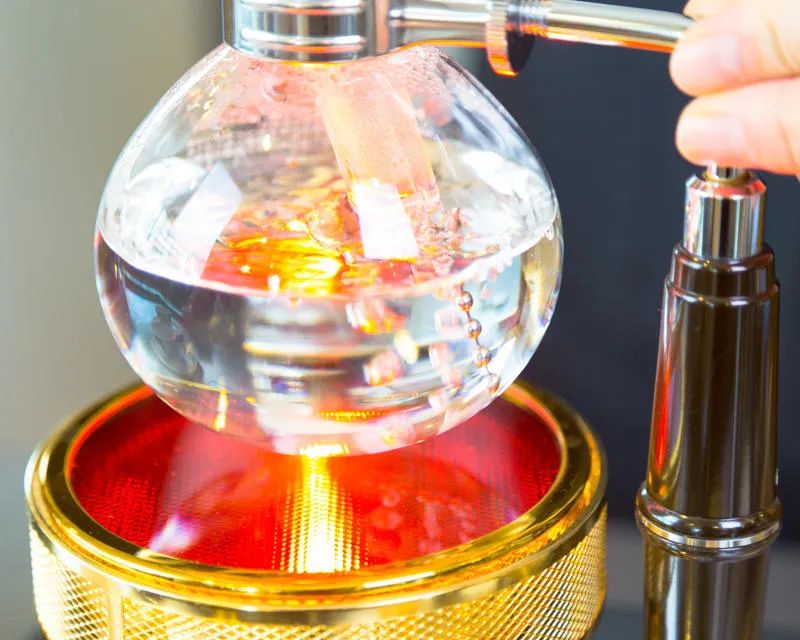
1. Pour in 200 milliliters of hot water, wipe the lower pot dry, and turn on the heat source.
2. Insert the upper pot into the lower pot at an angle, ensuring the explosion-proof bead touches the bottom of the lower pot.
3. When continuous small water droplets appear in the lower pot, straighten the upper pot and press it tight. Wait for the water in the lower pot to be drawn into the upper pot.
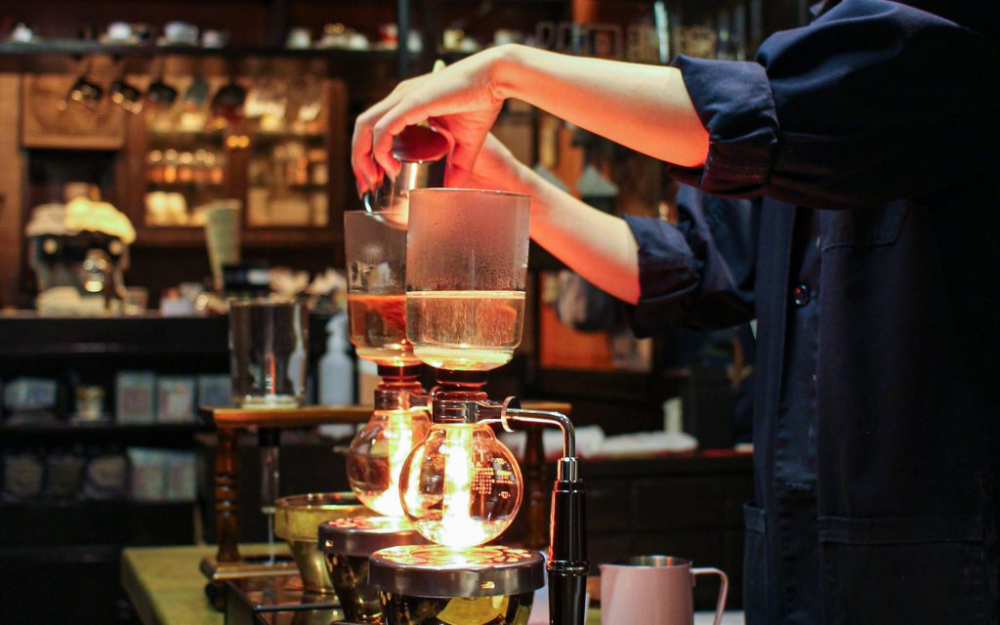
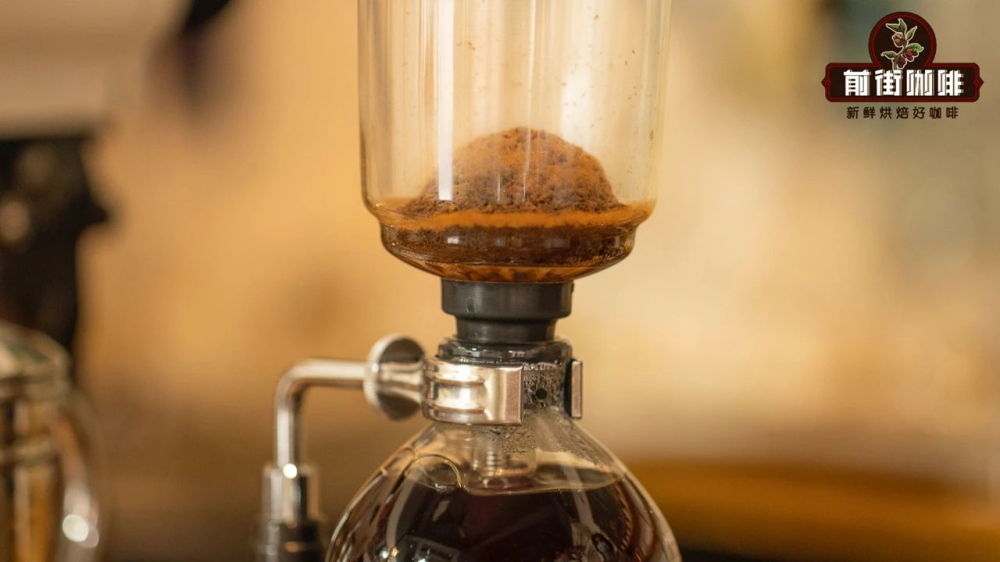
4. Pour in the coffee grounds and start timing. In the first stage, use the stirring rod to press all the coffee grounds into the water by tapping, so that they absorb water evenly.
5. In the second stage, at 25 seconds, use the stirring method recommended by Front Street Coffee to stir, so that the coffee clearly shows three layers: coffee liquid, coffee grounds, and coffee foam.
6. In the final stage, at 50 seconds, stir in the same direction. At 60 seconds, remove the heat source and wait for the coffee liquid to fall back.
The siphon coffee brewed this way has a rich aroma. Although it is not as clear and clean as pour-over, the oils floating on the surface add a lot of body to the mouthfeel.
In Front Street Coffee's view, compared with pour-over coffee, the operation of a siphon pot is obviously more cumbersome. First, a heat source is needed before brewing, the entire extraction process cannot be distracted, and after brewing, it must be cleaned promptly, washing the flannel used for filtering grounds. If placed in a shop with high output, siphon pot production is only more troublesome.
For more professional coffee knowledge, please follow the WeChat public account: Front Street Coffee (FrontStreet Coffee)
The above content is compiled by CoffeeHunters, a coffee news website.


