







How does the ECX shape Ethiopia's fair trade coffee production?
Ethiopia divides coffee exports into three systems: ECX bidding, cooperatives, and single farms. Cooperatives and single estates may skip the ECX and export directly, giving them more complete traceability. Single farms, such as the Hambela farm behind Sidamo sun-dried Huakui, are the only route to full traceability, since cooperatives still buy cherries from many smallholders and process them centrally.
The Ethiopia Commodity Exchange was founded in 2008 by Eleni Gabre-Madhin, a former World Bank economist, to create Africa's first commodity exchange. It introduced grading, warehousing, logistics, pricing rules, and instant communications, aiming to cut the high transaction risk and cost that weighed on fair trade coffee farmers. Private processing plants still export through ECX bidding and hold the largest share.
As the holy land of specialty coffee, Ethiopia's coffee export system is quite complex. According to local regulations, coffee exports are divided into three major systems: ECX bidding, cooperatives, and single farms. Among these, cooperatives and single estates can bypass ECX and export directly, with relatively complete traceability. ECX was founded by Eleni Gabre-Madhin in 2008, and it transformed the trading situation of coffee farmers through grading, warehousing, and real-time information. What truly achieves 100% traceability is the single farm system that has risen in recent years. The Sidamo sun-dried Huakui is a representative work from the Hambela farm. This article will sort out the operational differences among the three major systems, the trading logic of ECX, the structure of the six cooperative unions, and the significance of single farms to specialty coffee. Front Street will also continue to follow these origin developments and bring coffee enthusiasts clearer origin knowledge.
According to relevant Ethiopian regulations, coffee export channels can be divided into three categories: the first is the private processing plant system that completes exports through ECX bidding, which also accounts for the largest share; the second is the cooperative system; and the third is the single farm system. Among these three, cooperatives and single estates do not need to go through the ECX bidding process and can export directly, so their product records and traceability are relatively complete and reliable.
However, if we dig deeper, cooperatives are still essentially buying cherries from smallholders and processing them centrally, so it is difficult to achieve 100% traceability. Single farms, by contrast, are regarded as the key path toward the next generation.
Ethiopia Ethiopia Commodity Exchange
The Ethiopia Commodity Exchange (ECX) was founded in 2008 by Eleni Gabre-Madhin, a former senior economist at the World Bank and director of the International Food Policy Research Institute (IFPRI).
The goal of establishing ECX was to create the first commodity exchange in Ethiopia and indeed in all of Africa. It introduced modern trading rules and technologies such as pricing mechanisms, warehousing and logistics, and instant communications, attempting to change the situation of high transaction risk and high costs in Ethiopia's agricultural product market and to build an efficient, trustworthy, and transparent commodity market.
From its inception, ECX received widespread praise, and the outside world generally believed it would bring transformation to Ethiopian agriculture and help alleviate famine and poverty. ECX also claimed that, with the help of rural cooperatives, it had opened market channels for more than 2.4 million smallholder farmers.
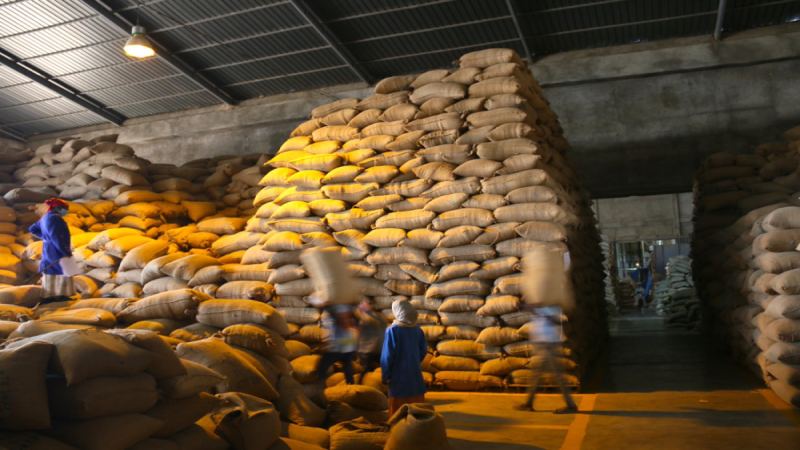
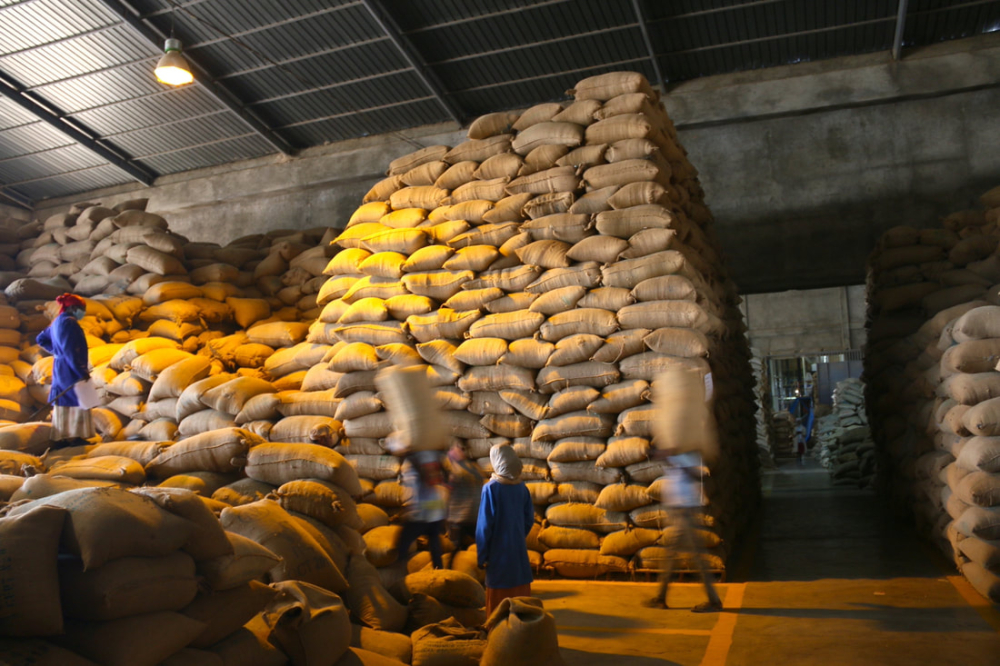
The coffee trading process of ECX is roughly as follows: farmers first sell coffee cherries to local washing stations, and some stations purchase higher-quality cherries at higher prices. After processing is completed, the washing stations transport the green beans to warehouses at delivery stations.
ECX plays the role of a "distribution center," specifically in the following aspects:
1. More effective price protection. ECX purchases coffee beans from coffee farmers at stable and relatively favorable prices, then stores them;
2. Coffee grading, with higher quality commanding higher prices;
3. Timely information transmission. Coffee farmers only need to make a phone call to quickly learn trading prices, processing stations in their area, coffee warehouses, and other information;
4. Building warehousing and processing facilities. As of 2012, Ethiopia had a total of 56 warehouses distributed across 17 locations, 9 of which had coffee warehouses, thereby reducing transportation costs.
Taking the Yirgacheffe region as an example, the delivery station is located in Dila. Green beans are labeled by production area and graded according to green bean quality and cupping results. The higher the overall quality, the higher the selling price. After traders purchase green beans through ECX, the packaging will at most indicate the production region and village, such as Yirgacheffe: Konga and Yirgacheffe: Kochere.
Ethiopia Coffee cooperative names and introductions
Farmers' Cooperative Union
To facilitate direct export by farmer cooperatives, farmer cooperatives in various regions have jointly established their own cooperative unions. At present, Ethiopia has a total of 6 Farmers' Cooperative Unions, namely:
● Oromia Coffee Farmers Cooperative Union (OCFCU)
● Sidama Coffee Farmers Cooperative Union (SCFCU)
● Yirgacheffe Coffee Farmers Cooperative Union (YCFCU)
● Kafa Forest Coffee Farmers Cooperative Union (KFCFCU)
● Bench Maji Coffee Farmers Cooperative Union (BMCFCU)
● Tepi Coffee Farmers Cooperative Union (TCFCU)
The advantage of cooperative unions is that they bring scattered smallholders and cooperatives together into a larger collective, thereby participating in international projects (such as Fairtrade) and connecting with overseas buyers through a unified export window. A certain proportion of the proceeds from the harvest is paid to the cooperative; after deducting management fees, the cooperative retains a portion for community development and distributes the rest to farmers. In this way, smallholders receive more stable and convenient income and are better able to cope with cultivation and living expenses. This is precisely why more and more smallholders are willing to join cooperatives.
Sigiga Cooperative (1600-2500 meters)
Production area: Gedeo-Kochere
Number of members: 1,862
Soil type: red-brown soil
Certifications: Fair Trade, UTZ sustainable cultivation, Organic coffee
Finchewan Cooperative (1450-2000 meters)
Production area: Gedeo-Wenago
Number of members: 1,271
Soil type: red-brown soil
Certifications: Fair Trade, Organic coffee
Konga Cooperative (1750-2300 meters)
Production area: Gedeo-Yirgacheffe
Number of members: 1,556
Soil type: red-brown soil
Certifications: Fair Trade, Organic coffee
Hafursa Cooperative (1750-2300 meters)
Production area: Gedeo-Yirgacheffe
Number of members: 1,975
Soil type: red-brown soil
Annual green bean production: 798,000 kilograms
Average farm size: maximum 4 hectares, annual output about 600 kilograms per hectare
The cooperative has a washing station
Certifications: Fair Trade, Organic coffee
Resa Cooperative (1000-1400 meters)
Production area: Gedeo-Wenago
Number of members: 2,719
Soil type: red-brown soil
Can provide two sets of coffee processing equipment
Certifications: Fair Trade, Organic coffee
Addis Katema Cooperative (1000-1400 meters)
Production area: Gedeo-Wenago
Number of members: 891
The cooperative has a washing station
Soil type: red-brown soil
Certifications: Fair Trade, Organic coffee
Biloya Cooperative (1600-2500 meters)
Production area: Gedeo-Kochere
Number of members: 1,203
Soil type: red-brown soil
Provides two sets of coffee processing equipment
Certifications: Fair Trade, Organic coffee
Worka Cooperative (1650-2700 meters)
Production area: Gedeb
Number of members: 305
Soil type: red-brown soil
Annual green bean production: 457,000 kilograms
Average farm size: maximum 4 hectares, annual output about 699 kilograms per hectare
The cooperative has all processing equipment
Certifications: Fair Trade, Organic coffee
Koke Cooperative (1750-2300 meters)
Production area: Gedeo-Yirgacheffe
Number of members: 828
Soil type: red-brown soil
Can provide one set of processing equipment
Certifications: Fair Trade, UTZ sustainable cultivation, Organic coffee
Hama Cooperative (1600-2500 meters)
Production area: Gedeo-Kochere
Number of members: 1,505
Soil type: red-brown soil
Can provide one set of processing equipment
Certifications: Fair Trade, Organic coffee
Chichu Cooperative (1410-2000 meters)
Production area: Gedeo-Dila
Number of members: 1,675
Soil type: red-brown soil
Average farm size: maximum 4 hectares, annual output about 591 kilograms per hectare
Can provide one set of processing equipment
Certifications: Fair Trade, Organic coffee
Michile Cooperative (1410-2000 meters)
Production area: Gedeo-Dila
Number of members: 1,206
Soil type: red-brown soil
Average farm size: annual output about 592 kilograms per hectare
Can provide one set of processing equipment
Certifications: Fair Trade, UTZ sustainable cultivation, Organic coffee
Hase Haro Cooperative (1450-2000 meters)
Production area: Gedeo-Wenago
Number of members: 1,519
Soil type: red-brown soil
Average farm size: maximum 4 hectares, annual output about 591 kilograms per hectare
Can provide one set of processing equipment
Certifications: Fair Trade, Organic coffee
Dumerso Cooperative (1750-2300 meters)
Production area: Gedeo-Yirgacheffe
Number of members: 246
Soil type: red-brown soil
Can provide two sets of processing equipment
Certifications: Fair Trade, Organic coffee
Tumticha Cooperative (1410-2000 meters)
Production area: Gedeo-Yirgacheffe
Number of members: 960
Soil type: red-brown soil
Can provide two sets of processing equipment
Certifications: Fair Trade, Organic coffee
Aramo Cooperative (1750-2300 meters) (90+ Clinique production area)
Production area: Gedeo-Yirgacheffe
Number of members: 2,254
Soil type: red-brown soil
Can provide two sets of processing equipment
Certifications: Fair Trade, Organic coffee
Edido Cooperative (1750-2300 meters)
Production area: Gedeo-Yirgacheffe
Number of members: 1,044
Soil type: red-brown soil
Can provide one set of processing equipment
Certifications: Fair Trade, Organic coffee
Adame Cooperative (1000-1400 meters)
Production area: Gedeo-Wenago
Number of members: 533
Soil type: red-brown soil
Can provide one set of processing equipment
Certifications: Fair Trade, Organic coffee
Belekara Cooperative (1000-1400 meters)
Production area: Gedeo-Wenago
Number of members: 685
Soil type: red-brown soil
Can provide one set of processing equipment
Certifications: Fair Trade, Organic coffee
Adado Cooperative (1200-1700 meters)
Production area: Sidamo-Bule
Number of members: 1,128
Soil type: red-brown soil
Can provide one set of processing equipment
Certifications: Fair Trade, Organic coffee
Haru Cooperative (1200-1700 meters)
Production area: Gedeo-Yirgacheffe
Number of members: 1,187
Soil type: red-brown soil
Can provide one set of processing equipment
Certifications: Fair Trade, Organic coffee
Two new coffee trade regulations introduced in July 2017 may break the original structure—coffee farmers will have the right to resell their coffee beans to coffee processing plants within three days before they arrive at ECX warehouses.
Barista Single farm
The single farm system has actually existed in Ethiopia for a long time, but for many years it accounted for a relatively low share and traditionally mostly belonged to bulk commercial lots that did not emphasize quality. As Ethiopia gradually emerged in the third wave of specialty coffee over the past twenty to thirty years, in addition to existing coffee professionals, a group of new forces influenced by Western culture and hoping to bring change to the industry also gradually emerged locally. Traditional exporters went deep into production areas to cultivate with care, and this also attracted a wave of people returning from Europe and the United States to devote themselves to building their hometowns.
How important is the single farm system (referred to here for now as the Single Farm Project, or SFP)? As is well known, Ethiopia is dominated by a smallholder farming system, and the smallholder system cannot achieve complete traceability.
Single farms are precisely the only answer to solving this series of problems.
Single-variety lots, special-processing lots, customized lots, and so on are all extremely critical practical concepts in the development of specialty coffee.
For example, the Sidamo sun-dried [Huakui] bean belongs to a single farm and comes from the micro-region Hambela farm.
The above content is compiled by CoffeeHunters, a coffee news website.


