







How do you set grind size when brewing an SOE coffee?
Espresso grind cannot be checked with a standard sieve, so dial it in by taste instead. Fix dose, liquid weight, pressure, and water temperature, then change only the grind setting. Espresso particles run roughly 150 to 300 microns, fine enough to feel like flour. Judge each shot for bitterness, sharp acidity, or wateriness and adjust accordingly.
Definitions from the Italian Coffee Association and the WBC describe espresso characteristics as a concentrated drink brewed under pressure with a defined dose and yield. Using a Colombian Sidra SOE, the article shows that when grind is right but flavor still drifts, small dose adjustments can bring the cup back in line.
The grind size for espresso is much finer than for pour-over and cannot be calibrated with a standard sieve, so how do you determine it? This article starts with the physical particle size range of espresso grounds, reviews the definitions of Espresso by the Italian Coffee Association and the WBC, and, combined with Front Street Coffee's hands-on experience, explains how to lock in extraction time by fixing dose, liquid weight, pressure, and water temperature while adjusting only the grind size, then judging by taste whether there are defects such as bitterness, sharp acidity, or wateriness. The article also uses a Colombian Sidra SOE as an example to demonstrate how, when the grind size is suitable but the flavor still deviates, you can further optimize by finely adjusting the dose, helping coffee enthusiasts build a systematic approach to dialing in espresso grind.
For more specialty coffee knowledge, please follow: Front Street Coffee (Frontsteet Coffee)
Coffee grind size is a very troublesome factor. Many problems that fellow coffee lovers encounter during brewing stem from an inaccurate grasp of grind size. For pour-over coffee grind size, Front Street recommends using a No. 20 (0.85mm) standard sieve for calibration, with a pass rate of 80% (you can sift 10g of coffee grounds and have 8 grams pass through) as the pour-over coffee grind size.
But espresso grind is very fine, and using a sieve to sift it is not realistic, so how is espresso grind size determined?
Espresso Grind Coarseness
If you go to a café, pay careful attention: the shop will have at least two grinders on display, one of which is an espresso grinder with a full hopper, and the other is a grinder used for pour-over. Why equip two grinders? Actually, making espresso is extremely sensitive to the coarseness of the coffee grounds; a change in coarseness imperceptible to the naked eye will immediately show its difference when extracted on the coffee machine.
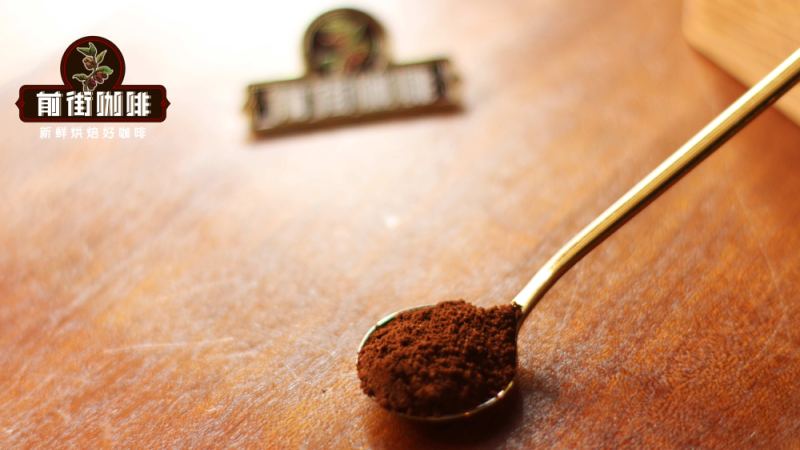
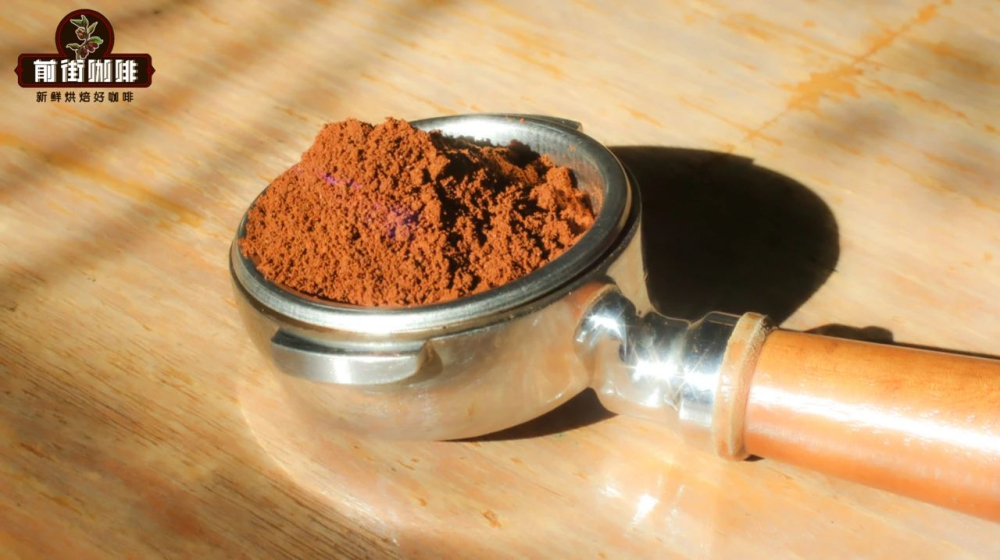
Therefore, for the consistency of continuous espresso output, a separate grinder is generally equipped specifically for grinding espresso coffee beans. And espresso grounds, whether looking at them or touching them, feel like flour, and if expressed in data, their coarseness is roughly between 150-300 microns.
How to Determine Espresso Grind Size
According to the definitions of Espresso by the Italian Coffee Association and the WBC, a qualified espresso refers to a 1-ounce (about 30ml) espresso with golden crema extracted within 20~30 seconds by hot water at 90.5~96°C under 9 atmospheres of pressure.
Although the above statement does not clearly state the specific degree of grind coarseness, as long as we clarify the relationship between time and grind size, determining the grind size becomes easy.
When there are no problems with human factors such as distributing and tamping, the finer the coffee grind particles, the longer the extraction time, and the taste tends toward burnt bitterness, easily leading to over-extraction; conversely, the coarser the grind particles, the shorter the extraction time, and the taste tends toward sourness, easily leading to under-extraction.
Therefore, when Front Street faces an unfamiliar espresso coffee bean or changes to a new grinder, the approach to determining grind size is: first determine the extraction recipe. Front Street's espresso preset extraction recipe is 20 grams of coffee grounds (depending on the capacity of the portafilter basket), using a 1:2 extraction ratio of grounds to liquid (the roast level of the Sunflower Warm Sun blend used by Front Street is slightly lighter than general espresso coffee beans, so a 1:2 ratio is used to highlight the flavor characteristics of Sherry coffee and Red Cherry coffee), that is, 40g of coffee liquid (weight units are used because they are more precise than volume units; the weight of coffee crema is less than its volume).
For pressure and water temperature, fixed parameters are used. The pressure of the coffee machine used by Front Street is set at 9bar, and the water temperature is 93°C. Then we only need to adjust the grind size to reach the preset time point. Some grinders are equipped with a hopper, so after each grinding adjustment, the residual grounds need to be cleaned out to avoid affecting the accuracy during dialing in.
When you have dialed in to our preset time range, don't get too excited yet. Because what we want is a delicious espresso, at this point you need to taste it and judge whether there are defective flavors such as bitterness, sharp acidity, and wateriness, and then judge whether it has the flavors that this coffee should express. If not, you need to continue adjusting, and at this point the adjustment is not limited to grind size. Because the brewing parameters we preset are based on existing knowledge, and when facing an unfamiliar coffee bean, we must consider whether the preset extraction parameters are reasonable.
For example, when testing Front Street's Colombian Sidra SOE coffee, when the right parameters are selected (grind size, flow rate), the coffee will have very rich grape, passion fruit, and citrus flavors. But if, after dialing in to the appropriate grind size, the extraction parameters are 20g of coffee grounds extracting 40g of coffee liquid, taking 30 seconds, and when tasting the flavor you feel a slight burnt bitterness, then you can reduce the dose by 0.2~0.5g to make the flow rate faster, thereby enhancing the expression of good flavors.
Therefore, when judging whether the grind size of espresso is correct, we first determine whether the extraction parameters are within a reasonable range, and then taste and test whether its flavor meets expectations. If not, fine-tuning is needed.
For more specialty coffee knowledge, please follow: Front Street Coffee (FrontStreet Coffee)
The above content is compiled by CoffeeHunters, a coffee news website.


