







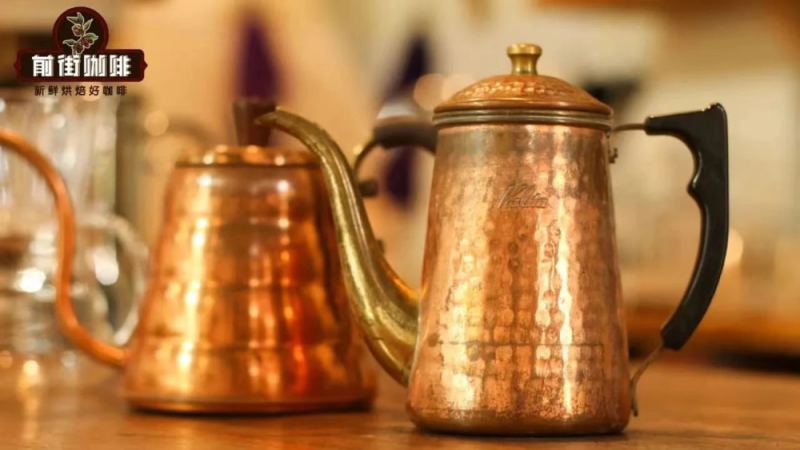
How does coffee material affect your pour-over kettle choice?
Pick a pour-over kettle by weighing four things: temperature control, spout shape, capacity and handle design, and body material. Temperature-controlled models heat and hold water at a set point but weigh more and cost more, while non-temperature-controlled kettles are lighter and cheaper yet need a separate thermometer.
Stainless steel, copper, and enamel porcelain each change weight, heat retention, and price, so the coffee material you choose shapes daily handling. Spout shape decides how steady the stream is, and beginners often gain a lot from a narrow gooseneck. A flavor sequence of beans from a coffee beans manufacturer rounds out the guide for new brewers.
You want to get a pour-over kettle, but you're faced with a dizzying array of styles on the market and don't know where to start? Actually, choosing a kettle is like a swordsman choosing a sword—a well-suited kettle can greatly reduce the difficulty of water control, letting even beginners consistently brew good-tasting coffee. This article draws on Front Street's hands-on experience to break down the key points of choosing a kettle one by one: the choice between temperature-controlled and non-temperature-controlled models, how the spout shape affects the water flow, the body capacity and handle design, and the trade-offs between materials like stainless steel, copper, and enamel porcelain. At the end, it also includes a flavor sequence of Front Street Coffee beans suitable for beginners to try step by step, helping you sort out the purchasing logic all at once.
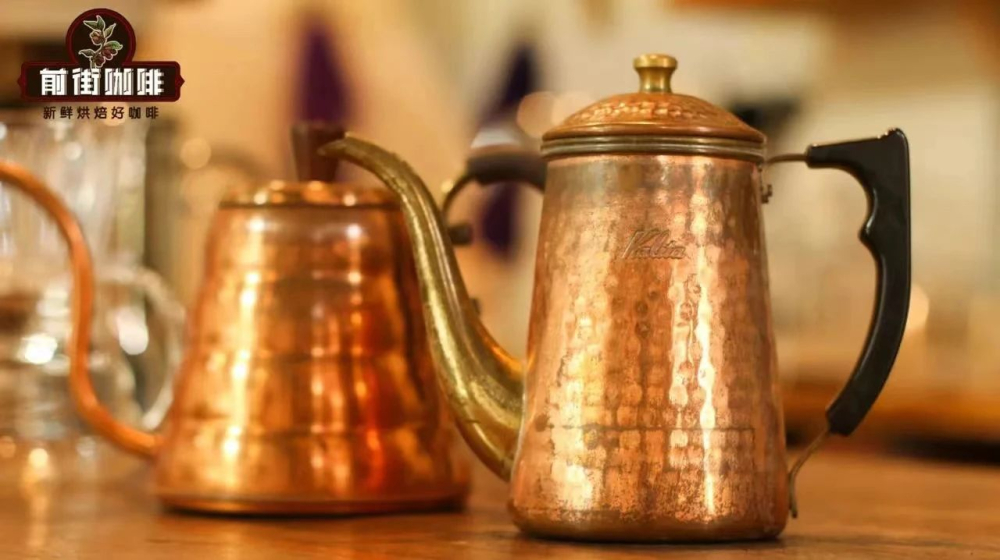
A pour-over kettle is a crucial piece of equipment in the extraction process, just like a swordsman's trusty sword at his side. Whether you choose the right kettle directly affects how easily you can control the water during brewing.
Therefore, finding a pour-over kettle that suits your own habits is quite important, especially for those just starting out—a suitable kettle lets you more calmly produce your ideal flavors. Today, Front Street is here to talk about what aspects you should look at when choosing a pour-over kettle.
Temperature-controlled or non-temperature-controlled
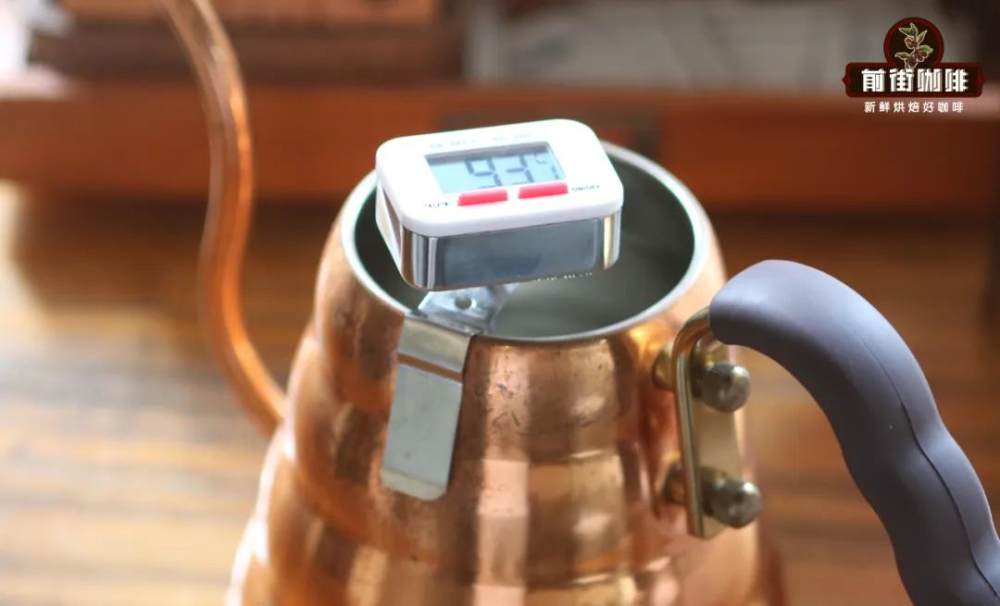
The first fork in the road when buying is deciding whether to get a temperature-controlled or non-temperature-controlled model. A non-temperature-controlled kettle is simply a regular kettle without a heating module. It's relatively affordable, and many equipment brands treat it as a basic entry-level model. It suits people who already have water-heating equipment at home, though you'll also need to buy a separate thermometer to help measure temperature.
The advantage of a temperature-controlled kettle is quite straightforward—convenience: the body has built-in heating, so you can set the water temperature to whatever you want; it also has heat-retention capability, so the temperature won't drop between two pours. Of course, it has drawbacks too: the extra temperature-control component at the base makes the overall weight heavier than non-temperature-controlled models, with a lower center of gravity, and the price is usually about three hundred yuan more.
To sum it up in one sentence: if you brew infrequently and have a limited budget, just choose the non-temperature-controlled version; if you prioritize convenience and brew frequently in your daily routine, a temperature-controlled kettle is clearly more worth getting.
Spout
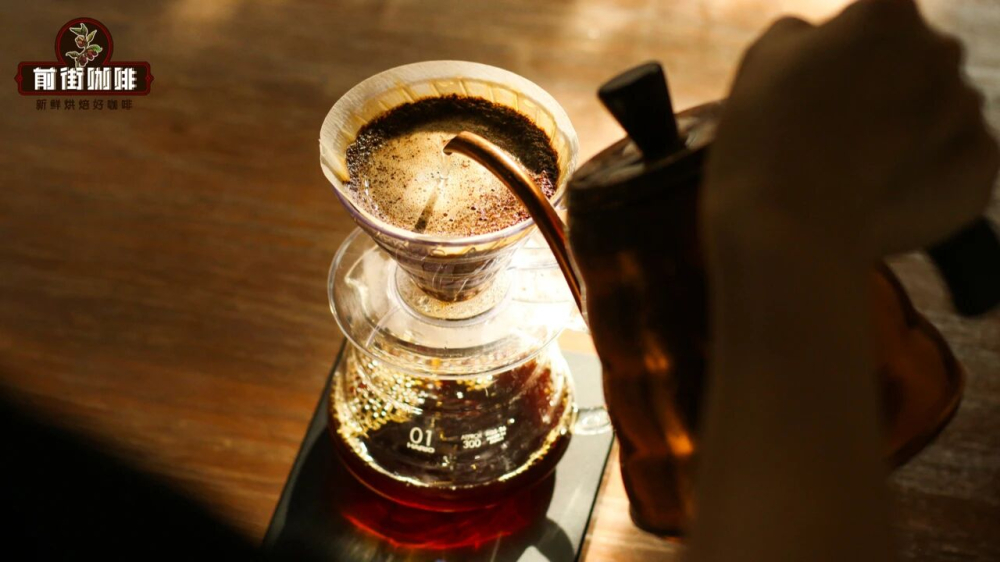
What the stream of water looks like is mainly determined by the spout. Common spout types on the market today include narrow gooseneck, wide gooseneck, as well as eagle-beak, crane-neck, and flat spouts. Different spout types directly change the thickness and impact force of the water stream, and also affect the difficulty of use and operating flexibility.
Those just getting into pour-over might want to start practicing with a narrow-spout kettle. The flow from a narrow-spout kettle looks slender, but its impact force isn't weak; it's easy to master and the water flow is easier to control. The drawbacks are also obvious: it can't produce a large flow, so there's less variation in how you can play with it.
The water-control threshold for a wide-spout kettle is considerably higher than for a narrow-spout one, and mastering the flow requires a great deal of practice.
However, it offers more playability. Once you're skilled, you can switch between large and small flows at will, try all kinds of brewing routines, and even handle tricky techniques like the 'drip method.' It's better suited to advanced players who have already moved past the beginner stage.
The crane-neck kettle's spout is a specially designed wide spout that looks like a crane's head from the side, which is where its name comes from.
Don't worry that just because it's wide, the flow will be too fierce to hold back—the designer added a multi-hole baffle at the spout position to restrain the water from surging too much, so you can control the water freely without needing a high level of skill. Precisely because of this, it has won countless fans: it retains playability while the water-control difficulty isn't high.
An eagle-beak kettle refers to a spout with a downward-curving guiding structure. The advantage of this design is that the water more easily gathers into a vertical stream. As for a flat-spout kettle, the opening is basically parallel to the horizontal plane and lacks guiding direction, so the water more easily forms a parabola, requiring more practice to master.
Body
The size of the body can be determined by the weight you can handle or your daily brewing volume. Common capacities mostly range between 0.5 and 1.2 liters. When choosing, it's recommended to go about 200 milliliters above the amount of water you actually need, to leave room for error in operation.
The reason is that when there's insufficient water, it's hard to form a vertical and forceful stream, the coffee grounds don't get fully agitated, and the final result is under-extraction.
Handle
Each brand's handle shape is different, and it's also part of brand recognition. Almost every manufacturer mentions something like 'ergonomic design' in its marketing.
Indeed, different handle shapes produce noticeably different feels. A good design is more comfortable to hold and helps you better manage the kettle's center of gravity and stabilize the water flow—simply put, it saves effort and is easy to control.
Material
The most common materials for pour-over kettles are stainless steel, copper, and enamel porcelain. In terms of cost-effectiveness, stainless steel is the first choice. It's also the most widespread material on the market—cheap and easy to use.
If you value performance, copper kettles perform better, with top-notch heat retention and feel, though the price is slightly higher (this refers to comparisons among non-temperature-controlled models). If appearance comes first, you can consider enamel porcelain, which exudes an artistic feel throughout, with the drawback being that it chips easily.
Finally, besides having a handy kettle, freshly roasted good beans are equally indispensable. For beginners, it's recommended to try them gradually in the following order: Front Street Yirgacheffe's jasmine-citrus flavor → Front Street Costa Rica's sweet orange-nut flavor → Front Street Yunnan small-bean's herbal-plum flavor → Front Street Brazil Cerrado's creamy-nut flavor → Front Street Colombia Huila's dark chocolate-caramel flavor → Front Street Indonesia Mandheling's spice-herbal flavor.
The above content is compiled by CoffeeHunters, a coffee news website.


