







How Do You Make an Americano From Starbucks Espresso?
An Americano is made by adding hot water to a shot of espresso, which softens the drink's heavy, concentrated flavor while keeping the coffee's structure. Starbucks offers espresso in short, tall, and grande cups of 8, 12, and 16 ounces, though the actual espresso yield is far smaller. For a drink that is not finished in one sip, the tall size is a moderate choice.
The three common ways to drink espresso are straight, with milk as a milk coffee, or with water as an Americano. Blending beans matters here: Italian-style blend coffee, built from several origins, is typically chosen for espresso so the shot balances body, sweetness, and bitterness. Latte preparation follows set ratios and extraction parameters.
Espresso is the foundation of many fancy coffee drinks, and Starbucks is no exception. But Espresso has a strong, heavy flavor that not everyone can easily accept. This article, from the perspective of Front Street Coffee, systematically explains how to order Starbucks espresso, the definition and characteristics of Espresso, the logic behind choosing Italian blend beans, and recommends four blend coffee beans suitable for making espresso. In addition, it details three common ways to drink espresso—drinking it straight, adding milk to make milk coffee, and adding water to make Americano—as well as the preparation ratio and extraction parameters for latte, helping coffee lovers fully master the tasting and preparation points of espresso.
For more specialty coffee knowledge, please follow: Front Street Coffee (Frontsteet Coffee)
Espresso can be said to be the foundation of the Italian coffee system. The various fancy coffee drinks commonly seen on the market are basically extensions built on Espresso as the base, and Starbucks' product line also follows this logic. Of course, many coffee lovers also choose to drink espresso straight. However, its taste is quite strong and powerful, and acceptance varies from person to person. Next, Front Street Coffee (FrontStreet Coffee) will talk about how espresso should actually be drunk.
How to order Starbucks espresso?
First, let's look at Starbucks' cup sizes. Starbucks offers three sizes—short, tall, and grande—for customers to choose from as needed, with capacities of 8 ounces, 12 ounces, and 16 ounces respectively. The actual yield of espresso itself is much smaller. Front Street Coffee (FrontStreet Coffee)'s suggestion is that if you do not plan to down it in one gulp, the tall size is a relatively moderate choice. So how exactly should Starbucks espresso be drunk? To answer this question, we first need to understand what espresso is.
What is espresso?
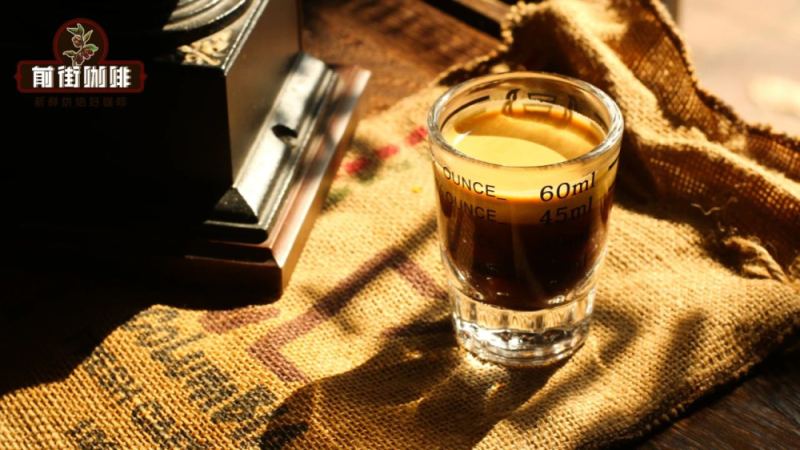
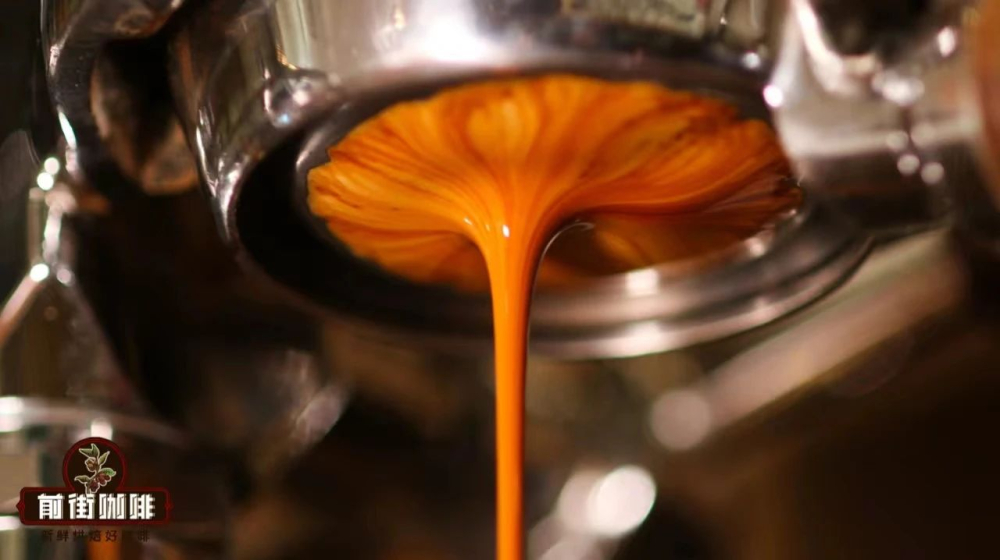
Espresso, whose English name is Espresso, is made by forcing nearly boiling high-pressure water through very finely ground coffee powder to obtain a concentrated coffee drink. Compared with other extraction methods, Espresso has a higher concentration, with greater amounts of suspended particles and dissolved solids, and its surface is covered with a layer of coffee fat—that creamy foam. Because the entire extraction process is completed under pressure, Espresso's mouthfeel is very intense and its concentration of chemical substances is also extremely high. It is often used as the base for other drinks, such as latte, cappuccino, mocha, and Americano. However, in Front Street Coffee (FrontStreet Coffee)'s stores, many coffee fans also prefer to order an Espresso directly to experience its mellow, smooth texture.
As the name suggests, Italian coffee is an Italian creation. According to Front Street Coffee (FrontStreet Coffee), Italy was very fond of that kind of rich yet bittersweet espresso at the time, while single-origin coffee beans have the problem of flavor bias, often having advantages and shortcomings at the same time. In addition, good single-origin beans are expensive, so Italians preferred to use blend beans to make espresso, and on this basis continuously developed and carried it forward to this day.
What coffee beans are used for espresso?
Front Street Coffee (FrontStreet Coffee) mentioned earlier that espresso is mainly made using Italian blend beans, because the espresso machine has a notable characteristic: it multiplies the most prominent flavor of the coffee beans. For example, Ethiopia's Yirgacheffe features citrus-lemon-like acidity, and the espresso machine will amplify this acidity; while Indonesia's Mandheling is dominated by herbal, earthy, and somewhat bitter flavors, and the machine will further intensify the bitterness.
For this reason, single-origin coffee beans are not suitable for making espresso, otherwise it is difficult to guarantee stable flavor. The blend approach is to mix coffee beans from different origins and different varieties together, usually with a combination of two to three kinds of beans being the most common. The intention of blending is clear: to bring together the flavors of different coffee beans to form a new taste experience, achieve a more balanced effect, and also serve as a signature product for the store.
For example, if a certain bean is smooth in mouthfeel but lacks aroma, another bean full of aroma can be added to make up for shortcomings and complement each other. Italian blend beans also have another practical purpose—cost control. Traditional Italian blends include Robusta coffee beans, because Robusta has a rich flavor. Although its cupping score cannot compare with single-origin beans, when paired with single-origin beans, it can bring richer, denser crema to Italian coffee, and when used as the base for milk coffee, it can also provide a thick, smooth mouthfeel.
This is also one of the reasons why Italian coffee is deeply loved by coffee fans. Coffee fruit is ultimately an agricultural product, and annual climate changes can lead to unstable flavor—perhaps sweeter this year, and not as sweet next year. Mixing several coffee beans together can effectively solve this problem, at least keeping the coffee flavor relatively consistent each year.
Next, Front Street Coffee (FrontStreet Coffee) will recommend several coffee beans suitable for making espresso .
Espresso coffee bean recommendations
Front Street Coffee (FrontStreet Coffee) Sunflower Warm Sun Blend
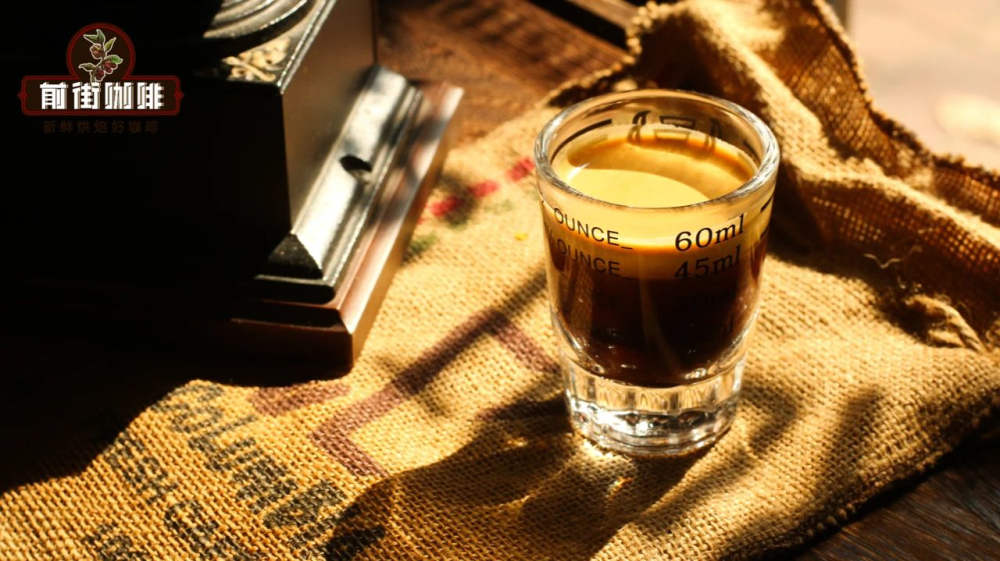
Flavor: Noticeable fruit acidity, light berry aroma, vinous aroma, rich chocolate flavor, with a clear sweet aftertaste.
Recipe: Honduras Sherry : Yirgacheffe Red Cherry = 6:4
This blend is composed of Yirgacheffe sun-dried Red Cherry and Honduras Sherry. Front Street's design idea for this bean is that it can be used for both espresso and pour-over. When extracting espresso with it, the aroma given off carries a noticeable fermented vinous note; after entering the mouth, the acidity of citrus and berries immediately emerges, accompanied by a whisky-like aroma, with a finish of dark chocolate.
When this Warm Sun Blend is brewed by pour-over instead, the richness of flavor is not as great as that of espresso. After brewing, one can perceive fermented vinous aroma and a little citrus aroma. When drunk hot, there are only obvious vinous aroma and dark chocolate finish. Only after the temperature drops does it slightly reveal the acidity of citrus and berries. Overall it is clean and fresh, without a vanilla-cream-like mouthfeel.
Front Street Coffee (FrontStreet Coffee) Specialty Blend
Flavor: Soft slight acidity, clean sweetness, nutty sweet aftertaste; overall it does not feel too pungent, is mild, and the crema is medium.
Recipe: Colombia : Brazil = 3:7
This blend uses a combination of Brazilian and Colombian beans. When tasted, there is a light roasted grassy aroma, with a slight bitterness amid the fresh fragrance, smooth and pleasant, with a comforting aftertaste. The reason is that coffee beans from Colombia's Huila region have a pleasant acidity, aromatic scent, moderate acidity, and rich, thought-provoking sweetness; coffee beans from Brazil's Cerrado region have a comfortable bittersweet taste and are extremely smooth on the palate. The combination of the two can be described as excellent.
Front Street Coffee (FrontStreet Coffee) Commercial Blend
Flavor: Caramel sweetness, nutty and cocoa-like, dark chocolate flavors, balanced acidity and sweetness, slightly bittersweet, with a lasting finish.
Recipe: Colombia : Brazil : Robusta = 3:6:1
This blend uses Brazilian and Colombian coffee beans plus 10% Robusta beans. The taste is classic. Front Street believes that this blend tastes rich in crema and caramel sweetness, and also carries nutty, cocoa-like, and dark chocolate flavors, with balanced acidity and sweetness, slight bitterness, and a lasting finish. This commercial blend, like Front Street Coffee (FrontStreet Coffee)'s Specialty Blend, uses a ratio of Colombian and Brazilian beans; the difference is the additional Robusta, thereby providing rich crema and making the coffee mouthfeel even richer. This espresso blend—Front Street Dark Cocoa Blend—recommended by many baristas, offers excellent value for money and is suitable for espresso beginners and small coffee shops.
Front Street Coffee (FrontStreet Coffee) Espresso Bean Recommended by Many Baristas—Front Street Dark Cocoa Blend
Flavor: With soft fruit acidity, caramel sweetness, nutty and dark chocolate flavors, smooth and thick, but the taste is on the lighter side.
Recipe: Yunnan : Brazil = 3:7
This blend combines Brazilian and Yunnan beans. Front Street believes that when tasted it has soft fruit acidity and caramel sweetness, as well as nutty and dark chocolate flavors, is smooth and thick, but the taste is on the lighter side. This is because Yunnan's natural conditions are very similar to Colombia's—high altitude and a large temperature difference between day and night—and its flavor is of the aromatic type, with moderate acidity, a rich and mellow taste, uniform particles, high oil content, and fruity fragrance. Its quality and mouthfeel are close to Colombian coffee, but the taste is still slightly lighter. Coffee beans from Brazil's Cerrado region have a comfortable bittersweet taste and are extremely smooth on the palate. Therefore, the flavor of these two beans mixed together is also quite good. This espresso coffee bean recommended by many baristas—Front Street Dark Cocoa Blend—is very cost-effective and suitable for espresso beginners and small coffee shops.
How to drink espresso?
Now that we understand how to choose espresso coffee beans, let's return to the main topic: how exactly should espresso be drunk ? Front Street Coffee (FrontStreet Coffee) mentioned earlier that Espresso is mainly used as the base for Italian coffee, and of course it can also be drunk on its own. In addition, there is another common way to drink it, which is the Americano seen everywhere on the market—the method is to prepare a cup of ice water or hot water, pour in Espresso, and stir evenly, and a cup of Americano is complete. In other words, there are three common ways to drink Espresso.
1. Drink it straight: the flavor is mellow and smooth, relatively intense.
2. Drink it with milk: make creative coffee; the warm sensation blending in the mouth gradually gives off the aroma of espresso.
3. Drink it with water: that is, Americano black coffee, which tastes relatively refreshing.
Espresso has a characteristic: after extraction is completed, as the coffee liquid gradually settles, the crema on top covers the surface, and the coffee begins to form layers in the cup. Therefore, Front Street Coffee (FrontStreet Coffee) suggests stirring it before tasting, so that all the layered soluble substances in the espresso are recombined, thereby obtaining a more balanced and complete flavor experience. After stirring and letting the coffee temperature drop slightly, it helps further release the coffee's flavor and avoids tasting overly strong bitterness in the first sip.
Second, the high concentration created by Front Street Coffee (FrontStreet Coffee) through a low powder-to-water ratio and high-pressure extraction also makes espresso taste rich and intense. In addition, because espresso is extracted under high pressure, it produces its unique product "crema"/"Crema," which also provides espresso with a unique mouthfeel experience. So when drinking espresso, coffee lovers are more inclined to taste its touch, mouthfeel, aroma, and finish, plus a few obvious flavors.
The above is the experience and knowledge compiled by Front Street Coffee (FrontStreet Coffee) on how to taste espresso. In the text above, Front Street Coffee (FrontStreet Coffee) also mentioned that espresso is often widely used to make fancy milk coffee, so next Front Street Coffee (FrontStreet Coffee) will share the preparation process of latte.
Latte preparation ratio
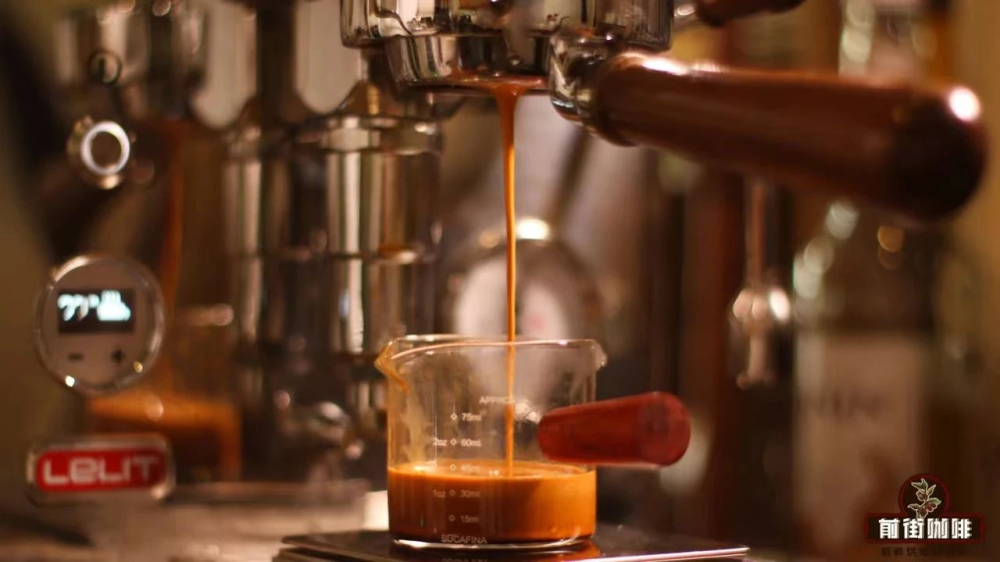
Front Street uses the Flying Horse E98 espresso machine, and the extraction parameters are as follows:
Pressure: 9 bar
Temperature: 90.5~96°C
Time: 20~30 sec
Powder-to-water ratio: 1:1.7~1:2
Dose: 12g (single espresso) 20g (double espresso)
Extracted espresso yield: 20ml (single) 40ml (double)
Front Street uses double espresso to make latte, using Front Street Coffee (FrontStreet Coffee) Sunflower Blend coffee beans. After extraction, the flavor profile is: noticeable fruit acidity, a light berry aroma lingering, rich vinous aroma and chocolate flavor, and a comfortable sweet finish.
Milk: whole fresh milk (Front Street uses Vitasoy fresh milk)
Milk steaming temperature: 50-60°C (too low a temperature cannot stimulate the release of lactose in milk; too high a temperature will destroy the protein in milk, resulting in a grainy mouthfeel)
Milk foam thickness: 1 cm (milk foam thinner than 1 cm is for making flat white; milk foam thicker than 1 cm is for making cappuccino)
Recommended ratio for hot latte
Front Street recommends a coffee-to-milk ratio of 1:6.5 for making latte, 40ml espresso : 260ml hot milk. By pouring the milk in a circular motion to fully integrate it with the espresso, a cup of hot latte is obtained. After fresh milk is heated, the sweetness molecules from lactose are better released. Once evenly mixed with espresso, the entire latte naturally carries the sweetness of milk without stealing the spotlight from the espresso; instead, against the backdrop of milk, the flavor of the espresso is even more evident. Front Street's hot latte flavor profile is: whisky vinous aroma, lactose and coffee acidity colliding to create a milkshake-like sweetness, with a finish reminiscent of hazelnut and other nuts.
For more specialty coffee beans, please add private WeChat Front Street Coffee (FrontStreet Coffee), WeChat ID: kaixinguoguo0925
The above content is compiled by CoffeeHunters, a coffee news website.


