







Where did coffee originate, and how do you start pour-over brewing?
Pour-over brewing comes down to four controls: water temperature, grind size, coffee-to-water ratio, and pouring technique. Light-to-medium roasts brew well between 91 and 93°C, while medium-dark roasts work better at 86 to 88°C. Five classic methods, including the three-stage pour, stir-and-bloom, Japanese drip, one-cut, and volcano pour, cover most beginner needs.
Getting these variables to line up is what separates a café cup from a home one, and the roasting process behind the beans sets the starting point for temperature and grind choices. For anyone curious about where did coffee originate, the short answer is Ethiopia, from which the plant spread to Yemen and beyond.
The charm of pour-over coffee lies in having every step under your own control, yet many enthusiasts feel that their home brews always fall short of the taste they get in a café. In this article, Front Street Coffee explains four dimensions—water temperature, grind size, coffee-to-water ratio, and pouring technique—and introduces five classic pour-over methods in detail: the three-stage pour, the stir-and-bloom method, the Japanese drip method, the one-cut pour, and the volcano pour. It also analyzes the causes of failed extractions and directions for improvement. Whether you are a beginner just starting out or a veteran looking to refine your technique, you will find practical guidance here.
With the rise of the third wave of coffee, pour-over coffee has grown increasingly popular. From the perspective of the folks at Front Street, holding the gooseneck kettle and completing each pour by hand carries a unique sense of ritual in itself. However, many friends report that no matter how they brew at home, they just can't reproduce that cup from the café—yet they can't quite pinpoint whether the problem lies in the bloom time, the grind setting, the pouring technique, or the water temperature. So how do you make a satisfying cup of coffee? Below, Front Street Coffee (FrontStreet Coffee) will walk you through four aspects one by one: water temperature, grind size, coffee-to-water ratio, and pouring technique.
Water Temperature
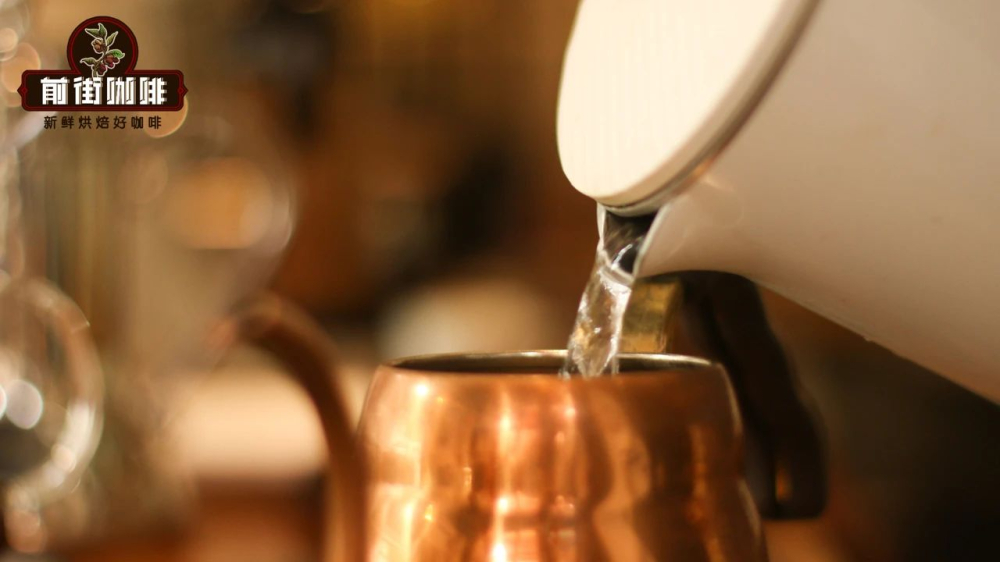
The higher the water temperature, the stronger the extraction power, and the coffee tends toward bitterness with a more intense mouthfeel; when the water temperature is lower, extraction power weakens, and the coffee tends to show acidity with a mild, light mouthfeel. The pour-over water temperature needs to be set according to the roast level of the coffee beans: for light-to-medium roasts, it is recommended to keep it between 91 and 93°C, while for medium-dark roasts, 86 to 88°C is suggested. Front Street Coffee's daily brewing basically fine-tunes within this temperature range. A customer once expressed doubt about this temperature range, so Front Street brewed a dark-roasted Golden Mandheling with 86°C water—and the resulting cup was so intense it could almost be compared to an espresso.
Generally speaking, darker-roasted beans are suited to lower water temperatures, while lighter-roasted beans are suited to higher water temperatures. A special reminder here: if you use high-temperature water to brew dark-roasted beans, or low-temperature water to brew light-roasted beans, neither will produce an ideal flavor.
Pour-Over Coffee Grind Size
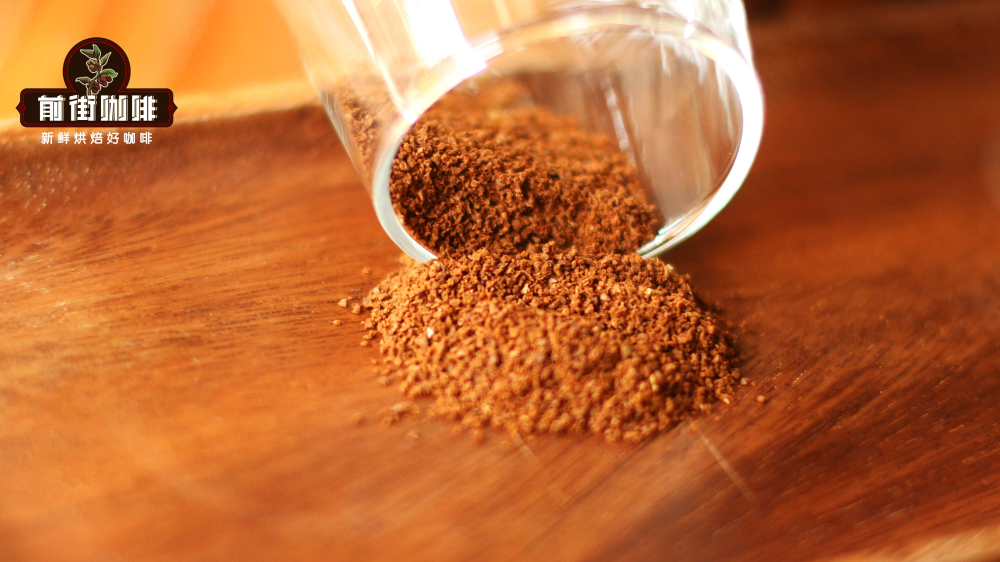
Grind size refers to the coarseness or fineness of the coffee particles, and it directly affects how long the coffee stays in contact with the water. The finer the coffee is ground, the more substances water can extract in the same amount of time—but grinding too fine easily leads to over-extraction. Conversely, the coarser the grind, the fewer substances are extracted in the same amount of time, but it can also cause under-extraction. Front Street Coffee's approach is to use an 80% pass rate through a Chinese standard No. 20 sieve as the baseline for pour-over grind size—a value determined through repeated taste testing. Keep in mind that different coffee beans require different grind sizes, so when the pour-over flavor is off, it's worth checking first whether the grind size is appropriate.
The finer the coffee is ground, the larger the surface area, which means the extraction speed will correspondingly increase. Front Street's advice: if you usually brew medium-roast beans and now switch to light-roast beans, you can adjust the setting finer; likewise, if you usually brew light roasts and switch to dark-roast beans, you should adjust the grind slightly coarser.
Coffee-to-Water Ratio
The coffee-to-water ratio refers to the proportional relationship between coffee grounds and brewing water. It determines how strong or weak the coffee is, with common ratios including 1:10, 1:13, 1:15, and 1:16. Front Street recommends a 1:15 ratio, which is relatively balanced in both strength and mouthfeel. Of course, everyone's preference for coffee taste differs, so when brewing you can absolutely adjust the ratio according to how strong or light you want it.
Pour-Over Coffee Techniques
1. Three-Stage Pouring Technique
Pour-over coffee offers a rich variety of pouring methods, including the three-stage pour, the one-cut pour, the drip method, the volcano pour, the stirring method, and more. Front Street Coffee recommends that those new to pour-over use the three-stage pouring method, which is suitable for light-roast, light-to-medium-roast, and medium-roast coffee beans. The staged extraction of the three-stage pour can clearly distinguish the front, middle, and back notes of the coffee, offering a relatively reliable way to present the coffee's flavor in full.
First Pour: Bloom (Helps Release Gas)
The roasting process that turns green coffee beans into roasted beans involves a series of chemical reactions and physical changes. Once roasting reaches a certain point, a large amount of gas (most of it carbon dioxide) accumulates inside the beans.
Generally speaking, the fresher the coffee beans and the closer they are to the roast date, the more pronounced the bubbling during the bloom. Dark-roasted beans also tend to release more gas during the bloom than light-roasted beans, so if you want a beautiful domed bloom, you might prioritize Front Street PWN Golden Mandheling, Front Street Blue Mountain, or Front Street Brazil Cerrado. Front Street's coffee beans are all freshly roasted, and customers are usually advised to rest the beans for three days first to let the carbon dioxide release, which avoids instability and under-extraction during brewing.
Only after the bloom releases gas can the coffee particles absorb water evenly, and only then can the subsequent extraction remain consistent. An ideal bloom allows the coffee grounds to degas quickly and thoroughly while also letting them come into contact with water fully and rapidly, helping achieve even extraction.
During the bloom, pay attention to the following four points:
1. Before pouring for the bloom, first level the coffee grounds.
2. When pouring for the bloom, use gentle motions.
3. During the bloom, as little extracted liquid as possible should flow into the lower server; if too much liquid appears in the server, reduce the amount of water poured or check the grind size. (If too much water is used for the bloom, a large amount of coffee liquid will drip down—the water doesn't linger in the coffee bed but instead directly carries out substances from the outside of the grounds, and the off-flavors and astringency on the outer layer of the grounds begin to dissolve out, resulting in coffee that is both weak and carries over-extracted off-flavors. If too little water is used for the bloom, with no drips falling at all, it means the grounds haven't absorbed enough water and some coffee hasn't degassed sufficiently, which will cause under-extraction.) To address this, after many bloom experiments, Front Street found that pouring water equal to twice the weight of the coffee grounds is relatively appropriate.
4. The bloom time is roughly between 30 and 40 seconds. When the expansion on the surface of the coffee grounds ends and you can see the coffee surface begin to wrinkle and shrink, that means the bloom is complete and you can begin the next pour. (If the bloom time is too long, the coffee easily develops bitterness and astringency; if too short, the soak is insufficient, and the coffee may be under-extracted or its flavors may not fully emerge.) Usually the bloom end time varies somewhat from bean to bean, but Front Street found this unfavorable for beginners to operate—after all, beginners need standardization and ease of use. Therefore, on the premise that the coffee beans are freshly roasted, Front Street recommends a uniform bloom time of 30 seconds, and those with experience can adjust it themselves.
Second Pour
The second pour starts from the center, with a small stream injected toward the bottom of the coffee bed. To make the stream's penetration more concentrated, keep the circling motion small—about the size of a one-yuan coin—then spiral outward. From the second pour onward, pay attention to the water level, trying not to exceed the height of the coffee bed; that is, when the stream circles close to the edge of the filter paper, you can stop pouring.
Third Pour
The coffee bed that was originally thicker at the edge of the filter paper becomes heavier as it absorbs water, and as the water level drops it slides down and thins out. When the water level drops by half, you can proceed with the third pour. From the third pour onward, observe the extent of the water level drop, and again start circling from the center, keeping the water level below the height of the coffee bed. At this point you will also notice that foam has covered the surface. The third pour should increase the tumbling of the coffee particles, getting all the settled particles moving so that soluble substances dissolve out.
The tumbling particles gradually come to rest once you stop adding water, and at that point you rely on the flow rate created by the dropping water level to create friction between the coffee particles. So once you stop adding water, the coffee particles will sink and cause clogging, which is why you must pay special attention to the rhythm of pouring. If you break the pour too many times, it's essentially letting the coffee grounds sit in water the whole time, which leads to astringency and off-flavors in the final stage of extraction.
Causes of Extraction Failure and How to Improve
If you don't follow the key extraction points, failure comes easily. For example, coffee grounds that aren't fresh enough won't expand and can't bloom properly. If the grind is too coarse, hot water will drain through too quickly; if the particles are too fine, they will clog the dripper and produce coffee with strong astringency. If the grind is uneven, the flavor components entering the hot water will also be uneven, making it hard to brew an ideal taste.
When controlling flavor, you must also pay close attention to the hot water temperature—you can't rely on visual estimation alone; you must measure precisely with a thermometer, and this is the key to success. Keeping the filtration layer intact is especially important; otherwise, hot water will drip through before the components are fully extracted, producing weak, flavorless coffee. In the latter half of extraction, the proportion of unnecessary components increases, so you need to work quickly to reduce the extraction of unnecessary components.
Front Street Coffee will demonstrate the brewing using Front Street Colombia Sidra coffee as an example.
Take Front Street Colombia Sidra coffee beans as an example. This is a single-origin coffee from Finca La Línea in the Huila region, grown at an altitude of 1,700 meters and processed using double anaerobic natural method. Once ground into coffee powder, it has a very intense aroma of grapes, passion fruit, and citrus; brewed as black coffee, it has a rich and clear grape-juice character.
If you like coffee beans with this kind of flavor, you might also consider Front Street Colombia Ombligon, Front Street Strawberry Candy · Geisha Blend, and Front Street Blackberry.
2. The Stir-and-Bloom Method Popular in Europe and America
Suitable for light-roasted coffee beans
The European-American stirring method: during the bloom stage, use a stirring stick to do a cross-shaped stir. It is also a branch of the three-stage method, developed as a pour-over technique after Matt Perger, the 2012 World Brewers Cup champion. This approach can effectively enhance the release of aromatic substances in the coffee beans, amplify the beans' flavor strengths, and strengthen the coffee's mouthfeel so it doesn't feel too thin.
The stirring method places high demands on coffee bean quality. If you use inferior coffee beans, it will instead amplify their undesirable flavors. In addition, the stir-and-bloom method is better suited to brewing light-roasted coffee beans, and a relatively fine grind is often used, which increases the water contact area of the coffee grounds and raises the extraction rate. But if the degree of stirring isn't well controlled, it can easily cause over-extraction.
Therefore, we also recommend pairing it with pour-over equipment known for fast extraction. The Hario V60 dripper uses alternating long and short spiral extraction ribs, which increases the flow rate; the cloud-like design of the Hario Buono kettle, with its wide base, provides a stronger penetrating force to the poured stream, keeping the fine particles tumbling for a longer time. This point is crucial, because while the coffee grounds are tumbling, the release of internal substances is paused, which avoids extracting off-flavors along with everything else due to prolonged soaking.
3. Japanese Drip Pouring Method
Suitable for medium-roast or darker-roasted coffee beans
The drip pouring method is also called essence-style extraction: the drip method uses a weak stream, disturbing the coffee bed as little as possible, reducing convection, and increasing soak time. Coffee made with this Japanese technique has high body, high sweetness, is rich and smooth, and has a distinct texture.
Since the pour-over kettle needs to produce water one drop at a time, it's suitable to choose a flat-cut wide-mouth spout or a wide-mouth gooseneck kettle. The advantage of these kettles is that the thickness of the stream is highly controllable, making them better suited to the drip pouring method. Used together with Kono's conical dripper—whose ribs stop before reaching half the height of the dripper, a design that lets the filter paper cling fully to the wall after absorbing water and greatly limits the space for air to escape—this method is better suited to medium-roast or darker-roasted coffee beans.
At the start of pouring, we use drop-by-drop pouring, which increases soak time and, at a low coffee-to-water ratio, lets the coffee grounds expand fully without producing any off-flavors. After that, we pour with a fine stream and then a coarser stream to extract the floral and fruity notes of the coffee's front end. The whole process takes about 4 to 5 minutes.
4. One-Cut Pouring Technique
As the name suggests, the one-cut pour means doing only one uninterrupted pour after the bloom. After the bloom ends, one uninterrupted pour keeps the coffee grounds continuously soaked in water; the retained liquid fully releases the aromatic substances within the grounds, the flow rate continuously increases, and you reduce the stream before the water level rises above the dripper. This technique mainly controls the amount of water and the flow rate—you need to know when to pour to achieve the full range without losing balance. An inappropriate pouring method will disrupt the coffee's overall balance.
The main advantage of this approach is that it maintains a gentle flavor and a sense of balance. The less ideal aspect is that if the pouring technique isn't well controlled, water passes through the upper part where there are no coffee grounds and falls along the edge of the filter paper, and the resulting coffee may taste watery.
5. Volcano Pouring Technique
The "volcano pour" technique originates from Japan and is suitable for dark-roasted coffee beans, because these beans contain more carbon dioxide. By using the carbon dioxide in the beans through multiple blooms, the coffee grounds puff up like a volcanic eruption. The "volcano pour" mostly uses a flannel filter cloth and a V60 dripper for brewing. Because the coffee bed is thicker in the middle, water is poured into the center of the grounds, at a spot about the size of a one-yuan coin. The first half focuses on fully extracting without disturbing the coffee bed, while the second half pours evenly to prevent over-extraction of the coffee grounds in the middle while also diluting the brew.
Pros: The coffee has a thick mouthfeel and a pronounced sweet aftertaste.
Cons: The first half is over-extracted and the second half is under-extracted, making the coffee liquid uneven; it needs to be thoroughly swirled after brewing to blend into a perfect cup. But swirling lowers the coffee's temperature, and if you use high-temperature extraction to maintain temperature, it will make the coffee dry and astringent.
The above content is compiled by CoffeeHunters, a coffee news website.


