







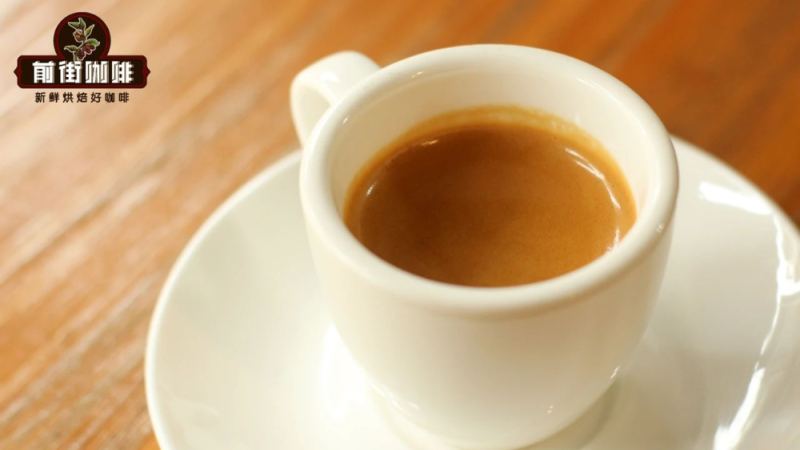
A proper espresso is the foundation of the entire Italian coffee system. From bean selection and resting, hopper management, and grind size adjustment, to dosing, distribution, tamping, and extraction time control, every step influences the final flavor. Using Yirgacheffe Red Cherry paired with Honduras Sherry Barrel blend beans as an example, Front Street Coffee has put together a reusable extraction calibration approach: too fine a grind tastes bitter, too coarse tastes sour, and the portafilter basket temperature, tamping pressure, and flow rate together determine balance. This article presents the full set of output parameters—20g dose extracting 40ml, 9 bar pressure, 20–30 seconds—to help enthusiasts build a stable espresso extraction framework.
For more specialty coffee knowledge, please follow: Front Street Coffee ( Frontsteet Coffee )
Italy's coffee tradition occupies a pivotal position in the industry—this is hard to deny—this long-standing and richly connoted coffee system has long been accepted and loved around the world. The many espresso drinks derived from it are equally renowned, so Front Street has always held respect for the people and countries that have contributed to the coffee industry. The fact that Italian coffee has become a global beverage naturally speaks to its charm, and all of it comes down to a cup that seems simple yet is full of tension: espresso. It is the highly concentrated essence of coffee, and even if you don't favor this taste, you cannot deny this fact—this is precisely the root and continuation of Italian coffee. If you want to understand how an ideal espresso should be made, follow along with Front Street below.
The History of Espresso
Espresso means "fast" in Italian, referring to extraction completed under high pressure in a short time. It originated in Italy and is ranked alongside "fashion and food" as one of Italy's three national treasures. The espresso first invented tasted bitter and carried a burnt note; it was not until the 1940s that its taste and quality were thoroughly improved and elevated. In China, different names such as concentrated coffee, Italian espresso, and aromatic coffee all actually refer to Espresso.
Next, Front Street will explain in detail how to make a good espresso.
First, choose fresh espresso beans that have rested for the proper amount of time.
Espresso beans generally use a blend, and incorporating a certain proportion of Robusta beans can bring a richer crema. Front Street Coffee (FrontStreet Coffee) uses single-origin natural-process Yirgacheffe Red Cherry, paired with single-origin Honduras whiskey-barrel-fermented Sherry, highlighting wine aroma and fruity acidity. In freshly roasted coffee beans, about 2% of their weight is carbon dioxide; these gases gradually escape depending on the storage environment, equipment, or method, making the pressure inside the packaging higher than one atmosphere, and this pressure helps aromatic substances merge with oils, bringing the aromatic substances inside the beans into a state that is easy to extract. Resting beans is the process of "gas release," also called awakening, resting, or maturation.
For resting, simply keep the original packaging unopened and place it in a cool, dry place, allowing the coffee beans to release gas on their own through the one-way degassing valve on the bag. If espresso beans are too fresh and degassing vigorously, channeling is likely to occur, and the resulting espresso will be unstable. To get a stable espresso, you can choose espresso beans that have rested for about ten days.
1. Refill the hopper
Through experiments, Front Street Coffee (FrontStreet Coffee) found that the amount of coffee beans in the grinder hopper does indeed have a slight effect on espresso. This effect comes from the gravity of the coffee beans: when the hopper is full, the beans at the burrs are in a compressed state and are cut evenly and tightly; as the bean quantity decreases, the weight from above borne by the beans at the burrs drops, making them looser than when the hopper is full, so the same volume of beans is cut fewer times, and the grind therefore becomes slightly coarser.
2. Clean the grinder
On one hand, reduce excessive coffee grounds left inside the grinder so they do not interfere with the next espresso extraction. On the other hand, it is to allow the coffee beans to produce more carbon dioxide to withstand the high-pressure environment during extraction by the espresso machine. Most espresso beans are roasted darker, which also makes the beans prone to oiling, and these oils remaining in the grinder will likewise affect the coffee's taste. Regularly maintaining the grinder not only extends the machine's lifespan but also better ensures consistency in coffee flavor.
3. Adjust the grind size
Properly adjusting the grinder helps keep espresso output stable. Regarding espresso grind size, it is not a matter of fixing it at a certain setting and being done with it; it is affected by air temperature, atmospheric pressure, temperature, storage time, and, when switching between old and new beans, different roasting times, different bean batches, and different resting times, causing extraction conditions to vary. There is another point: continuous brewing and extraction of espresso also brings changes in grind size, so making espresso requires fine-tuning the grind according to the actual extraction situation. The finer the espresso grind particles, the longer the extraction time tends to be, the taste tends toward burnt bitterness, and over-extraction is easy, so it is recommended to adjust coarser; conversely, the coarser the particles, the shorter the extraction time tends to be, the taste tends toward sourness, and under-extraction is easy, so it is recommended to adjust finer.
Front Street would like to remind you here that when the grinder runs continuously for more than 3 minutes, the burrs will overheat from prolonged operation, and overheated burrs will affect the flavor of the coffee beans being ground; at the same time, prolonged operation generates a large amount of static electricity, which also affects grind uniformity. At this point, stop the grinder for 1 minute to give the burrs time to cool down.
4. The portafilter basket should be at room temperature!
Through experiments, Front Street believes that when the portafilter basket is at room temperature, the extraction of espresso can very well reach the standards for concentration and extraction yield. A high-temperature basket accelerates the volatilization rate of flavor molecules in the coffee grounds, greatly reducing extractable flavor substances; when producing drinks in daily work, locking in the handle and extracting immediately is likewise to reduce the high temperature of the group head accelerating the volatilization of flavor molecules in the puck. But if the basket is at a low temperature, the low temperature cannot evenly extract the flavor substances in the coffee, and the concentration and extraction yield instead become lower.
4. Dosing
After the espresso beans' grind is adjusted, keep distributing the grounds at a constant rate while rotating the handle at a constant rate. Do not underestimate the dosing step: uneven dosing will greatly mislead and affect the subsequent distribution step; uneven density distribution in the coffee bed will cause the puck thickness to be inconsistent, and during extraction the hot water will pass through different positions at different speeds, and with the slightest carelessness, perforation is likely to occur, causing part of the puck to be under-extracted and part to be over-extracted, so the coffee tastes unstable every time. If you pay attention to how the coffee grounds fall, you will probably find that the grounds do not fall completely vertically; under the influence of lateral acceleration, the coffee bed will still show a certain degree of bias. This is when we need to keep distributing the grounds at a constant rate while rotating the handle at a constant rate.
5. Distribution
Common distribution tools can usually be adjusted in height. Before distributing, determine the appropriate height based on the dose. If the distribution tool is too far from the surface of the coffee bed, it will hit the raised parts and move grounds into the hollows; if it is too close, it will press onto the coffee bed, and such pressure is not necessarily even.
6. Tamping
The direction of tamping: straight down. The direction of tamping may be more complicated than we imagine: straight down. If you tamp at an angle, the high-temperature, high-pressure hot water coming from the group head will seek the layer with the least resistance to penetrate, causing uneven extraction.
The force of tamping needs to be determined by the coarseness of the coffee grind, with the reference being the coffee's flow rate during extraction (extraction time 25±3 seconds). If the flow rate is too fast, it indicates the tamping force is too light; if the flow rate is too slow, it indicates the tamping force is too heavy, and these directly affect the finished espresso and the coffee's mouthfeel. To reduce espresso instability caused by differences in tamping force each time, Front Street Coffee (FrontStreet Coffee) recommends using a calibrated tamper for tamping.
7. Extracting the coffee liquid
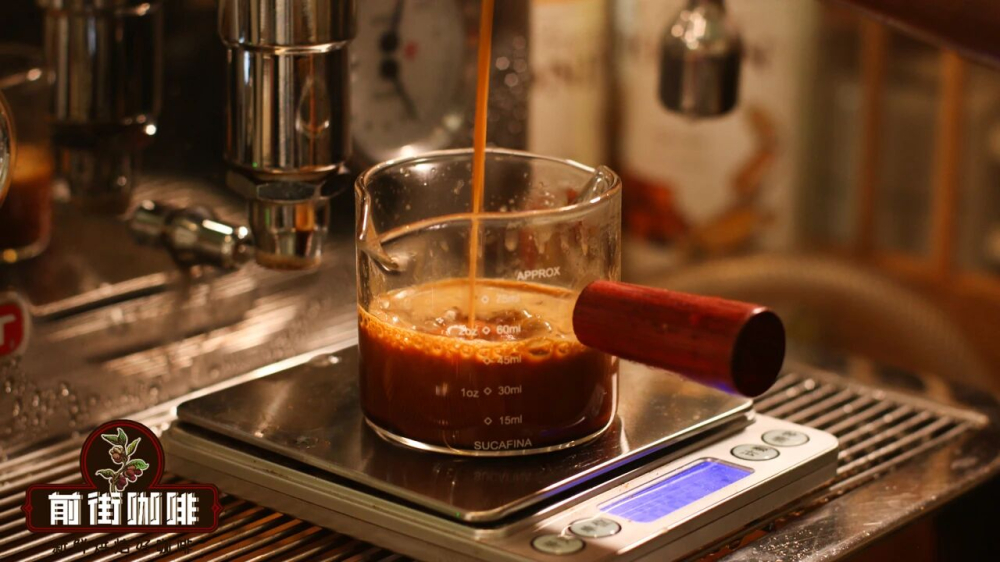
The extraction time is between 20 and 30 seconds; generally, a reasonable extraction time is between 20 and 30 seconds (without first considering extraction extended by other factors). The moment you stop extraction is also an important factor determining the final taste of a cup of espresso. A relatively standard espresso should achieve balance among flavors, with a smooth mouthfeel, a sweet and mellow impression on the first sip without bitterness, moderate acidity, bitterness, and sweetness, and a solid aromatic richness.
Front Street Coffee (FrontStreet Coffee) currently uses a blend of coffee beans processed with sherry barrels and natural-process Yirgacheffe Red Cherry Plan to make espresso. Sixty percent Honduras sherry barrel coffee beans provide flavor and body for this blend, while forty percent natural Yirgacheffe provides more aroma and acidity.
Front Street espresso extraction parameters:
Grinder: Fly Horse 900N
Grind size: 1.6
Pressure: 9 bar
Temperature: 90.5–96°C
Time: 20–30 sec
Dose: 20g (double espresso)
Extraction yield: 40ml
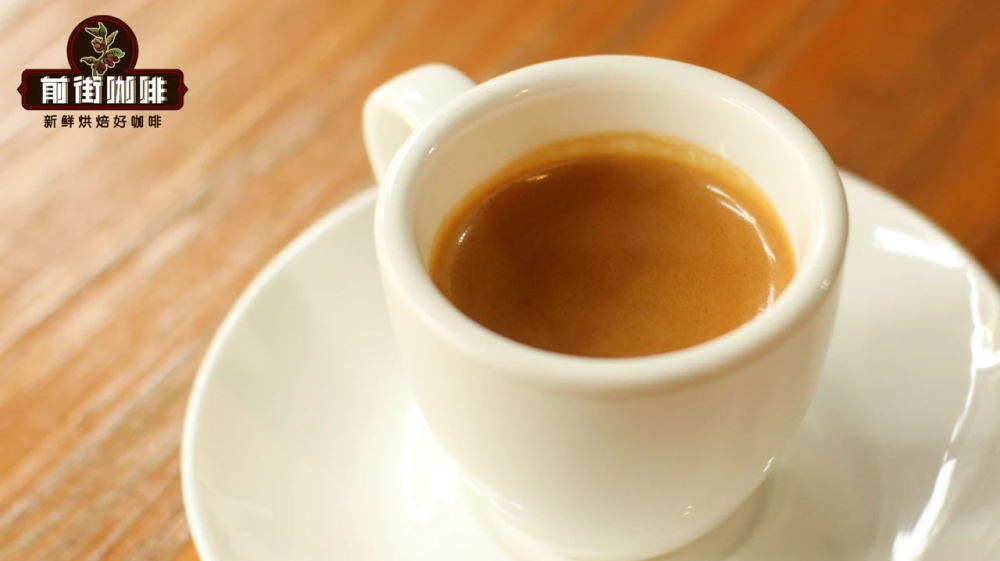
Extracted espresso flavor: smooth mouthfeel, medium body, obvious fruity acidity on entry accompanied by a faint berry aroma, whiskey aroma, rich chocolate flavor, and a clear sweet aftertaste.
For more specialty coffee knowledge, please follow: Front Street Coffee ( Frontsteet Coffee )
The above content is compiled by CoffeeHunters, a coffee news website.


