







Are Blue Mountain No. 1 Coffee Beans Really the Most Expensive?
Blue Mountain No. 1 earns its reputation from balance rather than intensity: sweet, sour, and bitter notes sit close together, which makes it a useful benchmark for a good cup. Its price comes from scarce supply, strict CIB production region rules, and the top grade standard, not from being the single costliest coffee on the market.
Japan long held priority purchasing rights, taking about 80 percent of Blue Mountain output, so little authentic coffee reached other markets. The 2008 downturn, the 2012 leaf rust outbreak, and 2015 forest fires all cut supply further. Certificates, Clifton Estate background, Typica variety, and washed processing are the practical checks for authenticity.
Blue Mountain No. 1 coffee is often asked whether it is the best-tasting and most expensive coffee. Front Street Coffee believes that the balanced sweet, sour, and bitter flavor of Blue Mountain coffee is enough to define the standard of a good cup of coffee. This article will review the historical ups and downs of Blue Mountain coffee—from Japan's priority purchasing rights to the severe blows of the 2008 economic crisis, leaf rust disease, and forest fires—and analyze the reasons for its high price and true value. At the same time, Front Street will share how to identify authentic Blue Mountain No. 1: CIB production region regulations, NO.1 grade standards, three types of certificates, the background of Clifton Estate, Typica variety characteristics, washed processing method, as well as Front Street's roasting curve and brewing parameters.
For more specialty coffee knowledge, please follow the WeChat public account: FrontStreet Coffee
FrontStreet Coffee often encounters customers asking: Is Blue Mountain No. 1 coffee worthy of being called the best-tasting coffee? Is it the most expensive coffee? Front Street has always believed that the deliciousness of Blue Mountain coffee is beyond doubt, and its balanced sweet, sour, and bitter flavor can fully serve as the benchmark for judging a high-quality cup of coffee. So, is Blue Mountain No. 1 still that most expensive cup of coffee?
In an era when the specialty coffee market was not yet mature, Blue Mountain coffee beans were the most widely known representative of specialty coffee. At that time, influenced by Western culture, coffee had already become a daily household beverage in Japan. Japan was long the largest buyer of Blue Mountain coffee and had priority purchasing rights, with about 80% of Blue Mountain coffee sold to Japan and the remaining 20% flowing to other regions around the world. Authentic Blue Mountain coffee that could truly enter the Chinese market was extremely scarce, even rare. Therefore, in that period, drinking an authentic cup of Blue Mountain coffee in China was quite a luxurious experience.
In the 2008 economic downturn, Japanese buyers withdrew, and Blue Mountain coffee then suffered successive natural disasters, including the 2012 leaf rust outbreak and the 2015 forest fires, and the industry was severely hit. The high price of Blue Mountain coffee stems from Jamaica's limited planting area and low production, and the continuous disasters made matters worse. However, Blue Mountain is not the most expensive coffee. With the development of the specialty coffee market, more and more coffee beans participate in green bean competitions, and because competition batches have low production, these beans often fetch astonishingly high prices. As for exactly how expensive they can be, Front Street will not discuss it here.
Why did Japan once have priority purchasing rights?
The Jamaican government established the Jamaica Coffee Industry Board (CIB) in 1950. This committee sets coffee quality standards and supervises their implementation to ensure the quality of Jamaican coffee. The committee issues special official seals for exported green beans and roasted beans. Because Japanese loans were used to improve production quality, the market was stabilized. It was not until 2009 that Jamaica terminated Japan's priority purchasing rights, and in April 2011, the first batch of Blue Mountain No. 1 coffee arrived in mainland China.
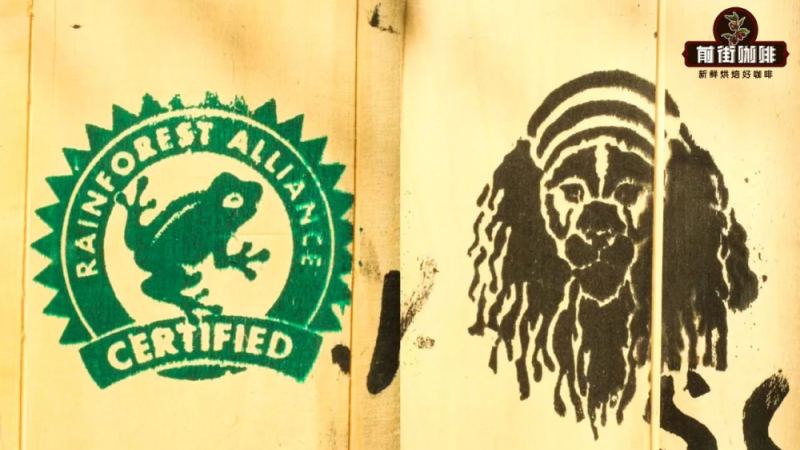
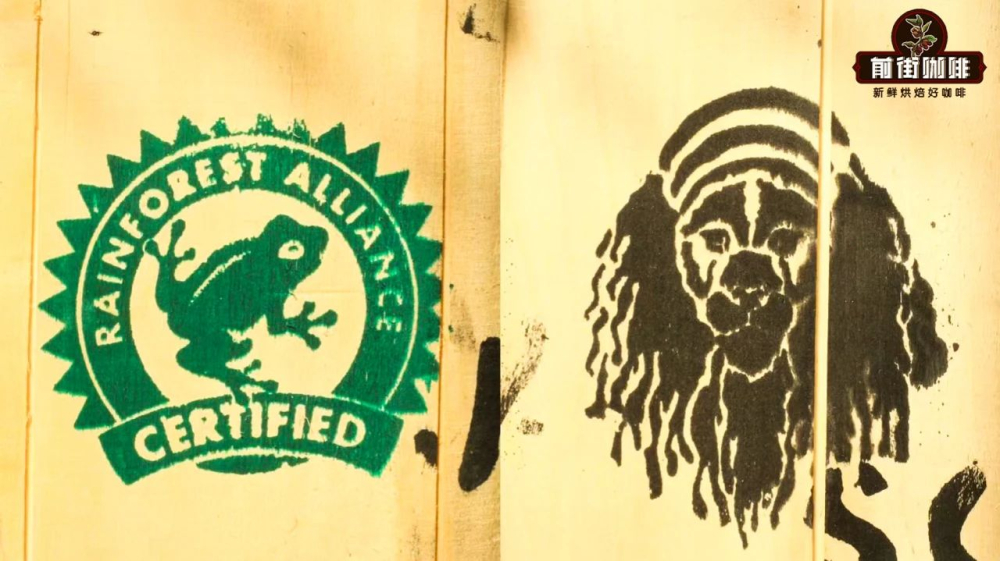
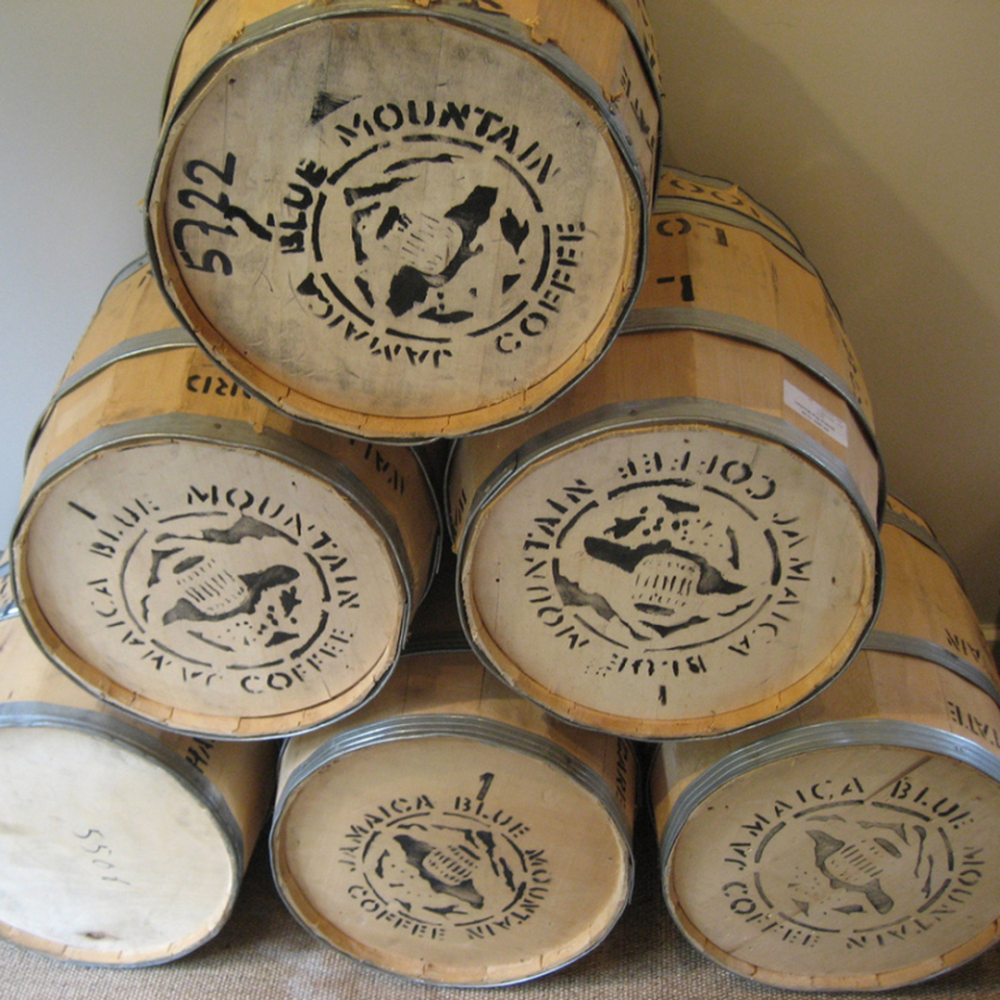
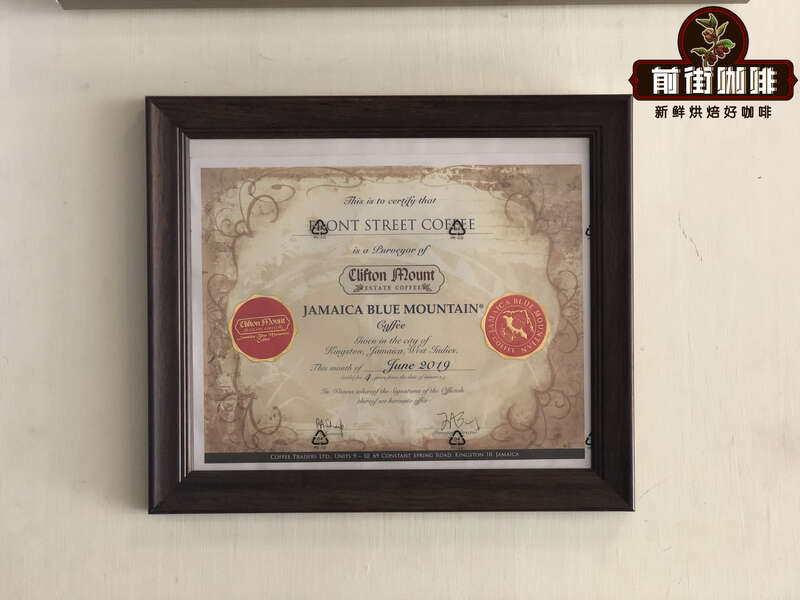
In order for customers to taste authentic Blue Mountain No. 1, FrontStreet Coffee specially selected Blue Mountain coffee beans from the oldest Clifton Estate, exported by a company designated by the National Coffee Board, loaded in wooden barrels as green beans, and with Rainforest certification.
Why does Front Street dare to say that the Blue Mountain coffee we selected is authentic? Next, Front Street will discuss how to identify authentic Blue Mountain No. 1.
CIB regulations stipulate that only coffee beans produced in designated production areas above 2,200 feet above sea level in Jamaica's Blue Mountains can be called Jamaican Blue Mountain. According to bean size, they are divided into NO.1, NO.2, NO.3, and hand-selected PB. Among them, the basic standards for NO.1 Blue Mountain green beans are: above 17 mesh, defect rate below 3%, moisture content about 13%, etc. Currently, the Jamaican Coffee Board can issue certificates for all exported Blue Mountain coffee.
Certificates are divided into three types:
(1) Quality certificate issued by the Jamaican Coffee Board
(2) Authorized sales certificate issued by the Blue Mountain coffee manufacturer.
(Blue Mountain coffee is distributed by 4 processing manufacturers licensed by the Jamaican government, and exported by 16 licensed exporters)
(3) Certificate of origin for Jamaican Blue Mountain coffee
What is the designated Jamaican Blue Mountain growing region?
Jamaican Blue Mountain coffee can only be grown in the Blue Mountains. The Blue Mountains are located in eastern Jamaica, at an altitude of 1,000-1,700 meters. Only Blue Mountain coffee grown in this area is authentic Blue Mountain coffee. The mountain is surrounded by the Caribbean Sea. On clear days, sunlight shines directly on the azure sea, and the peaks reflect the brilliant blue glow of the seawater, hence the name. The Blue Mountains are located in the coffee-growing belt and have fertile volcanic soil, fresh and pollution-free air, a humid climate, and are foggy and rainy all year round (average precipitation 1,980 mm, temperature about 27°C). This climate has created the world-renowned Jamaican Blue Mountain coffee.
The local area uses a mixed planting method, with coffee trees growing alongside banana trees and avocado trees in terraces. The terrain is rugged and uneven (all coffee trees are planted on rugged slopes), making the picking process extremely difficult, and only skilled local female workers can handle it. When picking, selecting coffee cherries that are just right in ripeness is also crucial; underripe or overripe cherries will affect coffee quality.
Clifton Estate
Clifton Mount is the oldest coffee-producing site in Jamaica that is still in normal operation, at an altitude of 1,310 meters, and it is the only Clifton farm in Jamaica with the "Rainforest" mark. Clifton Mount is the oldest coffee-producing site in Jamaica that is still in normal operation, and it is the only Clifton farm in Jamaica with the "Rainforest" mark.
As early as the mid-eighteenth century (roughly around 1750), Clifton Farm began growing and producing coffee. As early as the mid-eighteenth century (roughly around 1750), Clifton Farm began growing and producing coffee. The Blue Mountain area is a small place with only 6,000 hectares of planting area, and it is impossible for all coffee labeled "Blue Mountain" to be grown there. Today's Clifton Farm is the largest estate in this area, and by international standards it is still considered small-scale planting. Many of the estate owners are small landowners whose families have worked this land for two centuries.
What are Blue Mountain NO.1, NO.2, NO.3, and hand-selected PB?
Blue Mountain No. 1: 96% of the beans must be screen size 17/18, with no more than 2% defective beans.
Blue Mountain No. 2: 96% of the beans must be screen size 16, with no more than 2% defective beans.
Blue Mountain No. 3: 96% of the beans must be screen size 15, with no more than 2% defective beans.
Blue Mountain Peaberry: 96% of the beans must be screen size 10 single round peaberries, with no more than 2% defective beans.
FrontStreet Coffee's Blue Mountain coffee is Blue Mountain NO.1 coffee beans exported by a company designated by the National Coffee Board, packed in wooden barrels as green beans, and with Rainforest certification.
What coffee bean variety is Blue Mountain coffee?
Typica has bronze-colored young leaves, oval or slender pointed beans, a tall tree body, and slightly inclined branches at an angle of 50-70 degrees. Its flavor is elegant, but the plant is relatively weak, has poor disease resistance, and each tree has a very low coffee yield and few cherries. The Typica variety has a characteristic red-copper color at the leaf tips, so it is called red-top coffee. The opposite leaves of the coffee tree are oblong, with smooth surfaces, and the branches at the ends are very long with few branches. The flowers are white and bloom at the base where the petiole joins the branch. Ripe coffee cherries look like cherries and are bright red.
Blue Mountain coffee bean processing method
Before this year, Blue Mountain coffee was only washed processed. Washing and fermentation are used to remove the skin, pulp, and mucilage. Farms using the washed method must build washing tanks and be able to introduce a continuous supply of fresh water. During processing, the skin and pulp are first removed, then fermentation is allowed for 12-18 hours. After fermentation is complete, the beans are placed in a tank and moved back and forth, using the friction of the beans and the force of flowing water to wash the coffee beans until they are smooth and clean. After washing, the coffee beans are still wrapped in the parchment layer, with a moisture content of 50%, and must be dried in the sun to reduce the moisture content to 12-14%; otherwise, they will continue to ferment and become moldy and spoiled. After that, the coffee beans are sorted and then stored in special warehouse stacks. These procedures must be strictly controlled; otherwise, the quality of the coffee will be affected.
How does FrontStreet Coffee roast Blue Mountain No. 1 coffee?
Washed Blue Mountain roasting curve
Natural Blue Mountain roasting curve
How does Front Street brew Blue Mountain coffee?
The brewing parameters used by Front Street are: Kono dripper, 88°C water temperature, 1:15 coffee-to-water ratio, 15g coffee dose, grind size (70-75% passing through a No. 20 standard sieve).
Front Street considered that both Blue Mountain beans use a relatively dark roast level. The darker the roast, the faster coffee substances dissolve. To avoid over-extraction, Front Street used a lower water temperature for extraction and also used the Kono dripper with a slower flow rate, in order to ensure that as much coffee material as possible is extracted under low-temperature conditions.
Front Street uses staged extraction, namely the three-stage pouring method, using 30g of water for blooming, with a blooming time of 30s. In the first stage, pour in a small stream in a circular motion until 125g, then stop. When the liquid level drops to the point where the coffee bed is about to be exposed, continue with the second stage of pouring until 225g, and end extraction. The total extraction time (including blooming) is 2'00.
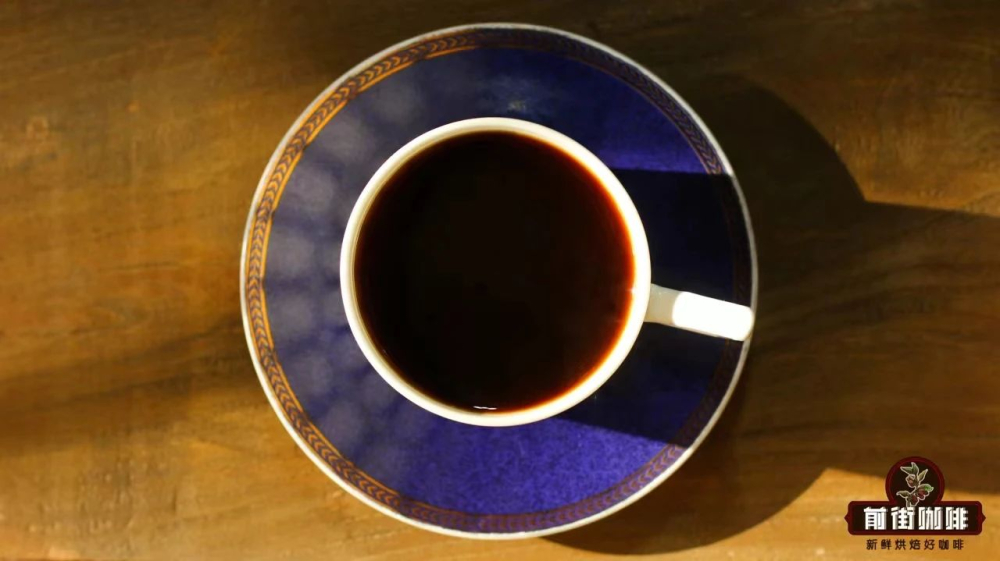
[Front Street Washed Blue Mountain Coffee] Rich dark chocolate and nutty flavors, creamy smooth mouthfeel, and balanced sweetness, acidity, and bitterness.
The above content is compiled by CoffeeHunters, a coffee news website.


