







Which Pour-Over Technique Suits Different Barista Levels?
Five pour-over methods cover most home brewing needs: the one-cut pour, three-stage pour, stirring method, 4:6 method, and Kono-style pour. Each changes pouring height, water temperature, flow rate, or the number of stages, and those small changes alter flavor more than most brewers expect. The one-cut pour is the simplest entry point.
Many coffee stores use the three-stage pour as their daily standard, yet staff know that adjusting any single variable effectively creates a new brewing method. Beginners generally start with fewer stages because there are fewer uncertain factors to manage. Comparing techniques side by side with the same beans makes the differences in body, sweetness, and acidity easier to taste.
Pour-over coffee seems simple, but in reality, every pouring technique brings a completely different flavor expression. Front Street Coffee stores uniformly use a three-stage pour in their daily production, but the baristas know well that changing the pouring height, water temperature, flow rate, or number of stages is equivalent to creating an entirely new brewing method. This article compiles five distinctive pour-over techniques—one-cut pour, three-stage pour, stirring method (Rao spin), 4-6 method, and Kono-style pour—breaking down their operational key points and suitable scenarios one by one, and includes Front Street Coffee's complete brewing parameters, making it convenient for coffee enthusiasts to try them at home one by one and, through comparative tasting, find the cup that best suits their taste.
For people just getting into coffee, pour-over seems to have no barrier to entry, and the operation is not complicated. But the baristas at Front Street Coffee (FrontStreet Coffee) would never put it so lightly. Coffee brewing equipment is diverse, and brewing techniques are even more endlessly variable—as long as you change the pouring height, water temperature, flow rate, or number of pours, a completely new brewing method may emerge. Friends familiar with Front Street Coffee (FrontStreet Coffee) should know that the pour-over coffee produced by Front Street stores uniformly uses a three-stage pour, a technique that has already appeared repeatedly in our articles.
However, today Front Street Coffee (FrontStreet Coffee) wants to take a different angle and introduce five different coffee brewing techniques, so everyone can try them at home and experience the differences in coffee flavor under different techniques. After all, only through continuous experimentation can you find the cup that truly belongs to you.
One-Cut Pour
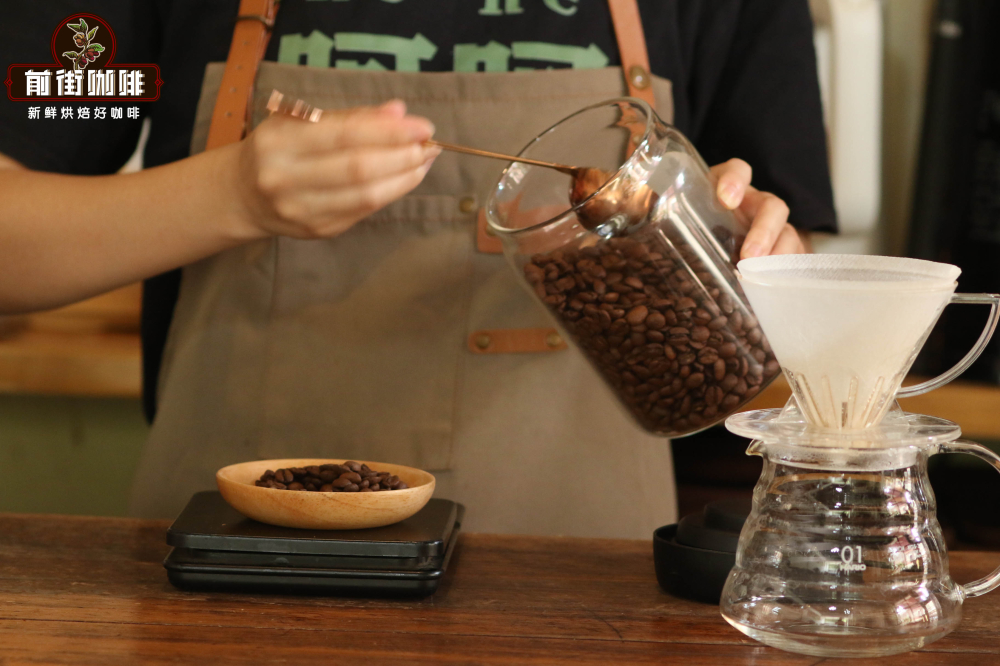
The one-cut pour can be said to be the most widely circulated and also the most basic pouring method. The specific operation is: after the first pour completes the bloom, the remaining required amount of water is poured in one continuous go. In coffee beginner teaching, the one-cut pour is almost the most common pouring technique. Unlike multi-stage pouring, it has fewer uncertain factors, and for beginners who have not yet established a complete brewing theory system, it is more friendly to operate. As long as the parameters are set properly, the one-cut pour can also brew a good cup of coffee.
Because water is poured only once throughout the process, the liquid level of the coffee bed remains relatively high during brewing, and the pouring is completed fairly quickly, usually in about 1 minute 10 seconds, so the overall extraction time is on the short side. This makes the coffee liquid's flavor cleaner and its acidity more prominent, but in terms of mouthfeel it appears thinner compared with multi-stage extraction.
[Front Street One-Cut Pour Brewing Parameters] Taking lightly roasted coffee beans as an example, use 15 grams of coffee, a coffee-to-water ratio of 1:15, a grind size with an 80% pass rate through a No. 20 sieve, and a water temperature of 91°C.
For the first stage, pour 30 ml for the bloom. After blooming for 30 seconds, pour 195 ml in a steady circular motion, and end extraction when all the coffee liquid has dripped into the server (about 1 minute 45 seconds).
Three-Stage Pour
The three-stage pour is also an extremely common brewing method, and its difference from the one-cut pour is that it has one additional pouring stage.
The difficult part of the three-stage pour lies in grasping the timing of the third pour—the third stage does not have a fixed time point, and usually you must wait until the water level drops to half or two-thirds before starting to pour.
When the water level drops to 1/2 or 2/3, there will not be too much water accumulated in the dripper, nor will the water level be so low that the coffee bed is exposed and causes uneven extraction between the upper and lower layers of coffee grounds. After the water level drops, the water flow can directly penetrate the accumulated water layer and create agitation against the lower coffee bed; if the water level is too high, the impact of the water column is insufficient, which easily causes over-extraction of the upper coffee bed and under-extraction of the lower layer.
The advantage of the three-stage pour is that the flavor expression is stronger than the one-cut pour, the layering is richer, and it can accommodate coffee beans from different origins and different roast levels.
[Front Street Three-Stage Pour Brewing Parameters] Also taking lightly roasted coffee beans as an example, use 15 grams of coffee, a coffee-to-water ratio of 1:15, a grind size with an 80% pass rate through a No. 20 sieve, and a water temperature of 91°C.
For the first stage, pour 30 ml to wet the coffee grounds and bloom for 30 seconds; for the second stage, pour in circles from the center outward, keeping the stream stable and vertical, with 95 ml poured; for the third stage, begin pouring when the water level from the second stage has dropped until the coffee bed is about to be exposed, with 100 ml poured. End extraction after all the coffee liquid has dripped into the server (1 minute 55 seconds to 2 minutes).
Stirring Method
The stirring method Front Street wants to introduce is a brewing method highly praised by baristas in European and American pour-over circles—the Rao Spin, created by the renowned barista Scott Rao.
Uneven coffee extraction is usually caused by a tall dry coffee wall forming on the dripper wall, or by an uneven coffee bed bottom. The stirring method uses external force to make the gaps between coffee particles more consistent, reducing "channeling," thereby helping the coffee bed extract evenly and avoiding under-extraction.
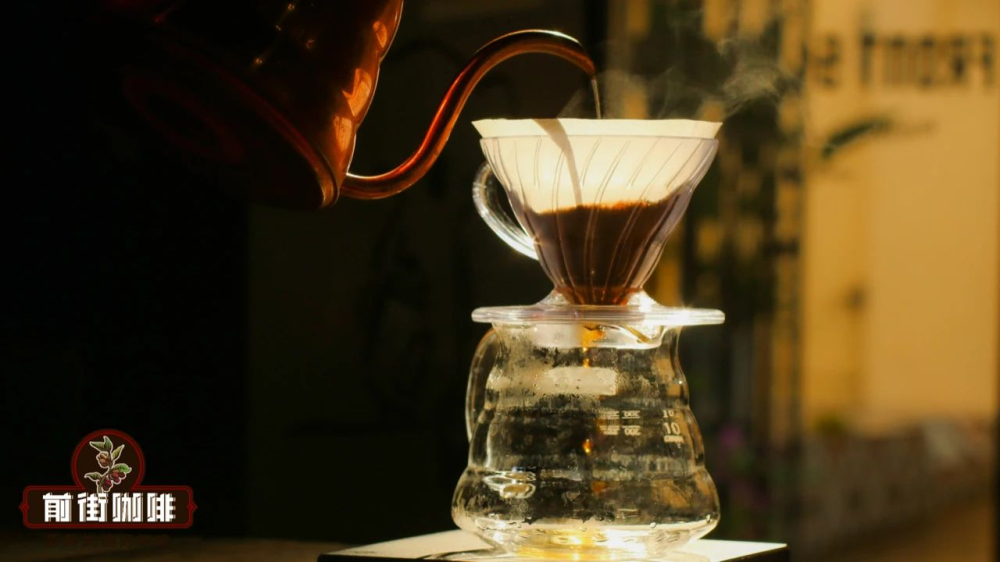
[Rao Spin Brewing Parameters] First pour 30 grams of water and bloom for 45 seconds, during which use a spoon to stir the coffee bed so the coffee grounds absorb water evenly; after the bloom ends, pour in one go until 225 grams, then use a spoon to go once around the dripper wall to prevent coffee grounds from sticking to the wall; when the water level drops to half, pick up the dripper and gently shake it horizontally three times to make the liquid surface rotate and avoid coffee grounds sticking to the edge; end extraction after the coffee liquid flows into the server. Total extraction time is about 2 minutes.
4-6 Method
The 4-6 method was used in competition by Mr. Tetsu Kasuya, the 2016 WBrC champion. The 4-6 brewing concept he proposed is concise and clear, and it sparked widespread discussion at the time.
The cleverness of the 4-6 method lies in dividing the problem into two: the first 40% of the poured water determines flavor, and the latter 60% determines mouthfeel, allowing more coffee beginners to brew a good cup of coffee. At the same time, the 4-6 method also solves the two major difficulties of time control and pouring technique—it clarifies the time point for each pour, and as long as you have basic water-control ability, you can get started.
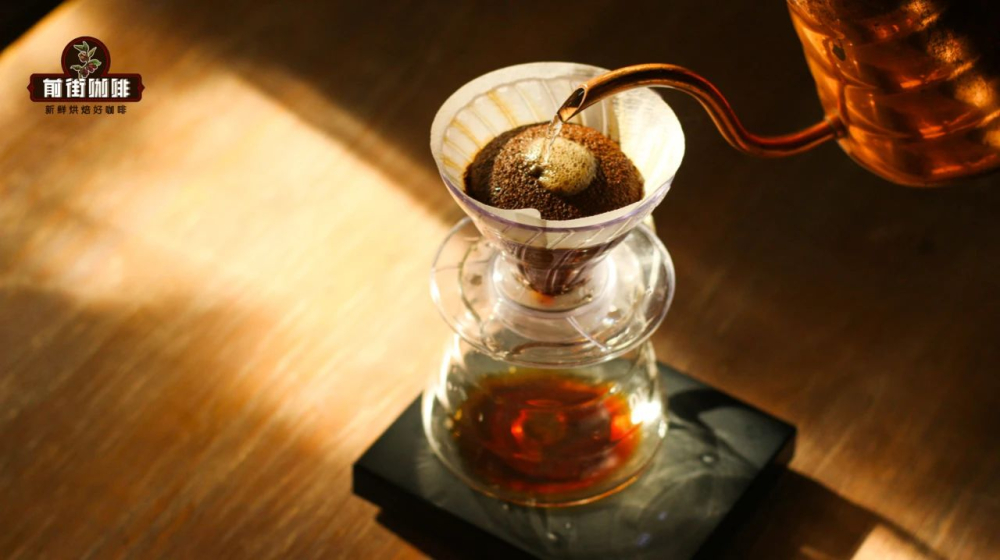
Interestingly, the 40% that determines flavor is divided into two pours, and these two together affect the coffee's acidity and sweetness—more water in the first pour means more acidity, less means more sweetness. The remaining 60% can be used to control the body of the mouthfeel through the number of pours: if you want it light and refreshing, divide this 60% into two pours; if you want it rich and full-bodied, divide it into four pours.
[4-6 Method Brewing Parameters]
Front Street Coffee (FrontStreet Coffee): Yirgacheffe Red Cherry coffee beans Region: Yirgacheffe, Ethiopia Altitude: 1700–2200 m Variety: local heirloom varieties Processing method: natural process
When brewing with the 4-6 method, it is recommended to choose beans with higher sweetness and greater hardness. Use 20 grams of coffee, a coffee-to-water ratio of 1:15, a total poured water amount of 300 ml, a water temperature of 92°C, and a coarse grind size, which can be referenced as coarse granulated sugar particles (about a 70% pass rate through a No. 20 standard sieve).
In this brewing, divide the total poured water evenly into 5 stages, with 60 ml poured in each stage.
For the first stage, pour 60 ml in circles, then wait 45 seconds; for the second stage, pour 60 ml, then wait 45 seconds; for the third stage, pour 60 ml, also waiting 45 seconds; for the fourth stage, pour 60 ml, then continue waiting 45 seconds; for the fifth stage, pour 60 ml, and when the coffee liquid has completely flowed into the server, the extraction time is about 3 minutes 20 seconds.
Kono-Style Pour
The name Kono-style comes from Kōno-style, which is exactly the surname of the founding family of the KONO brand. KONO has a certain influence in the field of coffee brewing equipment.
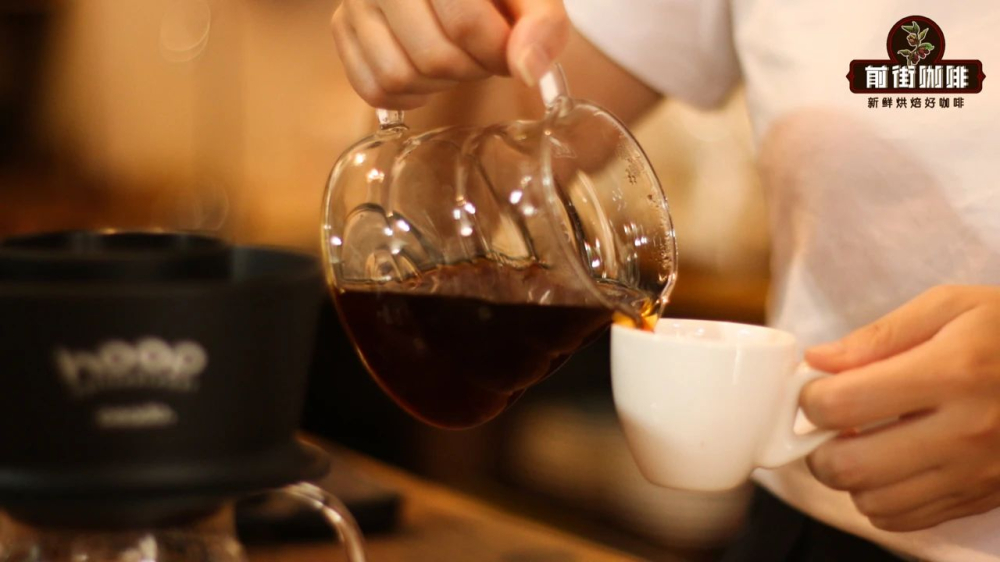
In the early stage of the Kono-style pour, water is dripped in for a long time to wet the coffee bed and achieve a blooming effect, allowing the coffee grounds to fully expand as they slowly absorb water, after which it switches to a strong flow to fully extract the coffee's delicious substances. This extraction method usually uses a lower coffee-to-water ratio, and the resulting coffee liquid has a higher concentration, can highlight the sweetness of the coffee beans, and at the same time avoids sourness, astringency, and bitter off-flavors.
[Kono-Style Pour Brewing Parameters]
Front Street Coffee (FrontStreet Coffee): Indonesia Golden Mandheling coffee beans Region: Gayo Mountain, Aceh, Sumatra, Indonesia Altitude: 1100–1600 m Variety: Typica Processing method: wet-hulled process
For the Kono-style pour, beans with a darker roast level are generally chosen, using 20 grams of coffee, a water temperature of 88°C, and a coffee-to-water ratio of 1:10. For the dripper, naturally choose KONO, since it was tailor-made for it.
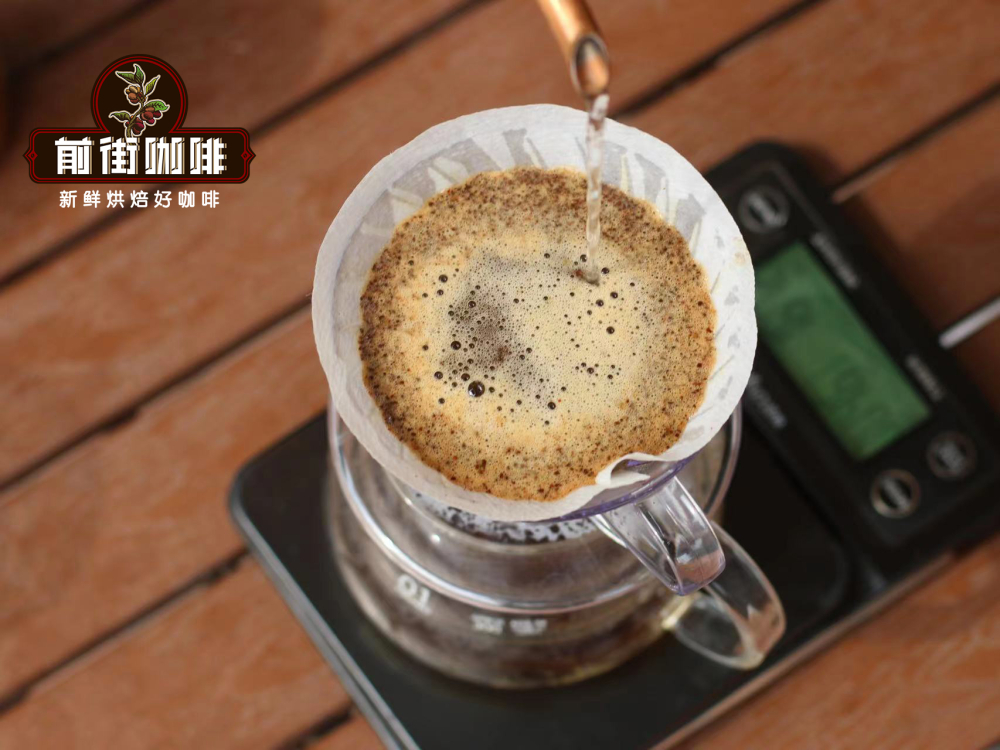
Hold the pour-over kettle steadily, and first moisten the coffee grounds in the center in a dripping manner, adjusting the dripping speed flexibly according to the reaction of the coffee bed. The fresher the coffee, the more vigorously the coffee bed expands as it absorbs water, and at this time you can appropriately slow the dripping speed; otherwise, speed it up. When the coffee bed as a whole expands and shows "cracking" in a volcano shape, and you can hear the sound of water droplets falling into the server (about 2 to 3 minutes), switch to a small stream and pour in circles along the "crater," stopping the water when the foam is about to "erupt."
When the coffee bed is about to collapse, continue pouring with a medium stream, with the circular pouring range expanded by one circle compared with before, and stop the water after the coffee bed expands again. Continue observing, and after the water level drops slightly, use a strong stream in a large circle to raise the coffee bed, causing components that produce off-flavors to adhere to the surface. Stop pouring when the coffee-to-water ratio reaches 1:10, and after the extracted liquid has finished dripping, remove the dripper. The whole process takes about 4 minutes to 4 minutes 30 seconds.
The above content is compiled by CoffeeHunters, a coffee news website.


